
Product Education · September 20, 2026 · 8 min read
Is Häagen-Dazs Chocolate Clean? Five Ingredients, Scanned
Cream, skim milk, cane sugar, alkalized cocoa, egg yolks. Why a five-ingredient ice cream needs no gums, and what a short label still cannot tell you.
By Chris Carrillo · Reviewed by Armin Rad, Co-Founder & CTO, Aurascan · September 20, 2026
Every article is checked against primary sources before publication. How we review

Häagen-Dazs Chocolate Ice Cream contains five recognizable ingredients: cream, skim milk, cane sugar, cocoa processed with alkali, and egg yolks. The label completely avoids commercial gums, synthetic emulsifiers, and artificial flavorings. Instead of industrial texturizers, the recipe relies on egg yolk lecithin, dairy solids, and traditional custard chemistry to maintain its thick structure.
Key takeaways
- The formula relies on five household ingredients without added gums or chemical emulsifiers.
- Natural egg yolk lecithin provides the emulsion required to bind dairy fats and water.
- Dutch-processed cocoa reduces raw acidity and alters natural cocoa flavanols while deepening color.
- A minimalist ingredient list does not equate to low sugar or low saturated fat; always review the Nutrition Facts panel.
Why people buy it
Shoppers consistently gravitate toward Häagen-Dazs Chocolate when seeking a straightforward, traditional frozen dessert. In a modern grocery store where many ice cream pints feature multi-line ingredient statements packed with stabilizing gels, modified starches, and engineered flavoring systems, a pint boasting five basic culinary components offers clear clarity. People often perceive shorter ingredient statements as closer to homemade food, appreciating the absence of complex additive names.
Beyond label simplicity, buyers choose this product for its dense, rich mouthfeel and pronounced chocolate profile. Because the formulation skips gums and stabilizers, every spoonful delivers a concentrated custard-style texture that melts slowly. The product appeals directly to adults who want an indulgent, classic treat without deciphering industrial food additives on the back of the carton. As of September 2026, nothing has changed in the regulatory status of any of the five ingredients.
Scan preview
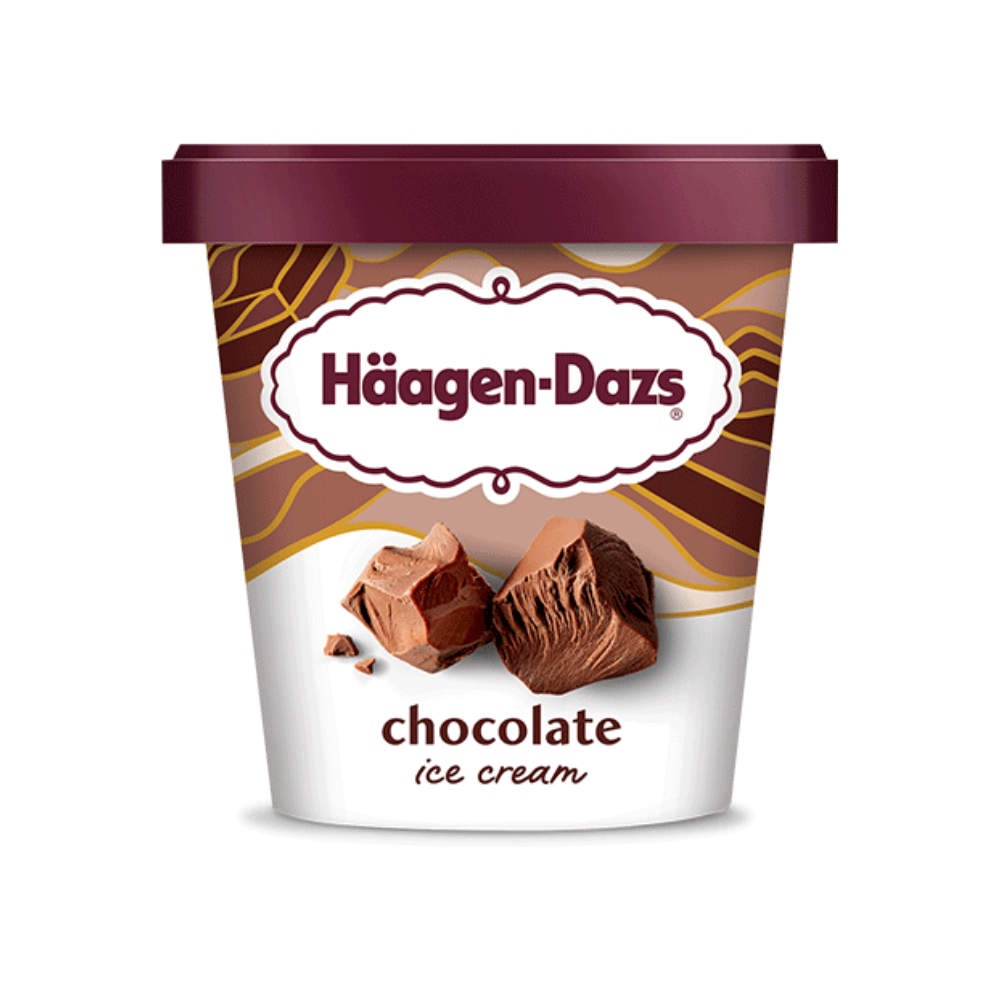
Haagen-Dazs
Haagen-Dazs Chocolate Ice Cream - 14 Fl Oz
CANE SUGAR · SKIM MILK · COCOA PROCESSED WITH ALKALI
Standout ingredient: SKIM MILK
Analysis by Aurascan. Sources are listed on the product page.
What Aurascan found
When scanning packaged foods, Aurascan analyzes every single component individually against regulatory archives and published food science research rather than applying an opaque composite rating. Instead of assigning a blanket numeric score, the app reviews the technical identity, common processing steps, and public health literature associated with each item.
Evaluating Häagen-Dazs Chocolate reveals an uncommonly tight ingredient statement. Every entry represents an established culinary foodstuff or regulated staple, completely bypassing the synthetic additives that frequently populate modern ultra-processed snacks and frozen treats. Below is how each of the five ingredients functions in the tub.
Cream and skim milk: Meeting the standard of identity
The foundation of this pint consists of cream and skim milk. Under federal regulations set forth in 21 CFR 135.110, an item labeled legally as ice cream must meet strict compositional baselines. The standard of identity mandates that ice cream contain not less than 10 percent milkfat, not less than 1.6 pounds of total solids per gallon, and weigh at least 4.5 pounds per gallon. The carton does not state this product's milkfat percentage, only that it qualifies as ice cream. Products falling below these specific thresholds cannot be marketed simply as ice cream and must instead carry identifiers like frozen dairy dessert.
By combining fresh cream with skim milk, the recipe establishes the required dairy solids and dairy fat base without requiring rehydrated milk protein concentrates or whey derivatives. High milkfat naturally coats the palate and delivers a smooth sensation, reducing the perceived need for thickeners. The dairy fat also traps microscopic air cells and creates physical resistance against ice crystal formation during routine distribution freezing cycles.
Cane sugar: Simple formulation still means added sugar
Cane sugar provides the primary sweetness needed to counterbalance the natural bitterness of concentrated cocoa powder. Extracted from sugar cane stalks, sucrose acts as more than just a sweetening agent in frozen confections. It also plays a vital functional role by depressing the freezing point of the mixture, preventing the pint from freezing solid like an ice cube and ensuring it remains scoopable at standard household freezer temperatures.
While consumers often view cane sugar as preferable to high fructose corn syrup or synthetic non-nutritive sweeteners, it is important to remember that cane sugar remains an added sugar. Under the FDA's 2016 Nutrition Facts label update, the sugar it contributes must be counted on the panel under Added Sugars. A clean label does not make a dessert low in carbohydrates or calories, so individuals managing blood glucose or daily caloric intake should review the Nutrition Facts panel directly for exact portion details.
Cocoa processed with alkali: What Dutch processing changes
The chocolate character in this ice cream comes from cocoa processed with alkali, an ingredient commonly referred to in culinary contexts as Dutch-process cocoa. Governed under 21 CFR 163.112, alkalization involves treating cocoa nibs or cocoa powder with alkaline solutions like potassium carbonate or sodium bicarbonate. As explained by the American Society of Baking, this treatment neutralizes the natural tartness and acidity inherent to raw cacao beans.
Alkalization alters the cocoa in several clear ways. It darkens the color to a rich, deep brown and softens astringent, sharp flavor notes, producing the smooth, mellow chocolate flavor consumers expect. However, research indicates that the alkalizing process also significantly decreases the concentration of natural cocoa flavanols and polyphenolic antioxidants. While it optimizes baking and freezing performance by improving solubility, it represents a deliberate trade-off between natural micronutrient density and mellow flavor expression.
Egg yolks: Custard chemistry over commercial stabilizers
Egg yolks serve as the structural anchor that holds this entire five-ingredient formula together. In traditional European gelato and French custard bases, egg yolks are the historic ingredient responsible for binding fat and moisture. Egg yolks are naturally rich in lecithin, a phospholipid molecule featuring a hydrophilic head and a lipophilic tail. This unique physical structure allows lecithin to stabilize the emulsion between liquid skim milk and heavy milkfat.
Because the egg yolk proteins and lipids naturally bind the water and fat droplets, they prevent phase separation without requiring synthetic emulsifiers. The presence of egg yolks classifies this style of ice cream structurally as a custard-style base. For individuals with egg allergies, however, this functional culinary choice means the product contains a major food allergen that must be carefully tracked.
What is missing from the carton?
The most revealing aspect of this product profile is what does not appear on the carton. Many commercial brands introduce specialized additives to lower production costs, accelerate processing, and artificially extend shelf stability. Among the most common absent additives are:
- Plant and bacterial gums: No guar gum, locust bean gum, tara gum, xanthan gum, or carrageenan to artificially build viscous body.
- Synthetic and semi-synthetic emulsifiers: No mono- and diglycerides or polysorbate 80 to artificially bind water and fats.
- Alternative sweeteners: No high fructose corn syrup, maltitol, or artificial sweeteners.
- Flavoring enhancers and colorants: No synthetic food dyes, annatto extracts, or generic natural flavor lines.
To see how stark this difference can be, read our Tillamook vs Häagen-Dazs comparison and review Is Tillamook Cookies and Cream Clean? The Label, Scanned, which features approximately thirty separate entries, four different gum stabilizers, and annatto coloring. For another frozen dessert perspective, consider reading Are Friendly's Orange Cream Bars Clean? Every Ingredient, Scanned. Exploring items across the frozen aisle illustrates how widely formulation philosophies diverge.
Quiz
Is Häagen-Dazs Chocolate clean?
Guess before you scroll.
Reveal Aurascan's verdict
Aurascan says: Flagged
The main flag is CANE SUGAR.
What to look for on the label
When shopping the ice cream aisle, reading the packaging carefully helps you distinguish between traditional dairy confections and heavily stabilized formulations. Use this quick checklist when reviewing cartons:
- Check the legal product designation: Confirm whether the carton states ice cream or frozen dairy dessert, which signals differences in fat and solid thresholds under federal standards.
- Scan the stabilizer list: Notice if the carton lists guar gum, carrageenan, or cellulose gum, which are frequently used to replace dairy solids and prevent ice crystals in high-overrun products.
- Identify the emulsifier source: Look for egg yolks, which indicate a traditional custard emulsion, versus mono- and diglycerides, which indicate commercial industrial processing.
- Inspect the sweetener variety: Check whether sweetness comes from cane sugar or concentrated corn syrups.
- Review the allergen warnings: Remember that traditional formulas using real dairy and eggs will always carry milk and egg allergen disclosures.
It is important to state plainly what label evidence cannot establish: an ingredient review alone cannot predict individual metabolic responses, personal digestive sensitivities, or lactose tolerance levels. A minimal ingredient deck does not transform an indulgent dessert into an everyday health food, nor does it guarantee suitability for all diets.
How do clean labels compare across aisles?
Navigating frozen confections involves understanding how manufacturers balance shelf life, distribution realities, and ingredient minimalism. While traditional brands maintain short ingredient panels relying on custard bases, other packaged products address different sensory profiles or dietary restrictions using alternative formulation techniques. For consumers interested in learning how beverage and snack manufacturers approach similar ingredient choices, our library evaluates common staples:
- Is Fanta Pineapple Clean? Every Ingredient, Scanned
- Is Fanta Orange Clean? Every Ingredient, Scanned
- Is Dole 100% Pineapple Juice Clean? The Label, Scanned
- Is Fage Total 0% Clean? A Two-Line Yogurt Label, Scanned
- Are Pringles Hot Honey Clean? Every Ingredient, Scanned
- Is Sprite Clean? Every Ingredient in the Can, Scanned
- Is Core Power Clean? Every Ingredient in the Shake, Scanned
- Are Doritos Clean? Every Nacho Cheese Ingredient, Scanned
- Is Celsius Peach Vibe Clean? Every Ingredient, Scanned
- Is Monster Energy Clean? Every Ingredient in the Can, Scanned
Reviewing labels across product categories allows shoppers to identify recurring additives, understand functional culinary ingredients, and make informed choices aligned with their dietary values.
Why does manufacturing without gums matter?
Producing commercial ice cream with just five ingredients introduces manufacturing challenges that mass-market formulas avoid through industrial additives. Without carrageenan or locust bean gum to absorb moisture and preserve structural consistency, pints exposed to temperature abuse during supermarket stocking or transport can form coarse ice crystals more readily. The high dairy fat and custard solids create a rich mouthfeel, but they also require strict temperature control throughout the supply chain.
Furthermore, using Dutch-processed cocoa powder balances bitterness without artificial chocolate boosters or masking agents. Understanding these food science trade-offs helps shoppers appreciate why standard mass-market desserts turn to stabilizers, while highlighting why a five-ingredient formulation remains an intentional culinary achievement in commercial food packaging.
Try Aurascan
See what is really in the food you buy.
Common questions
- How many ingredients are in Häagen-Dazs Chocolate ice cream?
- Häagen-Dazs Chocolate ice cream contains exactly five ingredients: cream, skim milk, cane sugar, cocoa processed with alkali, and egg yolks.
- Why does Häagen-Dazs use egg yolks instead of gums?
- Egg yolks contain natural lecithin, an effective emulsifier that binds dairy fats and water together. This traditional custard-style base creates a rich texture naturally, eliminating the need for commercial stabilizers like guar gum or carrageenan.
- What does cocoa processed with alkali mean?
- Cocoa processed with alkali, also called Dutch-process cocoa, has been treated with an alkalizing agent to reduce natural acidity. This process darkens the cocoa color and produces a smoother, less bitter flavor, though it also reduces natural cocoa flavanols.
- Is Häagen-Dazs Chocolate ice cream gluten-free?
- None of the five ingredients (cream, skim milk, cane sugar, cocoa processed with alkali, egg yolks) naturally contain gluten. However, consumers with celiac disease should always verify the package label for facility cross-contact statements.
- Does Häagen-Dazs Chocolate contain artificial flavors or colors?
- No. The formulation does not contain synthetic food dyes, annatto, or added natural flavor extracts. The color and flavor come entirely from the alkalized cocoa, dairy, and cane sugar.
- Is a five-ingredient ice cream healthier than standard ice cream?
- A shorter ingredient statement indicates fewer industrial additives and gums, but it does not mean the product is low in calories, saturated fat, or sugar. Consumers should consult the Nutrition Facts panel on the carton for precise dietary values.
Sources
In this series
Guide
Is Fanta Pineapple Clean? Every Ingredient, ScannedGuide
Is Tillamook Cookies and Cream Clean? The Label, ScannedGuide
Is Fanta Orange Clean? Every Ingredient, ScannedGuide
Are Friendly's Orange Cream Bars Clean? Every Ingredient, ScannedGuide
Is Dole 100% Pineapple Juice Clean? The Label, ScannedGuide
Is Fage Total 0% Clean? A Two-Line Yogurt Label, Scanned
Related guides
Product Education
Is Frigo String Cheese Clean? Four Ingredients, ScannedPasteurized part-skim milk, cheese cultures, salt, enzymes. What the FDA standard for low-moisture mozzarella requires, and what 'enzymes' hides on a cheese label.
Product Education
Is Tillamook Cookie Dough Ice Cream Clean? 25 Ingredients, ScannedTillamook Chocolate Chip Cookie Dough lists 25 ingredients, most of them cookie dough. Which are dairy, which are dough, and where the gums and lecithin come in.
Product Education
Are Stacy's Pita Chips Clean? Every Ingredient, ScannedEnriched wheat flour, sunflower and/or canola oil, two Parmesans and a 2-percent tail with rosemary extract. Stacy's Parmesan Garlic and Herb pita chips, line by line.
Try it on your own groceries
Scan your next label with Aurascan
Point the camera at any ingredient list and get the same evidence-graded read you see here.
Open the scannerLabel-reading intel, weekly.
What changed on food labels this week — bans, recalls, and new guides.