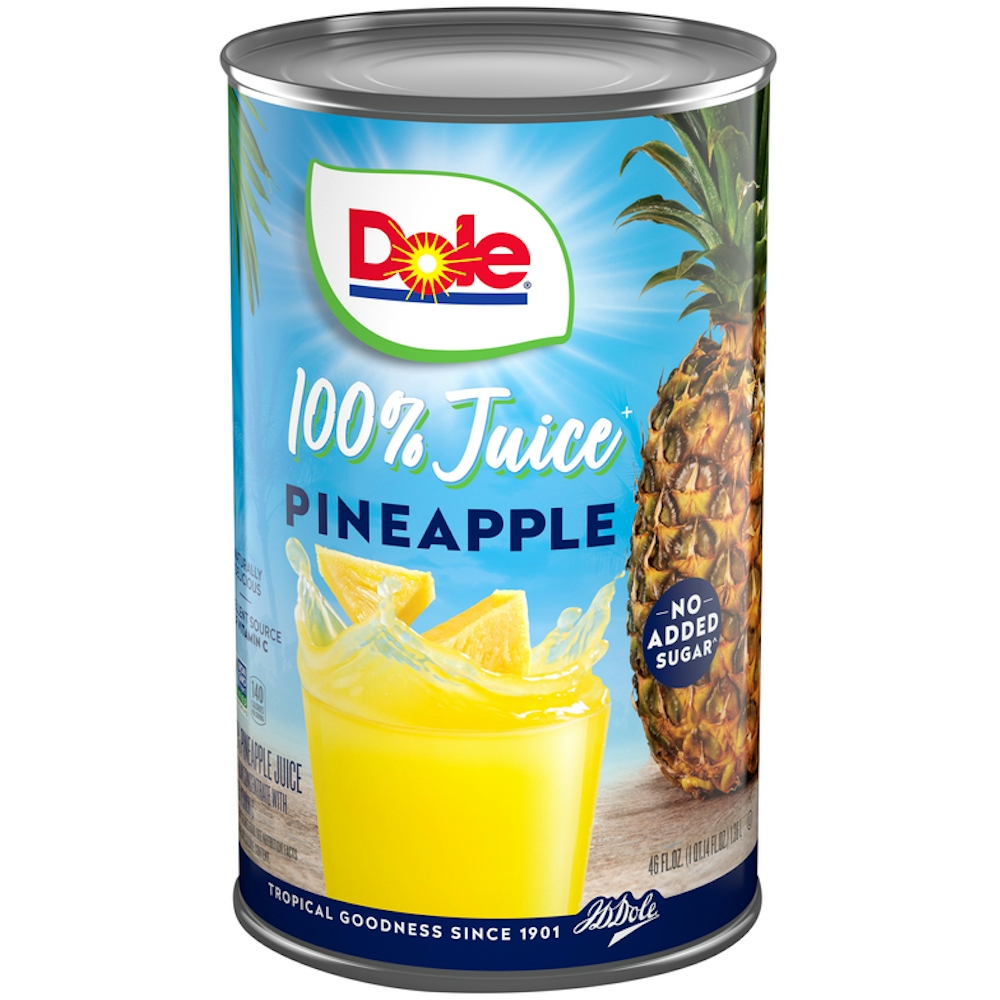
Is Dole 100% Pineapple Juice Clean? The Label, Scanned
Dole 100% Pineapple Juice adds no sugar, yet a glass carries soda-level sugar. What "100% juice" and "from concentrate" mean under FDA rules, and why vitamins are added.
Product spotlightCluster: Product Spotlightsdole 100% pineapple juice (46 oz can), every ingredient scannedProduct-focused guide
9/15/2026 · 8 min read · Chris Carrillo · Reviewed by Armin Rad, Co-Founder & CTO, Aurascan · Last reviewed 9/15/2026
Written by Chris Carrillo. Reviewed by Armin Rad, Co-Founder & CTO, Aurascan. It cites 6 sources; use the source list and methodology to check the evidence directly.
Dole 100% Pineapple Juice contains no added refined sugars, artificial colors, or artificial preservatives, relying on reconstituted fruit concentrate and fortified vitamins. However, processing whole fruit into juice strips out dietary fiber, leaving naturally occurring sugars that act metabolically as free sugars. Understanding the difference between whole fruit and reconstituted canned juice is essential for making informed dietary choices.
Key takeaways:
The product meets FDA 21 CFR 101.30 standards for 100% juice by rehydrating pineapple juice concentrate with filtered water back to standard single-strength brix levels.
While the label states 'no added sugar', the concentration and juicing process turns natural fruit sugars into free sugars that are absorbed rapidly by the body.
Fortified vitamins (ascorbic acid/vitamin C, vitamin A, and vitamin E) provide essential micronutrients while also helping preserve product flavor and color.
Thermal canning and Juice HACCP regulations ensure shelf stability and pathogen safety without requiring synthetic chemical preservatives.
Individual metabolic responses to liquid fruit sugars vary, so check the Nutrition Facts panel to fit the beverage into your personal dietary goals.
Why people buy it
Dole 100% Pineapple Juice in the classic 46 fluid ounce can is a staple in households, commercial kitchens, and beverage bars. Consumers reach for it as a convenient, shelf-stable way to enjoy tropical fruit flavor without peeling and pressing whole pineapples. Many shoppers view the prominent '100% Juice' and 'No Added Sugar' claims as a health-conscious alternative to traditional carbonated sodas or artificially flavored fruit punches.
Beyond drinking it straight, buyers frequently use the canned juice as a functional culinary ingredient. It serves as a tenderizing marinade base for meats, a tangy mixer for non-alcoholic mocktails and tropical cocktails, and a natural sweetener for baking. The metal can packaging allows it to sit in a pantry for months, giving families a reliable source of fruit flavor without the risk of rapid spoilage common to fresh produce.
Analysis by Aurascan. Sources are listed on the product page.
What Aurascan found
A close review of the ingredient panel on the 46 oz can reveals a short, straightforward list: pineapple juice from concentrate (filtered water and pineapple juice concentrate), ascorbic acid (vitamin C), vitamin E, and vitamin A. Each component serves a distinct nutritional or functional purpose.
Reconstituted Pineapple Juice (Water and Juice Concentrate)
The primary ingredient is pineapple juice from concentrate, composed of filtered water and pineapple juice concentrate. Fruit juice concentration involves pressing whole pineapples to extract their liquid, followed by vacuum evaporation to remove a significant portion of the natural water content. This process reduces volume and weight for efficient global shipping and prevents microbial growth during storage. Before canning, filtered water is mixed back into the concentrate to restore the juice to its single-strength standard. Quality parameters for grading single-strength and reconstituted products are detailed under the USDA United States Standards for Grades of Pineapple Juice.
Under United States Food and Drug Administration (FDA) regulations codified in 21 CFR 101.30, a beverage can be labeled as '100% juice' from concentrate as long as the amount of water added back accurately restores the natural concentration of soluble solids (measured in degrees Brix) typical of freshly expressed pineapple juice. While this process is completely legitimate and standard across the beverage sector, it fundamentally alters how the human body processes the fruit compared to eating a fresh pineapple slice.
When a whole pineapple is consumed, dietary fiber slows digestion and moderates the rate at which fructose and glucose enter the bloodstream. During juicing, the insoluble fibrous matrix is removed. Clinical reviews on the Health Effects of 100% Fruit Juice examine how liquid fruit juices behave differently from whole fruit regarding glycemic response. As health organizations note, sugars naturally present in fruit juices are categorized as 'free sugars' because they lack the physical cellular structure and fiber that buffer absorption. Consequently, while no table sugar or high-fructose corn syrup is added, the beverage delivers a concentrated dose of fast-digesting liquid carbohydrate. A can of Sprite makes a useful comparison: its sugar is added and declared as such, while the juice's sugar is native and declared only under total sugars. Our guide to added sugar's dozens of label names explains the difference.
Added Vitamin Fortification: Ascorbic Acid, Vitamin A, and Vitamin E
In addition to the reconstituted juice, Dole fortifies the beverage with three essential micronutrients: ascorbic acid (vitamin C), vitamin A acetate or palmitate, and vitamin E acetate.
Ascorbic acid is the chemical name for vitamin C, a water-soluble antioxidant. The biochemical structure and antioxidant properties of this molecule are thoroughly described in the PubChem Compound Summary: L-Ascorbic Acid. While pineapples naturally contain native vitamin C, the heat used during concentration, pasteurization, and canning can degrade a portion of delicate natural vitamins. Adding ascorbic acid back into the formulation guarantees consistent nutritional potency from the first can to the last. Beyond human nutrition, ascorbic acid functions as a natural processing aid; its antioxidant properties inhibit polyphenol oxidase enzymes, preventing the juice from oxidizing, browning, and developing off-flavors over its shelf life. Federal rules affirm its status as safe under 21 CFR 182.3013 - Ascorbic Acid (GRAS Status).
Vitamin A and vitamin E are fat-soluble antioxidants added to enhance the overall nutrient density of the beverage. These vitamins support immune function, skin health, and cellular protection against oxidative stress. Because pineapple juice contains virtually zero dietary fat, the bioavailability of fat-soluble vitamins can vary depending on whether the beverage is consumed alongside a meal containing healthy fats. Regulators classify these added vitamins as Generally Recognized as Safe (GRAS) under standard food use conditions.
How do processing and juice HACCP rules protect quality?
The safety and longevity of canned pineapple juice are governed by strict federal processing mandates rather than chemical additives. Under FDA Juice Hazard Analysis and Critical Control Point (HACCP) regulations (21 CFR Part 120), commercial juice manufacturers must apply validated control measures capable of achieving at least a '5-log reduction' in the most resistant potential pathogens, such as Salmonella or Escherichia coli.
In the case of canned pineapple juice, this safety standard is achieved through thermal pasteurization and commercial canning. Pineapples are naturally acidic fruits, typically possessing a pH well below the 4.6 threshold that separates high-acid from low-acid foods. This natural acidity creates an inhospitable environment for bacterial spore germination, allowing pasteurization temperatures to effectively sterilize the liquid. Once sealed in the airtight, lined metal container, the product remains microbiologically sterile and protected from light and oxygen degradation until opened.
Is a can of Dole 100% Pineapple Juice clean?
Guess before you scroll.
Reveal Aurascan's verdict
Aurascan says: Flagged
The main flag is Vitamin E.
Is canned pineapple juice different from eating whole pineapple?
A common question among shoppers is whether drinking canned 100% pineapple juice provides the same health profile as eating fresh pineapple slices. While both share identical fruit-derived micronutrients and natural flavors, the mechanical separation of juice from pulp creates significant physiological differences. Whole raw pineapple contains both soluble and insoluble dietary fiber, including cellulose and pectin, which form a viscous gel-like matrix inside the digestive tract. This fiber network physically slows enzymatic breakdown, modulating the absorption rate of natural fructose and glucose.
In contrast, canned pineapple juice has had virtually all insoluble plant cell walls removed during filtration and pressing. When consumed as a liquid, the sugars enter the small intestine rapidly, leading to a steeper spike in postprandial blood glucose and insulin levels compared to an equivalent caloric portion of whole fruit. Additionally, the chewing process required for whole fruit stimulates satiety hormones and cephalic phase digestive responses that liquid beverages bypass. Therefore, while canned juice offers convenience and vitamins, it cannot fully replace the metabolic benefits provided by intact, fiber-rich whole fruits.
What are the evidence limitations and metabolic considerations?
Evidence limitations: While standard nutritional science clearly defines how the human body metabolizes liquid sugars and utilizes fortified vitamins, existing scientific literature cannot establish or predict individual glycemic, metabolic, or digestive responses for every single consumer. Variations in baseline insulin sensitivity, daily physical activity, gut microbiome composition, and overall meal context significantly affect how quickly fruit sugars are absorbed.
Furthermore, while clinical trials provide broad insights into general nutrient absorption, current evidence cannot definitively establish the precise long-term health impact of consuming pasteurized, fortified fruit juices compared to whole fresh fruit over multi-year periods. People managing metabolic conditions, diabetes, or specific dietary restrictions should consult their healthcare provider or registered dietitian when incorporating concentrated fruit juices into their daily routine.
What to look for on the label
When navigating the juice aisle, marketing claims can sometimes blur the line between nutritional benefits and total sugar intake. Here is a practical label-reading checklist to keep in mind when evaluating canned fruit juices:
'100% Juice' vs. 'Juice Cocktail' or 'Beverage': Look for the percentage declaration required by regulators. Products labeled as cocktails, nectars, or punches often contain far less real juice, with the remainder made up of added water, high-fructose corn syrup, and artificial flavorings.
'No Added Sugar' is not 'Low Sugar': A product can legally state 'No Added Sugar' while still containing substantial natural sugar per serving. Always check the total carbohydrates and total sugars on the Nutrition Facts panel rather than relying solely on front-of-package claims.
Added Antioxidants vs. Synthetic Preservatives: Check whether the shelf life is maintained through thermal processing and natural antioxidants like ascorbic acid (vitamin C), rather than chemical antimicrobial agents like sodium benzoate or potassium sorbate.
Fortification Levels: If you use fruit juice to meet daily vitamin quotas, review the percent Daily Value (% DV) column to see how much vitamin C, A, or E is provided per standard serving.
Is Dole 100% Pineapple Juice made with added sugar?
No. Dole 100% Pineapple Juice contains no added refined table sugar or high-fructose corn syrup. All the sugars listed on the Nutrition Facts panel are naturally occurring sugars from the pineapple concentrate.
What does 'from concentrate' mean on a pineapple juice label?
Juice from concentrate means fresh pineapple juice was pressed, filtered, and had its water evaporated to reduce shipping volume. Before packaging, filtered water is added back to restore the juice to its original single-strength liquid standard.
Why are ascorbic acid, vitamin A, and vitamin E added to the juice?
Ascorbic acid (vitamin C) is added to replenish natural vitamins lost during heat processing and to act as an antioxidant that prevents browning and flavor changes. Vitamins A and E are added for nutritional fortification.
Does 100% pineapple juice count as a free sugar?
Yes. According to organizations like the World Health Organization, sugars in fruit juices are considered free sugars because the whole fruit's cellular structure and dietary fiber have been removed, leading to faster digestion.
Does canned pineapple juice contain artificial preservatives?
No. The juice is preserved through thermal pasteurization and canning under FDA Juice HACCP safety standards. The natural fruit acidity and airtight metal packaging keep it shelf-stable without synthetic chemical preservatives.
How should unopened and opened 46 oz Dole pineapple cans be stored?
Unopened cans can be kept at room temperature in a cool, dry pantry until the printed expiration date. Once opened, any remaining juice should be transferred to an airtight glass or plastic container and refrigerated, typically consumed within five to seven days.
See what is in your label
Aurascan turns product labels into plain-English ingredient explanations and source-backed context.
Friendly's Orange Cream bars stack two sweeteners, four gums, carrageenan and two certified dyes (Red 40, Yellow 6). What each does, and where the dye phase-out stands.
Sprite has six ingredients: carbonated water, high fructose corn syrup, citric acid, natural flavors, sodium citrate and sodium benzoate. What each does, per the FDA.