Is Core Power Clean? Every Ingredient in the Shake, Scanned
Core Power Chocolate is ultrafiltered milk plus three stabilizers, three sweeteners and lactase. Carrageenan, cellulose gum, stevia, sucralose and Ace-K explained.
Product spotlightCluster: Product Spotlightscore power chocolate high-protein milk shake, every ingredient scannedProduct-focused guide
9/14/2026 · 7 min read · Chris Carrillo · Reviewed by Armin Rad, Co-Founder & CTO, Aurascan · Last reviewed 9/14/2026
Written by Chris Carrillo. Reviewed by Armin Rad, Co-Founder & CTO, Aurascan. It cites 6 sources; use the source list and methodology to check the evidence directly.
Fairlife Core Power Chocolate high-protein milk shake achieves its high protein profile and thick consistency through a base of ultra-filtered dairy combined with non-nutritive sweeteners and a multi-gum stabilizer system. While its macro profile attracts fitness enthusiasts, its ingredient list contains additives like carrageenan, cellulose gum, sucralose, and acesulfame potassium that receive mixed feedback from nutrition researchers and gut health advocates. Understanding the exact function and regulatory status of each additive helps consumers decide if this ready-to-drink shake fits their personal dietary standards.
Key takeaways:
Core Power relies on ultra-filtered milk and added lactase enzyme to achieve high protein density while remaining lactose-free.
The shelf-stable, creamy texture is maintained using three hydrocolloids: cellulose gel, cellulose gum, and carrageenan.
Carrageenan is authorized by regulatory agencies, though digestive sensitivity debates continue regarding its impact on gut comfort.
Sweetness is achieved with minimal added sugar via a triple-sweetener blend: stevia leaf extract, sucralose, and acesulfame potassium.
Why people buy it
Fairlife Core Power Chocolate is one of the most popular ready-to-drink protein beverages in convenience stores and supermarkets. Athletes, gym-goers, and busy professionals frequently purchase it because it delivers a substantial amount of complete dairy protein without requiring a shaker bottle or protein powder mixing. Its rich chocolate flavor mimics a traditional chocolate milkshake far more closely than standard water-based whey shakes, making it a convenient on-the-go post-workout option.
Beyond basic workout recovery, shoppers reach for Core Power because it provides lactose-free dairy nutrition. Consumers who struggle with standard milk digestion appreciate the high protein content alongside essential micronutrients like calcium and vitamin D. The product's shelf stability and smooth texture make it an effortless choice for meal replacements or high-protein snacking during travel and work.
Core Power
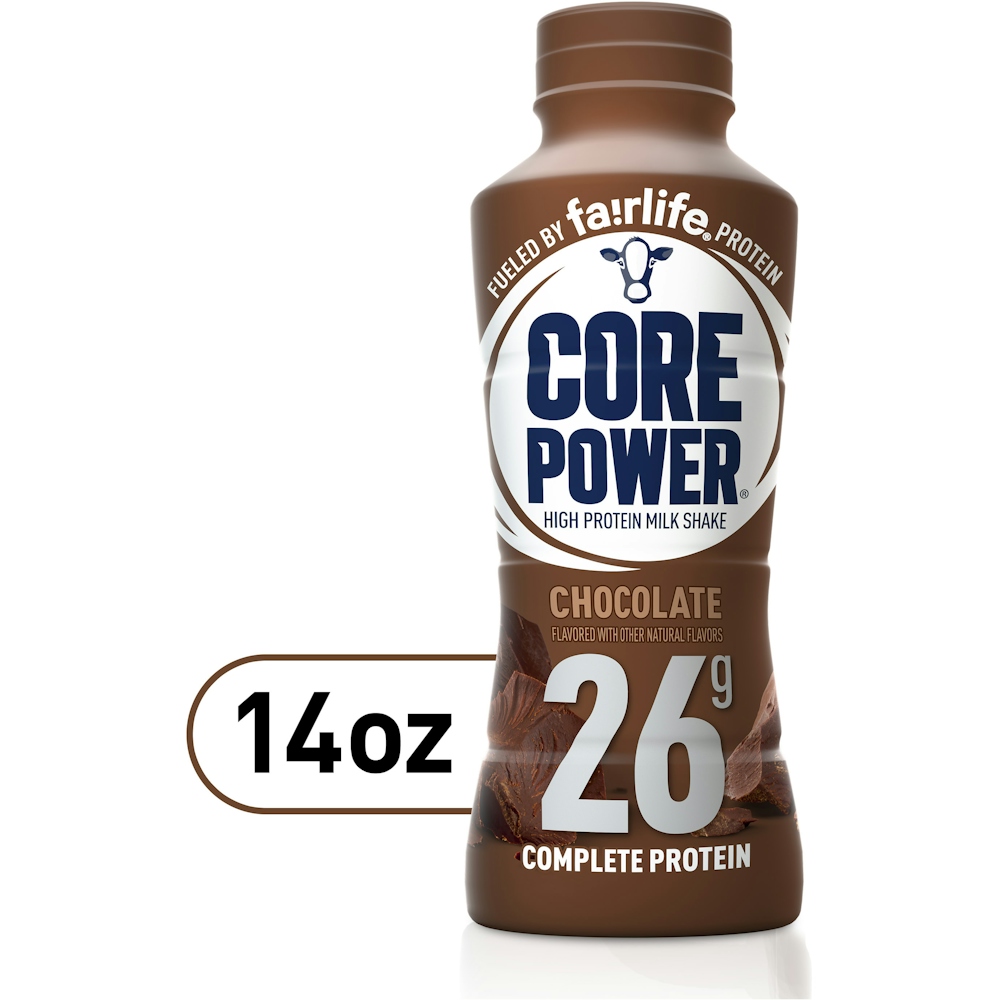
Core Power Chocolate High Protein Milk Shake 14 Fl Oz
Analysis by Aurascan. Sources are listed on the product page.
What Aurascan found
To understand what is really inside the bottle, we must look closely at each component listed on the packaging. The formulation splits into four key functional categories: the filtered dairy base, texture stabilizers, the sweetening blend, and standard chocolate flavoring with nutrient fortification.
Filtered low-fat grade A milk and lactase enzyme
The primary ingredient in Core Power is filtered low-fat grade A milk. Fairlife utilizes a proprietary cold-filtration process (ultra-filtration) that passes raw cow milk through specialized porous membranes. This physical separation separates water, lactose, minerals, and proteins, allowing the manufacturer to concentrate natural whey and casein proteins while removing a large portion of native milk sugars (lactose) and water.
To ensure the beverage is safe for individuals with lactose intolerance, the formulation includes the lactase enzyme. Lactase breaks down any residual lactose disaccharides into simple, easily digestible monosaccharides: glucose and galactose. This enzymatic conversion allows Fairlife to market the beverage as lactose-free without altering the high-quality amino acid profile inherent to complete dairy proteins.
The stabilizer system: cellulose gel, cellulose gum, and carrageenan
Ready-to-drink protein beverages face a major physical challenge: heavy cocoa particles and dense milk proteins tend to precipitate and settle to the bottom during storage. To maintain an evenly suspended, thick, and velvety mouthfeel, Core Power uses a trio of hydrocolloids: cellulose gel (microcrystalline cellulose), cellulose gum (carboxymethylcellulose), and carrageenan.
Cellulose gel and cellulose gum are derived from plant fiber and serve as bulking agents and viscosity modifiers. They create a structural network that prevents liquid separation (syneresis). Carrageenan, a naturally derived polysaccharide extracted from red edible seaweeds (see is carrageenan safe?), is widely utilized in dairy processing because it binds tightly with casein protein micelles, keeping them stable throughout shelf life.
While carrageenan is approved as a safe additive by global regulators including the U.S. FDA and the European Food Safety Authority (EFSA), it remains a subject of ongoing discussion in nutritional science. Some animal and cell culture studies suggest that degraded carrageenan (poligeenan) or high dietary exposure to food-grade carrageenan may interact with intestinal epithelial cells and potentially trigger localized gut inflammation in sensitive individuals. However, regulatory toxicological reviews continue to affirm that food-grade carrageenan is non-toxic at standard commercial levels. Consumers with irritable bowel syndrome (IBS) or sensitive digestive tracts often monitor their personal tolerance to this stabilizer.
The sweetening blend: stevia, sucralose, and acesulfame potassium
Rather than relying purely on high amounts of added cane sugar or corn syrup to achieve its sweet dessert flavor, Core Power utilizes a blend of three low-calorie and non-nutritive sweeteners: stevia leaf extract, sucralose, and acesulfame potassium.
Stevia leaf extract is a high-intensity sweetener extracted from the leaves of the Stevia rebaudiana plant, containing sweet glycosides like rebaudioside A. Sucralose is a chlorinated carbohydrate derivative that is roughly 600 times sweeter than sucrose without contributing caloric load. Acesulfame potassium (Ace-K) is a synthetic calorie-free sweetener that works synergistically with sucralose to deliver a clean sugar-like taste curve while masking the bitter or metallic aftertastes typical of single-source artificial sweeteners. This multi-sweetener approach is identical to the formulation strategies seen in other low-sugar beverages like Diet Coke, Scanned: What Every Ingredient Actually Does and Is Celsius Peach Vibe Clean? Every Ingredient, Scanned.
As of mid-September 2026, systematic safety reviews by the European Food Safety Authority and the U.S. FDA continue to confirm that sucralose and acesulfame potassium remain safe within established Acceptable Daily Intake (ADI) thresholds. While non-nutritive sweeteners help keep added sugar content low, research into their long-term effects on the gut microbiome continues to be an active area of scientific study.
Cocoa, natural flavors, and vitamin fortification
The remaining elements of the formulation complete the flavor, color, and micronutrient profile. Cocoa powder provides genuine chocolate taste and natural antioxidants. It is paired with natural flavors, which are plant- or dairy-derived aroma and taste extracts used to enhance the richness of the cocoa profile.
Salt is included to balance the sweetness and accentuate the chocolate flavor notes. Finally, the shake is fortified with vitamin A palmitate and vitamin D3, helping restore and boost micronutrients naturally present in whole dairy that may be partially reduced during the fat-skimming and ultra-filtration steps.
Is Fairlife Core Power Chocolate safe for daily consumption?
For the vast majority of healthy adults, Fairlife Core Power Chocolate is considered safe and provides a convenient source of high-yield dairy protein. Because its ingredients comply with international food safety thresholds, drinking it as part of a balanced diet poses no acute regulatory health hazard. The ultra-filtered milk delivers essential branched-chain amino acids (BCAAs) that assist with muscle protein synthesis and post-exercise recovery.
However, personal dietary philosophy plays a significant role in whether a consumer considers this product clean. Clean-eating advocates often prefer whole foods or minimally processed shakes with single-ingredient protein powders. The presence of artificial sweeteners and hydrocolloid gums places Core Power into the ultra-processed food category. Individual digestive responses can also vary; some individuals experience gastrointestinal bloating or discomfort when consuming products containing carrageenan, gums, or high-intensity sweeteners.
Is a bottle of Core Power Chocolate clean?
Guess before you scroll.
Reveal Aurascan's verdict
Aurascan says: Flagged
The main flag is FILTERED LOW FAT GRADE A MILK.
What to look for on the label
When evaluating Core Power Chocolate or similar packaged protein drinks, check the following details on the Nutrition Facts panel and ingredient deck:
Protein Source and Content: Review the declared protein figure on the label to verify it meets your personal post-workout macronutrient targets.
Stabilizer Complex: Look for carrageenan, cellulose gum, gellan gum, or xanthan gum if you have identified personal gut sensitivities to specific food hydrocolloids.
Sweetener Profile: Check the ingredient list for sucralose, acesulfame potassium, stevia, or sugar alcohols if you prefer to avoid artificial sweeteners or prefer naturally sweetened products.
Lactose Declaration: Confirm the lactose-free claim if you have dairy sugar intolerances.
Vitamin Fortification: Check the percent daily values (% DV) for calcium, vitamin D, and potassium to understand the drink's total micronutrient contribution.
It is important to recognize scientific limitations: while broad toxicological studies establish general safety thresholds, current research cannot predict how an individual's unique gut microbiome will respond to chronic, multi-additive consumption over decades.
If you want to quickly break down the additives, sweeteners, and protein sources in your favorite gym drinks and snacks, scan the barcode with the Aurascan app to get an immediate, cited ingredient breakdown.
Is Fairlife Core Power Chocolate completely lactose-free?
Yes. Fairlife uses ultra-filtration to remove the majority of lactose, followed by the addition of the lactase enzyme to break down any remaining milk sugars, making it suitable for people with lactose intolerance.
Why does Core Power contain carrageenan?
Carrageenan is an authorized food additive derived from red seaweed used as a stabilizer. It binds with milk proteins to prevent the cocoa and dairy solids from separating during storage.
What artificial sweeteners are in Core Power Chocolate?
Core Power Chocolate uses a combination of sucralose and acesulfame potassium alongside natural stevia leaf extract to provide sweetness without large amounts of added sugar.
Does Fairlife Core Power need to be refrigerated?
Unopened bottles are shelf-stable due to aseptic processing and packaging, but the manufacturer recommends serving it chilled for optimal taste, and it must be refrigerated after opening.
Is Core Power Chocolate considered an ultra-processed food?
Yes. Because it contains isolated dairy proteins, refined non-nutritive sweeteners, and multiple industrial hydrocolloid gums, it falls under the ultra-processed food classification despite its high protein content.
See what is in your label
Aurascan turns product labels into plain-English ingredient explanations and source-backed context.
Doritos Nacho Cheese lists MSG, three certified dyes, two flavor enhancers and several milk ingredients. What each does, and what the FDA dye tracker says.
Monster Energy lists over twenty ingredients: sugar, glucose, taurine, ginseng, two preservatives, sucralose and caffeine. What each one does and what regulators say.
We scanned every ingredient in the KIND Peanut Butter Dark Chocolate bar: three sweeteners, palm kernel oil, soy isolate, chicory fiber. What each one does.