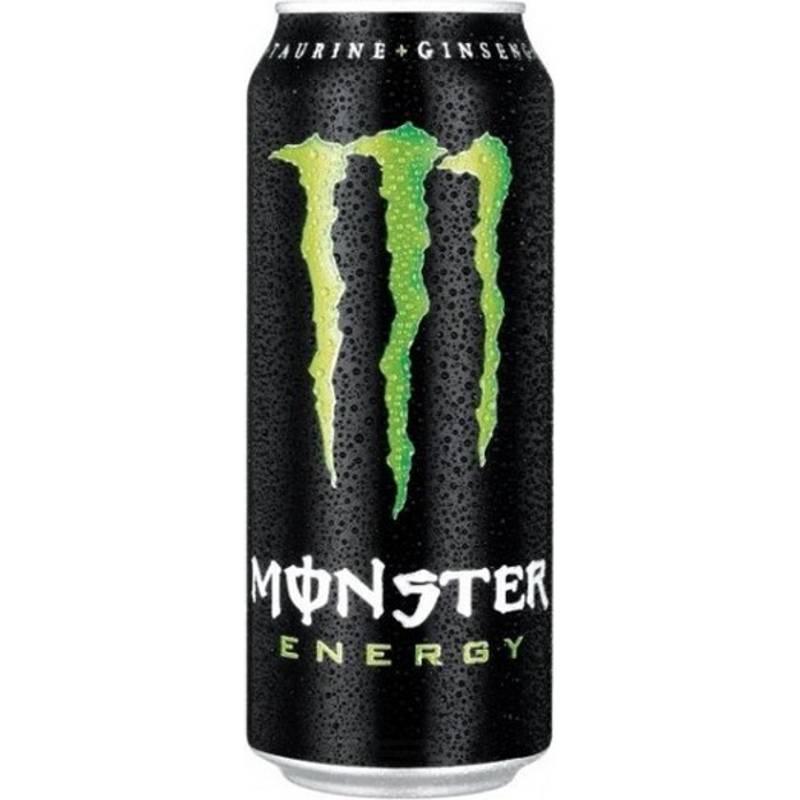
Is Monster Energy Clean? Every Ingredient in the Can, Scanned
Monster Energy lists over twenty ingredients: sugar, glucose, taurine, ginseng, two preservatives, sucralose and caffeine. What each one does and what regulators say.
Product spotlightCluster: Product Spotlightsmonster energy green 16 oz can, every ingredient scannedProduct-focused guide
9/14/2026 · 6 min read · Chris Carrillo · Reviewed by Armin Rad, Co-Founder & CTO, Aurascan · Last reviewed 9/14/2026
Written by Chris Carrillo. Reviewed by Armin Rad, Co-Founder & CTO, Aurascan. It cites 6 sources; use the source list and methodology to check the evidence directly.
Monster Energy Green 16 oz delivers 160 mg of total caffeine alongside 54 grams of added sugars, taurine, B vitamins, and preservatives. Its ingredients are permitted by the FDA and EFSA within standard limits, but the multi-stimulant blend means the whole can, not one serving, is the number to watch.
Key takeaways:
The original 16 oz green can delivers 160 mg of caffeine paired with approximately 54 g of total sugars (sucrose and glucose), supplying 210 calories per can.
Regulators like the US Food and Drug Administration (FDA) and European Food Safety Authority (EFSA) consider functional additives like taurine and D-glucuronolactone safe at standard beverage levels.
Monster blends nutritive carbohydrates with non-nutritive sucralose, which is roughly 600 times sweeter than sucrose, to calibrate its distinct taste profile.
Reading the Nutrition Facts panel helps distinguish whole-can metric totals from legacy dual-serving declarations.
Why people buy it
Monster Energy Original Green in the 16 fl oz can has remained one of the most recognizable energy beverages globally. Consumers frequently reach for it during long work shifts, intensive study sessions, athletic training, or highway driving when they want rapid alertness and fatigue reduction. The distinct sweet-tart citrus profile and carbonation provide an immediate sensory lift.
Beyond basic taste, the brand's proprietary blend promises sustained stamina through combined stimulants and micronutrients. While standard sodas deliver caffeine and sugar alone, energy formulas integrate amino acid derivatives like taurine and botanical extracts such as Panax ginseng and guarana to support energy metabolism and mental focus.
Analysis by Aurascan. Sources are listed on the product page.
What Aurascan found
When evaluating energy drinks, transparency matters more than generic health scores. Aurascan uses an automated verifier backed by databases like Open Food Facts and the USDA to scan every listed ingredient independently, assigning distinct verdicts (Clean, Mixed, or Flagged) rather than an arbitrary black-box rating. Looking across the label in exact descending order reveals how each compound functions inside the beverage matrix.
The base of the drink consists of carbonated water, sugar, glucose, citric acid, and natural flavors. Carbonated water provides effervescence, while the combination of sucrose (table sugar) and glucose supplies rapid carbohydrate energy, accounting for 54 g of carbohydrates per 16 fl oz can. Citric acid acts as an acidulant, imparting tartness and keeping the drink acidic for stability. Natural flavors round out the signature flavor profile without introducing synthetic coloring agents at this stage of the formula.
For the amino acid at the heart of the blend, see our taurine review.
What functional compounds provide the energy boost?
Moving further down the panel reveals the functional energy blend that defines Monster's formula:
Taurine: A naturally occurring amino sulfonic acid involved in bile salt formation, osmoregulation, and cellular membrane stabilization. The European Food Safety Authority (EFSA) concluded in comprehensive safety opinions that exposure to taurine at levels typically present in energy drinks does not pose safety concerns.
Panax Ginseng Root Extract: A traditional herbal extract containing bioactive ginsenosides. It is included to support vitality and cognitive performance, though concentration levels in commercial beverages are generally mild.
L-Carnitine L-Tartrate: A salt of L-carnitine, an amino acid derivative essential for transporting long-chain fatty acids into mitochondria for cellular adenosine triphosphate (ATP) production.
Caffeine: The primary central nervous system stimulant in the formulation, supplied at 160 mg per 16 oz container (approximately 10 mg per fluid ounce). It works by competitively antagonizing adenosine A1 and A2A receptors in the brain, reducing perceived fatigue and elevating alertness, as outlined in clinical literature evaluating energy drink health risks and regulatory overview.
Guarana Seed Extract (Paullinia cupana): A South American climbing plant whose seeds naturally contain caffeine along with theobromine and polyphenols, adding naturally derived xanthines to the total stimulant load.
D-Glucuronolactone and Inositol: D-glucuronolactone is a structural component of connective tissue and naturally occurring carbohydrate metabolite; EFSA's 2009 opinion found that exposure to D-glucuronolactone at the levels used in energy drinks does not raise safety concerns. Inositol is a carbocyclic sugar that plays a foundational role in cellular signaling pathways.
How do sweeteners, acids, and preservatives function?
To maintain shelf stability, balance tartness, and optimize sweetness without relying solely on additional caloric sugars, Monster Energy utilizes targeted stabilizers and secondary sweetening agents:
Sodium Citrate: The sodium salt of citric acid, functioning as a buffer to stabilize pH levels and control perceived acidity.
Color Added: Food-grade coloring agents used to impart the signature appearance of the liquid.
Sorbic Acid and Benzoic Acid: Common antimicrobial preservatives added at controlled levels to inhibit the growth of yeasts, molds, and bacteria, ensuring microbial stability throughout shelf life.
Sucralose: A non-nutritive, high-intensity artificial sweetener derived from chlorinated sucrose. It is roughly 600 times sweeter than sucrose and passes largely unabsorbed through the digestive tract, helping maintain sweetness intensity without adding extra caloric burden.
Salt (Sodium Chloride): Enhances flavor balance and supplies the sodium declared on the Nutrition Facts panel.
B-Vitamin Complex (Niacinamide, Pyridoxine Hydrochloride, Riboflavin, Cyanocobalamin): These synthetic vitamins (B3, B6, B2, and B12) act as essential coenzymes in human cellular energy metabolism pathways, typically at or above the daily reference intake per can; check the panel. Riboflavin also provides a characteristic fluorescent yellowish hue.
As of mid-September 2026, there have been no regulatory bans or status changes for the individual ingredients in Monster Energy Green 16 oz, including caffeine, taurine, D-glucuronolactone, B vitamins, and preservatives, which remain permitted or Generally Recognized as Safe (GRAS) by both the FDA and EFSA. However, the FDA placed caffeine disclosure and beverage labeling guidance on its regulatory priority agenda following continued scrutiny regarding high-caffeine beverage consumption among adolescents, an issue discussed in the NCCIH energy drinks health professional fact sheet. In-depth toxicological reviews also assess safety evaluations of energy drink ingredients across various age brackets. When reviewing the physical can, consider these key checkpoints:
Container vs. Serving Discrepancies: Historically, 16 oz cans listed two 8 oz servings per container. Modern labeling reflects both per-serving and per-can nutritional values; always verify full-can totals on the Nutrition Facts panel.
Total Stimulant Load: Factor in both the 160 mg of added anhydrous caffeine and botanical sources like guarana extract to understand aggregate daily intake relative to the FDA's recommended maximum of 400 mg daily for healthy adults.
Preservative and Additive Sensitivities: Individuals sensitive to benzoic acid or specific non-nutritive sweeteners like sucralose should note their position in the secondary ingredient tier.
Sensitive Populations: Energy drinks are not recommended for children, pregnant or nursing individuals, or people sensitive to caffeine.
What are the scientific limitations?
Current scientific evidence cannot establish uniform physiological responses for every individual, as genetic caffeine metabolism rates (such as variations in the CYP1A2 enzyme), baseline cardiovascular health, and personal tolerance levels vary widely across populations. Governing bodies continue to study the long-term impact of multi-ingredient stimulant combinations.
Aurascan is a free food-label scanner app currently in beta (available via iOS TestFlight, with a waitlist for other platforms). It operates completely independently without brand sponsors, pulling verified data from Open Food Facts and USDA databases so you can see cited, ingredient-level verdicts in seconds. Scan your next can or snack package to see exactly what is inside.
Is Monster Energy Green 16 oz safe for daily consumption?
Regulators such as the FDA and EFSA consider the individual ingredients safe at typical consumption levels for healthy adults. However, health agencies advise moderating daily total caffeine (under 400 mg) and added sugar intake.
How much caffeine is in a 16 oz can of Monster Energy Green?
A standard 16 oz can of Monster Energy Green contains 160 mg of caffeine, which equals 10 mg per fluid ounce and represents 40% of the FDA recommended daily upper limit for healthy adults.
Why does Monster Energy contain both sugar and sucralose?
Combining 54 g of caloric sugars (glucose and sugar) with non-nutritive sucralose (600 times sweeter than sugar) allows the beverage to achieve its targeted sweetness profile without increasing carbohydrate caloric density.
What role does taurine play in energy drinks?
Taurine is an amino sulfonic acid involved in bile salt formation, cellular osmoregulation, and membrane stabilization. EFSA assessments confirm it is safe at standard beverage concentrations up to several thousand milligrams.
Are guarana and ginseng considered stimulants in Monster?
Guarana naturally contains 3% to 5% caffeine by weight along with other methylxanthines, contributing to total stimulant load. Panax ginseng is an herbal botanical traditionally used for stamina, present in minor supplemental amounts.
Who should avoid drinking Monster Energy?
Health authorities recommend that children, adolescents, pregnant or breastfeeding women, and individuals with underlying cardiovascular conditions or caffeine sensitivity avoid high-caffeine energy drinks.
See what is in your label
Aurascan turns product labels into plain-English ingredient explanations and source-backed context.
Celsius Sparkling Peach Vibe is sugar-free and vitamin-fortified, but the label carries sucralose, a caffeine blend and vegetable-juice color. Every ingredient explained.
Carbonated water, 27 g of sugar, 80 mg of caffeine, synthetic taurine, B vitamins, flavors and colors: what each does, what regulators say, and the scan.
We scanned every ingredient in the KIND Peanut Butter Dark Chocolate bar: three sweeteners, palm kernel oil, soy isolate, chicory fiber. What each one does.