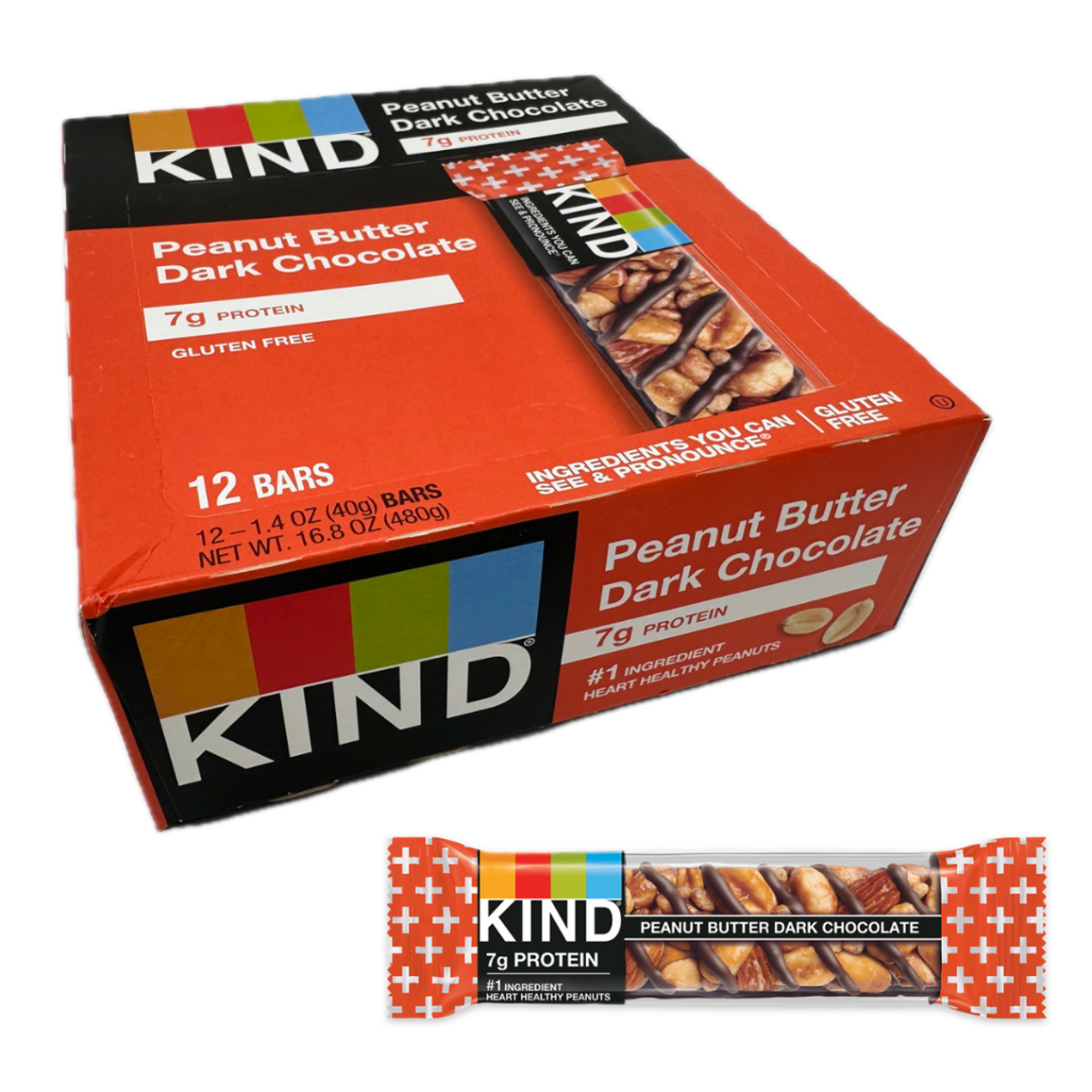
Is the KIND Peanut Butter Dark Chocolate Bar Clean? Scanned
We scanned every ingredient in the KIND Peanut Butter Dark Chocolate bar: three sweeteners, palm kernel oil, soy isolate, chicory fiber. What each one does.
Product spotlightCluster: Product Spotlightsis the kind peanut butter dark chocolate bar clean? every ingredient, scannedProduct-focused guide
9/13/2026 · 8 min read · Chris Carrillo · Reviewed by Armin Rad, Co-Founder & CTO, Aurascan · Last reviewed 9/13/2026
Written by Chris Carrillo. Reviewed by Armin Rad, Co-Founder & CTO, Aurascan. It cites 3 sources; use the source list and methodology to check the evidence directly.
The KIND Peanut Butter Dark Chocolate bar combines whole peanuts and almonds with three added sweeteners, refined palm kernel oil, and chicory root fiber. Major food authorities confirm every ingredient is safe, though whole food purists may question the processed binders and added fats.
Key takeaways:
Whole nuts form the primary ingredient base, supplying plant fats, plant protein, and natural fiber.
The formula combines three distinct sweeteners: glucose syrup, sugar, and honey to bind the ingredients and create flavor.
Added chicory root fiber raises the dietary fiber number on the Nutrition Facts panel, but may cause digestive discomfort in sensitive individuals.
Texture and stability rely on standard food additives like soy lecithin, tapioca starch, and palm kernel oil, all permitted by regulatory authorities.
Available scientific evidence confirms the general safety of these ingredients but cannot establish individual digestive tolerance or long-term personal metabolic outcomes.
As of September 12, 2026, regulatory agencies like the FDA and EFSA maintain safe, authorized status for all components in this formulation.
Why people buy it
Many shoppers reach for KIND bars as a convenient bridge between whole foods and packaged convenience. The prominent transparent packaging and visible whole nuts give the immediate impression of a simple, minimally processed snack. For busy professionals, athletes, and parents, it serves as a portable snack that feels more wholesome than a traditional chocolate confectionery.
Beyond visual appeal, the bar attracts consumers looking for sustained energy without artificial sweeteners or synthetic colors. The combination of dark chocolate, peanut butter, and sea salt delivers a familiar, indulgent taste profile while still being marketed as an everyday nutritional bar.
Kind
Kind Bar - Peanut Butter Dark Chocolate Plus Protein
Analysis by Aurascan. Sources are listed on the product page.
What Aurascan found
To understand the formulation completely, we can examine the specific role, sourcing, and regulatory profile of every major component listed on the packaging.
Is a KIND Peanut Butter Dark Chocolate bar clean?
Guess before you scroll.
Reveal Aurascan's verdict
Aurascan says: Flagged
The main flag is PEANUTS.
Are whole nuts and peanut butter truly the primary ingredients?
The ingredient deck leads with peanuts, accompanied further down by almonds and peanut butter. In regulatory ingredient listings overseen by the U.S. Food and Drug Administration (FDA), ingredients must be listed in descending order of predominance by weight. Having whole nuts as the primary components means the bulk of the bar consists of intact plant matrices, so most of its protein and fat comes from nuts rather than from isolates or refined oils. The exact grams are on the Nutrition Facts panel.
Nuts provide unsaturated fatty acids, plant-based protein, vitamin E, magnesium, and naturally occurring fiber. Unlike ultra-refined snack bases composed primarily of starches or protein flours, whole nuts require mechanical breakdown during digestion, which generally moderates nutrient absorption rates. For individuals comparing snack options, similar whole-food profiles can be seen when evaluating treats like Is Häagen-Dazs Vanilla Bean Clean? Five Ingredients, Scanned, where simple dairy and sugar form the physical base.
In addition to the primary energy and satiety provided by whole peanuts and almonds, the mechanical intactness of tree nuts and legumes provides sustained gastric transit time. When whole nuts are chewed, a portion of the lipid content remains encapsulated within cellular walls, which means energy release is gradual. This stands in contrast to pure nut oils or isolated nut flours. The presence of whole nuts delivers essential micronutrients such as dietary copper, manganese, and phytosterols, reinforcing the nutritional value of the overall product formulation.
How do glucose syrup, sugar, and honey impact the formula?
While whole nuts dominate the recipe, the bar uses a trio of caloric sweeteners: glucose syrup, conventional sugar (sucrose), and honey. The Nutrition Facts panel lists the added sugars these contribute per bar. The FDA daily value for added sugars is 50 grams on a 2,000 calorie diet, so even a modest number per bar adds up across several snacks a day. Food manufacturers frequently combine multiple carbohydrate sources to achieve specific textural and binding properties. Glucose syrup provides moisture retention and flexibility, preventing the bar from becoming brittle, while sugar and honey contribute direct sweetness and cohesive stickiness.
From a metabolic perspective, the human digestive system breaks these sweeteners down into basic monosaccharides, primarily glucose and fructose. The FDA and the European Food Safety Authority (EFSA) classify all three as standard nutritive sweeteners. However, because three distinct forms are distributed across the label rather than a single large dose of table sugar, shoppers should account for the cumulative contribution of added sugars when assessing daily intake.
Combining distinct carbohydrate sources also alters crystallization kinetics during shelf storage. Sucrose on its own tends to form crystalline structures over time, which can make snack bars turn hard or chalky. Glucose syrup acts as an anti-crystallizing agent, preserving the chewy mouthfeel consumers expect. Honey introduces unique aromatic compounds alongside fructose and glucose, contributing a subtle flavor note that complements roasted peanuts and dark chocolate without requiring artificial flavor agents.
Why does the coating use palm kernel oil instead of pure cocoa butter?
The dark chocolate coating and drizzle utilize a combination of palm kernel oil, unsweetened chocolate, alkalized cocoa, and cocoa butter. Cocoa butter is the natural fat extracted from cocoa beans, lending authentic melt-in-the-mouth properties. Palm kernel oil is derived from the seed of the oil palm and is rich in saturated fatty acids, composed of over 80 percent saturated fat, primarily lauric acid.
In confectionery coatings, palm kernel oil is utilized because it has a sharp melting point and high stability at room temperature, preventing the chocolate drizzle from melting in transit or on store shelves. The FDA categorizes palm kernel oil as Generally Recognized as Safe (GRAS) under 21 CFR 184. Regulatory bodies like the European Food Safety Authority monitor dietary saturated fat recommendations, advising consumers that while palm kernel oil is safe and non-toxic, it contributes to overall dietary saturated fat totals.
Palm kernel oil differs fundamentally from palm oil in its lipid architecture. Palm oil is extracted from the fleshy fruit pulp and contains roughly 50 percent saturated fatty acids, whereas palm kernel oil is extracted from the seed kernel and contains upwards of eighty percent saturated fatty acids. This high saturated fat fraction gives it functional solid-fat properties at ambient room temperatures without requiring hydrogenation. Consumers seeking to manage total daily saturated fat intake should evaluate the coating fats alongside their broader dietary patterns.
What do soy protein isolate and soy lecithin do in the bar?
To raise the protein yield without altering texture significantly, the bar incorporates soy protein isolate alongside tapioca starch. Soy protein isolate is produced by defatting soybean flakes and removing the non-protein carbohydrates, yielding an ingredient that is at least 90 percent protein by dry weight. It serves as a neutral, highly concentrated source of amino acids.
Soy lecithin is added in small functional quantities, typically under 1 percent of total formulation weight (often around 0.2 to 0.5 percent), as an emulsifier. Lecithin contains phospholipids that bridge the gap between water-soluble and fat-soluble components, ensuring the cocoa, oils, and syrups remain uniformly blended without phase separation. The FDA GRAS Database designates soy lecithin as Generally Recognized as Safe (21 CFR 184.1400), and the EFSA evaluates it as food additive E 322. Both agencies view it as safe for the general public, though it remains a declared allergen for individuals with specific soy hypersensitivities.
Processing soy flakes into soy protein isolate involves aqueous alkaline extraction followed by isoelectric precipitation and spray drying. This industrial concentration creates a functional powder with complete amino acid availability and minimal flavor interference. Meanwhile, soy lecithin reduces viscosity in molten chocolate coatings during manufacturing, allowing smooth machine application and uniform coverage over the nut cluster base.
Does chicory root fiber cause digestive symptoms?
Chicory root fiber, also known chemically as inulin or oligofructose, is a soluble dietary fiber extracted from the roots of the Cichorium intybus plant. It is widely used in modern packaged foods to elevate the total fiber count without adding significant calories or viscous texture.
Inulin passes through the human upper gastrointestinal tract undigested and reaches the large intestine, where resident microflora ferment it into short-chain fatty acids. Because of this fermentation process, chicory root fiber acts as a prebiotic. According to official FDA Dietary Fiber Guidance, chicory root inulin qualifies as an official dietary fiber for nutrition labeling purposes. However, individual tolerance varies considerably. Clinical literature indicates that rapid consumption of isolated inulin in doses exceeding 5 to 10 grams per serving can lead to mild digestive symptoms, such as bloating, flatulence, or loose stools, particularly in individuals sensitive to fermentable oligosaccharides (FODMAPs).
The degree of digestive sensitivity often corresponds to the specific chain length of the inulin molecules and the baseline composition of the individual microbiome. While short-chain fructooligosaccharides ferment quickly in the proximal colon, longer-chain inulin molecules ferment more gradually across the distal colon. Because ingredient labels list chicory root fiber generically, determining the exact molecular weight distribution from the package alone is impossible, making personal trial and awareness the primary guide for digestive tolerance.
The First Ingredient: Verify whether the first listed item is a whole food (like peanuts or oats) or a refined syrup, isolate, or flour blend.
Multiple Sweeteners: Scan for split sweeteners (such as glucose syrup, tapioca syrup, honey, cane sugar, or brown rice syrup) that appear in several places on the list.
Added Isolated Fibers: Check for inulin, chicory root extract, or soluble corn fiber if you experience gastrointestinal distress from packaged health foods.
Specialty Oils: Identify whether fat sources come purely from whole ingredients and natural butters (like cocoa butter or nut butters) or refined fractions like palm kernel oil.
Fortifying Isolates: Note whether the protein comes naturally from whole nuts and seeds or from isolated fractions like soy or whey protein isolate.
Observing the relative order of binding syrups against whole nuts helps gauge the overall balance between intact food matrices and refined carbohydrates. A bar that lists nuts as its first ingredient provides substantial whole-food nutritional structure, but keeping track of secondary binders and functional texturizers clarifies the complete nutritional picture.
Is the KIND Peanut Butter Dark Chocolate bar considered ultra-processed?
Under standard dietary classification systems like NOVA, products that include isolated protein fractions (soy protein isolate), refined vegetable oils (palm kernel oil), and isolated fibers are categorized as processed or ultra-processed, even when their primary ingredient is whole nuts.
Why does the bar contain both cocoa butter and palm kernel oil?
Cocoa butter supplies authentic chocolate flavor, while palm kernel oil is added to the confectionery coating to maintain structural stability and prevent melting at room temperature.
Can chicory root fiber cause digestive issues?
Yes. Chicory root fiber (inulin) is a fermentable prebiotic fiber. When consumed in significant amounts, bacterial fermentation in the colon can cause gas, bloating, and mild digestive discomfort in sensitive people.
What types of sweeteners are in this KIND bar?
The bar uses three distinct caloric sweeteners: glucose syrup, standard sugar, and honey, which work together to bind the nuts and provide balanced sweetness.
Is soy protein isolate safe for daily consumption?
Soy protein isolate is recognized as safe by regulatory agencies such as the FDA and EFSA, functioning as a concentrated source of dietary plant protein.
What is the primary ingredient by weight?
In accordance with FDA labeling regulations, ingredients are listed in descending order by weight, making whole peanuts the primary ingredient in this formulation.
See what is in your label
Aurascan turns product labels into plain-English ingredient explanations and source-backed context.
Carbonated water, 27 g of sugar, 80 mg of caffeine, synthetic taurine, B vitamins, flavors and colors: what each does, what regulators say, and the scan.
Carbonated water, caramel color, aspartame, phosphoric acid, potassium benzoate, natural flavors, citric acid: what each does, what regulators say, and the scan.