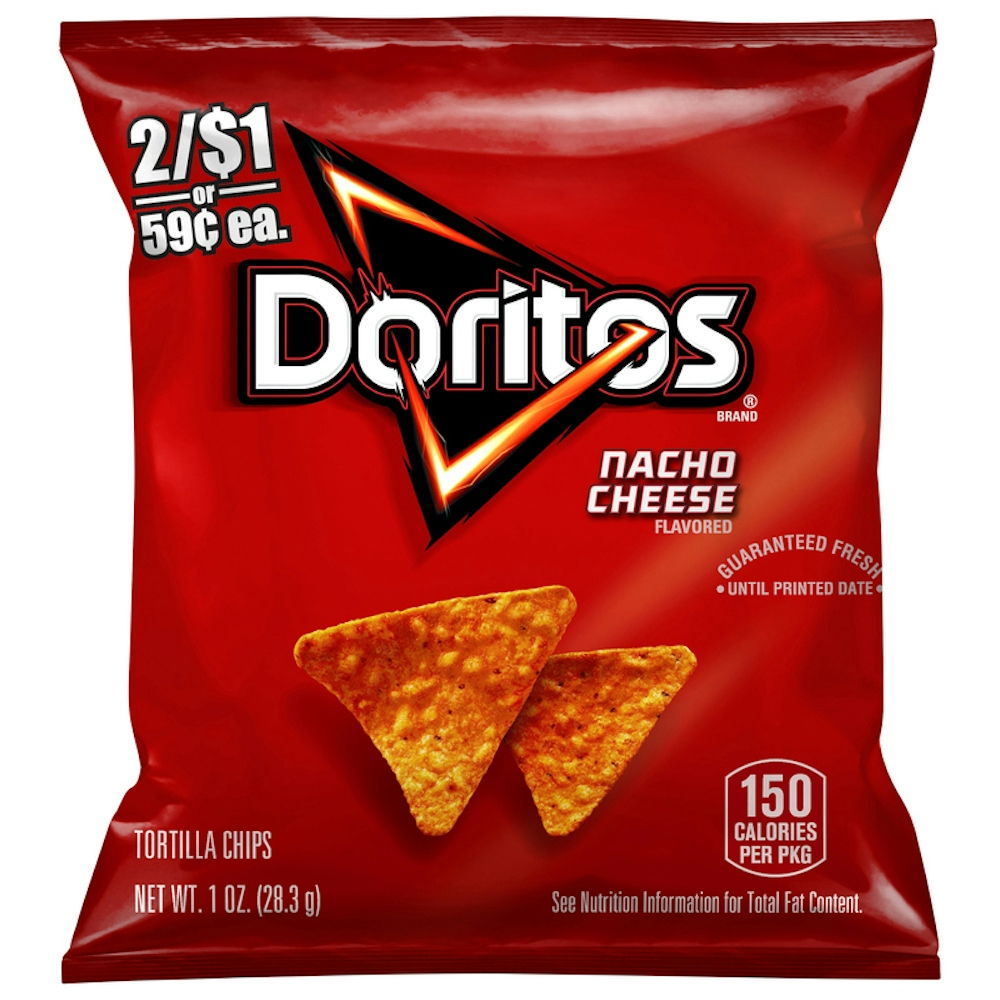
Are Doritos Clean? Every Nacho Cheese Ingredient, Scanned
Doritos Nacho Cheese lists MSG, three certified dyes, two flavor enhancers and several milk ingredients. What each does, and what the FDA dye tracker says.
Written by Chris Carrillo. Reviewed by Armin Rad, Co-Founder & CTO, Aurascan. It cites 7 sources; use the source list and methodology to check the evidence directly.
Doritos Nacho Cheese tortilla chips contain a base of whole corn and vegetable oils paired with savory seasoning, dairy powders, flavor enhancers, and synthetic food dyes. While ingredients like monosodium glutamate (MSG) and disodium ribonucleotides are generally recognized as safe, the product contains common milk allergens and artificial colors (Yellow 6, Yellow 5, Red 40) that face increasing regulatory scrutiny.
Key takeaways:
Doritos Nacho Cheese relies on synthetic dyes (Yellow 6, Yellow 5, and Red 40) that are currently subject to state bans and federal phase-out initiatives.
The intense savory taste comes from a synergistic blend of monosodium glutamate (MSG), disodium inosinate, and disodium guanylate, all of which remain approved food additives.
Multiple dairy derivatives, including whey, cheddar cheese, buttermilk, and Romano cheese, make the chips unsuitable for individuals with milk allergies or strict vegan diets.
The label declares a 28-gram serving; check the Nutrition Facts panel for calories, fat and sodium, since bag sizes and formulations vary.
Aurascan breaks down product formulations ingredient by ingredient to provide clear, evidence-based verdicts rather than opaque, overall health scores.
Why people buy it
Doritos Nacho Cheese tortilla chips are one of the most recognizable snack foods in the world. Consumers gravitate toward them for their unmistakable crunch, bold spice blend, and rich cheesy flavor profile that has remained a pantry and party staple for decades.
Beyond simple convenience, the snack delivers a specifically engineered sensory appeal. The formulation combines salty, tangy, and savory notes that trigger immediate palatability, making it a go-to choice for casual snacking, game days, and quick lunches.
Analysis by Aurascan. Sources are listed on the product page.
What Aurascan found
To understand what goes into every bag, we examine the full ingredient deck listed on the Doritos Nacho Cheese Flavored Tortilla Chips SmartLabel: corn, vegetable oil (corn, canola, and/or sunflower oil), maltodextrin, salt, cheddar cheese, whey, monosodium glutamate, buttermilk, romano cheese, whey protein concentrate, onion powder, corn flour, natural and artificial flavor, dextrose, tomato powder, lactose, spices, artificial color (Yellow 6, Yellow 5, Red 40), lactic acid, citric acid, sugar, garlic powder, skim milk, red and green bell pepper powder, disodium inosinate, and disodium guanylate.
Synthetic food dyes: Yellow 6, Yellow 5, and Red 40
The vibrant orange-red coating on each chip is achieved using three certified artificial color additives: FD&C Yellow No. 6, FD&C Yellow No. 5 (tartrazine), and FD&C Red No. 40. According to regulatory overviews on Color Additives in Foods, these petroleum-derived colorings provide batch-to-batch visual consistency that natural spices alone cannot replicate.
As of mid-September 2026, synthetic dyes have entered a major regulatory transition period. Following California's enactment of the School Food Safety Act (AB 2316), which restricted these synthetic colorings in school-provided foods, the US Food and Drug Administration and HHS announced regulatory updates via the FDA and HHS Phase-Out Initiatives for Synthetic Dyes to eliminate petroleum-based synthetic dyes across the national food supply in favor of authorized natural alternatives. PepsiCo has publicly pledged to work toward removing artificial colors across qualifying product lines as safe, shelf-stable natural replacements are developed.
Flavor enhancers: Monosodium glutamate, disodium inosinate, and disodium guanylate
The powerful umami punch in Doritos Nacho Cheese comes from a deliberate combination of monosodium glutamate (MSG) along with two purine nucleotides: disodium inosinate and disodium guanylate. When used together, nucleotides act synergistically with free glutamates, amplifying savory taste intensity well beyond MSG alone, as described in the Disodium 5'-inosinate Compound Summary.
Despite historical consumer controversy surrounding MSG, the agency clarifies in Questions and Answers on Monosodium glutamate (MSG) that global scientific bodies consistently classify MSG as Generally Recognized as Safe (GRAS). A typical serving contains less than 0.5 grams of added MSG, an amount metabolically indistinguishable from the glutamate naturally found in aged parmesan cheese and ripe tomatoes.
Dairy derivatives and milk allergen sources
Although primarily a corn chip, the seasoning blend contains multiple dairy-derived components. These include cheddar cheese, whey, buttermilk, Romano cheese, whey protein concentrate, lactose, and skim milk.
These ingredients contribute natural dairy acids, creamy mouthfeel, and authentic cheese solids to the dusting powder. However, because these ingredients derive directly from cow's milk, the product carries a mandatory allergen warning for milk. Individuals with severe IgE-mediated milk protein allergies or severe lactose intolerance must avoid this formulation.
Corn base, vegetable oils, and maltodextrin
The structural base of the chip consists of whole corn and corn flour cooked and fried in vegetable oils (corn, canola, and/or sunflower oil). These oils supply the fat declared on the panel, providing the necessary crispness and fat content that carries fat-soluble flavor compounds.
Maltodextrin, a hydrolyzed carbohydrate derived from starch, serves as a dispersion carrier for the seasoning mix. It helps the powdered cheese, spices, onion powder, garlic powder, citric acid, and lactic acid adhere evenly to the surface of each chip without clumping during packaging and transit.
Are artificial food dyes in Doritos safe to consume?
Certified color additives like Yellow 5, Yellow 6, and Red 40 undergo safety evaluations by food safety authorities before receiving market clearance. They are legally approved for use within strictly defined maximum usage limits.
However, clinical research and systematic reviews have highlighted associations between synthetic food dyes and behavioral changes, such as increased hyperactivity, in a subset of sensitive children. These findings prompted warning label requirements in the European Union and accelerated recent legislative bans in US states. While not acutely toxic at approved levels, shifting consumer sentiment and ongoing regulatory reviews are driving major brands toward naturally derived pigments like paprika oleoresin, annatto, and turmeric extract.
Is a bag of Doritos Nacho Cheese clean?
Guess before you scroll.
Reveal Aurascan's verdict
Aurascan says: Flagged
The main flag is Vegetable Oil.
How does the MSG seasoning synergy work in snacks?
The sensory chemistry behind Doritos Nacho Cheese is a classic demonstration of flavor potentiation. Monosodium glutamate binds to T1R1/T1R3 umami taste receptors on the human tongue. When disodium inosinate and disodium guanylate are introduced, they alter the receptor conformation, significantly extending the duration and intensity of the savory signal sent to the brain.
This synergy lets manufacturers build savory depth with less added salt than table salt alone would require.
What are the allergen risks and dietary restrictions?
Consumers managing specific dietary patterns or health conditions should note several key elements on the Doritos Nacho Cheese label:
Milk allergy: The inclusion of whey, buttermilk, skim milk, and real cheeses makes this snack unsafe for those with dairy allergies.
Lactose sensitivity: The presence of whey and lactose may cause discomfort in people with severe lactose malabsorption, though the absolute lactose quantity per single serving is relatively low.
Vegetarian and vegan status: The product is not vegan due to dairy solids, and depending on enzyme sourcing for the cheeses, may not meet strict vegetarian standards.
Gluten considerations: While corn is naturally gluten-free, Doritos Nacho Cheese is not always certified gluten-free due to potential shared manufacturing lines. Always check the specific bag for facility allergen statements.
What to look for on the label
When shopping for seasoned tortilla chips, looking closely at the ingredient deck can help you make an informed choice that aligns with your household's dietary goals:
Check the color source: Look to see if colors are identified by FD&C numbers (e.g., Red 40, Yellow 6) or as natural botanical extracts (e.g., annatto extract, paprika oleoresin, beet juice).
Identify flavor enhancers: Determine whether savory flavors stem from isolated glutamates and nucleotides (MSG, disodium inosinate) or yeast extracts and aged cheese concentrates.
Scan the allergen callout: Confirm whether milk, soy, or wheat are flagged beneath the main ingredient deck.
Consult the Nutrition Facts panel: For exact sodium, saturated fat, total carbohydrates, and caloric values per serving, review the standardized Nutrition Facts panel on the back of the package rather than relying on front-of-pack claims.
Evidence limits and individual sensitivity
Current scientific evidence cannot predict individual adverse reactions to complex food mixtures. While regulatory toxicology establishes general population safety thresholds, individual sensitivities to synthetic dyes, intense flavor additives, or specific dairy proteins vary widely. Long-term health outcomes are determined by overall dietary patterns rather than the occasional consumption of any single processed snack food.
To see a complete, evidence-backed breakdown of the ingredients in your pantry snacks, scan your next label with the Aurascan app today.
Yes, Doritos Nacho Cheese contains monosodium glutamate (MSG) alongside disodium inosinate and disodium guanylate to enhance its savory umami flavor profile. These ingredients are recognized as safe by the FDA and global food safety authorities.
Are Doritos Nacho Cheese chips dairy-free or vegan?
No. Doritos Nacho Cheese contains several dairy-derived ingredients, including cheddar cheese, whey, buttermilk, Romano cheese, lactose, and skim milk. They are not suitable for vegans or individuals with milk allergies.
Which artificial food dyes are in Doritos Nacho Cheese?
The US recipe uses FD&C Yellow No. 6, FD&C Yellow No. 5, and FD&C Red No. 40 to give the chips their characteristic orange-red color.
Are Doritos Nacho Cheese tortilla chips gluten-free?
While the primary grain is corn rather than wheat, Doritos Nacho Cheese is generally not certified gluten-free due to potential manufacturing cross-contact. Individuals with celiac disease should check packaging for specific facility certifications.
Why are artificial dyes being phased out of some snack foods?
Concerns over potential behavioral effects in sensitive children, along with legislative actions such as California's AB 2316 and updated FDA transition timelines, have led regulatory bodies and food manufacturers to prioritize natural color alternatives like paprika and annatto.
See what is in your label
Aurascan turns product labels into plain-English ingredient explanations and source-backed context.
Core Power Chocolate is ultrafiltered milk plus three stabilizers, three sweeteners and lactase. Carrageenan, cellulose gum, stevia, sucralose and Ace-K explained.
Celsius Sparkling Peach Vibe is sugar-free and vitamin-fortified, but the label carries sucralose, a caffeine blend and vegetable-juice color. Every ingredient explained.
Monster Energy lists over twenty ingredients: sugar, glucose, taurine, ginseng, two preservatives, sucralose and caffeine. What each one does and what regulators say.