
Comparisons · September 18, 2026 · 7 min read
Tillamook vs Häagen-Dazs: 5 Ingredients Against 30
Häagen-Dazs Chocolate lists five ingredients. Tillamook Cookies and Cream lists about thirty. Most of that gap is the cookie, not additives.
By Chris Carrillo · Reviewed by Armin Rad, Co-Founder & CTO, Aurascan · September 18, 2026
Every article is checked against primary sources before publication. How we review

Häagen-Dazs uses a minimalist custard base with five basic ingredients, while Tillamook Cookies and Cream reaches roughly thirty entries due primarily to the complex sub-components of baked sandwich cookies. Choosing between them comes down to whether you prioritize a minimalist dairy base or want bakery inclusions protected by food-grade stabilizers during storage.
Key takeaways
- A 30-item ingredient panel often reflects sub-components of inclusions like baked cookies (flour, oils, leavening) rather than chemical additives in the dairy base.
- Häagen-Dazs relies solely on egg yolks and dairy fat for structure, while brands using plant gums (guar, tara, xanthan, locust bean) gain protection against ice recrystallization during home freezer temperature fluctuations.
- Neither a 5-ingredient nor a 30-ingredient label changes the core reality that premium ice cream remains high in saturated fat and added sugar under federal standards.
- Natural colors like annatto and alkalized cocoa serve physical styling and flavor smoothing functions, differing fundamentally from synthetic petroleum dyes.
Which Ice Cream Base Is Cleaner: Five Ingredients or Thirty?
If your primary goal is a traditional, short-label frozen dessert, Häagen-Dazs Chocolate delivers a classic dairy formula made from cream, skim milk, cane sugar, cocoa processed with alkali, and egg yolks. It avoids vegetable oils, thickeners and added starches entirely, and is churned with little air, which is what makes it dense.
If your goal is a textured, bakery-style ice cream, Tillamook Cookies and Cream provides real chocolate cookie pieces folded into a rich dairy base. While its ingredient list contains around thirty separate items, the vast majority represent standard baking ingredients such as enriched flour, palm and soybean oils, leavening, and salt rather than synthetic dairy replacements.
As of September 18, 2026, neither style is classified as unsafe or subject to special regulatory scrutiny by food authorities. Both styles comply with standard federal identity definitions, leaving the choice to your textural preference and label philosophy.
Quiz
Which tub has the cleaner label: Tillamook or Häagen-Dazs?
Guess before you scroll.
Reveal Aurascan's verdict
Aurascan says: It's a tie
How Do Häagen-Dazs and Tillamook Compare on Labels and Ingredients?
Comparing these two cartons illustrates how formulation choices and mix-in ingredients change the length of an ingredient statement.
| Feature | Häagen-Dazs Chocolate | Tillamook Cookies and Cream |
|---|---|---|
| Total Listed Items | 5 ingredients | ~30 ingredients (including sub-items) |
| Dairy Base | Cream, skim milk | Cream, skim milk, milk |
| Emulsifiers | Egg yolks | Egg yolks, soy lecithin |
| Texturizers & Gums | None | Guar gum, tara gum, xanthan gum, locust bean gum, cornstarch |
| Mix-Ins | None (smooth chocolate base) | Enriched flour cookie pieces, palm/soybean oils, invert sugar, baking soda |
| Coloring Agents | Cocoa processed with alkali | Alkalized cocoa, annatto extract |
For a broader look at how short labels stack up against complex formulations in the grocery aisle, explore 5 Ice Creams Scanned: Five Ingredients vs Twenty and see Is Tillamook Cookies and Cream Clean? The Label, Scanned.
Scan preview
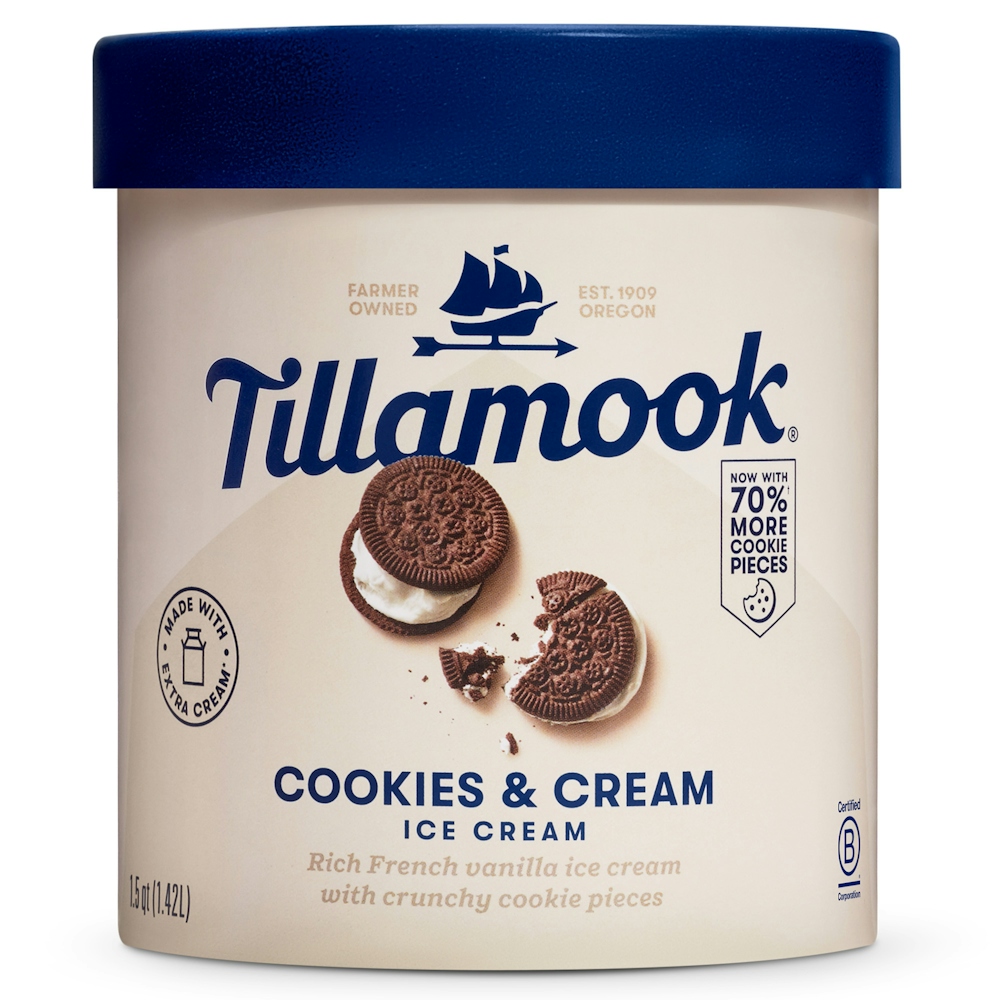
Tillamook
Tillamook Cookies And Cream Ice Cream, 48fl-oz
MILK · SUGAR · ENRICHED FLOUR
Standout ingredient: NIACIN
Analysis by Aurascan. Sources are listed on the product page.
Why Does Tillamook Have 30 Ingredients Compared to Häagen-Dazs?
At first glance, seeing thirty ingredients on a Tillamook carton might suggest a heavily engineered laboratory concoction compared to the five ingredients in Häagen-Dazs. However, reviewing how the Food and Drug Administration mandates ingredient declarations reveals a different story as set out in 21 CFR 135.110.
When a manufacturer adds a pre-baked component like a sandwich cookie into ice cream, federal labeling rules require the declaration of every sub-ingredient inside that cookie. Tillamook's cookie inclusion introduces enriched wheat flour (which legally must list flour, niacin, reduced iron, thiamine mononitrate, riboflavin, and folic acid), palm oil, soybean oil, invert sugar, cornstarch, salt, baking soda, and soy lecithin.
Those cookie components account for most of the entries on the label by themselves. The base ice cream remains a rich dairy formula of cream, milk, sugar and egg yolks. A longer label is not automatically toxic, nor is a short label automatically a health food. Both remain dense, calorie-rich desserts built on saturated dairy fat and added cane sugar. Always consult the Nutrition Facts panel on the back of the carton for precise calorie, sugar, and fat values.
Scan preview
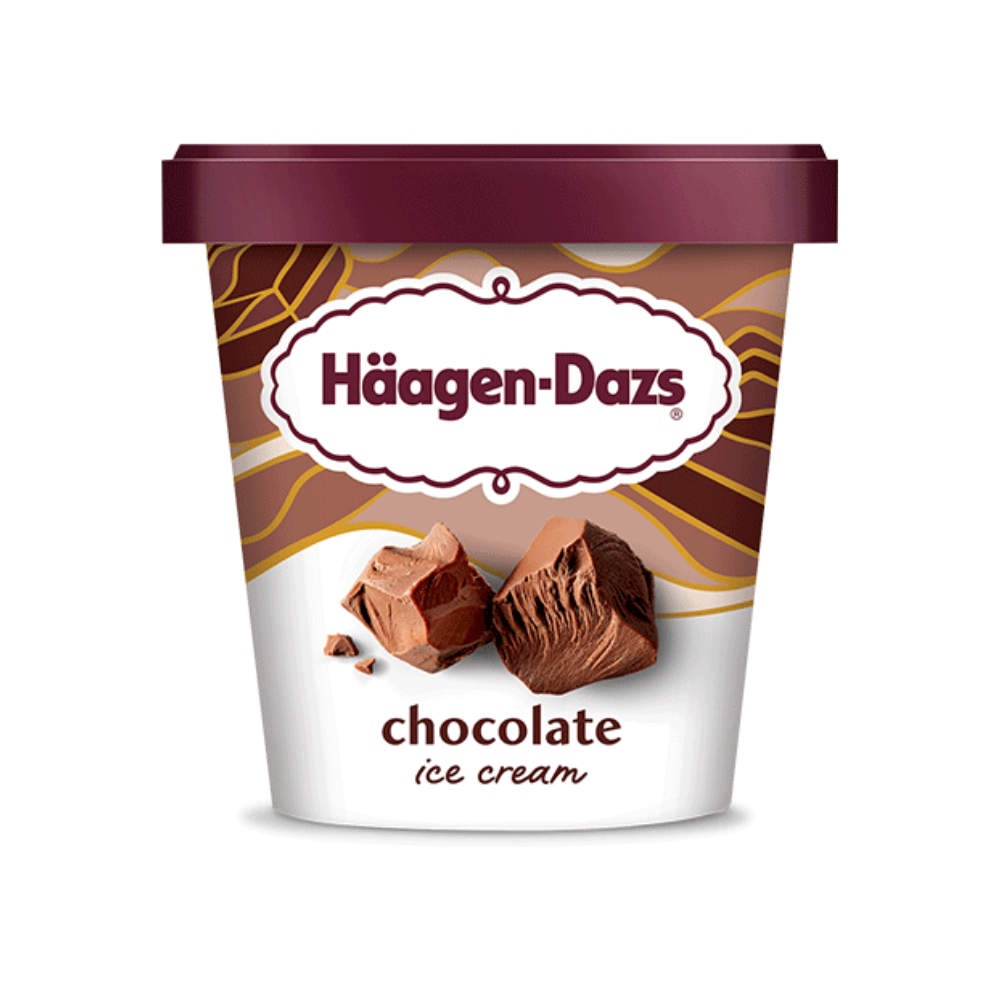
Haagen-Dazs
Haagen-Dazs Chocolate Ice Cream - 14 Fl Oz
CANE SUGAR · SKIM MILK · COCOA PROCESSED WITH ALKALI
Standout ingredient: SKIM MILK
Analysis by Aurascan. Sources are listed on the product page.
Why Do Ice Creams Use Gums, Stabilizers, and Emulsifiers?
Ice cream is an unstable emulsion of water, ice crystals, milk fat globules, air cells, and dissolved sugars. Häagen-Dazs manages this physical structure using high dairy fat content, low overrun (very little whipped air), and natural lecithin from egg yolks. Because it contains no added plant gums, it melts quickly and uniformly, but it is vulnerable to temperature abuse. If a carton melts slightly during the trip home from the supermarket and refreezes, large ice crystals form, resulting in a gritty, crunchy texture.
Tillamook uses a blend of vegetable hydrocolloids, including guar gum, tara gum, xanthan gum, and locust bean gum. These soluble fibers bind free water molecules in the liquid phase of the ice cream. As documented in research on Hydrocolloids in Food Processing and Ice Cream Microstructure, preventing free water from migrating and merging into large ice crystals during home freezer defrost cycles helps maintain a smooth, velvety scoop over weeks of storage.
Hydrocolloids also slow down the melting rate, giving the dessert a heavier body. Scientific reviews in Polysaccharide Gums and Emulsifiers in Dairy Systems indicate these plant-derived hydrocolloids, including ingredients like xanthan gum, are safe and pass through the human gastrointestinal tract largely unabsorbed as dietary fiber. In sensitive individuals, high intakes of specific gums may cause mild digestive gas or bloating. Gums appear at the end of an ingredient list precisely because they are used in very small amounts.
What Additives Are in Alkalized Cocoa, Annatto, and Cookie Mix-Ins?
Both cartons contain specialized functional ingredients designed to enhance flavor, hue, and shelf stability:
- Alkalized Cocoa (Dutch Process): Found in both products, this is cocoa powder treated with a food-grade alkali solution (such as potassium carbonate). This process reduces natural acidity, mellows bitter flavor notes, darkens the color to a rich brown, and helps cocoa particles disperse evenly in liquid.
- Annatto: Used in Tillamook, annatto is a plant-derived food color extracted from the seeds of the achiote tree (Bixa orellana). It imparts a creamy, natural yellow hue. Unlike synthetic petroleum-derived dyes like Yellow 5 or Red 40, annatto is exempt from certification under FDA regulations.
- Soy Lecithin: Present in Tillamook's cookie inclusion, soy lecithin is a naturally occurring lipid mixture that acts as an emulsifier, blending fats and water smoothly in the baked dough.
- Citric Acid: A naturally occurring organic acid used in minute quantities in the baked pieces to adjust pH balance and maintain shelf freshness.
Evidence cannot establish universal digestive tolerance for every individual; consumers with specific allergies to soy or wheat must check packaging declarations carefully, as cookie mix-ins introduce common allergens not found in plain dairy formulations.
What Are the Legal Standards of Identity for Ice Cream?
In the United States, the FDA enforces a strict Standard of Identity for ice cream under federal food law. To be legally sold as "ice cream," a product must contain:
- Not less than 10 percent milkfat by weight.
- Not less than 20 percent total milk solids.
- A finished weight of no less than 4.5 pounds per gallon, preventing manufacturers from selling whipped air as ice cream.
Both are labelled "ice cream" rather than "frozen dairy dessert," which is itself the signal that they meet that milkfat floor. The primary regulatory difference lies in formulation choice rather than legal grade. Häagen-Dazs opts for French custard-style stabilization via egg yolk solids, whereas Tillamook pairs dairy fat and egg yolks with FDA-authorized plant gums for structural resilience.
Which Ice Cream Should You Pick Based on Your Dietary Priorities?
Choosing between Häagen-Dazs and Tillamook depends on your personal priorities for texture, pantry simplicity, and dietary preferences:
- Choose Häagen-Dazs if: You prefer a pure custard melt, prioritize a five-ingredient panel without vegetable gums or seed oils, and consume your pints quickly before freezer frost can compromise texture.
- Choose Tillamook if: You want loaded baked mix-ins like cookies and cream, prefer an elastic, slow-melting scoop, and need an ice cream that resists crystallization in a frequently opened freezer.
- Avoid both or limit intake if: You are monitoring saturated dairy fat or added sugar consumption, or have dairy allergies or lactose intolerance. Those with celiac disease or severe wheat sensitivities must avoid inclusion flavors like cookies and cream entirely.
Try Aurascan
See what is really in the food you buy.
Common questions
- Why does Tillamook Cookies and Cream have 30 ingredients?
- Most of the 30 listed items come from the pre-baked sandwich cookie pieces folded into the ice cream. Under FDA rules, all sub-ingredients of the cookie - such as enriched flour, palm oil, leavening, and salt - must be individually listed on the carton.
- Does Häagen-Dazs use any gums or artificial stabilizers?
- Traditional Häagen-Dazs flavors like Chocolate, Vanilla, and Coffee do not use added gums like guar gum, carrageenan, or xanthan gum. They rely entirely on dairy fat, egg yolks, and low whipped air for stability.
- What is alkalized cocoa on an ice cream label?
- Alkalized cocoa, also called Dutch-processed cocoa, is cocoa powder treated with an alkaline solution to reduce natural acidity, darken its color, and create a smoother, less bitter chocolate flavor.
- Is annatto in ice cream safe?
- Annatto is a natural food color extracted from the seeds of the achiote tree. It is authorized by the FDA and EFSA to provide a creamy yellow color and is not a synthetic petroleum-based dye.
- Why do ice creams use guar gum and locust bean gum?
- Vegetable gums bind free water inside the ice cream base. This prevents water molecules from merging into large, crunchy ice crystals when cartons experience temperature changes during freezer storage.
- Is ice cream with fewer ingredients healthier?
- A shorter ingredient list does not make an ice cream a low-calorie or low-fat food. Five-ingredient ice creams still contain substantial amounts of cream, dairy saturated fat, and added cane sugar.
Sources
- Hydrocolloids in Food Processing and Ice Cream Microstructure (pmc.ncbi.nlm.nih.gov)
- Polysaccharide Gums and Emulsifiers in Dairy Systems (pubmed.ncbi.nlm.nih.gov)
- Food Additive Status List (fda.gov)
- Added Sugars on the Nutrition Facts Label (fda.gov)
In this series
Guide
5 Ice Creams Scanned: Five Ingredients vs TwentyGuide
Fanta Orange vs Sprite: Why One Has Dyes and One Doesn'tGuide
Is the Barebells Chocolate Dough Bar Clean? ScannedGuide
Is Tillamook Cookies and Cream Clean? The Label, ScannedGuide
Is Fanta Orange Clean? Every Ingredient, ScannedGuide
FDA's Front-of-Package Nutrition Box Is Still Not Final
Related guides
Comparisons
RYSE Loaded Protein vs Core Power: Powder vs Shake, Label by LabelBoth lean on sucralose, acesulfame K and carrageenan, but one is whey powder with MCT and inulin, the other ultra-filtered milk. Compared amid the heavy-metal debate.
Latest News
Does Stevia Spike Insulin? New Trials and an EFSA Reb M OpinionTwo September 2026 trials found no insulin or blood sugar effect from stevia or acesulfame-K, and EFSA cleared a new Reb M process. The caveats.
Latest News
Graziers Raw Milk Cheese Recall: E. coli Outbreak Sickens 13Graziers raw milk cheddar and jack cheeses were recalled after an E. coli O26 outbreak hit 13 people, most of them 5 or younger. What to check.
Try it on your own groceries
Scan your next label with Aurascan
Point the camera at any ingredient list and get the same evidence-graded read you see here.
Open the scannerLabel-reading intel, weekly.
What changed on food labels this week — bans, recalls, and new guides.