Written by Chris Carrillo. Reviewed by Armin Rad, Co-Founder & CTO, Aurascan. It cites 6 sources; use the source list and methodology to check the evidence directly.
Five-ingredient pints rely on high milkfat and egg yolks for structure, while twenty-ingredient cartons add plant gums, emulsifiers, and bakery sub-recipes to survive temperature swings. Both fulfill federal identity rules, but understanding these additives clarifies label differences before you reach the checkout aisle.
Key Takeaways
Under the FDA standard of identity 21 CFR section 135.110, true ice cream must contain at least 10 percent milkfat, but brand ingredient counts vary widely from 5 to over 20 components.
Short-ingredient pints rely exclusively on dairy fat and egg yolk lecithin for emulsification, whereas larger cartons often add mono- and diglycerides or carrageenan to resist heat shock.
Bakery inclusions like cookie dough and crushed sandwich cookies dramatically expand ingredient lists by introducing enriched wheat flour, vegetable oils, and soy lecithin.
Higher ingredient counts reflect functional texture control, shelf stability, and complex mix-ins rather than regulatory violations or unsafe additive profiles.
How Did We Select and Evaluate These Ice Cream Labels?
To understand what drives the length of an ice cream label, we evaluated five recognizable products across two distinct categories: ultra-simple base formulas and complex formulations with bakery inclusions or frozen novelties. We analyzed their ingredient statements side by side to see how dairy ratios, stabilization systems, and mix-in recipes alter the final panel.
Every additive reviewed across these products, from locust bean gum to mono- and diglycerides, remains permitted under U.S. Food and Drug Administration (FDA) standards and European Food Safety Authority (EFSA) additive frameworks as of mid-September 2026; the differences are formulation strategy, not safety status.
Our evaluation focuses on four key label criteria:
Base dairy structure: The primary sources of cream, skim milk, and dairy solids.
Emulsification method: Natural egg yolk lecithin versus manufactured mono- and diglycerides.
Texture stabilization: The presence of vegetable gums, carrageenan, or starches designed to prevent ice crystal formation.
Mix-in complexity: How bakery components introduce multi-layered sub-ingredients like enriched flour, palm oil, and soy lecithin.
Analysis by Aurascan. Sources are listed on the product page.
1. Häagen-Dazs Vanilla Bean (5 Ingredients)
Häagen-Dazs Vanilla Bean is one of the classic examples of minimalist ice cream manufacturing. Its ingredient statement contains just five basic items: cream, skim milk, cane sugar, egg yolks, and vanilla extract (with ground vanilla beans).
This pint makes our list as the benchmark for traditional custard-style formulation. Because it is a high-milkfat, low-overrun formula (very little air is whipped in), it achieves a dense, scoopable body without synthetic thickeners. The naturally occurring lecithin in egg yolks acts as the sole emulsifier, holding water and dairy fat molecules in suspension.
When reviewing this label, look for the absence of gums and starches. The trade-off for a five-ingredient list is vulnerability to temperature abuse: if this pint melts slightly during the drive home and refreezes, it will develop noticeable ice crystals faster than stabilized formulas.
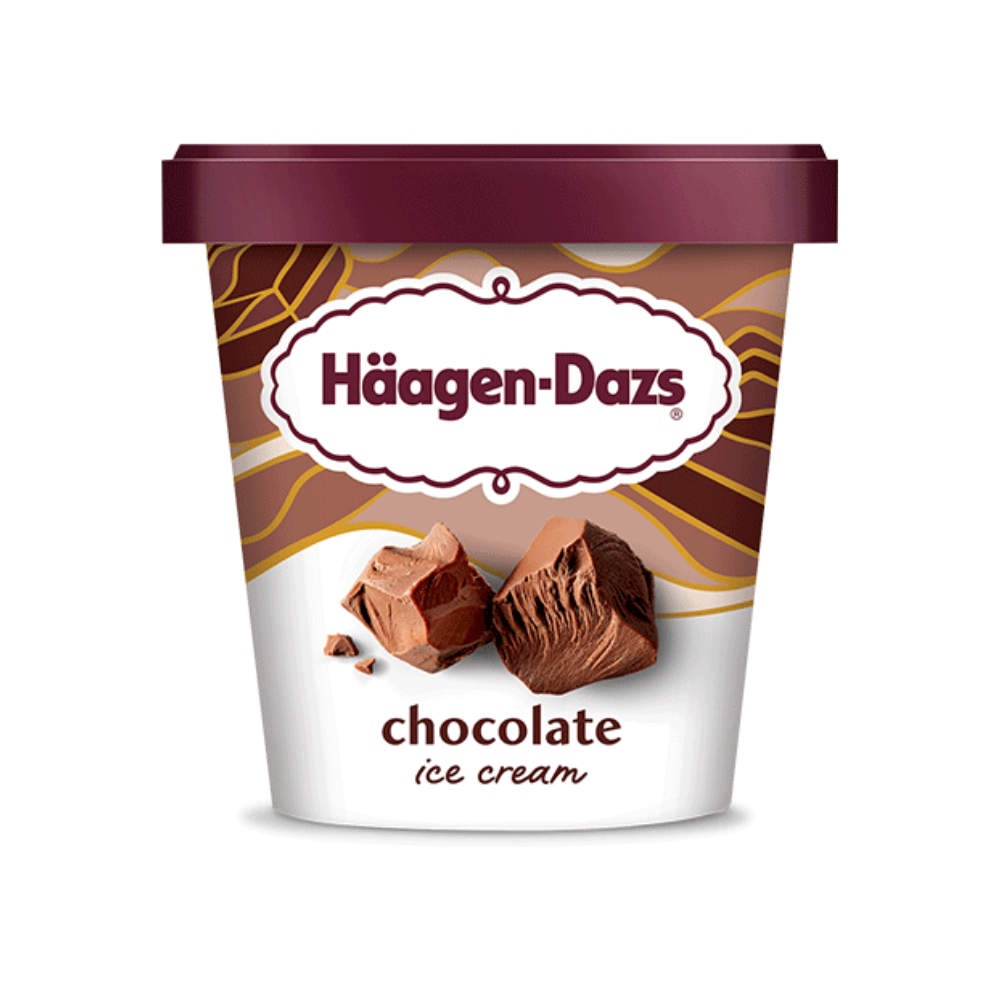
2. Häagen-Dazs Chocolate (5 Ingredients)
Sharing the same minimalist philosophy, Häagen-Dazs Chocolate uses cream, skim milk, cane sugar, cocoa processed with alkali, and egg yolks. This formula demonstrates how a classic flavor profile can be achieved without artificial flavors, modified starches, or vegetable oils.
The inclusion of Dutch-process cocoa (cocoa processed with alkali) neutralizes the natural acidity of the cocoa bean, yielding a darker color and milder, smoother chocolate flavor. Egg yolks once again provide the necessary surface-active fats to bind water and butterfat.
On the label, notice that cocoa replaces the vanilla bean specks while maintaining the five-ingredient threshold. For consumers checking for clean label simplicity, this represents an unadorned dairy formulation that relies entirely on high milkfat percentages for rich mouthfeel.
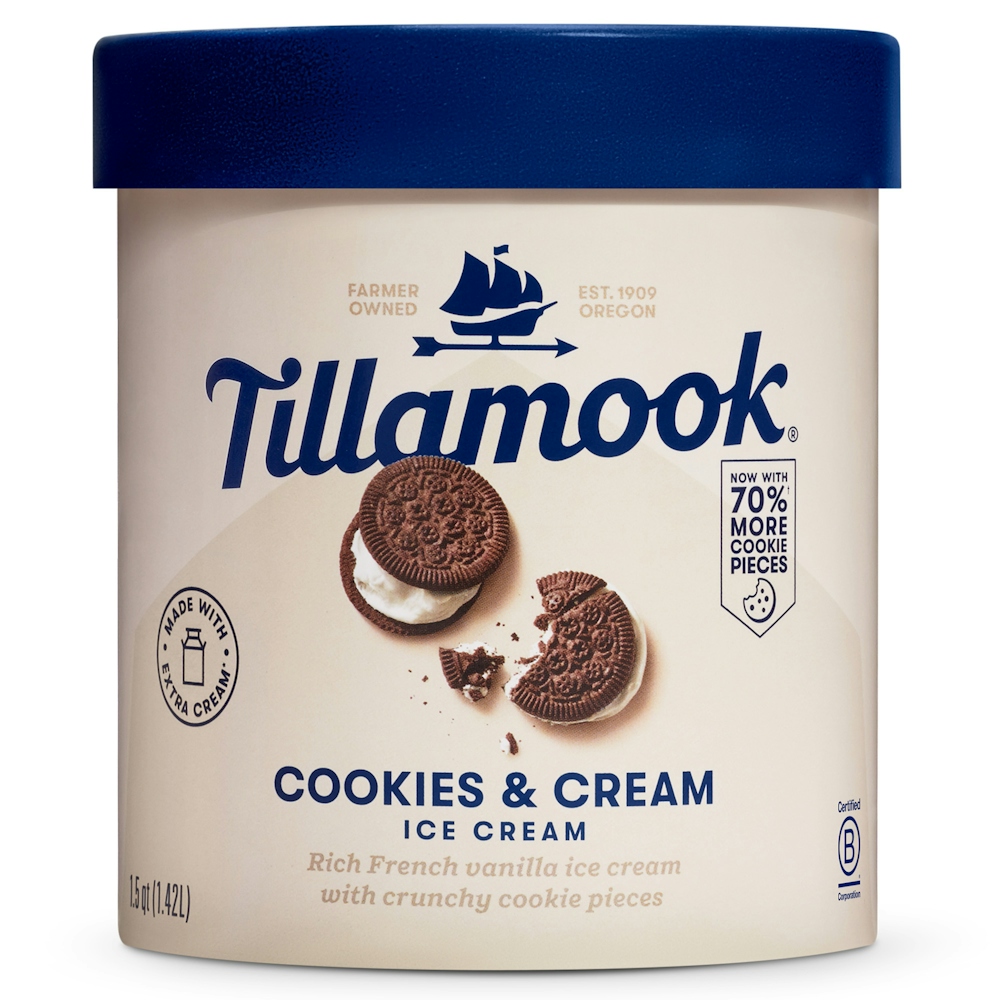
3. Tillamook Cookies & Cream (16+ Ingredients)
Moving into large family cartons, Tillamook Cookies & Cream features a significantly longer ingredient list that typically exceeds sixteen distinct components. The base lists cream, skim milk, milk, sugar, egg yolks and plant gums, combined with a distinct sub-ingredient list for the chocolate sandwich cookies.
This product makes our list because it illustrates how mix-ins multiply label length. The cookie pieces alone introduce enriched wheat flour (flour, niacin, reduced iron, thiamine mononitrate, riboflavin, folic acid), sugar, palm oil, cocoa processed with alkali, leavening, salt, and soy lecithin.
When examining cartons like this, check the parenthetical ingredient statements. The base ice cream remains relatively simple with dairy and plant gums, but the added bakery items bring their own processing aids, leaveners, and fats onto the Nutrition Facts panel.
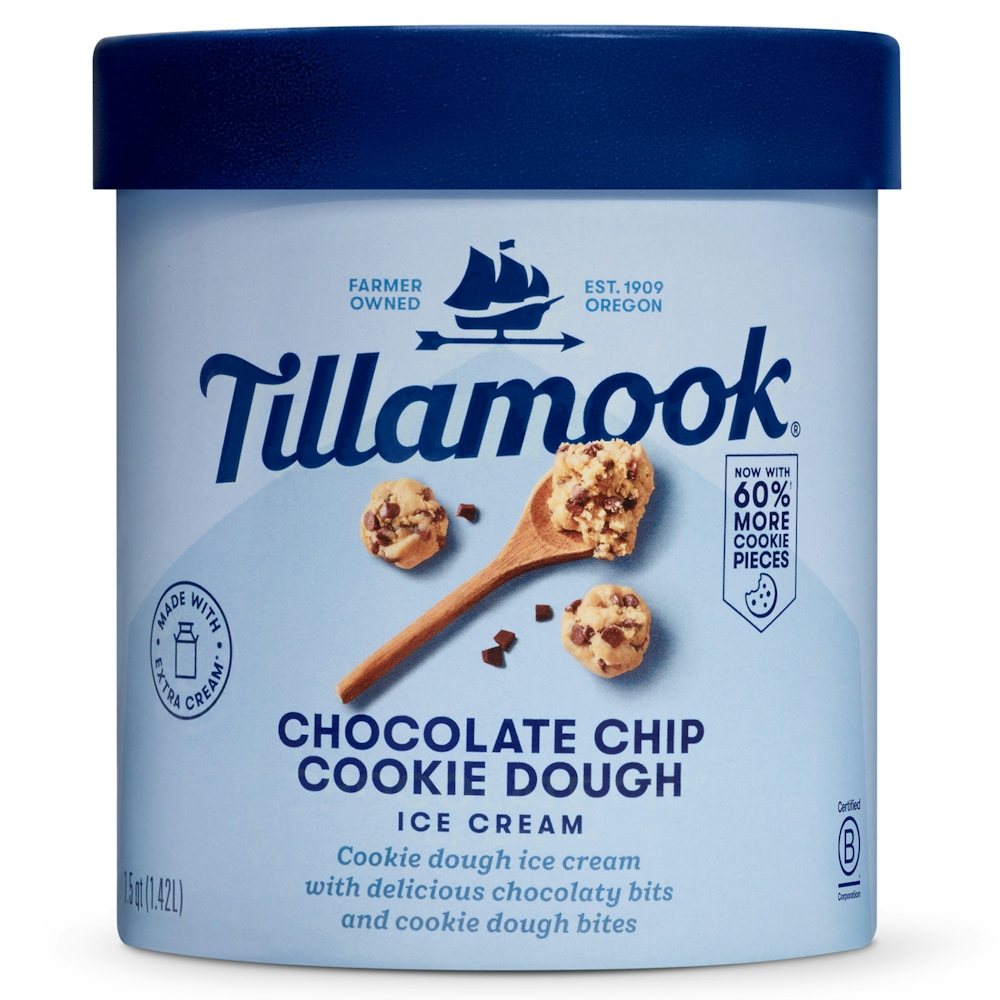
Tillamook Chocolate Chip Cookie Dough routinely lists twenty or more individual ingredients once all sub-components are fully declared. Alongside the standard dairy base, it incorporates separate sub-recipes for both chocolate chip cookie dough chunks and chocolate flakes.
This formula earned a spot because it highlights the compounding effect of multi-inclusion desserts. The cookie dough inclusion typically lists wheat flour, brown sugar, butter, chocolate chips (sugar, chocolate liquor, cocoa butter, soy lecithin), salt, and natural flavor. Meanwhile, the base relies on plant gums to keep the large 48-ounce carton smooth throughout months in home freezers.
On this carton label, look closely at allergen disclosures. With wheat, dairy, eggs, and soy present across multiple inclusions, cross-contact controls and clear parenthetical declarations are critical for individuals with food sensitivities. For those tracking processed additives, similar ingredient compounding can be seen when reviewing Is Core Power Clean? Every Ingredient in the Shake, Scanned.
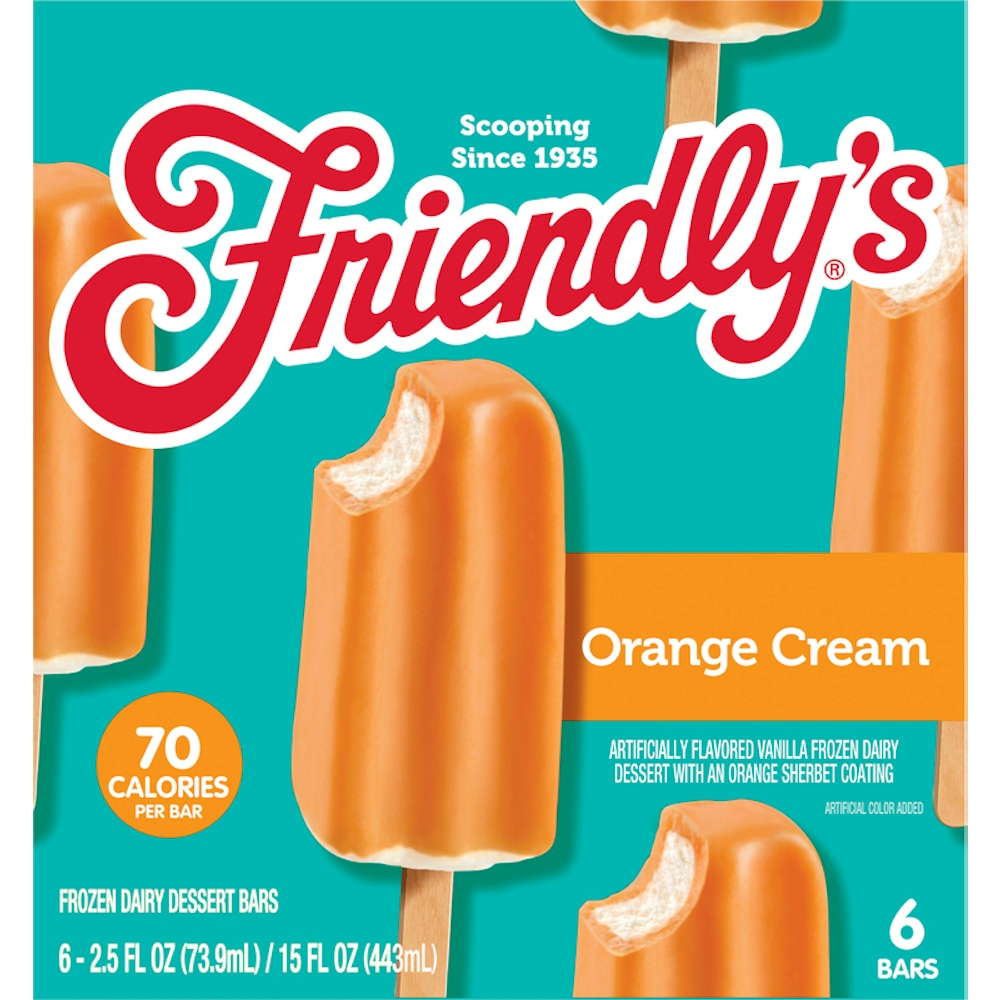
Friendly's Orange Cream Bars represent a different category: frozen novelties that combine an ice cream core with a sherbet or flavored ice shell. The combined ingredient deck contains skim milk, water, sugar, corn syrup, cream, high fructose corn syrup, whey, citric acid, mono- and diglycerides, guar gum, locust bean gum, cellulose gum, carrageenan, annatto color, Red 40, Yellow 6, and artificial flavors.
This novelty makes the list to illustrate why multi-additive formulations exist in commercial freezing. Novelty bars on wooden sticks experience rapid temperature shifts when taken in and out of home freezers. Corn syrup and high fructose corn syrup lower the freezing point to prevent rock-hard textures, while a robust gum blend (guar, locust bean, cellulose, carrageenan) creates a protective matrix that prevents dripping as the outer shell melts.
When scanning novelty bars, check for synthetic color additives and bulk sweeteners. Readers monitoring color regulations in packaged foods may also want to read Red 3 Has Four Months Left in U.S. Food: What to Check for broader regulatory context on certified food dyes.
What Does the FDA Standard of Identity 21 CFR § 135.110 Actually Require?
The legal definition of ice cream in the United States is tightly controlled by federal regulation. According to Registrar Corp's regulatory review, products must meet compositional baselines codified in 21 CFR § 135.110:
Total Milkfat: Must contain not less than 10 percent milkfat by weight (or 8 percent when bulky flavoring ingredients such as fruit, nuts, or chocolate pieces are added).
Total Milk Solids: Must contain not less than 20 percent total milk solids by weight.
Weight per Gallon: The finished product must weigh not less than 4.5 pounds per gallon, preventing manufacturers from selling excessive whipped air as ice cream.
If a product fails to meet the 10 percent milkfat threshold, often because milkfat has been replaced with vegetable oils or skim milk solids, it cannot legally be labeled ice cream. Instead, you will see terms like frozen dairy dessert or dairy dessert on the front panel. Both 5-ingredient pints and 20-ingredient cartons can fully meet the 10 percent standard; the differences lie in physical shelf-life design rather than legal compliance.
Why Are Stabilizers, Emulsifiers, and Gums Added to Large Cartons?
The functional difference between minimalist pints and long-ingredient cartons comes down to food physics. Ice cream is an unstable emulsion consisting of ice crystals, air bubbles, and liquid syrup suspended in milkfat. Over time, fluctuating storage temperatures cause small ice crystals to melt and recrystallize into larger, gritty ice grains, a process known as heat shock.
Vegetable Gums (Guar Gum, Locust Bean Gum, Tara Gum): Derived from seeds, these hydrocolloids are added at well under one percent of the formula to absorb unbound water, increasing the mix viscosity and slowing down water molecule migration during temperature swings.
Carrageenan: Extracted from red seaweed and used in very small concentrations, carrageenan interacts with dairy milk proteins (casein micelles) to prevent phase separation (wheying off) during storage.
Mono- and Diglycerides: Fatty-acid emulsifiers added in small amounts that displace dairy proteins from fat globules, promoting controlled fat agglomeration as outlined in the University of Guelph emulsifier guide to hold air bubbles firmly in place and create a smooth, dry extrusion texture.
While these additives are recognized as safe by regulators, some consumers prefer to avoid them due to personal digestive tolerances or a preference for culinary-style kitchen ingredients. For more on how additive decks vary across pantry staples, see our analysis on 5 High-Protein Products Scanned: Fage to Barebells.
Why Do Bakery Inclusions Multiply Ingredient Counts So Rapidly?
A common misconception is that a 20-ingredient ice cream contains twenty different chemical preservatives. In reality, bakery mix-ins account for the vast majority of extended label lengths.
When an ice cream brand adds chocolate chip cookie dough, brownie bites, or crushed sandwich cookies, FDA labeling rules require every sub-component of that inclusion to be declared in descending order of predominance. A single baked cookie chunk brings enriched flour, multiple leavening agents, several sugars, and specialized shortening oils into the final statement.
Furthermore, bakery inclusions must be formulated with lower water activity and specific fat profiles so they remain chewable rather than freezing rock-solid inside the frozen ice cream matrix. This engineering requires specialized plant oils and soy lecithin, naturally expanding what would otherwise be a 6-ingredient base into a 22-ingredient label.
How Should You Use This List When Shopping in the Freezer Aisle?
When shopping for frozen desserts, use this quick checklist to navigate the ingredient deck:
Check the Legal Name: Confirm whether the carton states Ice Cream or Frozen Dairy Dessert below the brand name.
Identify the Fat Source: Look for cream and milk at the top of the deck rather than vegetable oil blends or whey concentrates.
Evaluate the Emulsifiers: If you prefer whole-food binders, look for egg yolks; if you need long shelf stability in a large tub, expect gums and mono-diglycerides.
Break Down the Inclusions: Read parenthetical brackets separately to distinguish the base ice cream from bakery components.
Consult the Nutrition Panel: Always review the Nutrition Facts panel for official caloric, saturated fat, and total sugar values rather than guessing based on ingredient count alone.
It is important to state clearly what scientific evidence cannot establish: current nutrition research does not demonstrate that consuming approved food gums or mono- and diglycerides causes harm in healthy populations at standard dietary exposure levels. Individual digestive responses vary, and long-term additive interactions remain an active area of independent dietary study.
To see the full breakdown of your favorite pint or carton, you can scan the barcode yourself using the Aurascan app.
Why do some ice creams have only 5 ingredients while others have 20?
Pints with 5 ingredients use high milkfat and egg yolks to achieve stability naturally, which requires careful temperature storage. Cartons with 20 or more ingredients usually contain vegetable gums to prevent ice crystal formation and bakery inclusions (like cookie dough) that carry long sub-ingredient decks.
What is the difference between ice cream and frozen dairy dessert?
Under FDA 21 CFR section 135.110, true ice cream must contain at least 10 percent milkfat and weigh at least 4.5 pounds per gallon. Products that fail to meet these thresholds, often due to higher air content or lower dairy fat, must legally be labeled as frozen dairy dessert.
Are gums like guar gum and locust bean gum harmful in ice cream?
No. Regulators including the FDA and EFSA classify vegetable gums like guar gum, locust bean gum, and tara gum as safe food additives. They are plant-derived fibers used in tiny quantities (usually under 0.5 percent) to absorb water and keep ice cream smooth.
Why are mono- and diglycerides added to ice cream?
Mono- and diglycerides are emulsifiers that help fat globules partially coalesce and trap air bubbles during churning. This creates a creamier texture, prevents the product from melting too quickly, and maintains structure over months of freezer storage.
Do bakery inclusions make ice cream less healthy?
Inclusions like cookie dough, brownies, and waffle cones do not necessarily make an ice cream less safe, but they add refined wheat flour, vegetable oils, and additional sugars. Consumers should review the Nutrition Facts panel for specific dietary values.
See what is in your label
Aurascan turns product labels into plain-English ingredient explanations and source-backed context.
Fage 0% yogurt, Core Power shake, Ryse protein powder, Barebells and KIND bars, scanned: carrageenan, maltitol, sucralose, acesulfame K and gums explained.
Doritos, Pringles Hot Honey, Baked Lay's, Stacy's pita chips and SkinnyPop, scanned line by line: dyes, MSG, enriched flour, added sugar and one three-ingredient bag.
Diet Coke, Sprite, Fanta Orange, Fanta Pineapple and Fresca, label by label: which sweetener, acid, dye and preservative each one uses and what regulators say.