Is Soy Lecithin Safe? Uses, Allergy Facts, and Label Names
Learn what soy lecithin is, why it is added to chocolate and protein bars, its FDA and EFSA safety status, and how it affects people with soy allergies.
Written by Chris Carrillo. Reviewed by Armin Rad, Co-Founder & CTO, Aurascan. It cites 6 sources; use the source list and methodology to check the evidence directly.
Soy lecithin is a widely used food additive derived from crude soybean oil that acts as an emulsifier to blend fats and liquids. Regulators like the FDA and EFSA recognize it as safe with no numerical daily intake limit. Because refining strips nearly all protein, it rarely triggers allergic reactions.
Key takeaways:
Soy lecithin is a complex mixture of phospholipids extracted during raw soybean oil refining to keep immiscible ingredients from separating.
It is classified as Generally Recognized as Safe (GRAS) by regulators and authorized as food additive E 322 in the European Union.
Chocolate, baked goods, and snack bars rely on soy lecithin to maintain a smooth texture, control viscosity, and extend shelf life.
The degumming and refining process strips away most soy proteins, meaning it rarely triggers reactions, though food manufacturers must still declare it on allergen statements.
Sunflower lecithin, canola lecithin, and egg yolk lecithin serve as common non-soy alternatives in clean-label formulations.
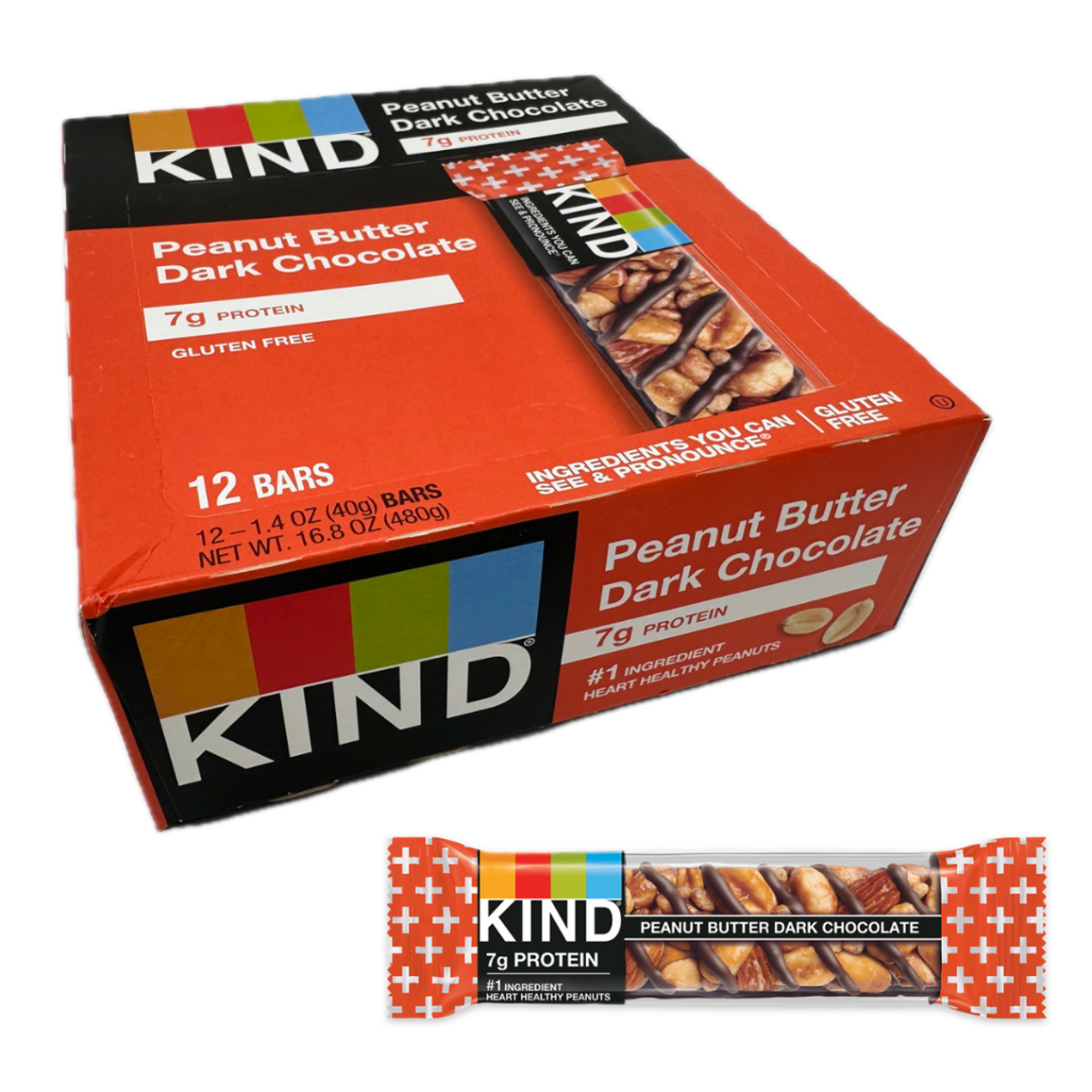
Is a KIND Peanut Butter Dark Chocolate bar clean?
Guess before you scroll.
Reveal Aurascan's verdict
Aurascan says: Flagged
The main flag is PEANUTS.
What Is Soy Lecithin and How Is It Made?
Lecithin is an umbrella term used in biochemistry and food science to describe a naturally occurring group of fatty substances known as phospholipids. These specialized lipid compounds are found in plant tissues, egg yolks, and animal cells. In biological systems, phospholipids serve as structural building blocks for cell membranes, possessing a unique amphiphilic chemical structure characterized by a hydrophilic (water-attracting) phosphate head and lipophilic (fat-attracting) fatty acid tails. This dual affinity allows lecithin to interact simultaneously with aqueous and lipid phases in food formulations.
Commercial soy lecithin is derived directly from raw soybeans during industrial vegetable oil refining. The initial stage begins by cleaning, dehulling, cracking, and flaking raw soybeans to extract crude soybean oil, typically using food-grade hexane as a solvent. Once the crude oil is collected, it undergoes an essential separation process known as water degumming. Warm water or steam is carefully introduced into the crude oil, which hydrates the polar phospholipids. As these molecules absorb water, they swell, become insoluble in the nonpolar triglyceride oil, and precipitate out as a dense, gelatinous sludge.
High-speed industrial centrifuges then separate the hydrated lecithin sludge from the clarified vegetable oil base. The recovered lecithin is transferred to vacuum dryers to remove remaining moisture, followed by filtration to eliminate fine seed particles. In some manufacturing lines, the material is treated with small amounts of food-grade hydrogen peroxide to achieve a lighter, standardized golden color and uniform viscosity. The finished commercial product consists of a concentrated blend of phosphatidylcholine, phosphatidylethanolamine, phosphatidylinositol, phosphatidic acid, and approximately 30% to 35% residual soybean triglycerides.
Why Is Soy Lecithin in Chocolate and Protein Bars?
In packaged food manufacturing, oil and water naturally resist permanent mixing due to thermodynamic forces. Without an active emulsifying agent, processed foods quickly separate into greasy oily films and watery layers, creating unappealing visual textures, surface fat bloom, and poor mouthfeel. Soy lecithin functions as an interfacial mediator, aligning its hydrophobic tails with fat molecules and its hydrophilic head with water or sugar crystals, thereby stabilizing the overall matrix.
In confectionery and chocolate manufacturing, soy lecithin is indispensable for rheological control and viscosity reduction. When cocoa butter melts, adding between 0.3% and 0.5% soy lecithin reduces the physical friction between suspended sugar crystals and cocoa particles. This thinning effect allows liquid chocolate to flow smoothly into molds, coat enrobed confections evenly, and resist fat blooming during temperature fluctuations, all while reducing the need for expensive additional cocoa butter fat.
Snack bars and high-protein foods present comparable structural challenges. Formulations containing dry protein isolates, concentrated syrups, and nut butters often turn stiff, chalky, or oily over time. Emulsifiers disperse fats evenly throughout the dough matrix, maintaining chewiness and moisture retention across months of ambient storage. Food scientists also use related techniques when stabilizing natural flavors to distribute delicate aromatic oils evenly across finished food products.
To understand this functionality in retail products, consider how complex protein bars combine moisture binders with fat coatings. For instance, in products combining peanut butter, protein crisps, and chocolate coatings, soy lecithin performs a dual role. It stabilizes the fat phase in the confectionery coating so it sets evenly, while simultaneously dispersing vegetable oils and liquid sweeteners through the core bar dough. This dual action prevents syneresis, which is the unwanted weeping of oil or liquid onto the outer packaging.
Kind
Kind Bar - Peanut Butter Dark Chocolate Plus Protein
Analysis by Aurascan. Sources are listed on the product page.
Is Soy Lecithin Safe? FDA and EFSA Regulations
Food safety agencies evaluate soy lecithin as a low-risk food ingredient with an established history of safe industrial use. In the United States, the FDA affirms soy lecithin as Generally Recognized as Safe (GRAS) under 21 CFR 184.1400. Under this regulation, manufacturers are permitted to utilize soy lecithin in conventional food products under current good manufacturing practices without a fixed statutory upper percentage ceiling. Broad nutritional reviews published by Harvard Health emphasize that soy products provide rich nutrient profiles without adverse health effects in typical dietary amounts.
In the European Union, the European Food Safety Authority oversees lecithins under the food additive designation E 322. During comprehensive safety re-evaluations published in the EFSA Journal, the panel concluded that lecithins present no genotoxic or carcinogenic safety concerns. Because dietary phospholipids are broken down through normal digestive pathways into choline, free fatty acids, and glycerol, the authority determined that establishing a numerical Acceptable Daily Intake (ADI) limit was unnecessary.
As of September 13, 2026, there have been no material changes or new bans regarding the regulatory status of soy lecithin across major governing bodies. It retains its GRAS status with the FDA and authorized additive status in the European Union. While recent studies have explored how various dietary emulsifiers interact with the intestinal microbiome and mucosal lining, regulatory agencies have not found evidence justifying restrictions on soy lecithin in conventional food supplies.
From a metabolic standpoint, the human body treats ingested soy lecithin as a regular nutrient source. Phosphatidylcholine delivers bioavailable dietary choline, a critical nutrient necessary for synthesis of the neurotransmitter acetylcholine, structural integrity of cell membranes, and hepatic lipid transport, as summarized by clinical resources on WebMD. While large supplemental dosages exceeding 10 to 30 grams daily can occasionally cause mild gastrointestinal symptoms, the fractional gram quantities consumed in everyday processed foods are well below supplemental exposure levels. Regulators continually review additive safety alongside other processing aids like carrageenan, benzoyl peroxide, and synthetic colorings like red 40.
Can People with a Soy Allergy Eat Soy Lecithin?
Soybeans are classified as a major food allergen under the Food Allergen Labeling and Consumer Protection Act (FALCPA), the Food Allergy Safety, Treatment, Education, and Research (FASTER) Act, and European Union labeling regulations. Because of these legal standards, packaged food products sold in these jurisdictions must clearly declare "Contains Soy" or list "Soy Lecithin" on the ingredient panel whenever derived from soybeans.
However, true IgE-mediated food allergies are triggered by specific storage proteins, such as Gly m 5 and Gly m 6, rather than by purified fatty acids or phospholipids. The multi-stage commercial extraction of soy lecithin involves high heat, water degumming, and centrifugal separation, which removes virtually all intact protein fractions. Sensitive analytical assays, including enzyme-linked immunosorbent assays (ELISA), indicate that commercial soy lecithin contains only minute trace residues of soy protein, typically in the tens to low hundreds of parts per million.
Because of this minimal protein content, clinical consensus and allergy organizations note that the vast majority of individuals with an IgE-mediated soy allergy can safely consume soy lecithin without experiencing allergic symptoms. Clinical monographs archived on EBSCO Research Starters confirm that purified lecithin fractions show exceptionally low rates of allergenicity. Nevertheless, because minute protein residues cannot be entirely ruled out in every manufacturing lot, highly sensitive patients with histories of severe anaphylaxis should consult their clinical allergist before consuming foods with soy derivatives. Individuals managing complex dietary restrictions often navigate similar vigilance when reviewing packaged food products for traces of gluten.
How to Spot Soy Lecithin on Food Labels
Given that food regulatory bodies mandate transparent allergen notifications, identifying soy lecithin on packaged goods is straightforward when scanning nutritional labels. When reviewing an ingredient statement, check for the following standard designations:
Direct ingredient nomenclature: Listed clearly as "Soy Lecithin," "Lecithin (Soy)," or "Soya Lecithin" within the primary ingredient hierarchy.
International additive numbering: In the European Union, the United Kingdom, Australia, and New Zealand, it may appear as "Emulsifier (E 322)" or "Emulsifier (322)" accompanied by an explicit soy allergen indicator.
Bold allergen summary statement: Positioned immediately below or alongside the ingredient list in bold text, reading: "Contains: Soy" or "May contain: Soy."
Modified ingredient forms: Occasionally designated as "Enzyme-modified soy lecithin" or "Hydrolyzed soy lecithin" in specialty baked goods to indicate altered hydrophilic-lipophilic balance.
Reviewing both the specific ingredient text and the accompanying allergen warning box ensures that consumers with strict dietary preferences do not overlook soy lecithin in aerosol cooking sprays, margarine spreads, baked treats, or chocolate glazes.
What Are the Best Alternatives to Soy Lecithin?
Driven by consumer preference for non-GMO ingredients and allergen-free formulations, food manufacturers increasingly turn to alternative phospholipid sources and hydrocolloid emulsifiers. Common replacements include:
Sunflower Lecithin: Cold-pressed from sunflower seeds without requiring harsh chemical solvents like hexane. Sunflower lecithin is inherently non-GMO and free from major declared food allergens, making it a primary substitute in premium chocolates and meal replacement powders.
Egg Yolk Lecithin: Historically the original commercial source of lecithin, egg yolk lecithin features high concentrations of phosphatidylcholine. It is predominantly used in pharmaceutical formulations, specialized medical nutrition, and liposomal dietary supplements.
Canola (Rapeseed) Lecithin: Recovered as a coproduct during canola oil processing, canola lecithin delivers functional viscosity control and emulsification comparable to soy lecithin at an economical cost.
Plant Hydrocolloids and Mono-Diglycerides: In certain water-heavy or bakery systems, food developers use mono- and diglycerides of fatty acids, acacia gum, or guar gum to stabilize emulsions without utilizing seed-derived phospholipids.
These functional alternatives give food developers the flexibility to formulate shelf-stable products tailored specifically to consumers avoiding soy or seeking non-solvent extracted additives.
Limitations and Research Uncertainties
While soy lecithin is extensively documented as safe for general consumption, available scientific evidence cannot establish absolute safety thresholds for every unique immune profile. Current research has not definitively resolved how lifelong cumulative exposure to mixed dietary emulsifiers alters individual gut microbiota composition. Furthermore, individual clinical thresholds in severe soy anaphylaxis cases remain difficult to predict with certainty.
Much of the world's commercial soybean crop is genetically modified, so conventional soy lecithin is often derived from GMO soybeans unless the packaging specifically states USDA Organic or Non-GMO Project Verified.
Does soy lecithin contain estrogen?
Soy lecithin contains only trace amounts of soy isoflavones (phytoestrogens) because the refining process separates the phospholipids from the protein and water-soluble fractions where isoflavones reside. It does not exert significant estrogenic effects in the body.
Why is soy lecithin used in cooking spray?
In cooking sprays, soy lecithin acts as a release agent. It creates a thin, non-stick barrier between the hot pan surface and food proteins, preventing sticking while dispersing the carrier oil evenly.
Is soy lecithin vegan?
Yes, soy lecithin is entirely plant-based and derived from soybean oil, making it suitable for vegan and vegetarian diets.
What is the difference between soy lecithin and sunflower lecithin?
Soy lecithin is extracted from soybeans (a major allergen) often using chemical solvents, whereas sunflower lecithin is cold-pressed from sunflower seeds, is free from major allergens, and is generally non-GMO.
See what is in your label
Aurascan turns product labels into plain-English ingredient explanations and source-backed context.
Learn what taurine is, why it appears in energy drinks, how it is manufactured, its regulatory safety status under EFSA and FDA, and who should limit intake.
Learn what polysorbate 80 (E433) is, why it is added to foods and supplements, what the latest research says about gut health, and how to spot it on labels.
BHT (E321) keeps cereal and chips from going rancid. FDA and EFSA limits, the IARC Group 3 rating, the 2026 FDA reassessment, and how to spot it on labels.