
Comparisons · September 18, 2026 · 7 min read
Fanta Orange vs Sprite: Why One Has Dyes and One Doesn't
Same company, same sweetener, very different labels. Sprite lists six ingredients and no colour; Fanta Orange lists ten, including Yellow 6, Red 40 and a clouding system.
By Chris Carrillo · Reviewed by Armin Rad, Co-Founder & CTO, Aurascan · September 18, 2026
Every article is checked against primary sources before publication. How we review
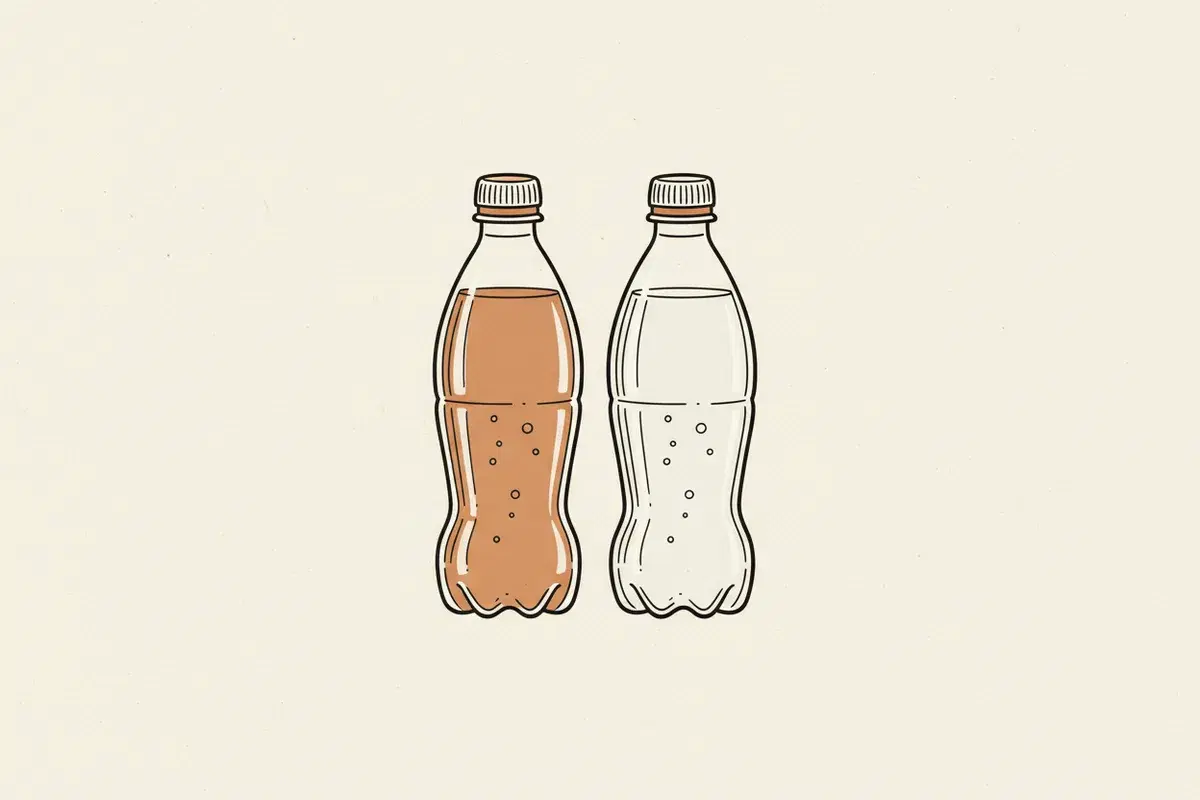
If you want a soda without certified artificial colorings or added oil stabilizers, Sprite is the clear winner between the two, while Fanta Orange remains the choice solely for consumers prioritizing classic, bright orange citrus styling. Although both beverages share the exact same base of carbonated water, high fructose corn syrup, and sodium benzoate, Fanta requires four extra functional additives just to engineer its signature neon hue and opaque body. Understanding this label gap reveals how food science uses chemical additives primarily for visual expectations rather than flavor delivery.
Key takeaways:
- Sprite uses six straightforward ingredients with zero certified colorings, relying on clear carbonation for its visual presentation.
- Fanta Orange contains ten ingredients, adding Yellow 6 and Red 40 purely to satisfy consumer expectations of what orange soda should look like.
- Fanta utilizes modified food starch and glycerol ester of rosin to keep its citrus flavor oils suspended in an opaque emulsion.
- Both beverages rely on high fructose corn syrup for sweetness, citric acid for tartness, and sodium benzoate for shelf preservation.
- The 67% increase in Fanta's ingredient count represents appearance engineering rather than deeper nutritional value or complex fruit juice.
Fanta Orange vs Sprite at a Glance: Ingredients, Dyes, and Additives
When examining the ingredient panels of these two iconic Coca-Cola brand beverages, the contrast in formulation complexity becomes immediately noticeable. Sprite maintains a minimalist, transparent formulation, while Fanta Orange incorporates multiple synthetic colorants and density adjusters. As of September 18, 2026, Fanta Orange relies on synthetic colorings like Yellow 6 and Red 40 to visually signify orange flavor, whereas Sprite is intentionally formulated dye-free to deliver a clear, crisp lemon-lime appearance.
| Product | Ingredient Count | Certified Food Dyes | Clouding & Stabilizing Agents | Sweetener System | Preservative Used |
|---|---|---|---|---|---|
| Sprite | 6 ingredients | None (Dye-Free) | None | High Fructose Corn Syrup | Sodium Benzoate |
| Fanta Orange | 10 ingredients | Yellow 6, Red 40 | Modified Food Starch, Glycerol Ester of Rosin, Sodium Polyphosphates | High Fructose Corn Syrup | Sodium Benzoate |
For shoppers exploring transparent options or comparing beverage formulations, our deep dive into Sprite vs Fresca: Sugar, Sweeteners and Preservatives illustrates how other citrus sodas handle sweetening and stabilization. When you unpack the full formulation in Is Fanta Orange Clean? Every Ingredient, Scanned, the technical reasons behind each additive become even more evident.
Quiz
Which can has the cleaner label: Fanta Orange or Sprite?
Guess before you scroll.
Reveal Aurascan's verdict
Aurascan says: It's a tie
The Appearance Penalty: Why Orange Soda Needs Yellow 6 and Red 40
Why does an orange soda need ten ingredients when a lemon-lime soda needs only six? The answer lies in consumer visual psychology, often called the appearance penalty. Natural citrus extracts from oranges, lemons, and limes are fundamentally pale or clear essential oils. If a manufacturer blends carbonated water, sugar, and natural orange flavor extract without any colorants, the resulting beverage looks completely water-clear, identical to Sprite or club soda.
Decades of consumer market research demonstrate that shoppers reject clear orange sodas, associating transparency with a lack of flavor potency or watered-down quality. To meet the expectation of a vivid, sun-ripened orange fruit, Fanta relies on two certified synthetic food dyes:
- FD&C Yellow No. 6: A petroleum-derived azo dye that delivers the primary bright yellow-orange base shade.
- FD&C Red No. 40: An azo dye added in precise micro-quantities to shift the yellow hue into a deeper, reddish-orange citrus tone.
Sprite bypasses this entire chemical requirement because consumers expect lemon-lime sodas to be crisp, clean, and transparent. The absence of dyes in Sprite is not necessarily an effort to create a health beverage; it is simply that clear sodas do not suffer from the visual expectation that drives orange-flavored drinks to add synthetic petroleum colorings.
Scan preview

Fanta
Fanta Orange Soda Soft Drink, Bottle - 20 Fluid Ounce
High Fructose Corn Syrup · Natural Flavors · Yellow 6
Standout ingredient: Carbonated Water
Analysis by Aurascan. Sources are listed on the product page.
Clouding Agents and Wood Rosin: Fanta's Flavor-Oil Stabilizers Explained
Color dyes alone are not enough to make orange soda look authentic. If you simply dissolve Yellow 6 and Red 40 in water, you get a translucent, jewel-toned liquid resembling cherry or ginger soda. Authentic orange juice, however, is naturally turbid and cloudy. Furthermore, natural citrus flavorings contain non-polar essential oils, such as limonene, which naturally separate and float to the surface of carbonated water over time.
To overcome these physical properties, Fanta Orange incorporates a sophisticated multi-component emulsion and clouding system designed to keep essential oils dispersed while maintaining an authentic, opaque beverage appearance:
- Modified Food Starch: Serves as a thickening and clouding agent, creating the milky opacity that mimics natural citrus juice pulp.
- Glycerol Ester of Rosin (Wood Rosin): A food-grade resin harvested from pine tree stumps. It functions as a weighting agent, increasing the specific gravity of the citrus flavor oils so they match the density of the surrounding sugary water, preventing the flavor from separating into an oily ring at the bottle neck.
- Sodium Polyphosphates: Sequestering agents that bind mineral ions, protecting the emulsion matrix and preventing the clouding particles from agglomerating and settling to the bottom.
Sprite completely avoids this entire category of chemical stabilization. Lemon and lime flavor compounds can be formulated using water-soluble flavor wash fractions that remain dissolved in clear water without weighting agents or clouding stars. Consequently, Fanta requires three extra structural chemicals purely to stabilize oil droplets and manufacture visual turbidity.
Scan preview
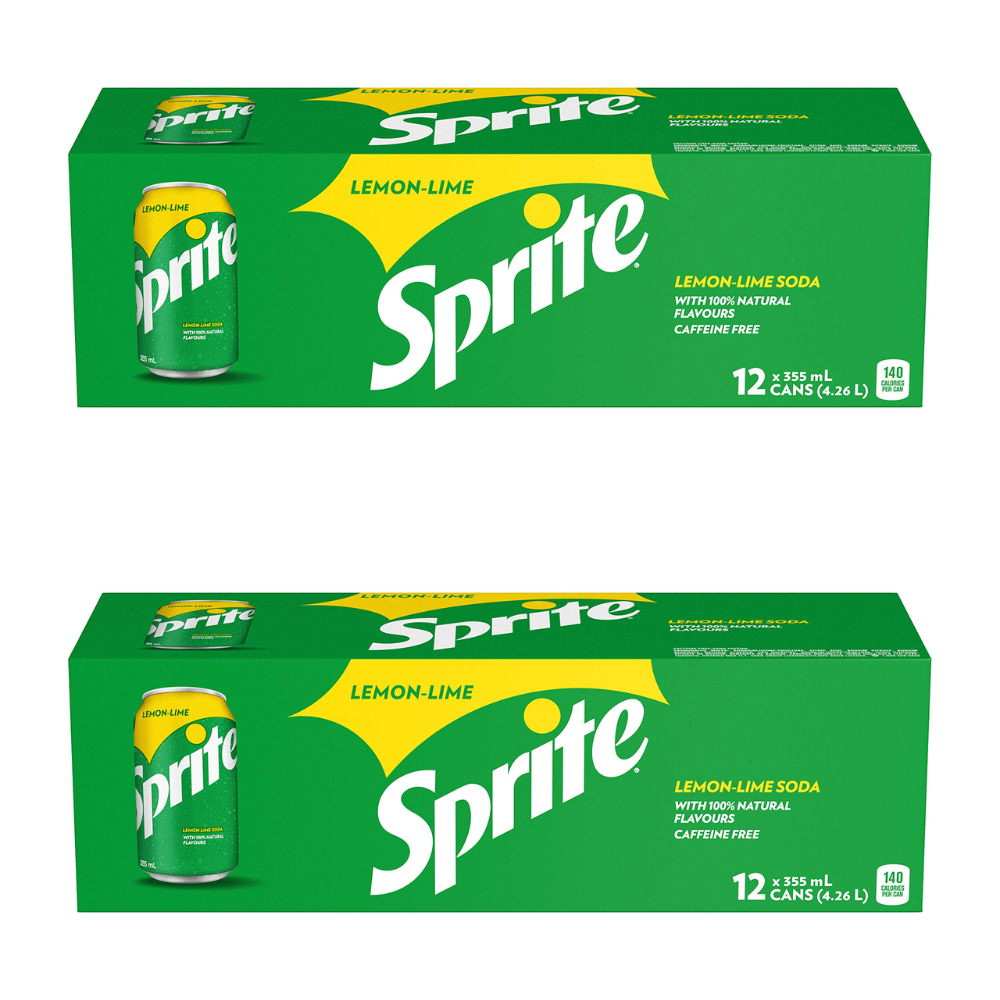
Sprite
Sprite Lemon Lime Caffeine Free Soda Soft Drink Fridge Pack Cans
High Fructose Corn Syrup · Natural Flavors · Carbonated Water
Standout ingredient: Carbonated Water
Analysis by Aurascan. Sources are listed on the product page.
Shared Foundations: HFCS, Citric Acid, and Sodium Benzoate Compared
Despite their radical divergence in visual engineering, Fanta Orange and Sprite share an identical core architecture. Neither beverage contains real fruit juice in its standard domestic version, and both rely on the exact same industrial foundation to deliver sweetness, acidity, and shelf-life stability.
Both beverages utilize high fructose corn syrup (HFCS) as their exclusive caloric sweetener. For a comprehensive breakdown of how this corn-derived sweetener behaves in shelf-stable beverages, see our detailed high fructose corn syrup ingredient review. HFCS provides heavy mouthfeel, balanced sweetness, and stable solubility under low pH conditions. For specific caloric content, total carbohydrates, and sugar metrics, consumers should refer directly to the Nutrition Facts panel printed on each can, as serving sizes and local bottler recipes can vary.
Both sodas also rely on citric acid for sharp, tart citrus acidity that cuts through heavy sugar sweetness. Sprite adds sodium citrate to buffer that acid and create a smoother, crisper lemon-lime bite. Finally, both products use sodium benzoate as an antimicrobial preservative. As outlined in our guide on sodium benzoate safety and usage, this compound prevents mold, yeast, and bacterial growth in ambient beverage distribution, making it an indispensable workhorse for modern shelf-stable soda logistics.
Regulatory Scrutiny: Where Food-Dye Phaseouts Leave Fanta Orange
Synthetic food dyes, particularly azo dyes like Yellow 6 and Red 40, have faced escalating scrutiny from health advocates, international food agencies, and domestic regulators. In the European Union, products containing Yellow 6 and Red 40 (Allura Red AC) must carry a mandatory warning label stating that the colorings may have an adverse effect on activity and attention in children. As a result, European formulations of Fanta generally replace petroleum dyes with natural plant extracts like paprika extract, pumpkin concentrate, and beta-carotene.
In the United States, regulatory attention has intensified following the April 2025 FDA/HHS petroleum-dye phase-out initiative, which urged food and beverage manufacturers to transition away from certified synthetic colorings toward plant-derived alternatives. While the FDA maintains that certified color additives are safe when used in compliance with current good manufacturing practices, emerging public discussions, federal agency roadmaps, and state-level legislative bans on specific food additives have forced beverage manufacturers to evaluate transition strategies.
Scientific evidence regarding synthetic dyes remains nuanced. While controlled trials demonstrate that certain sensitive children may experience behavioral changes or hyperactivity when consuming artificial dyes, broad population-level toxicological risks remain actively debated. Regulators emphasize that current acceptable daily intakes (ADIs) include wide safety margins, yet growing consumer demand continues to push domestic sodas toward the simpler, dye-free standard long held by Sprite.
Which Should You Pick: Clear Simplicity vs Classic Citrus Flavor
Choosing between Fanta Orange and Sprite comes down to an intentional trade-off between additive complexity and flavor profile preferences:
- Choose Sprite if: You want to eliminate certified artificial food dyes, wood rosin weighting agents, and modified food starches from your beverage choices. Sprite gives you a classic carbonated citrus experience with four fewer functional additives on the label.
- Choose Fanta Orange if: You are specifically seeking the nostalgic, bold profile of traditional American orange soda and do not mind consuming petroleum-derived dyes and emulsifying starches engineered for visual presentation.
- Consider Alternatives if: You want genuine fruit nutrition or wish to avoid high fructose corn syrup entirely. Neither soda contains measurable dietary fiber or micronutrients; both are sweetened carbonated indulgences.
Scientific literature cannot establish whether small, infrequent intakes of synthetic colorants have long-term biological consequences for every individual, as genetic sensitivities, dietary exposure rates, and overall gut environments vary widely across the population. What the label facts make plain is that Fanta's extra ingredients exist to satisfy an optical preference, whereas Sprite achieves its market identity through uncolored simplicity.
Try Aurascan
See what is really in the food you buy.
Common questions
- Why does Fanta Orange have so many more ingredients than Sprite?
- Fanta Orange contains ten ingredients compared to Sprite's six because it requires synthetic dyes (Yellow 6 and Red 40) for color, as well as modified food starch and glycerol ester of rosin to keep its orange citrus flavor oils evenly suspended in the liquid.
- Does Sprite contain any artificial food coloring?
- No, Sprite does not contain any certified artificial food dyes. It relies on a clear, carbonated formulation composed of carbonated water, high fructose corn syrup, citric acid, natural flavors, sodium citrate, and sodium benzoate.
- What is glycerol ester of rosin in Fanta Orange?
- Glycerol ester of rosin, commonly called wood rosin, is a food-grade resin sourced from pine stumps. It serves as a weighting agent that balances the density of orange essential oils with water, preventing the flavor oils from floating to the surface.
- Is European Fanta formulated differently than American Fanta?
- Yes. Due to European Union regulations requiring warning labels on products containing artificial azo dyes, European versions of Fanta typically use natural coloring concentrates such as beta-carotene, paprika extract, and real fruit juice concentrates instead of Yellow 6 and Red 40.
- Do Fanta Orange and Sprite contain caffeine?
- Standard domestic formulations of both Fanta Orange and Sprite are completely caffeine-free, though consumers should always check individual cans or regional specialty packaging to confirm.
- Why are orange sodas cloudy while lemon-lime sodas are clear?
- Orange sodas use modified food starch and weighting agents to disperse insoluble orange peel essential oils and mimic the natural cloudiness of real orange juice, whereas lemon-lime sodas use water-soluble flavor compounds that remain completely clear.
Sources
- Color Additives Questions and Answers for Consumers (fda.gov)
- Scientific Opinion on the re-evaluation of Sunset Yellow FCF (E 110) as a food additive (efsa.europa.eu)
- Tracking Food Industry Pledges to Remove Petroleum-Based Food Dyes (fda.gov)
- Color Additives Questions and Answers for Consumers (fda.gov)
In this series
Guide
Is the Barebells Chocolate Dough Bar Clean? ScannedGuide
Is Tillamook Cookies and Cream Clean? The Label, ScannedGuide
Is Fanta Orange Clean? Every Ingredient, ScannedGuide
FDA's Front-of-Package Nutrition Box Is Still Not FinalGuide
5 Lunchbox Snacks Scanned: String Cheese to Fig BarsGuide
5 Grocery Staples With the Shortest Labels, Scanned
Related guides
Comparisons
RYSE Loaded Protein vs Core Power: Powder vs Shake, Label by LabelBoth lean on sucralose, acesulfame K and carrageenan, but one is whey powder with MCT and inulin, the other ultra-filtered milk. Compared amid the heavy-metal debate.
Ingredient Reviews
Annatto: The Seed Color in Cheese and SnacksAnnatto (E 160b) is a seed-based orange color used in cheddar, butter and snacks. What FDA and EFSA allow, the ADIs, and rare allergy reports.
Latest News
'No Artificial Colors' Has a New Meaning on US LabelsSince February 2026 the FDA lets brands claim 'no artificial colors' as long as no certified petroleum dyes are used, even with beet or turmeric added. How to read it.
Try it on your own groceries
Scan your next label with Aurascan
Point the camera at any ingredient list and get the same evidence-graded read you see here.
Open the scannerLabel-reading intel, weekly.
What changed on food labels this week — bans, recalls, and new guides.