Written by Chris Carrillo. Reviewed by Armin Rad, Co-Founder & CTO, Aurascan. It cites 6 sources; use the source list and methodology to check the evidence directly.
Packing a daily lunchbox often involves balancing convenience, taste, and nutrition. To understand what goes into typical convenience snacks, we scanned five common staples: string cheese, 100% juice, seasoned pita chips, fruit fig bars, and chocolate-coated nuts. Scanning labels individually reveals key details about enriched grains, hidden dairy allergens, and sweetener blends that front-of-pack marketing can obscure.
Key takeaways:
Front-of-package claims like "100% Juice" or "Whole Wheat" do not tell the whole story about natural sugars or complex ingredient formulations.
Multi-ingredient snacks frequently contain hidden allergens, such as dairy seasonings in savory chips or soy lecithin in chocolate coatings.
State-level school food regulations, including California AB 2316 targeting specific food dyes, apply to school-provided meal programs rather than lunches packed at home.
Individual ingredient transparency offers an objective view of packaged foods without relying on arbitrary single-score ratings.
How Do We Evaluate Everyday Lunchbox Staples?
When evaluating lunchbox items, parents and consumers often encounter complex ingredient declarations. Rather than applying a single black-box score, we evaluate products by examining each component individually against verified regulatory and scientific databases, including Open Food Facts and the USDA.
As of mid-September 2026, none of the ingredients on these five labels is subject to a new FDA or EFSA restriction; the relevant rules are the long-standing ones on allergen declaration, enrichment, juice labeling and added-sugar disclosure.
Analysis by Aurascan. Sources are listed on the product page.
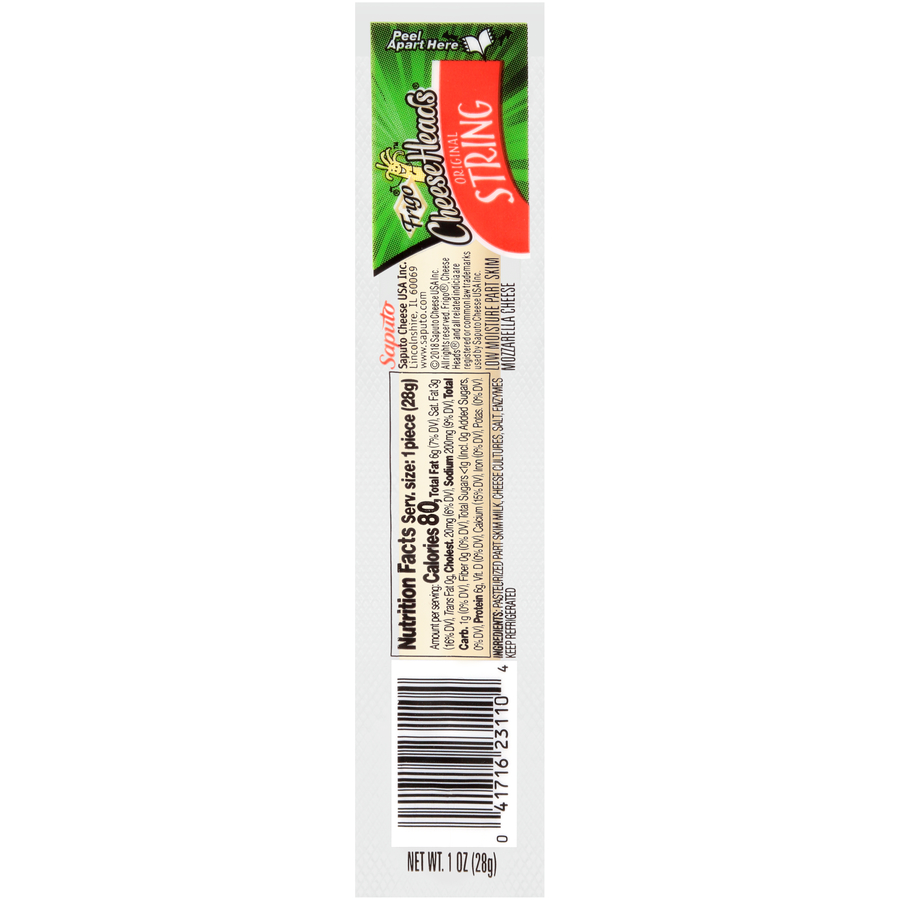
1. What Does Frigo Original String Cheese Reveal on Its Label?
Frigo Original String Cheese represents one of the most common refrigerated lunchbox items. As a standardized dairy product, its ingredient panel is relatively short compared to processed shelf-stable snacks.
Primary Ingredients: Pasteurized part-skim milk, cheese cultures, salt, and enzymes.
Notable Additives: Microbial enzymes (coagulants used during curd formation).
Allergen Callouts: Milk (major allergen).
From a regulatory standpoint, the U.S. FDA maintains a standard of identity for low-moisture mozzarella cheese. The enzymes used are recognized as safe processing aids that help coagulate milk proteins into curds. For households managing dairy sensitivities or lactose intolerance, this staple requires caution, but for general consumers, it provides a minimally processed profile without artificial colors or added sugars. To see how other basic foods compare, check our roundup of 5 grocery staples with the shortest labels, scanned.
Understanding processing aids helps demystify dairy labels. Microbial enzymes replace traditional animal rennet in modern dairy manufacturing, offering consistent curdling while keeping the product vegetarian-friendly. The simplicity of four primary components makes this item one of the cleanest profiles in convenience dairy.
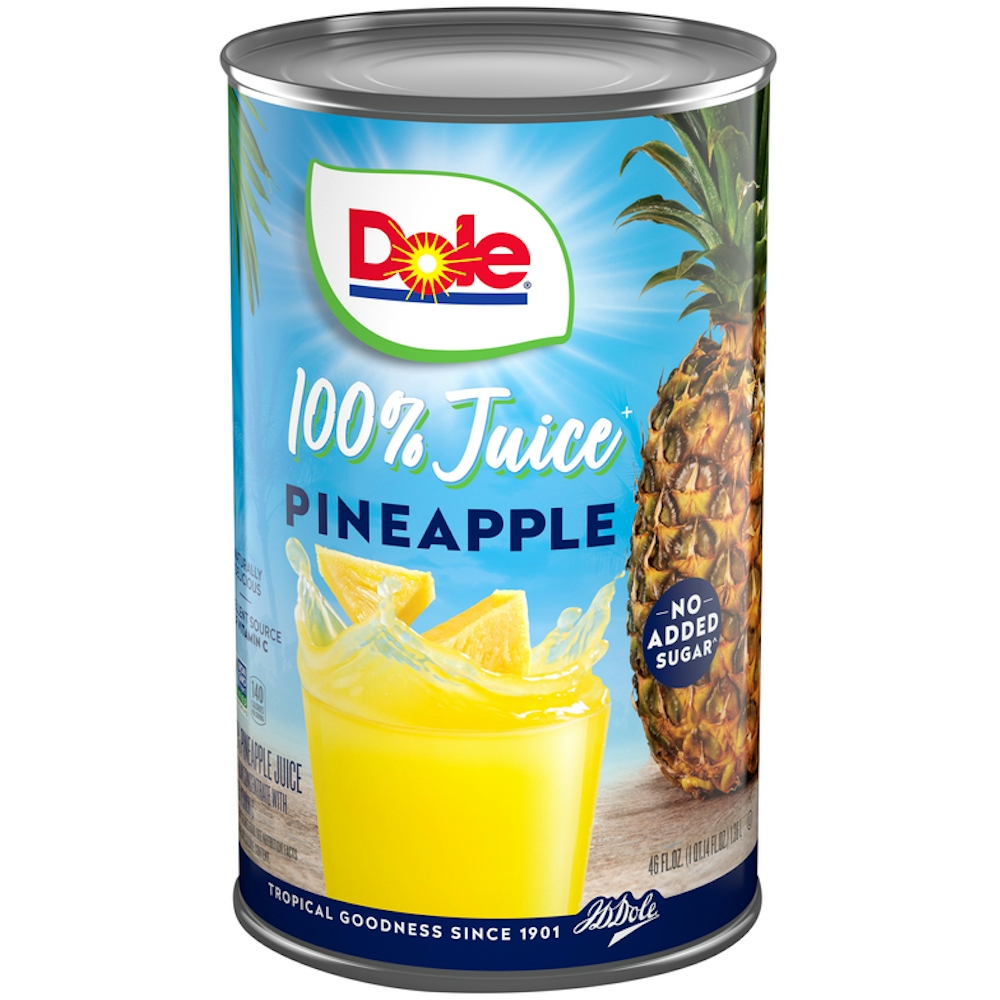
2. Is Dole 100% Pineapple Juice Free of Processing Additives?
Single-serve juice cans like Dole 100% Pineapple Juice are frequently packed as beverage alternatives. While free of added refined sucrose or high-fructose corn syrup, the label reveals processing details worth noting.
Primary Ingredients: Pineapple juice from concentrate (filtered water, pineapple juice concentrate).
Notable Additives: Ascorbic acid (vitamin C), vitamin A and vitamin E, added as fortification; ascorbic acid also protects color and flavor.
Allergen Callouts: None.
Under FDA labeling rules, beverages made entirely from reconstituted fruit concentrate can declare "100% Juice." Ascorbic acid is universally recognized as safe (GRAS) and functions both as a nutrient fortifier and an antioxidant preventing oxidation. While 100% fruit juice provides vitamins, guidance from the CDC on Added Sugars and Beverages notes that juices contain concentrated natural sugars without the dietary fiber present in whole fruit. Consumers should review the Nutrition Facts panel for serving sizes and carbohydrate values.
Reconstitution involves concentrating fruit juice by evaporating water at the source and adding water back during final packaging. This practice reduces shipping volume while retaining flavor stability. However, the lack of intact fruit flesh means the glycemic absorption rate is faster than eating a whole slice of fresh pineapple.
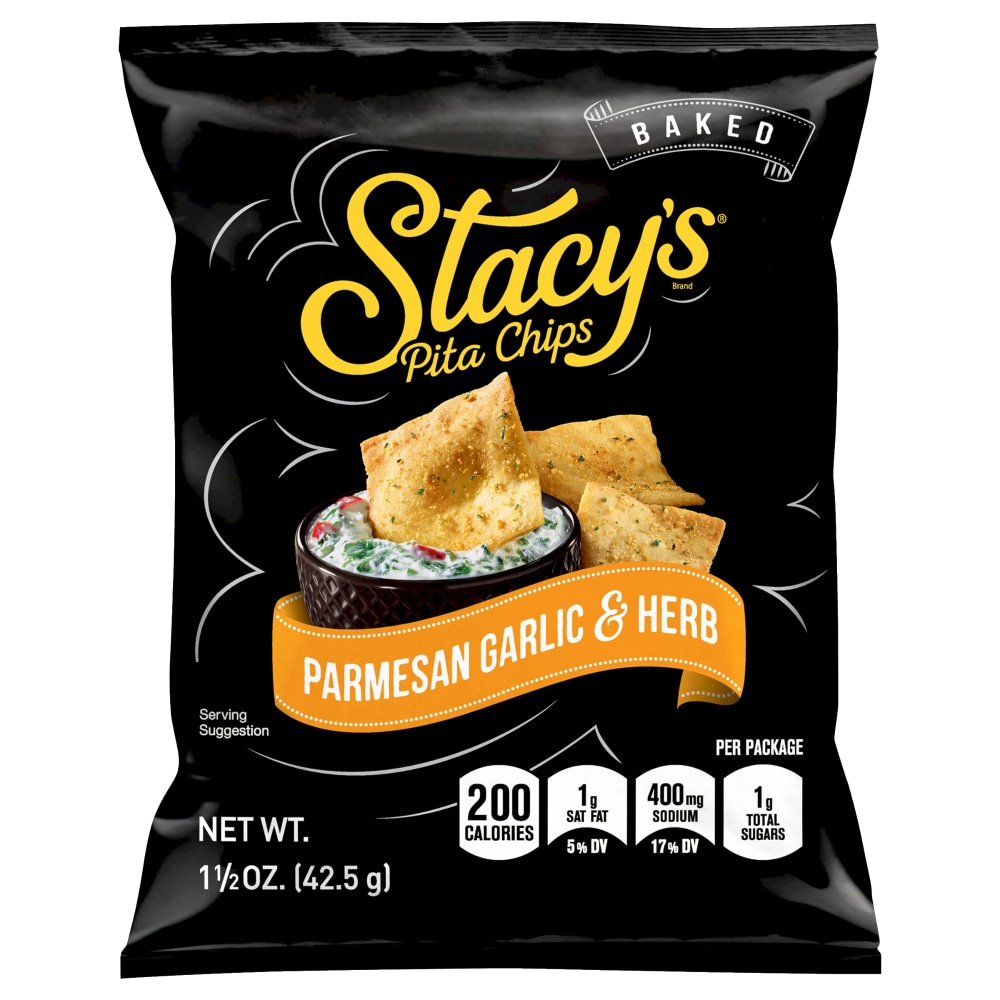
3. Why Do Stacy's Pita Chips Contain Dairy and Enriched Flour?
Savory baked chips often present themselves as simpler alternatives to traditional fried chips. Stacy's Parmesan Garlic & Herb Pita Chips offer a distinct flavor profile, but the ingredient statement is longer than plain varieties.
While natural flavors provide savory depth, the total sodium and refined grain balance are key metrics to verify on the Nutrition Facts panel when packing daily lunches.
Are SkinnyDipped dark chocolate almonds clean?
Guess before you scroll.
Reveal Aurascan's verdict
Aurascan says: Flagged
The main flag is Almonds.
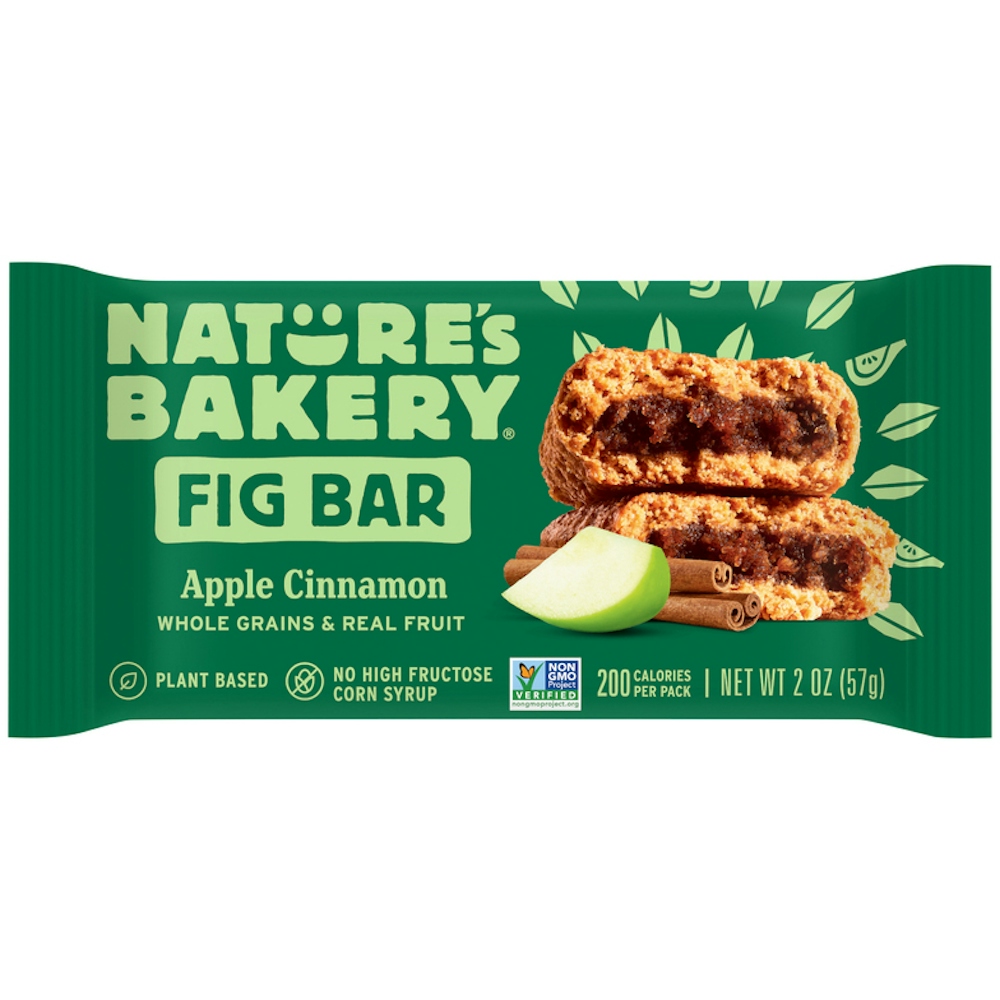
4. Nature's Bakery Apple Cinnamon Fig Bar: Whole Wheat and Sweetener Blends
Nature's Bakery Apple Cinnamon Fig Bars are marketed as convenient, wholesome baked snacks. A close scan of the label reveals a dual-part formulation: the whole wheat crust and the flavored fruit filling.
Notable Additives: Glycerin (a humectant that keeps the bar soft) and citric acid (flavor balance and acidity regulation).
Allergen Callouts: Wheat.
While whole wheat and oat fiber provide whole-grain value, the snack combines multiple sweetener types, including cane sugar, fig paste, and brown rice syrup. The FDA requires all added sugars to be explicitly detailed in the Nutrition Facts panel so consumers can distinguish between natural fruit sugars and added caloric sweeteners. For individuals monitoring glycemic intake, checking the panel is essential.
Combining whole grains with fruit puree provides a tender crumb without relying on hydrogenated shortening. Nonetheless, parents seeking low-sugar options should recognize that fig bars function calorically more like baked goods than fresh whole fruit.
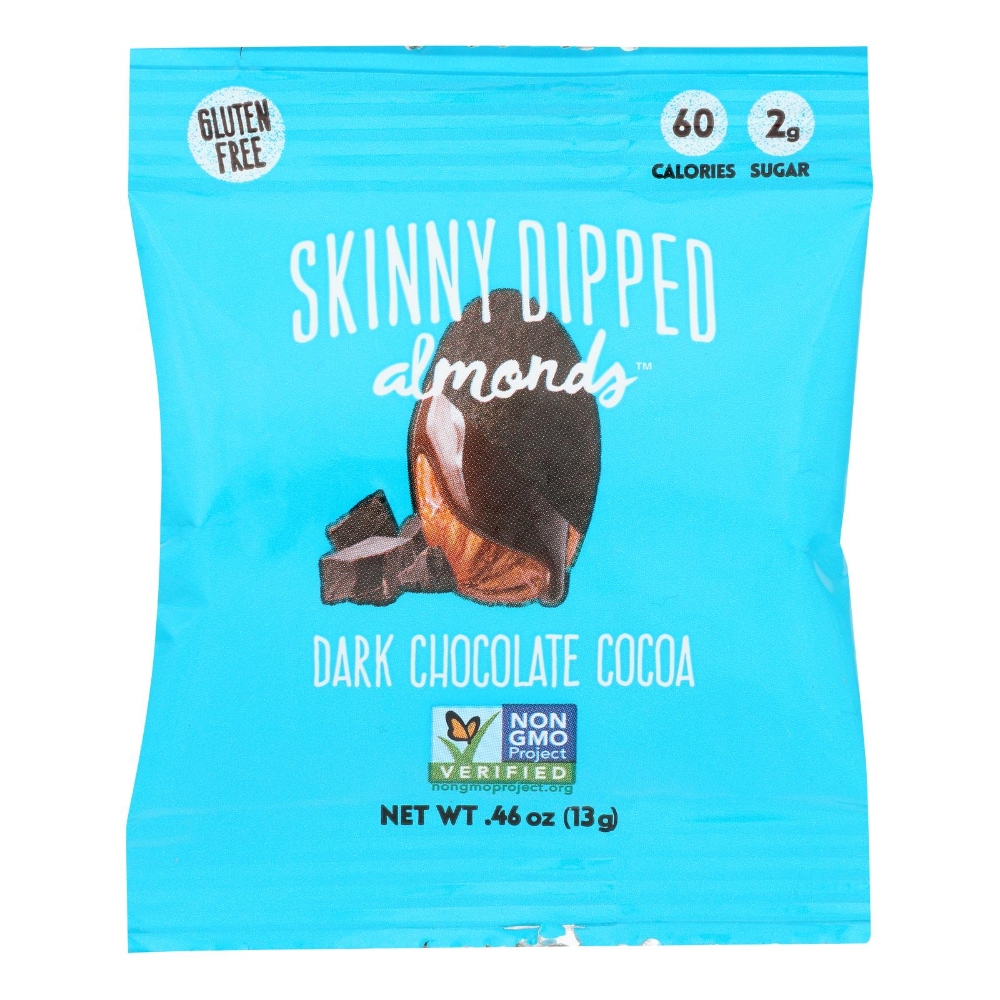
5. SkinnyDipped Dark Chocolate Cocoa Almonds: Nut Allergens and Cocoa Coatings
SkinnyDipped Dark Chocolate Cocoa Almonds bridge the gap between whole-food nuts and confectionery. The brand focuses on a thinner layer of chocolate coating compared to traditional candy-coated nuts.
Notable Additives: Lecithin (an emulsifier that stabilizes chocolate texture; the source, sunflower or soy, is named on the wrapper).
Allergen Callouts: Tree nuts (Almonds), Milk.
Lecithin functions as a processing aid to keep cocoa butter and cocoa solids evenly blended; sunflower lecithin is the common soy-free alternative, so check which one the wrapper names if soy is a concern. Because milk fat is present in the chocolate formulation, these almonds carry a dairy allergen warning in addition to tree nuts. This makes scanning essential for allergen-sensitive households.
Almonds supply plant-based fats, protein, and dietary fiber, mitigating the glycemic impact of the chocolate coating. The use of maple sugar alongside cane sugar creates a distinct flavor profile, while the thin coating strategy reduces overall added sugar compared to standard chocolate candies. Expert clinical overviews such as Johns Hopkins Medicine on School-Aged Child Nutrition emphasize the value of balancing nutrient-dense nuts with moderation in sweet coatings.
Do School Food Regulations Affect Lunches Packed at Home?
With rising public discussion around food additives, legislation such as California's Assembly Bill 2316 has placed restrictions on specific synthetic food dyes (such as Red 40 and Yellow 5) in public school food offerings. However, significant confusion exists regarding how these rules apply.
State-level school food regulations govern foods sold or served by school districts through cafeteria meal programs, vending machines, and school fundraisers. They do not dictate or restrict what parents pack in private lunchboxes brought from home. Nonetheless, many caregivers choose to use these regulatory discussions as a prompt to inspect home-packed items for synthetic colors, emulsifiers, and preservative agents.
Scientific evidence has clear limitations: individual metabolic and allergic responses vary widely, and broad population studies cannot establish how a specific child responds to trace food additives, natural flavor blends, or concentrated fruit sugars. Reviewing label statements provides an objective baseline for individual family choices.
How to Use This List for Better Lunchbox Choices
Deciphering multi-ingredient labels does not require a food science degree. Taking a systematic approach to label reading allows you to make informed decisions quickly:
Read Beyond Front Labels: Marketing phrases like "made with whole grain" or "real fruit" do not reveal the presence of secondary sweeteners, emulsifiers, or dairy powders.
Verify Major Allergens: Look beneath the ingredient block for bolded "Contains" statements covering milk, eggs, peanuts, tree nuts, wheat, soy, sesame, fish, and shellfish.
Examine Sweetener Diversity: Check for multiple sugar names across the list, including syrups, purees, concentrates, and refined cane sugar.
Check Nutrition Facts Panels: Always refer directly to the Nutrition Facts panel on the box for official calorie counts, fiber grams, and added sugar percentages.
Do school dye bans apply to foods packed in lunchboxes from home?
No. State regulations like California AB 2316 apply specifically to food provided, sold, or served by public school meal programs and vending machines, not to meals packed at home by parents.
Why does Dole 100% Pineapple Juice contain ascorbic acid?
Ascorbic acid (Vitamin C) is added as an antioxidant to preserve natural flavor and prevent the juice from discoloring due to oxidation during shelf storage.
Are microbial enzymes in string cheese safe?
Yes. Microbial enzymes are standard food-grade coagulants widely used in cheesemaking to separate milk into curds and whey, and they are recognized as safe by food regulatory agencies.
Why do pita chips list dairy allergens?
Flavored or seasoned pita chips, such as garlic and parmesan varieties, often contain real cheese or whey powder in their seasoning blends, introducing milk allergens.
How does Aurascan evaluate snack ingredients?
Aurascan evaluates every ingredient individually using verified sources like USDA and Open Food Facts, providing objective verdicts (Clean, Mixed, Flagged) rather than a single black-box score.
See what is in your label
Aurascan turns product labels into plain-English ingredient explanations and source-backed context.
Fage yogurt, SkinnyPop, Häagen-Dazs Vanilla Bean, Frigo string cheese and Dole pineapple juice have two to five ingredients each. Why short is not the same as healthy.
Doritos, Pringles Hot Honey, Baked Lay's, Stacy's pita chips and SkinnyPop, scanned line by line: dyes, MSG, enriched flour, added sugar and one three-ingredient bag.
Doritos, Pringles Hot Honey, Lay's Baked, Stacy's pita chips, SkinnyPop and SkinnyDipped almonds: what each real label says, with a scan card for every one.