5 Grocery Staples With the Shortest Labels, Scanned
Fage yogurt, SkinnyPop, Häagen-Dazs Vanilla Bean, Frigo string cheese and Dole pineapple juice have two to five ingredients each. Why short is not the same as healthy.
ListicleCluster: Snacks5 grocery staples with the shortest ingredient lists, scanned
9/15/2026 · 7 min read · Chris Carrillo · Reviewed by Armin Rad, Co-Founder & CTO, Aurascan · Last reviewed 9/15/2026
Written by Chris Carrillo. Reviewed by Armin Rad, Co-Founder & CTO, Aurascan. It cites 5 sources; use the source list and methodology to check the evidence directly.
Shopping for packaged foods often means navigating long lists of industrial additives and texturizers. Choosing grocery staples with ultra-short ingredient panels simplifies your cart by minimizing artificial binders and preservatives. However, a minimalist label does not automatically make a product nutritionally complete, as sodium, saturated fats, and natural sugars still demand scrutiny.
Key takeaways:
A short ingredient list signals fewer industrial additives, emulsifiers, or preservatives, but does not guarantee low sodium, low sugar, or low saturated fat.
Federal standards of identity established by regulators strictly regulate basic food categories like yogurt, standardized cheeses, and pure fruit juices.
Comparing the ingredients list directly alongside the Nutrition Facts panel provides a complete nutritional picture.
Scanning tools help unpack the functional role of every component without relying on opaque overall scores.
How Do We Select Minimalist Grocery Staples?
To identify grocery staples with the shortest ingredient declarations, we evaluated common household categories including dairy, snacks, frozen desserts, and beverages. Selection required items widely available in conventional supermarkets that feature five or fewer discrete ingredients without compromising standard shelf stability or consumer expectations.
The U.S. Food and Drug Administration establishes specific Standards of Identity for many traditional foods in the Electronic Code of Federal Regulations Part 131. These standards dictate required base components while allowing manufacturers flexibility on optional additives.
When evaluating simple foods, it helps to balance ingredient counts with overall dietary needs. For broader context on how processed items compare, see our guide on 6 snacks people scan most, and what their labels say to understand how formulation complexity shifts across aisles.
5 short labels, scanned
Fage
Fage Total All Natural Nonfat Plain Greek Strained Yogurt, 32 Oz
Analysis by Aurascan. Sources are listed on the product page.
1. Fage Total 0% Plain Greek Yogurt: Why Two Ingredients?
Fage Total 0% Plain Greek Yogurt features one of the most streamlined dairy labels in the refrigerated aisle, containing only two stated ingredients: Grade A pasteurized skimmed milk and live active yogurt cultures.
Under federal standards defined in 21 CFR Part 131, products labeled as yogurt must be produced by culturing dairy ingredients with characteristic bacterial strains, primarily Lactobacillus delbrueckii subsp. bulgaricus and Streptococcus thermophilus. Traditional straining removes liquid whey, yielding a naturally thick texture without requiring secondary thickeners such as modified corn starch, pectin, or gums that appear in some non-strained alternatives.
What to evaluate on the label:
Ingredients list: Verifies the absence of added sugars, stabilizers, or artificial flavorings.
Live active cultures: Confirms the presence of beneficial bacterial strains.
Nutrition Facts panel: Displays naturally occurring milk sugars (lactose) alongside total protein content.
While plain Greek yogurt is free of added sugars and industrial texturizers, individuals with dairy sensitivities or lactose malabsorption must still evaluate tolerance based on their specific physiological needs. The full two-line breakdown is in our Fage Total 0% spotlight.
2. SkinnyPop Original Popcorn: What Makes It Simple?
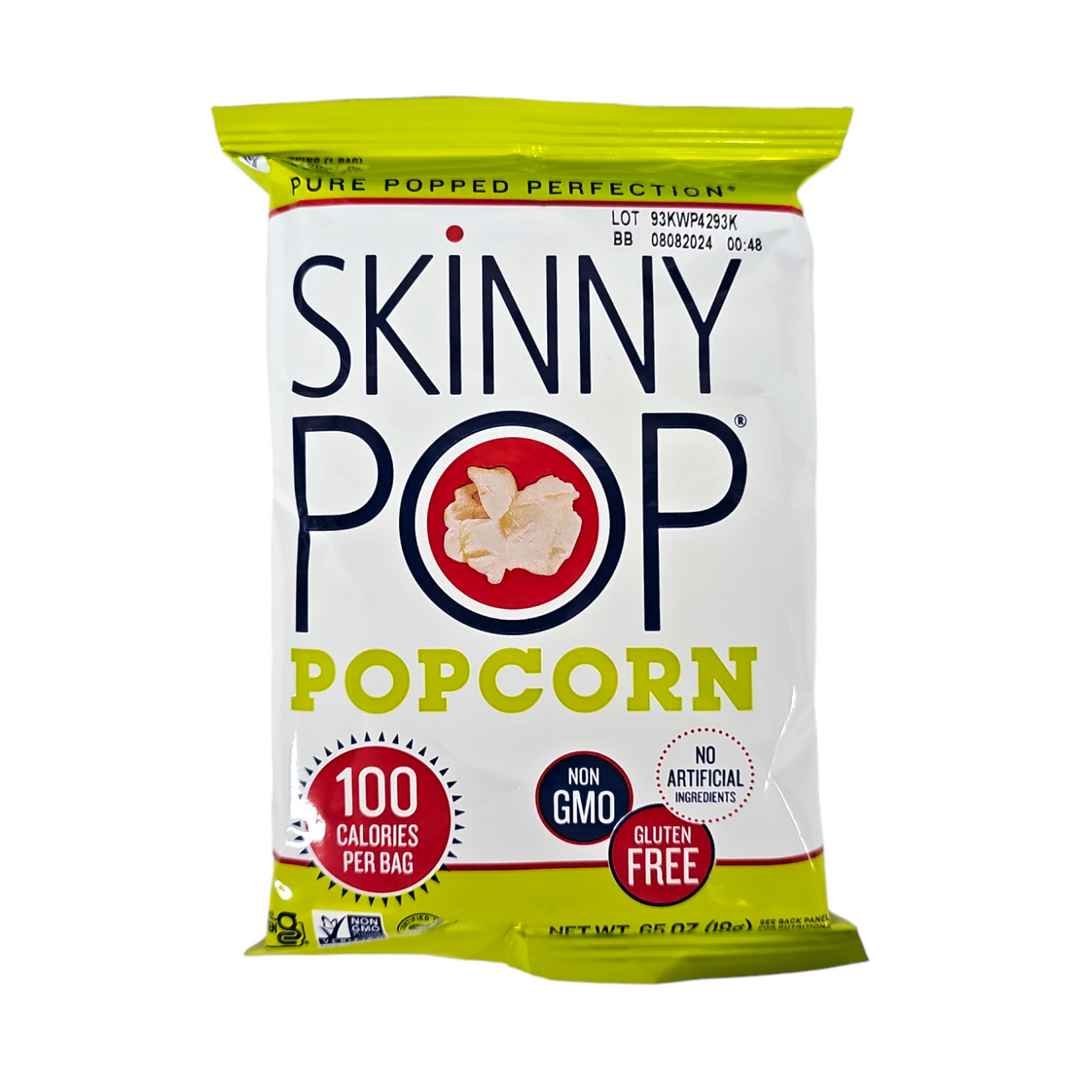
SkinnyPop Original Popcorn represents a minimalist formulation in the salty snack category, containing exactly three ingredients: popcorn, sunflower oil, and salt.
Whole grain popcorn provides dietary fiber naturally, while sunflower oil facilitates popping and ensures salt adherence across the kernels. Because this product avoids artificial butter flavorings, synthetic preservatives like TBHQ (tertiary butylhydroquinone), and flavor enhancers like disodium inosinate, its panel remains exceptionally clean.
Oil source: Sunflower oil acts as the primary fat carrier.
Nutrition Facts panel: Highlights sodium and total fat per serving.
Minimal ingredients do not eliminate dietary fat or sodium. When managing specific cardiovascular or caloric targets, comparing simple popcorn against other options is useful. Read our analysis of 5 chips people scan most, and what their labels say to see how snack oils and seasonings alter nutritional totals across brands.
Is Frigo string cheese clean?
Guess before you scroll.
Reveal Aurascan's verdict
Aurascan says: Flagged
The main flag is Pasteurized Part Skim Milk.
3. Frigo Cheese Heads String Cheese: How Few Ingredients?
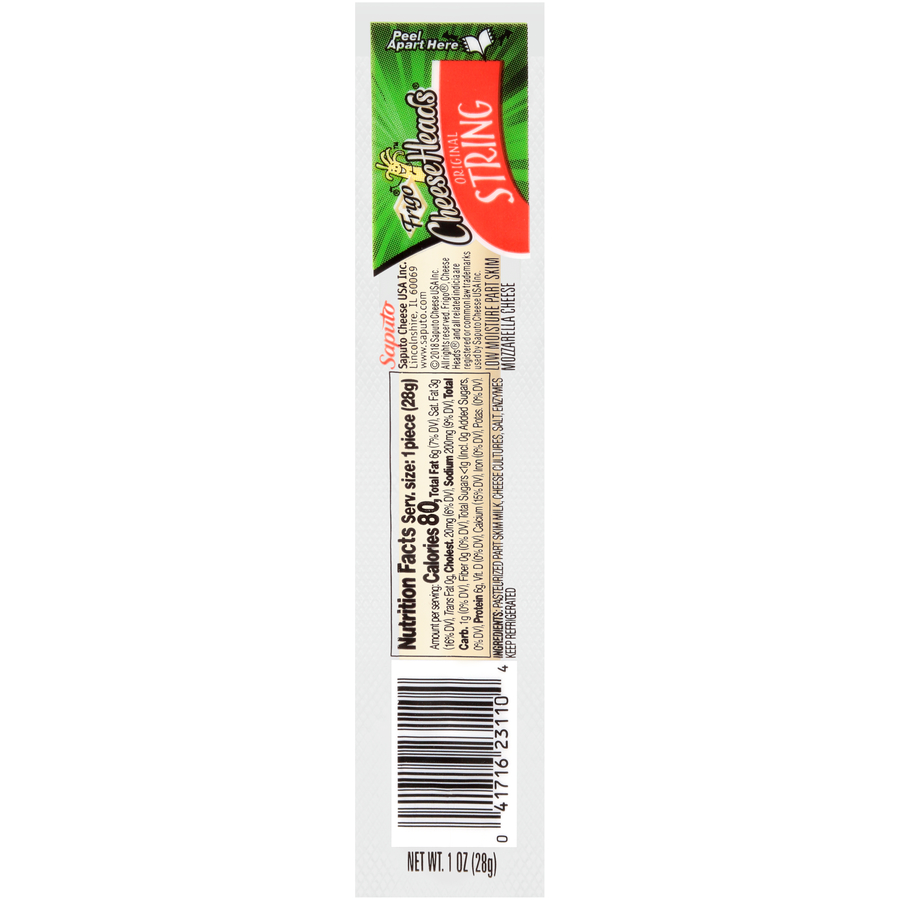
Frigo Cheese Heads Original String Cheese features a traditional four-ingredient composition: pasteurized part-skim milk, cheese cultures, salt, and enzymes.
Under federal mozzarella standards codified in 21 CFR Part 133, standard mozzarella cheese follows a strict manufacturing process where milk is acidified, coagulated via enzymes, heated, and stretched into its characteristic fibrous texture. The enzymes coagulate milk proteins into curds, while salt assists in moisture control, flavor development, and microbial preservation.
What to evaluate on the label:
Pure cheese formulation: Excludes emulsifying salts (such as sodium phosphates) typical in processed cheese snacks.
Enzyme sources: Microbial enzymes provide alternatives for vegetarian preferences.
Nutrition Facts panel: Details sodium and saturated fat per individually wrapped stick.
Even with four simple components, cheese naturally contributes sodium and dairy fat. A minimalist formulation ensures standard processing without added fillers, but portion sizes dictate overall nutrient intake.
4. Häagen-Dazs Vanilla Bean Ice Cream: Can Dessert Stay Minimal?
Häagen-Dazs Vanilla Bean Ice Cream is notable in the frozen dessert aisle for avoiding secondary stabilizers, listing five core ingredients: cream, skim milk, cane sugar, egg yolks, and vanilla extract (along with ground vanilla beans).
Many commercial ice creams use vegetable gums (such as guar gum, tara gum, or carrageenan) and mono- and diglycerides to maintain emulsification and prevent ice crystallization during standard freezer temperature fluctuations. This traditional custard-style base relies on egg yolk lecithin for natural emulsification, resulting in a dense texture with low overrun (incorporated air).
What to evaluate on the label:
Stabilizer absence: No added vegetable gums or synthetic emulsifiers.
Real flavor source: Real vanilla extract and vanilla bean flecks instead of artificial vanillin.
Nutrition Facts panel: Shows concentrated levels of saturated dairy fat and added cane sugars.
This product highlights why a short ingredient panel is not synonymous with low caloric density. The absence of industrial gums yields a classic culinary profile, but the recipe remains rich in natural sugars and fats. For an exploration of how formulation choices alter total profiles in processed foods, see our breakdown of baked lay's vs doritos: is the baked chip's label cleaner?.
5. Dole 100% Pineapple Juice: What Is Added?
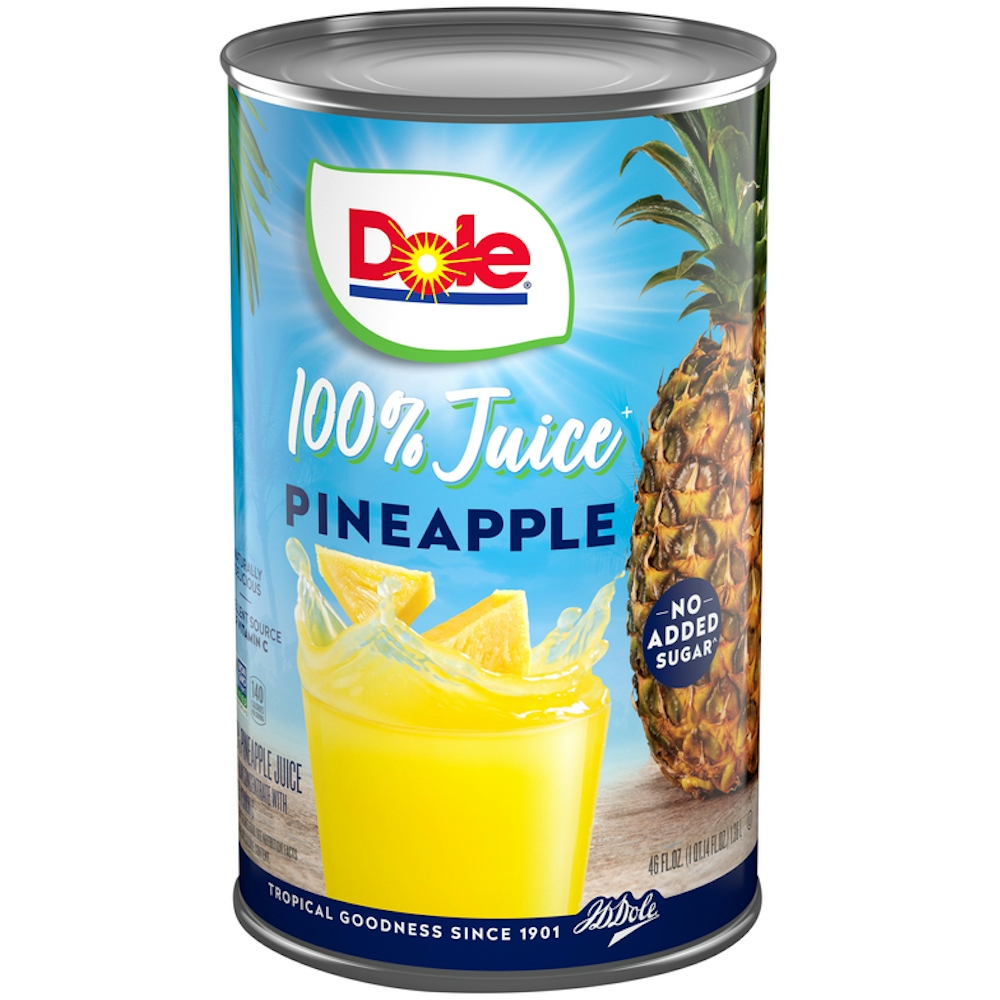
Dole 100% Pineapple Juice contains pineapple juice from concentrate (filtered water and pineapple juice concentrate) plus added vitamins: ascorbic acid (vitamin C), vitamin A and vitamin E.
According to federal juice standards in 21 CFR Part 146, beverages reconstituted from concentrate must meet specific soluble solids levels matching single-strength fruit juice. Ascorbic acid is introduced to standardize vitamin C content and prevent oxidation during packaging and storage, preserving color and flavor without artificial preservatives; the fat-soluble vitamins A and E are fortification. We walk through the whole can in the Dole 100% Pineapple Juice spotlight.
What to evaluate on the label:
Juice percentage: Confirms 100% fruit juice without added high-fructose corn syrup or artificial sweeteners.
Preservatives: Uses ascorbic acid (vitamin C) for antioxidant protection.
Even with zero added refined sweeteners, 100% fruit juice delivers concentrated simple carbohydrates without the intact dietary fiber found in whole fruit. Evaluating the full nutritional panel helps clarify glycemic impact.
How Can You Use This List to Decode Grocery Labels?
Evaluating ingredient simplicity requires looking at the function of each listed item alongside the numerical data on the Nutrition Facts panel. When inspecting product packaging, apply this practical checklist:
Count discrete ingredients: Fewer ingredients generally indicate minimal industrial processing aids, synthetic dyes, or texturizers.
Identify primary components: Ensure the first two or three items represent whole-food sources rather than isolated starches or refined syrups.
Check functional additives: Distinguish standard nutrients (like ascorbic acid) or traditional aids (like microbial enzymes) from synthetic preservatives or binders.
Review the Nutrition Facts panel: Always check serving size, sodium, saturated fat, and total or added sugars, which operate independently of ingredient count.
Scientific evidence cannot establish a single, universal dietary rule regarding ingredient length for every individual. Tolerances to specific food proteins, dairy derivatives, or concentrated sugars vary widely based on individual metabolic health and physiological needs.
Understanding what is inside your packaged groceries should not require memorizing chemical nomenclature: scan any of these five with the Aurascan app and each ingredient is explained on its own line.
Does a short ingredient list mean a packaged food is healthy?
Not necessarily. A short ingredient list means the product contains fewer additives, preservatives, or texturizers. However, basic ingredients like cream, sugar, and salt can still result in high levels of saturated fat, added sugar, or sodium on the Nutrition Facts panel.
Why do some standard foods have fewer ingredients than others?
Differences in processing, preservation methods, and cost account for variation. Traditional recipes may rely on ingredients like egg yolks or natural straining for texture, whereas high-volume commercial alternatives may use gums, starches, and preservatives to extend shelf life and reduce production costs.
What is an FDA standard of identity?
An FDA standard of identity is a federal regulation that defines what a specific food product must contain and how it must be manufactured to be sold under its common name, such as yogurt, cheddar cheese, or fruit juice.
Why is ascorbic acid added to 100% fruit juice?
Ascorbic acid is vitamin C. It is added to standardise nutrient levels and act as an antioxidant, which prevents the juice from browning and losing flavor due to oxidation during storage.
Are live active cultures considered separate ingredients in yogurt?
Live active cultures are distinct biological agents (specific bacteria strains like Lactobacillus bulgaricus) added to milk to ferment it into yogurt. They appear in the ingredients list to indicate the presence of active probiotic cultures.
How can I check what each ingredient on a label does?
You can review transparent ingredient databases or use food-label scanning tools like Aurascan, which breaks down each listed item individually with cited scientific evidence rather than assigning a generalized composite score.
See what is in your label
Aurascan turns product labels into plain-English ingredient explanations and source-backed context.
Doritos, Pringles Hot Honey, Lay's Baked, Stacy's pita chips, SkinnyPop and SkinnyDipped almonds: what each real label says, with a scan card for every one.
Doritos, Pringles Hot Honey, Baked Lay's, Stacy's pita chips and SkinnyPop, scanned line by line: dyes, MSG, enriched flour, added sugar and one three-ingredient bag.