
Comparisons · September 20, 2026 · 8 min read
RYSE Loaded Protein vs Core Power: Powder vs Shake, Label by Label
Both lean on sucralose, acesulfame K and carrageenan, but one is whey powder with MCT and inulin, the other ultra-filtered milk. Compared amid the heavy-metal debate.
By Chris Carrillo · Reviewed by Armin Rad, Co-Founder & CTO, Aurascan · September 20, 2026
Every article is checked against primary sources before publication. How we review

If you want pure convenience with digestive support for lactose sensitivity, Fairlife Core Power ready-to-drink shake provides an ultra-filtered liquid base treated with lactase enzyme. If you prefer versatile dosing, baking utility, and healthy fats, RYSE Loaded Protein powder delivers a concentrated whey blend enhanced with medium chain triglycerides.
Key takeaways:
- Core Power relies on ultra-filtered low-fat milk pre-treated with lactase enzyme for lactose sensitivity, whereas RYSE Loaded Protein combines whey isolate and concentrate with prebiotic agave inulin.
- Both products formulate with sucralose, acesulfame potassium, and carrageenan, but Core Power layers in monk fruit and stevia while RYSE adds MCT oil powder and artificial flavors.
- Powder tubs and ready-to-drink bottles may fall under distinct FDA regulatory frameworks (Nutrition Facts vs Supplement Facts), affecting disclosure requirements and proprietary blend transparency.
- Recent Consumer Reports testing and proposed California legislation (SB 1033) have placed heavy metals in protein products under the microscope, an issue not visible on standard product ingredient panels.
Quick Verdict: Powder Versatility vs Ready-to-Drink Convenience
Choosing between a dry protein powder mix and a ready-to-drink (RTD) bottle comes down to how you balance control against sheer convenience. RYSE Loaded Protein Cinnamon Toast is designed for customization (the protein grams per scoop are printed on the tub). It lets you control your liquid ratio, mix it into oatmeal, or bake with it, while providing extra functional lipids. However, it requires scooping, shaking, and washing a shaker bottle.
Fairlife Core Power Chocolate targets immediate consumption: a single-serve 14 fluid ounce (414 mL) bottle with the protein grams printed on the label. Because it is pre-mixed and uses ultra-filtered milk treated with lactase, it eliminates preparation friction and provides a smooth texture right out of the refrigerator. Understanding how these formats diverge in their ingredient construction reveals key differences in sweeteners, stabilizers, and potential digestive triggers.
Quiz
Which has the cleaner label: RYSE Loaded Protein or Core Power?
Guess before you scroll.
Reveal Aurascan's verdict
Aurascan says: It's a tie
At a Glance: RYSE Loaded Protein vs Fairlife Core Power
| Feature | RYSE Loaded Protein Cinnamon Toast (Powder) | Fairlife Core Power Chocolate (RTD Shake) |
|---|---|---|
| Primary Protein Sources | Whey protein isolate, whey protein concentrate | Filtered low fat grade A milk |
| Enzymatic Support | None declared | Lactase enzyme (lactose-free formulation) |
| Sweetening System | Sucralose, acesulfame potassium | Monk fruit juice concentrate, stevia leaf extract, sucralose, acesulfame potassium |
| Stabilizers & Gums | Cellulose gum, xanthan gum, carrageenan, gum acacia | Carrageenan, cellulose gel, cellulose gum |
| Functional Additions | MCT oil powder, organic agave inulin | Alkalized cocoa, vitamin A palmitate, vitamin D3 |
| Emulsifiers | Soy lecithin, sunflower lecithin | None declared |
| Flavoring Approach | Ground cinnamon, natural flavors, artificial flavors | Alkalized cocoa, natural flavors |
Scan preview
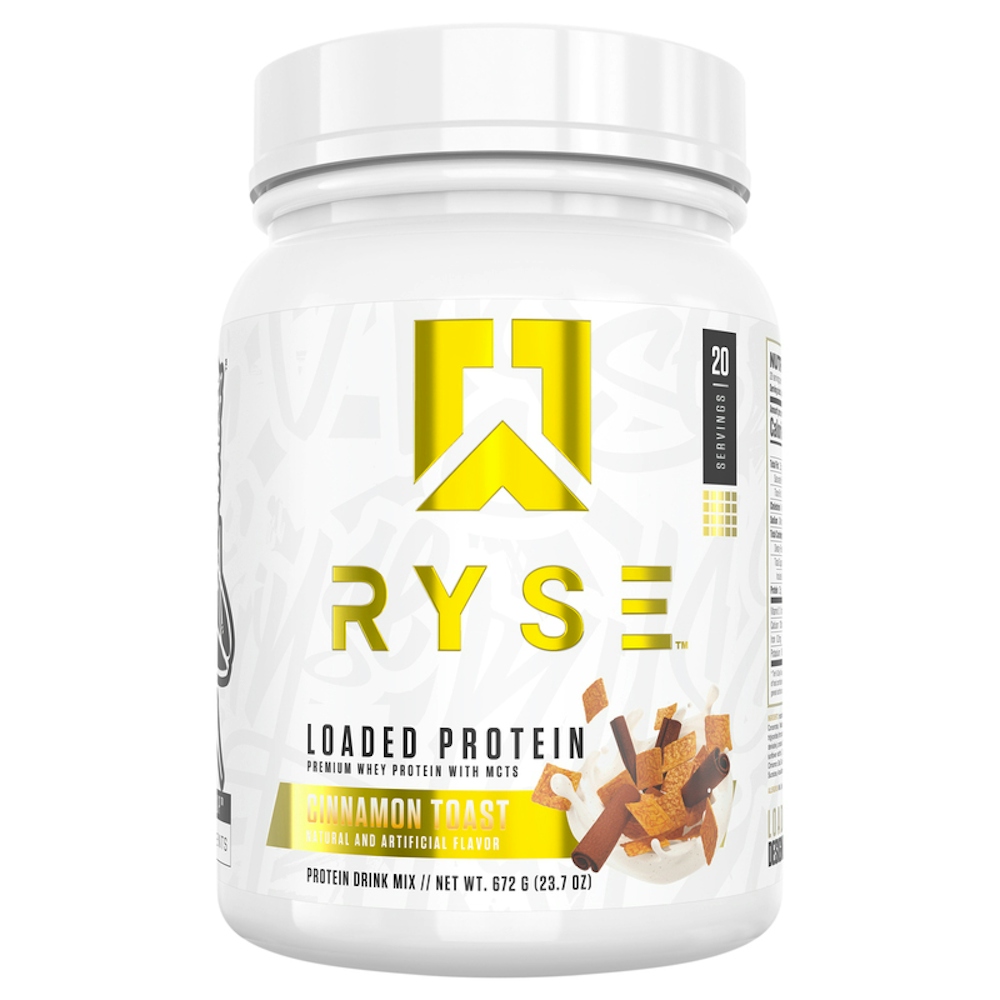
Ryse
Ryse Protein Drink Mix, Cinnamon Toast, Loaded Protein, 23.7 Ounce
INSTANTIZED WHEY PROTEIN ISOLATE · INSTANTIZED WHEY PROTEIN CONCENTRATE · NATURAL and ARTIFICIAL FLAVOR
Standout ingredient: XANTHAN GUM
Analysis by Aurascan. Sources are listed on the product page.
How Do Their Protein Sources and Filtration Processes Differ?
The fundamental divide between these two products lies in how their dairy proteins are isolated and processed. RYSE Loaded Protein uses a dual-whey formulation featuring whey protein isolate and whey protein concentrate. Whey isolate is the more refined fraction, with more of the fat and lactose filtered out; concentrate keeps more of the original milk fractions.
Because RYSE uses standard whey fractions without added lactase, individuals with severe lactose sensitivity should note that it is not declared lactose-free. For shoppers managing common sensitivities, reviewing Food Allergen Labels Explained: 9 Allergens and Their Hidden Names offers a helpful guide to identifying dairy derivatives on crowded ingredient lists.
Core Power takes an entirely different manufacturing route. Rather than rehydrating dried dairy powders, Fairlife starts with liquid grade A milk and runs it through specialized mechanical filters to concentrate the natural milk proteins while separating out sugars. It then introduces lactase enzyme into the liquid, converting residual milk sugars into simpler carbohydrates, allowing the RTD bottle to offer a lactose-free dairy drink. You can explore the full breakdown of this liquid formulation in our dedicated Fairlife Core Power product spotlight.
Scan preview
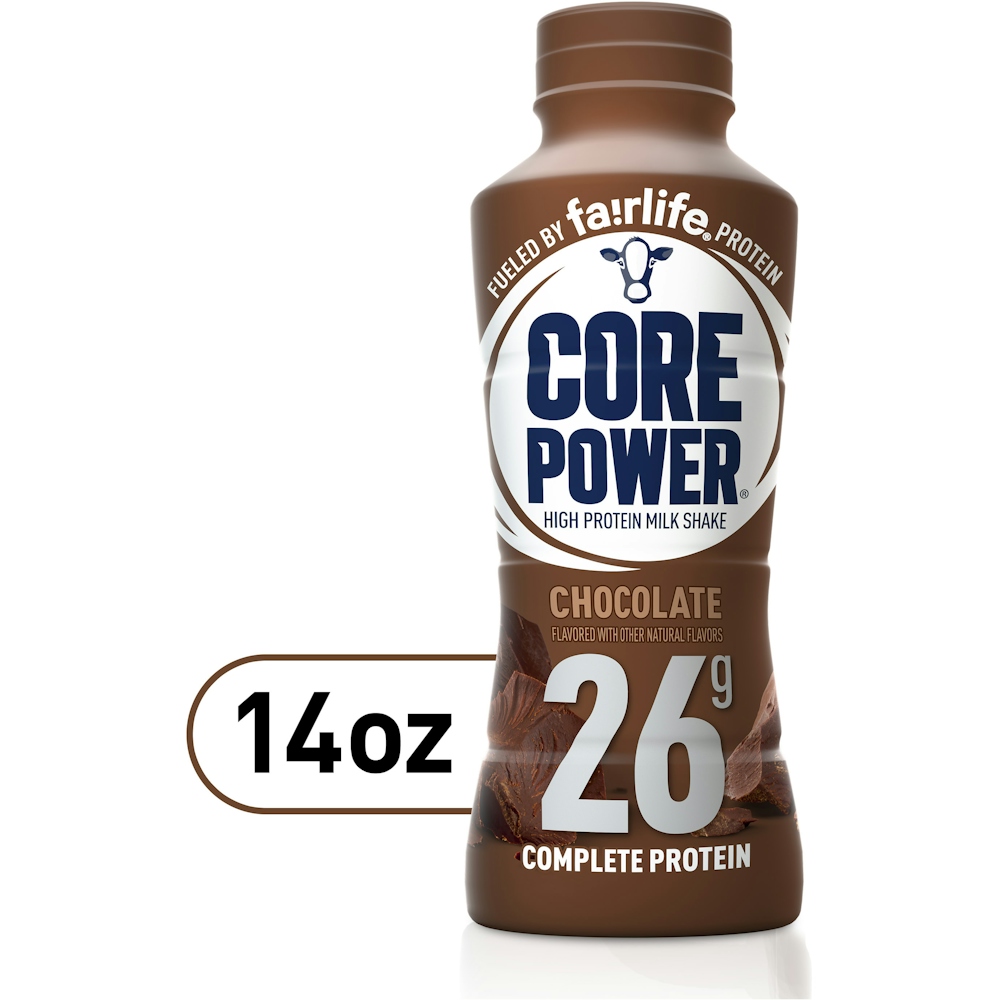
Core Power
Core Power Chocolate High Protein Milk Shake 14 Fl Oz
FILTERED LOW FAT GRADE A MILK · NATURAL FLAVORS · ALKALIZED COCOA POWDER
Standout ingredient: ACESULFAME POTASSIUM
Analysis by Aurascan. Sources are listed on the product page.
Which Sweetening System Better Balances Taste and Gut Tolerance?
Both products rely heavily on high-intensity artificial sweeteners to keep total sugars down while maintaining high sweetness levels. Both formulations share the combination of sucralose and acesulfame potassium. The FDA lists acesulfame potassium as about 200 times sweeter than table sugar and sucralose as about 600 times sweeter; formulators pair a fast-onset sweetener with a lingering one to mimic the taste curve of sugar without the calories.
Where they diverge is in secondary sweetening agents. Fairlife Core Power combines this high-intensity pair with plant-derived extracts: monk fruit juice concentrate and stevia leaf extract. This botanical combination rounds out the cocoa flavor profile and reduces the total amount of artificial sweeteners required in the liquid suspension.
RYSE skips plant extracts in favor of standard natural and artificial flavor compounds, working alongside real ground cinnamon. Consumers tracking how zero-calorie sweeteners and alternative sugars behave across diverse packaged goods can observe similar industrial blending strategies in comparisons like Fresca vs Diet Coke: Two Zero-Sugar Sodas, Two Different Labels.
Stabilizers and Thickeners: Carrageenan, Gums, and Inulin Digestion
Texture management is critical for both dry mixes and liquid shakes, but the formulations solve different rheological challenges. Both products utilize carrageenan and carboxymethylcellulose (cellulose gum) to create body, suspend solids, and prevent rapid separation. Carrageenan binds tightly with milk proteins, maintaining an even suspension of cocoa or cinnamon throughout the shelf life of the beverage or shake.
RYSE Loaded Protein incorporates additional structural agents due to its powder format. It includes xanthan gum for immediate viscosity upon shaking, alongside both soy lecithin and sunflower lecithin. These dual lecithins function as instantizing agents, allowing the hydrophobic protein granules to disperse evenly in water without clumping. Shoppers looking to compare these hydrocolloids and emulsifiers across packaged fitness items can browse our high-protein products roundup.
RYSE also adds medium chain triglyceride (MCT) oil powder, which relies on gum acacia as a spray-drying carrier, and organic agave inulin. Inulin is a soluble prebiotic dietary fiber composed of fructose chains. Inulin feeds bifidobacteria in the colon, which is why it is sold as a prebiotic, but it ferments quickly there. For people with irritable bowel syndrome or sensitivity to short-chain fermentable carbohydrates (FODMAPs), agave inulin can trigger gas, bloating, and abdominal discomfort.
Label Regulations: Nutrition Facts vs Supplement Facts Panels
When examining fitness beverages, one of the most significant yet overlooked distinctions is the regulatory panel on the back of the package. A ready-to-drink beverage like Fairlife Core Power is formulated and marketed as a conventional food item, requiring it to display a standard Nutrition Facts panel governed by 21 CFR 101.9 and explained in the FDA's Food Labeling Guide.
Powdered drink mixes, however, occupy a flexible border. Some tubs are labeled as conventional foods under Nutrition Facts regulations, while others are marketed as dietary supplements under 21 CFR 101.36, bearing a Supplement Facts panel as described in the FDA's Dietary Supplement Labeling Guide. Consumers should check which panel their specific tub carries:
- Conventional food products with Nutrition Facts must declare nutrients in standardized reference formats and cannot hide individual active components inside proprietary blends.
- Dietary supplements bearing Supplement Facts may group specific active ingredients under proprietary blends, disclosing only total blend weight rather than individual ingredient dosages.
- Dietary supplements are not pre-approved by the FDA before reaching retail shelves, placing the primary legal responsibility for safety, identity, and purity directly on the manufacturer.
Transparency and Contaminants: The Heavy Metals Debate
Beyond the stated ingredient list, third-party testing has drawn public attention to invisible trace compounds in protein processing. In an October 2025 investigation, Consumer Reports evaluated 23 commercial protein powders and ready-to-drink shakes. Their testing revealed that more than two-thirds of the evaluated products contained more lead in a single serving than Consumer Reports' own established daily safety benchmark.
This debate reached legislative halls with California Senate Bill 1033, introduced by Senator Padilla. The bill proposed requiring dietary supplement and protein manufacturers to systematically test their lots and publicly disclose levels of lead, cadmium, mercury, and inorganic arsenic. While SB 1033 successfully passed the California Senate Health Committee in March 2026, it was placed in the Appropriations Committee suspense file on May 14, 2026, stalling mandatory labeling requirements.
It is essential to clarify that neither RYSE Loaded Protein nor Fairlife Core Power declares trace heavy metal content on their packaging, nor does standard food labeling law currently require them to do so. Heavy metals enter protein products primarily through environmental absorption in soil, agricultural water, and industrial processing equipment, remaining entirely absent from standard ingredient lists.
Which Should You Pick: RYSE Powder or Core Power Shake?
Choosing the right option depends on your lifestyle demands, gastrointestinal tolerance, and culinary goals:
- Choose Fairlife Core Power if you need immediate, grab-and-go convenience after a workout without carrying shakers. It is also the superior pick if you suffer from lactose intolerance, thanks to its integrated lactase enzyme processing.
- Choose RYSE Loaded Protein if you want maximum versatility. The powder format allows you to calibrate serving sizes, incorporate protein into hot oatmeal or pancake batters, and benefit from added medium chain triglycerides.
- Proceed with caution on RYSE if you have a sensitive digestive tract prone to gas and cramping from fermentable fibers, as its agave inulin can provoke digestive symptoms.
- Proceed with caution on Core Power if you prefer to avoid ready-to-drink formulations that incorporate stevia leaf extract or monk fruit alongside artificial sweeteners.
Scientific evidence cannot establish how any individual digestive system will tolerate specific stabilizer matrices, nor can it predict long-term personal outcomes across unstudied populations with underlying gut conditions. The most effective approach is to review product packaging carefully. Aurascan is currently a free beta on iOS TestFlight, with a waitlist available for other platforms. The app analyzes food ingredients one by one with cited scientific evidence rather than assigning arbitrary numeric health scores, pulling authoritative data directly from Open Food Facts and the USDA with zero brand sponsorships. Scan your next protein powder or ready-to-drink shake to inspect processing aids and additives directly on your phone.
Try Aurascan
See what is really in the food you buy.
Common questions
- Is Fairlife Core Power lactose-free?
- Yes. Fairlife Core Power is made using ultra-filtered milk that is treated with the lactase enzyme, which breaks down residual lactose into simpler sugars, making it suitable for individuals with lactose sensitivity.
- Can RYSE Loaded Protein cause digestive issues?
- It may cause mild gas or bloating in individuals sensitive to fermentable fibers because its recipe includes organic agave inulin, a prebiotic fiber that ferments in the colon. It also contains whey concentrate, which contains small amounts of naturally occurring lactose.
- What artificial sweeteners are used in these protein products?
- Both RYSE Loaded Protein and Fairlife Core Power use a combination of sucralose and acesulfame potassium. In addition to these artificial sweeteners, Core Power includes monk fruit juice concentrate and stevia leaf extract.
- What is the difference between a Nutrition Facts and a Supplement Facts panel on protein?
- Nutrition Facts panels apply to conventional foods and require full disclosure of all nutritional lines without hiding ingredients in proprietary blends. Supplement Facts panels govern dietary supplements, which are not pre-approved by the FDA and permit manufacturers to group certain ingredients under proprietary blends.
- Do protein shakes and powders contain heavy metals?
- An October 2025 Consumer Reports investigation found that more than two-thirds of 23 tested protein products exceeded its daily threshold for lead in a single serving. However, standard product labels do not declare heavy metal levels, and current labeling laws do not require their disclosure.
Sources
- Guidance for Industry: A Food Labeling Guide (fda.gov)
- Non-nutritive Sweeteners and Health (pmc.ncbi.nlm.nih.gov)
- Inulin and Oligofructose: Review of Digestive Health Benefits (pmc.ncbi.nlm.nih.gov)
- Aspartame and Other Sweeteners in Food (fda.gov)
- Lead in Food, Foodwares, and Dietary Supplements (fda.gov)
In this series
Guide
Is Frigo String Cheese Clean? Four Ingredients, ScannedGuide
Is the Nature's Bakery Fig Bar Clean? Every Ingredient, ScannedGuide
Is Tillamook Cookie Dough Ice Cream Clean? 25 Ingredients, ScannedGuide
'No Artificial Colors' Has a New Meaning on US LabelsGuide
Court Says Allulose Is a Sugar. 'Zero Sugar' Labels Are in TroubleGuide
Texas School Lunches Now Ban 17 Additives. Here Is the List
Related guides
Latest News
Does Stevia Spike Insulin? New Trials and an EFSA Reb M OpinionTwo September 2026 trials found no insulin or blood sugar effect from stevia or acesulfame-K, and EFSA cleared a new Reb M process. The caveats.
Latest News
Ultra-Processed Food and 8.8 Million Adults: What the Review FoundA September 2026 meta-analysis of 51 cohorts links ultra-processed food to heart disease, cancer and death. What it shows, what it cannot, and the label clues.
Product Education
Is the Nature's Bakery Fig Bar Clean? Every Ingredient, ScannedWhole wheat flour, cane sugar, fig paste, brown rice syrup, an apple jam sub-list and canola oil. What a 'whole wheat' fig bar label actually says about sugar.
Try it on your own groceries
Scan your next label with Aurascan
Point the camera at any ingredient list and get the same evidence-graded read you see here.
Open the scannerLabel-reading intel, weekly.
What changed on food labels this week — bans, recalls, and new guides.