
Product Education · September 20, 2026 · 10 min read
Is the Nature's Bakery Fig Bar Clean? Every Ingredient, Scanned
Whole wheat flour, cane sugar, fig paste, brown rice syrup, an apple jam sub-list and canola oil. What a 'whole wheat' fig bar label actually says about sugar.
By Chris Carrillo · Reviewed by Armin Rad, Co-Founder & CTO, Aurascan · September 20, 2026
Every article is checked against primary sources before publication. How we review
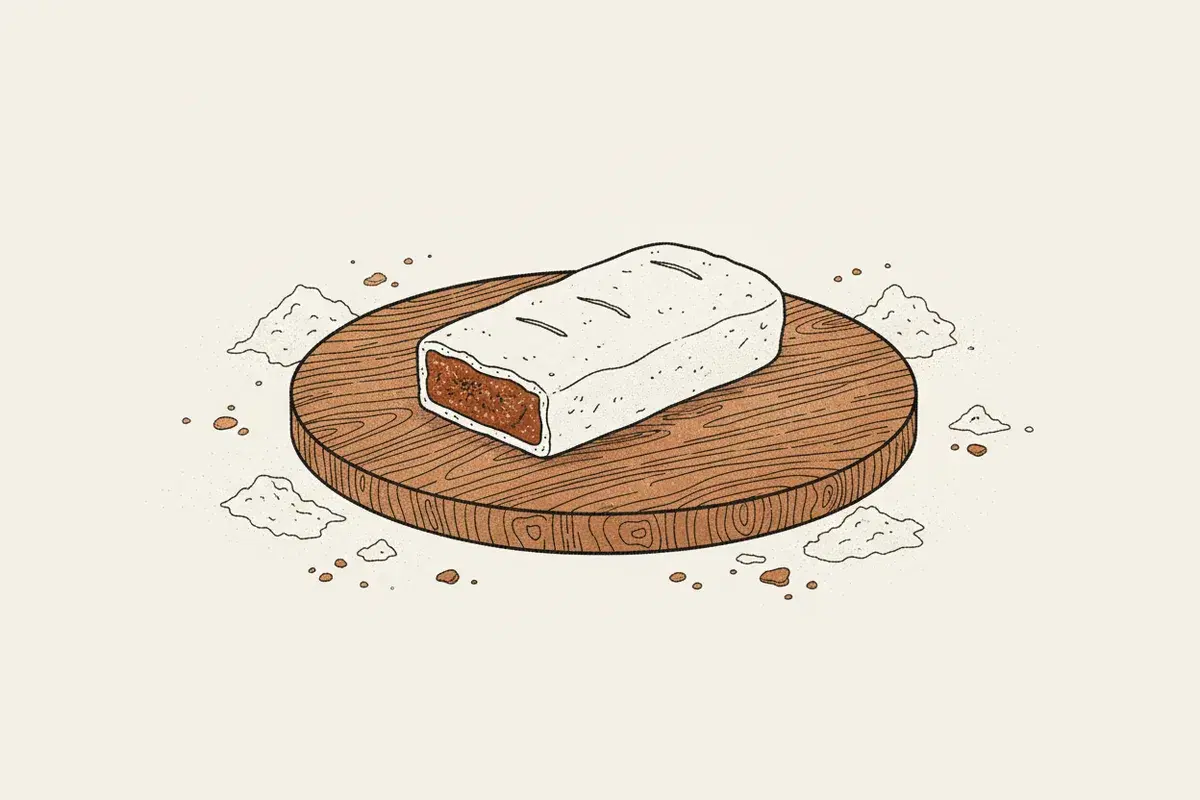
Nature's Bakery Apple Cinnamon Fig Bar combines whole wheat flour and fruit paste, but distributes sweeteners across five distinct entries totaling 19 grams of sugar per 56-gram serving. The formulation relies on vegetable glycerin (21 CFR 182.1320), plant thickeners, and exempt fruit juice colorants to maintain moisture and shelf stability.
Key takeaways:
- Sweeteners are split across multiple entries: cane sugar, brown rice syrup, naturally milled sugar, fig paste, and concentrated apple ingredients.
- Glycerin appears twice across the crust and fruit filling as an FDA-recognized humectant (21 CFR 182.1320) to retain moisture.
- The fruit filling uses locust bean gum and citrus pectin as plant-based thickeners rather than synthetic gelling agents.
- The coloring comes from fruit juice exempt from batch certification, satisfying common no-artificial-color standards.
Why people buy it
Nature's Bakery Whole Wheat Apple Cinnamon Fig Bars have become a pantry staple for families looking for an alternative to traditional cookies and candy bars. Shoppers are drawn to the prominent whole wheat branding, the promise of real fruit, and front-of-package badges highlighting plant-based, dairy-free, and non-GMO claims. The soft-baked texture and warm apple-cinnamon flavor make it an easy choice for school lunchboxes, road trips, and afternoon desk snacks.
Consumers also choose this snack because it feels closer to homemade baked goods than ultra-processed snack bars. With no artificial flavors, high fructose corn syrup, or synthetic food dyes on the packaging, many buyers view it as a wholesome staple. However, understanding what is actually inside this twin-pack requires looking past the front claims and examining how the recipe is constructed from the first ingredient to the last.
Scan preview
Nature's Bakery
Nature's Bakery Whole Wheat Apple Cinnamon Fig Bar
STONE GROUND WHOLE WHEAT FLOUR · DRIED CANE SUGAR · FIG PASTE
Standout ingredient: ROLLED OATS
Analysis by Aurascan. Sources are listed on the product page.
What Aurascan found
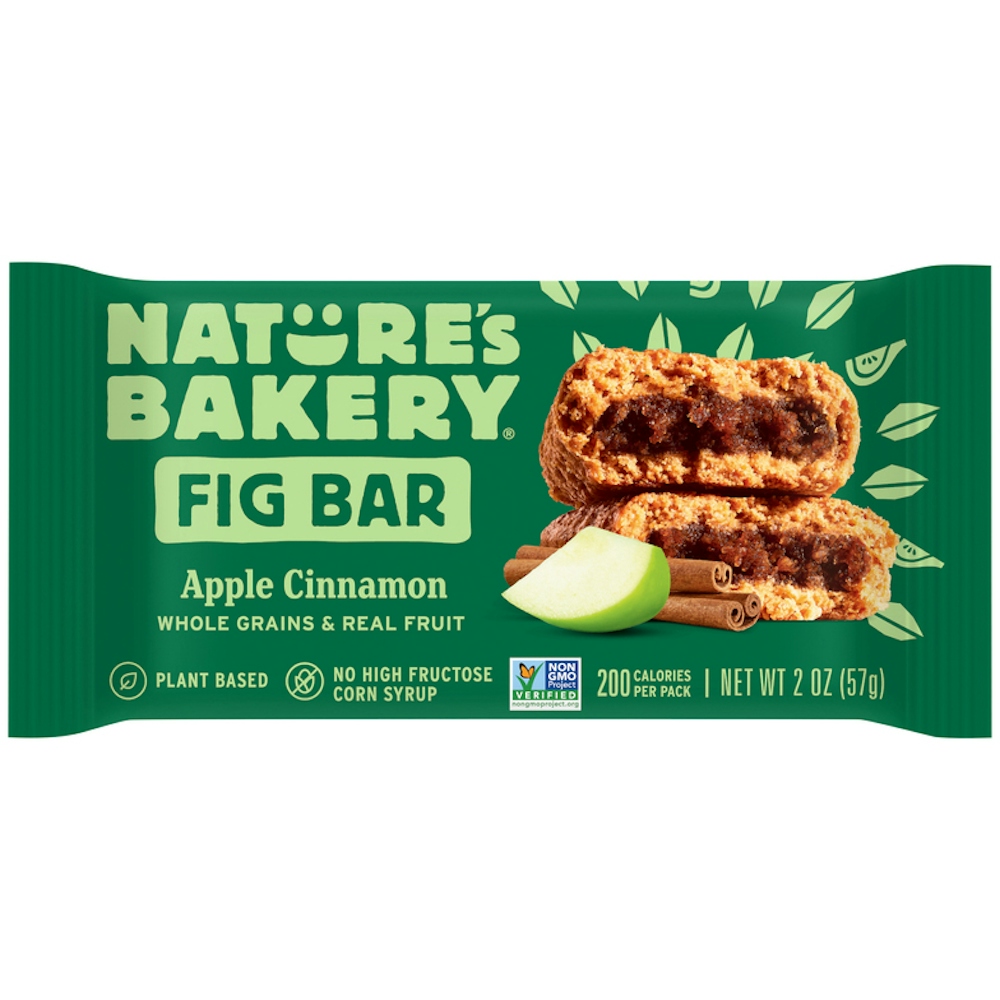
According to the manufacturer packaging and database entries verified through Open Food Facts, the complete ingredient list for the Nature's Bakery Whole Wheat Apple Cinnamon Fig Bar (2 oz / 56 g twin pack) reads in exact descending order:
Whole wheat flour, cane sugar, fig paste, brown rice syrup, apple jam (cane sugar, naturally milled sugar, rice starch, apple powder, evaporated apples, glycerin, natural flavor, pectin, citric acid, cinnamon, locust bean gum), canola oil, whole grain oats, glycerin, fruit juice (for color), sea salt, natural flavor, citric acid, baking soda. Allergen statement: Contains wheat.
To make sense of this dense formulation, we can divide the components into logical functional groups.
Whole wheat flour, whole grain oats, and canola oil
The foundation of the outer dough is whole wheat flour, which is listed as the very first ingredient. Under federal labeling standards, ingredients must be listed in descending order of predominance by weight. Starting with whole wheat flour ensures that the outer crust delivers intact grain components, including the bran, germ, and endosperm. Whole grain oats also appear further down the list, reinforcing the grain structure; the panel lists 3 grams of dietary fiber per twin pack, from the wheat, oats and fruit together.
Canola oil provides the dietary fat that keeps the baked crust tender and pliable; the exact grams are on the Nutrition Facts panel. Vegetable oils in shelf-stable baked goods help prevent moisture migration, ensuring that the crust does not dry out or turn brittle while sitting on grocery shelves. While some consumers look for cold-pressed or minimally processed oils, standard canola oil remains an efficient, neutral-tasting plant fat commonly used across commercial bakeries.
The sugar split: cane sugar, brown rice syrup, and apple jam
While whole wheat flour sits in the first position, analyzing the next several ingredients demonstrates how sweetening agents can be distributed across a label. Cane sugar is listed second, fig paste is third, and brown rice syrup is fourth. When you open the sub-ingredient list for the apple jam, you immediately encounter cane sugar again, followed by naturally milled sugar, apple powder, and evaporated apples. The package's Nutrition Facts panel, as recorded on Open Food Facts, lists 19 grams of total sugars per twin pack, of which 14 grams are Added Sugars, which is 28 percent of the Daily Value for added sugars in a 200-calorie serving.
In packaged goods, spreading sweetening components across multiple unique names prevents any single sugar from outweighing the primary grain ingredient. If the cane sugar from the dough and the sugars from the jam filling were combined into a single entry, the overall order of the label might shift significantly. Brown rice syrup, produced by enzymatically hydrolyzing rice starch into simpler sugars like maltose and glucose, adds both sweetness and viscous body to the filling. Some consumers raise questions about heavy metals in rice products, particularly brown rice syrup; however, label listings do not quantify trace minerals or heavy metal levels, and no specific conclusions about this product's arsenic profile can be drawn from the packaging alone.
Glycerin, pectin, and locust bean gum
Glycerin appears twice on this product label: once inside the apple jam sub-list and again in the main dough formulation. Vegetable glycerin is an odorless, viscous liquid recognized by the U.S. Food and Drug Administration as Generally Recognized as Safe (GRAS) under 21 CFR 182.1320. In baked goods, glycerin functions primarily as a humectant. It binds free water molecules, which keeps the filling jammy and prevents the whole wheat pastry from turning rock-hard during storage. Although it is not classified as an added sugar, glycerin is a polyol that does contribute calories.
The jam filling maintains its uniform consistency using pectin and locust bean gum. Pectin is a naturally occurring structural carbohydrate derived from citrus peels and apples that forms a stable gel in the presence of sugar and acid. Locust bean gum, milled from the seeds of the carob tree, acts as a complementary thickener and stabilizer. Together with rice starch, these plant polysaccharides ensure the fruit center does not leak out during high-temperature commercial baking.
Fruit juice for color, natural flavor, and leavening agents
The reddish-brown hue of the apple-cinnamon center is enhanced by fruit juice listed specifically for color. Under FDA regulations (21 CFR Part 73), color additives derived from plant, fruit, or mineral sources are classified as exempt from certification. This regulatory designation allows manufacturers to formulate foods without synthetic, petroleum-derived dyes like Red 40 while maintaining an appealing color. Under the FDA's February 2026 enforcement-discretion letter, a product coloured only with exempt colours like this one can carry a "no artificial colors" claim.
Rounding out the label are standard baking and flavoring agents:
- Natural flavor provides rounded apple and spice notes alongside real ground cinnamon.
- Citric acid controls the pH of the fruit jam, activating the gelling properties of pectin while providing a crisp tartness.
- Baking soda (sodium bicarbonate) acts as a chemical leavening agent, creating tiny pockets of air during baking to lighten the whole-grain dough.
- Sea salt balances the sweet notes and controls flour hydration; sodium milligrams are on the panel.
What to look for on the label
When evaluating shelf-stable snack bars at the grocery store, practicing methodical label reading helps separate marketing claims from actual formulation details. Front-of-box callouts like vegan, non-GMO, or dairy-free are printed by brands to signal lifestyle fit. It is important to note that the FDA does not define or formally regulate the term vegan on food packaging; the brand self-certifies that no animal ingredients are used.
To evaluate similar snack choices across the grocery aisle, compare how different brands approach their ingredient lists. For instance, read our breakdown of simple-ingredient snacks in Is SkinnyPop Clean? Three Ingredients, Scanned, or explore how dairy-based treats manage thickeners in Is Tillamook Cookies and Cream Clean? The Label, Scanned. You can also see how pure fruit products compare in Is Dole 100% Pineapple Juice Clean? The Label, Scanned, or look at multi-ingredient shakes in Is Core Power Clean? Every Ingredient in the Shake, Scanned, Are Pringles Hot Honey Clean? Every Ingredient, Scanned, and Is Sprite Clean? Every Ingredient in the Can, Scanned.
Keep these three principles in mind when inspecting packaged snack labels:
- Track composite sugars: Check whether added sugars appear under multiple names in both the dough and the filling sub-ingredients.
- Check the Nutrition Facts panel: Do not guess total sugar or fiber content from the ingredient names alone; look directly at the nutrition table for exact grams of total carbohydrates and added sugars per serving.
- Identify functional humectants: Ingredients like glycerin serve structural roles by holding onto moisture, helping you understand how commercial baked goods remain soft without refrigeration.
Quiz
Is a Nature's Bakery Apple Cinnamon Fig Bar clean?
Guess before you scroll.
Reveal Aurascan's verdict
Aurascan says: Flagged
The main flag is STONE GROUND WHOLE WHEAT FLOUR.
Is Nature's Bakery Fig Bar suitable for daily snacking?
Whether this fig bar fits into a balanced daily routine depends heavily on your nutritional priorities and dietary goals. With 19 grams of sugar in a 200-calorie, 38-gram-carbohydrate twin pack (per the panel), it operates nutritionally more like a whole-grain sweet pastry than a low-glycemic meal replacement: quick energy for a hike or a sports practice rather than a low-sugar snack.
However, individuals monitoring glycemic spikes or managing metabolic conditions may find that the 14 grams of added sugars outweigh the benefits of its 3 grams of dietary fiber. For broader context on how whole-food snacks handle ingredient simplicity, compare this bar to Is Fage Total 0% Clean? A Two-Line Yogurt Label, Scanned or examine indulgent dessert baselines in Is Häagen-Dazs Chocolate Clean? Five Ingredients, Scanned, Is Tillamook Cookie Dough Ice Cream Clean? 25 Ingredients, Scanned, and Are Friendly's Orange Cream Bars Clean? Every Ingredient, Scanned.
How does the sugar content compare to traditional snack bars?
Many consumers turn to fig bars under the impression that the sweetness stems entirely from whole dried fruit. While fig paste and evaporated apples do contribute natural fruit sugars, the inclusion of cane sugar, brown rice syrup, and naturally milled sugar accounts for the majority of the sweetness. In fact, the panel attributes 14 of the 19 grams to Added Sugars, so most of the sweetness does not come from the fruit.
Nature's Bakery avoids high fructose corn syrup and synthetic preservatives, but a sweet baked bar is still a sweet baked bar; compare the Added Sugars line against any toaster pastry before assuming it is the lighter choice. Beverage options like Is Fanta Orange Clean? Every Ingredient, Scanned and Is Fanta Pineapple Clean? Every Ingredient, Scanned illustrate how high sugar levels accumulate rapidly, reinforcing why scanning labels for added syrups is essential regardless of product category.
Does processing affect the whole grain benefits?
Using whole wheat flour as the primary ingredient gives this bar a nutritional advantage over conventional baked treats made with refined, enriched white flour. The intact whole grain preserves natural B vitamins, iron, and dietary fiber that are typically stripped away during industrial flour milling. However, commercial baking and blending with oils and liquid syrups modify the physical food matrix.
While whole grains digest more slowly than refined flours, the accompanying sugars and pulverized starches accelerate digestion compared to intact whole kernels or steel-cut oats. Thus, while the bar does provide 3 grams of whole-grain dietary fiber, it is absorbed more rapidly than an unrefined whole-grain breakfast bowl. Label analysis provides clear visibility into ingredient presence, but cannot measure exact personal insulin responses or postprandial blood glucose levels across different metabolic profiles.
Aurascan label data
Aurascan is a free food-label scanner app currently available in beta via iOS TestFlight, with a waitlist open for other platforms. Unlike services that generate a single arbitrary health grade, Aurascan analyzes labels ingredient by ingredient using cited regulatory and scientific evidence. The database aggregates verified product information from Open Food Facts, the USDA, and global barcode repositories, with citations continuously reviewed by an automated verifier.
Rather than assigning a mysterious score, the app provides distinct verdicts for each component: Clean, Mixed, or Flagged. Because Aurascan operates independently with no brand sponsors or advertising partnerships, consumers receive transparent, evidence-based ingredient context directly on their phones.
It is important to state plainly what packaging evidence cannot establish: an ingredient list does not indicate an individual's unique glycemic response, personal gastrointestinal tolerance to gums and polyols, or the presence of unstudied agricultural residues. If you want to see how the ingredients in your favorite snacks break down one by one, download the Aurascan beta and scan your next snack bar label directly.
Try Aurascan
See what is really in the food you buy.
Common questions
- Does Nature's Bakery Apple Cinnamon Fig Bar contain high fructose corn syrup?
- No. The sweetening profile uses whole wheat flour, cane sugar, fig paste, brown rice syrup, naturally milled sugar, apple powder, and evaporated apples, without high fructose corn syrup.
- Why is glycerin added to this fig bar?
- Glycerin serves as an FDA-recognized humectant (21 CFR 182.1320) in both the dough and the jam filling. It binds moisture to keep the crust and fruit center soft throughout shelf life.
- How much added sugar is in one serving of this fig bar?
- The Nutrition Facts panel lists 19 grams of total sugars per twin pack, of which 14 grams are Added Sugars (28 percent of the Daily Value).
- Is the apple cinnamon fig bar officially certified vegan by the FDA?
- The FDA does not establish a formal legal definition for the term vegan on food labels. While the ingredients are entirely plant-derived, the vegan claim is placed by the manufacturer.
- What provides the color in the apple cinnamon filling?
- The color is achieved using fruit juice listed specifically for color. This is an FDA-recognized color additive exempt from certification under 21 CFR Part 73.
- Where should I look to see the exact grams of sugar in this snack?
- Always consult the Nutrition Facts panel on the physical package. The ingredient list shows what sweetening sources are present by weight, but only the nutrition table provides exact grams of total and added sugars.
Sources
- Fig Bar Apple Cinnamon Nature's Bakery - Ingredient Profile (world.openfoodfacts.org)
- Added Sugars on the Nutrition Facts Label (fda.gov)
- Guidance for Industry: Food Labeling Guide (fda.gov)
In this series
Guide
Is Tillamook Cookie Dough Ice Cream Clean? 25 Ingredients, ScannedGuide
Is SkinnyPop Clean? Three Ingredients, ScannedGuide
Is Häagen-Dazs Chocolate Clean? Five Ingredients, ScannedGuide
Is Fanta Pineapple Clean? Every Ingredient, ScannedGuide
Is Tillamook Cookies and Cream Clean? The Label, ScannedGuide
Is Fanta Orange Clean? Every Ingredient, Scanned
Related guides
Product Education
Are Stacy's Pita Chips Clean? Every Ingredient, ScannedEnriched wheat flour, sunflower and/or canola oil, two Parmesans and a 2-percent tail with rosemary extract. Stacy's Parmesan Garlic and Herb pita chips, line by line.
Product Education
Is Frigo String Cheese Clean? Four Ingredients, ScannedPasteurized part-skim milk, cheese cultures, salt, enzymes. What the FDA standard for low-moisture mozzarella requires, and what 'enzymes' hides on a cheese label.
Product Education
Is Tillamook Cookie Dough Ice Cream Clean? 25 Ingredients, ScannedTillamook Chocolate Chip Cookie Dough lists 25 ingredients, most of them cookie dough. Which are dairy, which are dough, and where the gums and lecithin come in.
Try it on your own groceries
Scan your next label with Aurascan
Point the camera at any ingredient list and get the same evidence-graded read you see here.
Open the scannerLabel-reading intel, weekly.
What changed on food labels this week — bans, recalls, and new guides.