
Latest News · September 20, 2026 · 7 min read
Texas School Lunches Now Ban 17 Additives. Here Is the List
Texas SB 314 applies to free and reduced-price school meal contracts from September 1, 2026. Which dyes and preservatives are out, and what it means for snack labels.
By Chris Carrillo · Reviewed by Armin Rad, Co-Founder & CTO, Aurascan · September 20, 2026
Every article is checked against primary sources before publication. How we review
Texas public school meal contracts entered into or renewed on or after September 1, 2026, must now exclude 17 specific food additives under Texas Senate Bill 314. Signed on May 27, 2025, the law targets free and reduced-price breakfasts and lunches, removing synthetic dyes, preservatives, and dough conditioners statewide.
Key takeaways
- Texas Senate Bill 314 applies to school food contracts entered into or renewed on or after September 1, 2026, directly affecting the 2026-2027 school year.
- The law names exactly 17 substances, including 9 synthetic petroleum dyes, BHA, titanium dioxide, azodicarbonamide, and caramel colors III and IV, as well as substantially similar additives.
- The ban is limited to contracts for free and reduced-price meals in public and open-enrollment charter schools, rather than every retail food sale across the state.
- Parents who pack lunches must still inspect ingredient panels manually to identify these 17 additives in packaged grocery staples.
What happened
On May 27, 2025, Texas Governor Greg Abbott signed Senate Bill 314 into law, enacting strict chemical additive restrictions across Texas public school districts and open-enrollment charter campuses. The final statutory text codified under Texas Education Code Chapter 33 establishes clear boundaries on ingredients allowed in cafeteria kitchens serving subsidized dining programs.
Under the bill text available on Texas Legislature Online, these restrictions govern any contract to provide food for free or reduced-price meals that is entered into or renewed on or after September 1, 2026. The 2026-2027 school year, now under way, is therefore the first one the law bites.
Texas SB 314 explicitly forbids meal providers from supplying items containing any of the 17 listed chemical additives, or any substance determined to be substantially similar. Unlike broad public health initiatives that apply to overall supermarket shelves, this legislative action concentrates directly on state-supported child nutrition.
Scan preview
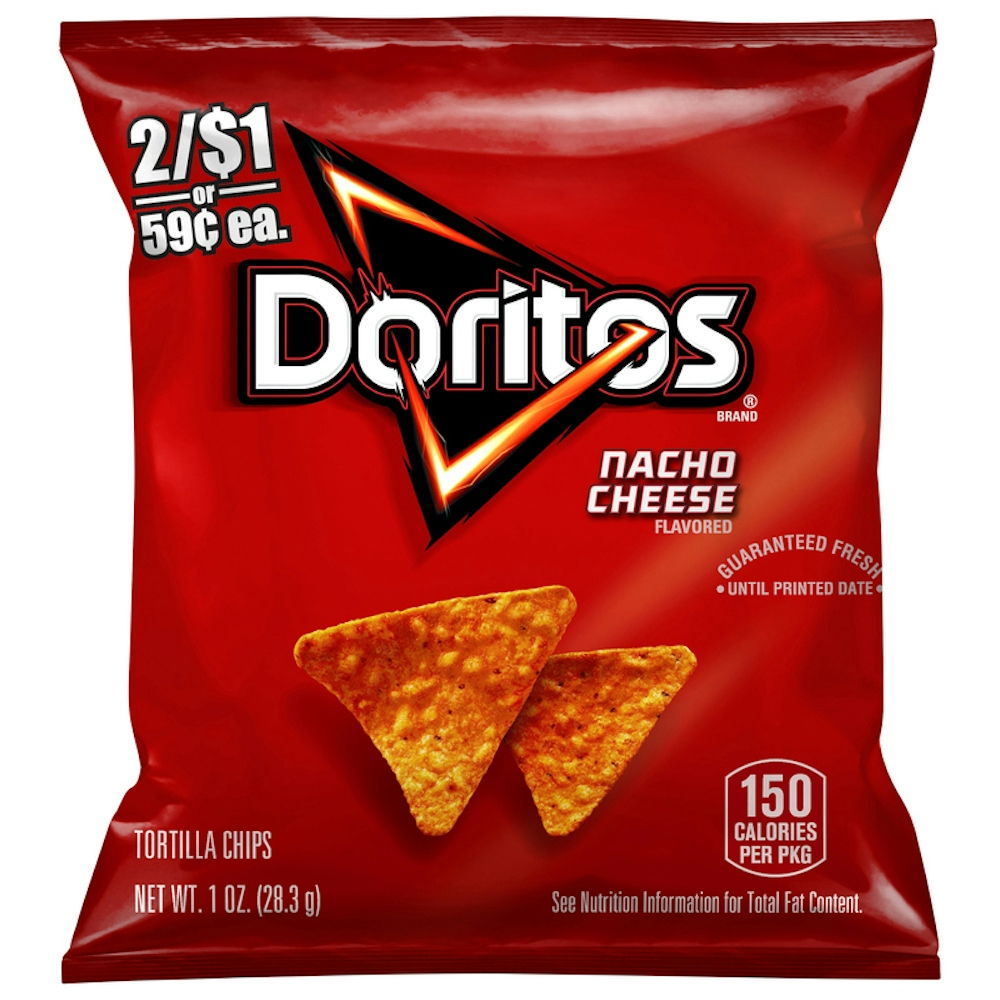
Doritos
Doritos Tortilla Chips Nacho Cheese Flavored - 1 Ounce
Vegetable Oil · Canola · Corn
Standout ingredient: Sunflower
Analysis by Aurascan. Sources are listed on the product page.
What changed?
The statute sets out an exact list of 17 prohibited ingredients. Food service directors and vendors must audit supplier sheets to eliminate these specific compounds from campus kitchens:
- Blue Dye No. 1
- Blue Dye No. 2
- Citrus Red Dye No. 3
- Green Dye No. 3
- Orange B
- Red Dye No. 3
- Red Dye No. 40
- Yellow Dye No. 5
- Yellow Dye No. 6
- Brominated vegetable oil (BVO)
- Potassium bromate
- Propylparaben
- Azodicarbonamide (ADA)
- Butylated hydroxyanisole (BHA)
- Ammonia caramel (Class III)
- Sulfite ammonia caramel (Class IV)
- Titanium dioxide
These substances represent several distinct functional categories in industrial processing. Synthetic petroleum-derived colorings, nine of the 17 names, are commonly used in flavored snacks, fruit-flavored breakfast items, and packaged treats. For in-depth safety evaluations of individual dyes, consumers can review our Red 40 review as well as our tartrazine review. Parents looking closely at packaging can also explore 5 Snacks and Sodas Scanned for Artificial Dyes to see where these artificial colors typically appear.
Preservatives like BHA are commonly added to cereal liners, potato chips, and vegetable oils up to the federal limit of 0.02% (or 200 parts per million) of fat content to slow lipid oxidation. For more analysis on how this compound behaves in shelf-stable snacks, see our detailed BHA review. Dough conditioners such as azodicarbonamide, traditionally capped at 45 parts per million in commercial flour, and potassium bromate have historically been used in commercial baking to improve bread volume. Titanium dioxide provides an opaque white pigment in powdered frostings; read our comprehensive titanium dioxide review for the scientific breakdown on nanoparticle safety. Additionally, Class III and Class IV caramel colorings are frequently found in dark sodas, barbecue sauces, and gravies.
Three of the additives on the Texas list, specifically brominated vegetable oil, potassium bromate, and propylparaben, were already rare or had faced federal action. For example, the FDA revoked the regulation authorizing brominated vegetable oil in food in July 2024. However, SB 314 places all 17 names directly into state educational code, and you can follow how each state handles these restrictions using our state-bans tracker guide.
Who is affected?
The scope of SB 314 is precise. As outlined in a legal analysis by Haynes and Boone, LLP, the statute applies strictly to contracts to provide food for free or reduced-price meals entered into or renewed by Texas school districts and open-enrollment charter schools. It does not apply to retail groceries outside of schools, private school dining halls, or standalone vending machine items paid for out of pocket unless those items are contracted under the subsidized meal program.
The statutory text does not spell out detailed administrative penalty schedules or single out individual food service management companies. Instead, the legal obligation rests on the district level through procurement contract compliance.
For families, the statute guarantees that children receiving state-subsidized school breakfasts and lunches will not be served these 17 specific ingredients during eligible dining periods. However, the bill does not regulate lunches, snacks, or drinks packed at home and brought onto campus in a lunchbox.
Quiz
Is Frigo string cheese clean?
Guess before you scroll.
Reveal Aurascan's verdict
Aurascan says: Flagged
The main flag is Pasteurized Part Skim Milk.
What it means for shoppers
Because SB 314 operates as an institutional procurement law rather than a consumer labeling mandate, packaged goods in Texas grocery stores will continue to carry these 17 ingredients. A parent buying packaged food at retail will still see standard federal ingredient lists, making label reading essential.
When reviewing food packages for a packed school lunch, check the ingredient statement on the back or side panel:
- Synthetic dyes: Look for FD&C names such as Red 40, Yellow 5 (tartrazine), Yellow 6, Blue 1, or Blue 2. For more context on how brands handle these formulations, see Skittles and M&M's Without FD&C Colors: What Changed on the Label.
- Preservatives: Scan the fine print on bags of chips and cereals for BHA, often listed alongside preservatives like BHT.
- Baking agents: Check commercial sliced breads and buns for azodicarbonamide or potassium bromate.
- Coloring agents: Look for titanium dioxide in white dressings, powdered doughs, and confections, and check sauces for caramel color classes.
Shoppers should keep in mind that the federal Nutrition Facts panel lists macronutrients like sugars and sodium, but the ingredient statement below it is where these 17 additives must be disclosed. Consumers reviewing different packaged options can also check comparisons like Fresca vs Diet Coke: Two Zero-Sugar Sodas, Two Different Labels to see how coloring and preservative choices vary widely across similar products.
The background
Texas SB 314 is part of a broader nationwide wave of state-level scrutiny regarding food additives. As tracked by Global Policy Watch, multiple states are moving ahead of federal timelines. In October 2023, California enacted the California Food Safety Act, banning brominated vegetable oil, potassium bromate, propylparaben, and Red Dye No. 3 statewide. California later followed with Assembly Bill 2316, signed in September 2024, which specifically removes six synthetic food dyes from public school foods by December 31, 2027. To see how these statutory models compare across state lines, consult our state-bans tracker guide.
Federal regulators have also taken steps to address food chemicals. In April 2025, HHS and the FDA announced a petroleum-dye phase-out plan accompanied by a public industry pledge tracker, encouraging manufacturers to voluntarily transition away from certified synthetic colorings in food products.
It is important to differentiate SB 314 from other Texas legislation. Texas Senate Bill 25, for example, is a distinct statutory initiative focused on consumer warning labels rather than cafeteria ingredient procurement rules; see our report on Texas SB 25 warning labels for full details on that retail packaging mandate. While SB 25 sparked discussion around front-of-pack alerts, SB 314 concentrates exclusively on the procurement of school meals.
Scientists and public health regulators continue to evaluate chemical exposure profiles. It is worth noting that current scientific evidence cannot establish uniform individual sensitivity levels for every consumer, and research remains ongoing regarding low-dose chronic exposure to additive combinations in children. While some parents report perceived behavioral sensitivity to artificial dyes, regulatory agencies worldwide hold differing assessments regarding acceptable daily intakes.
What to watch next
As the 2026-2027 academic year gets fully underway, school nutrition directors across Texas will be monitoring their supply chains to ensure delivery orders adhere to the 17-additive exclusion. Because large food manufacturers often supply regional school districts through multi-state supply contracts, observers are watching whether manufacturers will reformulate products nationwide or produce dedicated formulations specifically for Texas school lines.
Other states are considering similar legislation, using the California and Texas frameworks to design school dining restrictions. Further federal determinations from the FDA on petition reviews for food dyes and preservatives may also influence the national landscape.
For families navigating grocery aisles, independent ingredient checking remains the most direct way to identify what is inside packaged snacks. Aurascan is a free food-label scanner app currently available in beta via iOS TestFlight, with a waitlist open for other platforms. The app does not rely on a single black-box score or sponsored product placements. Instead, it pulls verified packaging data from Open Food Facts, the USDA, and barcode databases, cross-referencing every ingredient against cited evidence to deliver per-ingredient verdicts: Clean, Mixed, or Flagged. You can scan your next snack label with the Aurascan app to check for these 17 additives directly from your phone.
Try Aurascan
See what is really in the food you buy.
Common questions
- What is Texas Senate Bill 314?
- Texas Senate Bill 314 is a state law signed on May 27, 2025, that prohibits public school districts and open-enrollment charter schools from providing free or reduced-price meals containing any of 17 named food additives.
- When does the Texas school additive ban take effect?
- The restriction applies to school meal food contracts entered into or renewed on or after September 1, 2026, making the 2026-2027 school year the first academic calendar affected by the rule.
- Does SB 314 apply to food brought from home in packed lunchboxes?
- No. The law strictly regulates procurement contracts for free and reduced-price meals served by public and charter schools. It does not regulate personal lunches or snacks packed by parents at home.
- Which food dyes are banned in Texas school lunches?
- The law specifically bans nine synthetic dyes: Blue Dye No. 1, Blue Dye No. 2, Citrus Red Dye No. 3, Green Dye No. 3, Orange B, Red Dye No. 3, Red Dye No. 40, Yellow Dye No. 5, and Yellow Dye No. 6.
- How does Texas SB 314 differ from California's school food laws?
- California AB 2316 bans six synthetic food dyes from school meals starting December 31, 2027. Texas SB 314 includes synthetic dyes as well as dough conditioners like azodicarbonamide, preservatives like BHA, titanium dioxide, and specific caramel colorings, taking effect for contracts starting September 1, 2026.
- How does Texas SB 314 differ from Texas SB 25?
- Texas SB 314 governs public school food procurement contracts for free and reduced-price meals, whereas Texas SB 25 is a separate statutory initiative focused on commercial retail packaging warning labels.
Sources
- Certain Food Additives Now Banned in Texas Schools (haynesboone.com)
- Texas Education Code Chapter 33 (statutes.capitol.texas.gov)
- Texas Also Enacts Bans on Certain Ingredients in School Meals (globalpolicywatch.com)
- Senate Bill No. 314 Bill Text (capitol.texas.gov)
- Color Additives Questions and Answers for Consumers (fda.gov)
- Tracking Food Industry Pledges to Remove Petroleum-Based Food Dyes (fda.gov)
In this series
Guide
Dietary Guidelines Name 4 Things No Food Label ShowsGuide
5 Chips and Popcorns Scanned for Seed OilsGuide
Food Allergen Labels Explained: 9 Allergens and Their Hidden NamesGuide
Dole Pineapple Juice vs Fanta Pineapple: 4 Ingredients vs 13Guide
Fresca vs Diet Coke: Two Zero-Sugar Sodas, Two Different LabelsGuide
Is SkinnyPop Clean? Three Ingredients, Scanned
Related guides
Latest News
SNAP Soda Bans: 18 States Open for Comment After a 12% Sales DropUSDA published 18 state SNAP soda and candy restriction notices on September 15, 2026. A new study finds purchases fell 12.4 percent. What counts as a sweetened drink.
Latest News
Ultra-Processed Food and Kidney Disease: What a New Study FoundIn 2,661 adults over 65, animal-sourced ultra-processed foods had the strongest link to chronic kidney disease. The numbers and the caveats.
Latest News
Does Stevia Spike Insulin? New Trials and an EFSA Reb M OpinionTwo September 2026 trials found no insulin or blood sugar effect from stevia or acesulfame-K, and EFSA cleared a new Reb M process. The caveats.
Try it on your own groceries
Scan your next label with Aurascan
Point the camera at any ingredient list and get the same evidence-graded read you see here.
Open the scannerLabel-reading intel, weekly.
What changed on food labels this week — bans, recalls, and new guides.