
Latest News · September 20, 2026 · 7 min read
Skittles and M&M's Without FD&C Colors: What Changed on the Label
Mars now sells Skittles, Starburst, Extra and M&M's made without certified dyes. How to spot the difference on the bag, and why the blue M&M's are still missing.
By Chris Carrillo · Reviewed by Armin Rad, Co-Founder & CTO, Aurascan · September 20, 2026
Every article is checked against primary sources before publication. How we review
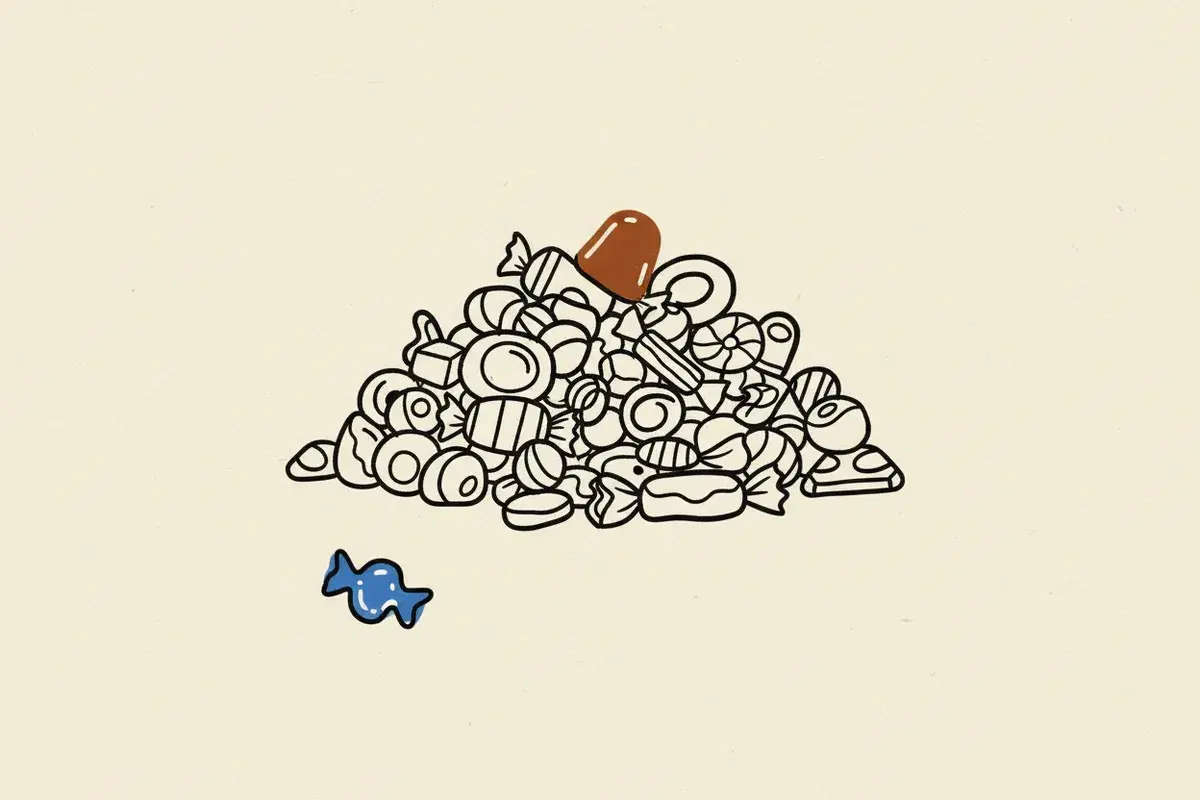
On August 13, 2026, Mars Snacking U.S. released alternative versions of Skittles Original, Starburst Original, Extra Spearmint gum, and M&M's Milk Chocolate formulated without FD&C certified synthetic food dyes on Amazon. The new M&M's option features only red, orange, green, and yellow pieces, omitting blue and brown candies while original dye-containing recipes remain on shelves.
The change shows up in the ingredient statement: the new versions carry no certified synthetic dyes such as Red 40, Yellow 5 or Blue 1. Mars has not published which colourants replace them, but colours exempt from certification typically appear on US labels either by source (beet juice, turmeric, spirulina extract, annatto) or under the catch-all "color added".
Key Takeaways
- On August 13, 2026, Mars Snacking introduced alternative versions of Skittles, Starburst, Extra gum, and M&M's made without petroleum-based synthetic colors on Amazon.
- The dye-free M&M's blend includes only red, orange, green, and yellow candies because Mars has not yet found acceptable alternatives for blue and brown.
- Certified synthetic colors like Red 40, Yellow 5, and Blue 1 are absent from these new packages, replaced by exempt-from-certification color additives from botanical or mineral origins.
- Under FDA regulation 21 CFR 101.22(k)(2), products colored using natural sources may still legally declare "Artificial Color" because the added pigment does not naturally belong to the candy base.
- These items are optional line extensions; original formulations using classic synthetic dyes remain actively sold in stores.
What happened
On August 13, 2026, Mars Snacking U.S. launched an alternative line of its flagship confectionery products made entirely without FD&C (Food, Drug, and Cosmetic) certified synthetic colors. The launch became available via Amazon, bringing dye-free varieties of Skittles Original (all 5 traditional fruit flavours), Starburst Original Fruit Chews (4 flavours), and Extra Spearmint gum to American consumers.
The launch also included M&M's Milk Chocolate, but with an immediate visual twist: the new candy mix contains only four colors: red, orange, green, and yellow. Mars said that blue and brown candies were left out of this initial dye-free release because the manufacturer has not yet developed natural replacement colorings that meet its internal appearance, taste, and shelf-stability criteria.
Mars emphasized that this rollout represents an expansion of product options rather than a permanent recipe reformulation across its entire portfolio. The classic versions of Skittles, Starburst, Extra, and traditional six-color M&M's containing conventional FD&C dyes remain available on standard retail shelves nationwide.
Scan preview
Doritos
Doritos Tortilla Chips Nacho Cheese Flavored - 1 Ounce
Vegetable Oil · Canola · Corn
Standout ingredient: Sunflower
Analysis by Aurascan. Sources are listed on the product page.
What changed on the ingredient label?
The most notable shift is found directly within the ingredient statements printed on the back of each package. Conventional candy lines rely on FD&C certified color additives derived from petroleum sources, which federal law requires brands to declare individually by name, as outlined in the FDA Summary of Color Additives for Use in the United States.
On traditional candy labels, consumers typically identify colorings such as FD&C Red No. 40, FD&C Yellow No. 5 (tartrazine), FD&C Yellow No. 6, and FD&C Blue No. 1. In contrast, the newly released formulations replace these chemical dyes with FDA-designated exempt-from-certification color additives derived from plant, vegetable, or mineral sources. Mars says it spent more than a decade researching and testing the formulations.
While Mars did not disclose its exact proprietary blend of natural colorants for each candy in its launch announcement, exempt-from-certification color additives commonly appear on U.S. ingredient decks as "color added," "fruit and vegetable juice (color)," or specific botanical derivatives like beet juice concentrate, turmeric oleoresin, annatto extract, and spirulina extract. Shoppers learning How to Read a Food Label: The Ingredient List, Line by Line will see these plant-based descriptors replacing the familiar numbered synthetic dyes.
Who is affected by this candy launch?
This release primarily affects consumers seeking to reduce or eliminate certified synthetic food dyes from their households. Parents, individuals with sensitivities, and shoppers who routinely scan food packaging now have a direct choice within popular candy brands without needing to purchase foreign imports or specialized niche confectionery.
Geographically, the release is currently concentrated through online ordering via Amazon for U.S. consumers. Mars has not published specific dates or price points for widespread brick-and-mortar retail distribution of these specific dye-free bags. For broader context on how brands navigate synthetic colorings across product categories, see our guide on 5 Snacks and Sodas Scanned for Artificial Dyes.
Additionally, candy lovers expecting a traditional M&M's experience will notice the structural difference in their bags. Because the blue and brown candies are entirely absent, color distribution in the new bags is strictly limited to four hues. Mars says it is continuing to refine the formulation to bring blue and brown back.
Quiz
Is a bottle of Fanta Pineapple clean?
Guess before you scroll.
Reveal Aurascan's verdict
Aurascan says: Flagged
The main flag is High Fructose Corn Syrup.
What it means for shoppers at the store
For shoppers standing in front of a candy display or reviewing an online listing, the packaging details require close reading. Understanding these differences helps prevent confusion between synthetic and botanical ingredients, especially when consulting consumer guidance like the FDA Color Additives in Foods Information for Consumers.
Label Differences to Watch For
- FD&C Certified Dyes: Traditional packages will explicitly list names like Red 40, Yellow 5, Yellow 6, Blue 1, or Blue 2.
- Exempt Color Additives: Dye-free packages replace numbered dyes with phrases such as "color added," "turmeric," "beet juice," "annatto," or "spirulina extract."
- The Artificial Color Quirks: Under federal labeling law 21 CFR 101.22(k)(2), a food colored with botanical juices can still legally declare "Artificial Color" or "Colored with Fruit Juice." The regulation lets colours exempt from certification be declared as "Artificial Color", "Artificial Color Added" or "Color Added", or by their name, so the phrase alone does not tell you whether a petroleum dye or a plant extract was used.
- Nutrition Facts: Swapping a colourant does not change the sugar. Check the Nutrition Facts panel for calories, sugar and fat; a dye-free candy is still candy.
Finding stable natural blues remains the primary obstacle for candy manufacturers. While spirulina extract (containing phycocyanin) is commonly used, it can degrade under high heat and acidic conditions. Newer options, such as Galdieria blue extract and butterfly pea flower extract, provide alternate options, but achieving a shelf-stable, deep chocolate-shell brown and royal blue without synthetic dyes remains a complex chemistry challenge.
For shoppers interested in comparing how other categories address food coloring, our reviews of Fanta Orange vs Sprite: Why One Has Dyes and One Doesn't and Is Fanta Orange Clean? Every Ingredient, Scanned examine similar coloring choices across beverage shelves. Understanding European versus American labeling conventions also provides context, detailed in our explainer on E Numbers Explained: The EU Code for US Additives.
The background
The push away from petroleum-based food dyes in the United States has accelerated significantly over the past two years. In April 2025, the U.S. Department of Health and Human Services (HHS) and the FDA established coordinated initiatives encouraging food manufacturers to reduce reliance on petroleum-derived colorings, establishing an official public tracker to monitor voluntary corporate phase-out pledges, as documented in our coverage of the FDA dye-tracker news piece.
This commercial shift aligns with heightened scrutiny from the FDA and HHS, which announced timelines to phase out petroleum-based food dyes following state action such as the California Food Safety Act (AB 418), which banned Red 3 and three other additives from foods sold in the state. In response to mounting consumer interest and regulatory scrutiny, the FDA updated its approved list of color additives in 2025, adding expanded allowances for natural colorants including Galdieria extract blue, butterfly pea flower extract, calcium phosphate, and gardenia blue.
Mars first announced in 2016 a five-year plan to remove artificial colours from its human food, then scaled it back. In 2025 it announced the option-based approach that launched in August 2026: dye-free versions alongside the originals, not instead of them.
Broader regulatory changes continue to impact product decks across grocery aisles. Related shifts include the Whole Foods Cheese Recall: The Egg Hiding Under 'Lysozyme' and updates such as the dietary guidelines naming 4 things no food label shows, along with inquiries like FDA's Front-of-Package Nutrition Box Is Still Not Final.
What to watch next
Key developments to watch include:
- The FDA's ongoing updates to its corporate color phase-out tracker, which records voluntary industry commitments across major packaged-goods brands.
- Whether Mars expands these dye-free formulations from online-first retail to national supermarket and convenience store shelves.
- Technological formulation updates concerning natural blue and brown colorants for M&M's, which would enable Mars to restore the full six-color candy palette.
It is important to note that current scientific evidence cannot establish uniform individual behavioral or physiological reactions to food dyes across all consumer demographics, and research regarding individual hypersensitivity remains open. Reading the ingredient declaration remains the most reliable method to confirm what is inside any packaged product.
For more insight into ingredient label transparency across varied treats, see our breakdowns on Tillamook vs Häagen-Dazs: 5 Ingredients Against 30, Is Tillamook Cookies and Cream Clean? The Label, Scanned, Is the Barebells Chocolate Dough Bar Clean? Scanned, and Seed Oils on a Label: What It Tells You, What It Doesn't.
Try Aurascan
See what is really in the food you buy.
Common questions
- Why do the new dye-free M&M's only have four colors?
- Mars left out blue and brown because it has not yet found replacement colours that meet its standards; it says it is continuing to refine the formulation.
- Did Mars permanently discontinue original Skittles and M&M's?
- No. Mars stated that classic varieties containing traditional FD&C certified colors remain on sale. The dye-free versions are sold as additional consumer options alongside original formulations.
- Can a food label say 'Artificial Color' if it uses natural vegetable juices?
- Yes. Under 21 CFR 101.22(k)(2), colours exempt from certification, which include plant and mineral colours, may be declared as "Artificial Color", "Artificial Color Added" or "Color Added" instead of by name.
- Which candies were released without synthetic dyes in August 2026?
- On August 13, 2026, Mars launched alternative formulations of Skittles Original, Starburst Original Fruit Chews, Extra Spearmint gum, and a four-color blend of M&M's Milk Chocolate on Amazon.
- How can I tell if a package uses natural colors instead of synthetic dyes?
- Look at the ingredient panel. Synthetic dyes appear by specific name and number, such as Red 40, Yellow 5, or Blue 1. Exempt-from-certification colors are listed as 'color added' or by their botanical source, such as beet juice or turmeric.
Sources
- Color Additives in Foods: Information for Consumers (fda.gov)
- Summary of Color Additives for Use in the United States (fda.gov)
- 21 CFR 101.22: Foods; labeling of spices, flavorings, colorings and chemical preservatives (ecfr.gov)
- Tracking Food Industry Pledges to Remove Petroleum-Based Food Dyes (fda.gov)
- Color Additives Questions and Answers for Consumers (fda.gov)
In this series
Guide
5 Snacks and Sodas Scanned for Artificial DyesGuide
Whole Foods Cheese Recall: The Egg Hiding Under 'Lysozyme'Guide
Dietary Guidelines Name 4 Things No Food Label ShowsGuide
Seed Oils on a Label: What It Tells You, What It Doesn'tGuide
E Numbers Explained: The EU Code for US AdditivesGuide
How to Read a Food Label: The Ingredient List, Line by Line
Related guides
Latest News
'No Artificial Colors' Has a New Meaning on US LabelsSince February 2026 the FDA lets brands claim 'no artificial colors' as long as no certified petroleum dyes are used, even with beet or turmeric added. How to read it.
Latest News
Graziers Raw Milk Cheese Recall: E. coli Outbreak Sickens 13Graziers raw milk cheddar and jack cheeses were recalled after an E. coli O26 outbreak hit 13 people, most of them 5 or younger. What to check.
Latest News
Lobster in Ravioli, Soy in Chips: When Allergen Labels FailTwo September recalls, Deano's ravioli with undeclared lobster and J. HIGGS chips with undeclared soy, show why a correct ingredient list is not enough.
Try it on your own groceries
Scan your next label with Aurascan
Point the camera at any ingredient list and get the same evidence-graded read you see here.
Open the scannerLabel-reading intel, weekly.
What changed on food labels this week — bans, recalls, and new guides.