
Latest News · September 20, 2026 · 7 min read
Whole Foods Cheese Recall: The Egg Hiding Under 'Lysozyme'
An FDA recall of Cabricharme goat cheese for undeclared egg lysozyme shows how allergens hide under enzyme names, and what US label law actually requires.
By Chris Carrillo · Reviewed by Armin Rad, Co-Founder & CTO, Aurascan · September 20, 2026
Every article is checked against primary sources before publication. How we review

On September 11, 2026, Whole Foods Market recalled Fromagerie Coop de Mean Cabricharme cheese sold at the specialty cheese counters of 18 stores in seven states because it contains egg lysozyme that was not declared on the label. Lysozyme is an antimicrobial enzyme extracted from hen egg whites. Leaving it off the label breaks federal allergen rules and puts egg-allergic shoppers at risk.
Key Takeaways
- Whole Foods Market recalled Belgian raw-goat-milk Cabricharme cheese across 18 specialty counters on September 11, 2026, due to undeclared egg lysozyme.
- Lysozyme is an enzyme extracted from hen egg white used by cheesemakers to prevent late blowing defect caused by gas-forming Clostridium bacteria during maturation.
- Under the Food Allergen Labeling and Consumer Protection Act (FALCPA), egg-derived lysozyme legally constitutes a major food allergen and requires explicit label disclosure.
- Cheese cut and wrapped at a service counter is labelled by the store, not the producer, which is where allergen statements most easily go missing.
- No illnesses have been reported to date. The FDA notice says customers do not need to return the cheese but are urged to destroy it; refunds are available with a receipt.
What happened in the Whole Foods cheese recall?
On September 11, 2026, the U.S. Food and Drug Administration posted an allergy alert initiated by Austin-based Whole Foods Market, as documented in the official FDA recall alert. The specialty grocery chain voluntarily recalled Fromagerie Coop de Mean Cabricharme cheese, a soft, creamy Belgian cheese made from raw goat's milk and aged for several months, after discovering that the label did not declare egg.
The undeclared allergen involved is egg lysozyme, a naturally derived enzyme extracted directly from hen egg whites. According to the FDA notice, the mislabeling was discovered by a store team member. The notice does not say how the allergen came to be left off the label.
According to the FDA notice, the issue affected specialty counters at 18 Whole Foods Market locations across seven states: Arizona, California, Connecticut, Massachusetts, New Jersey, New York, and Rhode Island. No illnesses or adverse allergic reactions had been reported in connection with the recalled cheese as of the announcement date.
Customers who bought the cheese do not need to return it but are urged to destroy it. A full refund is available with a valid receipt.
Scan preview
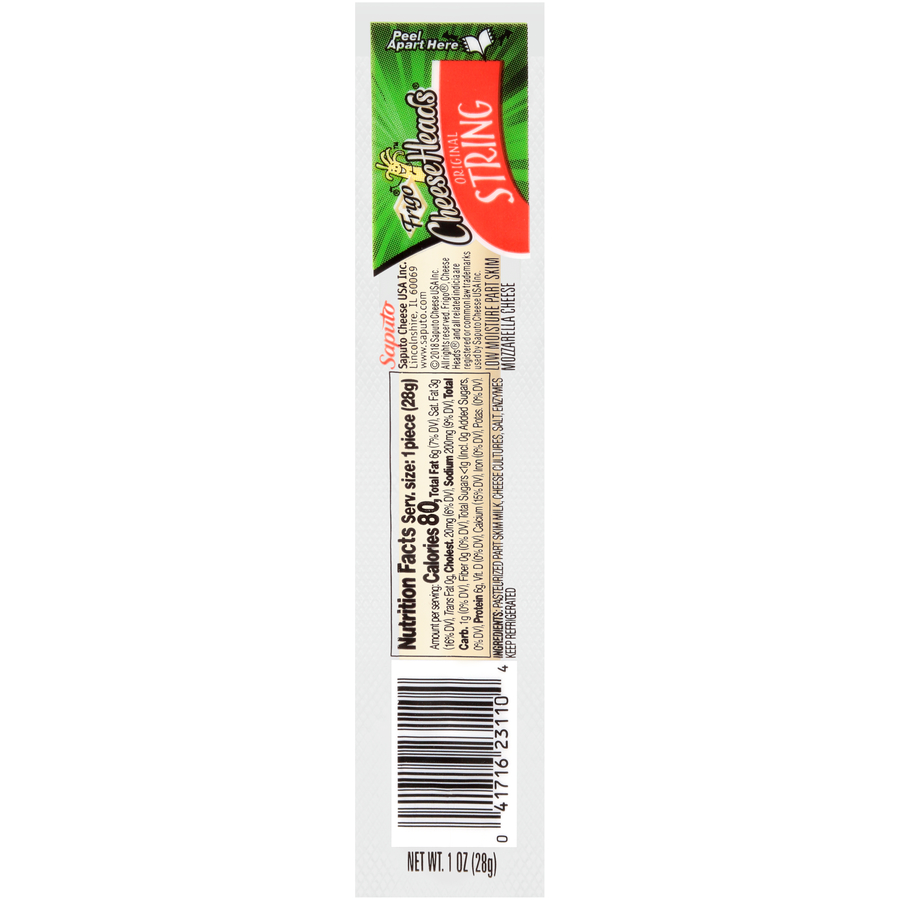
Frigo
Frigo String Cheese, Original
Pasteurized Part Skim Milk · Enzymes · Cheese Cultures
Standout ingredient: Cheese Cultures
Analysis by Aurascan. Sources are listed on the product page.
What changed for cheese labeling rules?
Nothing changed in the rules themselves. What the recall does is show the rules working exactly as written: an egg-derived enzyme with a technical-sounding name is still egg, and a label that does not say so is misbranded.
From a regulatory perspective, the recall reinforces strict enforcement of the Food Allergen Labeling and Consumer Protection Act (FALCPA). Under FALCPA, any ingredient derived from one of the recognized major food allergens must be clearly declared using the common or usual name of the allergen source. Cheesemakers and retailers cannot hide an egg derivative behind technical terms like enzyme, preservative, or lysozyme alone.
Cheesemakers use lysozyme as a preservative against spoilage bacteria. In the European Union, it is cataloged as additive E 1105, as outlined in our guide on E Numbers Explained: The EU Code for US Additives. However, in both the United States and Europe, its technological status as an enzyme does not exempt it from mandatory allergen disclosure.
As of September 2026, the regulatory status of egg-derived lysozyme is unchanged: it is permitted in cheese in both the United States and the European Union, provided the label declares it as egg.
Who is affected by the undeclared egg enzyme?
The recall directly affects consumers who purchased cut wedges of Fromagerie Coop de Mean Cabricharme cheese from specialty service counters at the 18 affected Whole Foods Market locations in Arizona, California, Connecticut, Massachusetts, New Jersey, New York, and Rhode Island. The FDA notice did not specify the total weight or number of wheels distributed.
The people at risk are children and adults with immunoglobulin E (IgE)-mediated hen egg allergy. For these individuals, accidental ingestion of egg proteins can trigger systemic allergic reactions ranging from mild hives, facial swelling, and gastrointestinal distress to severe, life-threatening anaphylaxis requiring immediate epinephrine administration.
Consumers without egg sensitivities or egg allergies are not at risk of allergic harm from consuming cheese containing lysozyme. The cheese itself was not contaminated with pathogenic bacteria or chemical toxins; the recall was initiated exclusively because of the unlabeled allergen.
The incident is also a warning to anyone who runs a cheese counter: when a wheel is cut and rewrapped in store, the store becomes the labeller, and every allergen statement on the producer's case has to survive the trip to the sticker on the wedge.
Quiz
Is a KIND Peanut Butter Dark Chocolate bar clean?
Guess before you scroll.
Reveal Aurascan's verdict
Aurascan says: Flagged
The main flag is PEANUTS.
What it means for shoppers at the cheese counter
For shoppers navigating life-threatening food allergies, this recall highlights a significant blind spot: pre-packaged items cut and wrapped directly in grocery stores. Packaged foods arriving from a manufacturer carry a label that manufacturer is responsible for; items sliced at a service counter carry a label the store wrote.
When a grocery store cuts wheels into smaller portions, employees wrap them and print a store label. If the information behind that label is incomplete, the sticker will omit the warning even when the importer's original packaging carried it.
Shoppers must learn that allergen-derived ingredients frequently hide behind biochemical names on food labels. Understanding How to Read a Food Label: The Ingredient List, Line by Line is essential for spotting these derivative proteins across processed and specialty foods alike. Examining other retail items like lunchbox dairy in 5 Lunchbox Snacks Scanned: String Cheese to Fig Bars underscores the importance of careful label review.
To protect yourself and your family, review this checklist of secondary ingredient names that originate from major allergens:
- Egg derivatives: Lysozyme, albumin, ovalbumin, livetin, vitellin, and ovomucoid.
- Milk derivatives: Casein, caseinates (calcium caseinate, sodium caseinate), whey, and lactalbumin.
- Soy derivatives: Soy lecithin (unless specifically labeled as sunflower or canola lecithin).
- Wheat derivatives: Semolina, spelt, farina, durum, and hydrolyzed wheat protein.
Under federal law, manufacturers and packagers must declare the allergen either in the ingredient list itself, such as "lysozyme (egg)", or in a dedicated "Contains: Egg" statement placed immediately below the ingredients.
The background on lysozyme in cheesemaking
To understand why an egg protein was in goat milk cheese, one must examine the biochemistry of cheese preservation. During the production of aged, semi-hard, and hard cheeses, spore-forming bacteria belonging to the genus Clostridium (notably Clostridium tyrobutyricum) can contaminate raw milk via silage feed and dairy farm environments.
These bacterial spores survive milk pasteurization and mild thermization. As cheese cures over weeks or months, the spores germinate in the oxygen-deprived interior of the wheel, fermenting lactic acid into butyric acid, carbon dioxide, and hydrogen gas. This phenomenon, known as late blowing, causes extensive internal fissures, foul odors, cracked rinds, and ruined batches.
Lysozyme acts as a barrier against late blowing. It is an enzymatic protein that hydrolyzes the beta-(1,4)-glycosidic bonds between N-acetylmuramic acid and N-acetylglucosamine in the peptidoglycan cell wall of Gram-positive bacteria, lysing the vegetative cells before they can produce gas.
Because hen egg white is rich in lysozyme, commercial processors extract the enzyme from chicken eggs. Although it is added for its antimicrobial effect, it remains an egg protein. A 1997 study in the journal Allergy tested 52 patients with clinical egg allergy and found that 35 percent had IgE antibodies against lysozyme; the authors concluded that lysozyme should be indicated on food labels. EFSA's 2023 safety evaluation of lysozyme as a food enzyme reached the same point: residual lysozyme in treated cheese may trigger allergic reactions in susceptible individuals.
In the United States, federal allergen regulations expanded on January 1, 2023, when the Food Allergy Safety, Treatment, Education, and Research (FASTER) Act officially made sesame the ninth major food allergen alongside milk, eggs, peanuts, tree nuts, wheat, fish, crustacean shellfish, and soybeans. This expansion underscored the FDA's commitment to eliminating undeclared allergens across all retail food channels.
What to watch next in food allergen compliance
The obvious place to look next is the retail counter itself: deli counters, cheese counters and in-store bakeries where bulk product is cut, wrapped and labelled by the store rather than the producer.
Regulatory attention is on compliance and enforcement, not on new restrictions on lysozyme itself.
There is no established safe threshold of egg lysozyme for allergic individuals, because reactivity varies widely from person to person, and it is not settled whether lysozyme broken down during long cheese ageing loses its allergenicity.
Broader packaging and transparency shifts are occurring across the grocery aisle, echoing conversations seen in FDA's Front-of-Package Nutrition Box Is Still Not Final and updates on Dietary Guidelines Name 4 Things No Food Label Shows.
Digital label scanners provide critical support for consumers by instantly flagging derivative ingredients, but technology has inherent limitations: a scanner reading an ingredient list can only detect hazards if the retailer printed the words on the label. When an ingredient never makes it onto the sticker, public health alerts and official FDA recall announcements remain the ultimate safety net.
Try Aurascan
See what is really in the food you buy.
Common questions
- What is egg lysozyme and why is it used in cheese?
- Egg lysozyme is an antimicrobial enzyme extracted from chicken egg whites. Cheesemakers add it to milk to prevent late blowing defect, a spoilage issue caused by gas-producing Clostridium bacteria that causes cracking, off-flavors, and structural damage in aging cheeses.
- Which Whole Foods locations were affected by the Cabricharme cheese recall?
- The September 11, 2026 recall affected specialty cheese counters at 18 Whole Foods Market stores across seven states: Arizona, California, Connecticut, Massachusetts, New Jersey, New York, and Rhode Island.
- Is egg lysozyme safe for someone with an egg allergy?
- No. Egg lysozyme retains its antigenic structure and IgE-binding capacity, meaning it can trigger genuine allergic reactions, including hives, swelling, and anaphylaxis, in individuals allergic to hen eggs.
- Why can a cheese-counter label miss an allergen?
- Cheese cut and wrapped in store is labelled by the store, not the producer. If the information behind that label is incomplete, the sticker can omit an allergen that the producer's original packaging declared. The FDA notice for this recall says only that a store team member discovered the mislabeling.
- What should I do if I bought the recalled Whole Foods Cabricharme cheese?
- The FDA notice says customers do not need to return the cheese but are urged to destroy it. A full refund is available with a valid receipt.
- What are the nine major food allergens recognized by U.S. law?
- Under the FALCPA and the FASTER Act, the nine major allergens requiring mandatory plain-language labeling are milk, eggs, peanuts, tree nuts, wheat, fish, crustacean shellfish, soybeans, and sesame.
Sources
- Whole Foods Market Issues Allergy Alert on Undeclared Egg in Cabricharme Cheese (fda.gov)
- Lysozyme in Food Processing and Allergenicity Assessment (pmc.ncbi.nlm.nih.gov)
- Allergenicity of Hen Egg-White Lysozyme (pubmed.ncbi.nlm.nih.gov)
- Food Allergies: What You Need to Know (fda.gov)
In this series
Guide
Dietary Guidelines Name 4 Things No Food Label ShowsGuide
5 Snacks and Sodas Scanned for Artificial DyesGuide
Seed Oils on a Label: What It Tells You, What It Doesn'tGuide
E Numbers Explained: The EU Code for US AdditivesGuide
How to Read a Food Label: The Ingredient List, Line by LineGuide
Tillamook vs Häagen-Dazs: 5 Ingredients Against 30
Related guides
Latest News
Lobster in Ravioli, Soy in Chips: When Allergen Labels FailTwo September recalls, Deano's ravioli with undeclared lobster and J. HIGGS chips with undeclared soy, show why a correct ingredient list is not enough.
Latest News
'Gluten-Free' Plantain Flour Recalled Over Wheat GlutenGF Blends recalled AIP flour, bread mix and pizza mix after certified gluten-free plantain flour tested above the 20 ppm limit. Lots, dates and what the claim means.
Latest News
FDA 2026 Food Code and Sesame: Allergen Disclosure Moves to MenusFDA released the 2026 Food Code on September 17, and Virginia's updated rules add sesame as a major allergen for restaurants. What changes for diners and label readers.
Try it on your own groceries
Scan your next label with Aurascan
Point the camera at any ingredient list and get the same evidence-graded read you see here.
Open the scannerLabel-reading intel, weekly.
What changed on food labels this week — bans, recalls, and new guides.