
Ingredient Reviews · September 4, 2026 · Updated September 21, 2026 · 8 min read
What Is Titanium Dioxide? Uses, Safety, and Labeling
Learn what titanium dioxide is, why the EU banned food additive E171 while the FDA permits it, nanoparticle health concerns, and how to spot it on labels.
By Chris Carrillo · Reviewed by Armin Rad, Co-Founder & CTO, Aurascan · September 21, 2026
Every article is checked against primary sources before publication. How we review
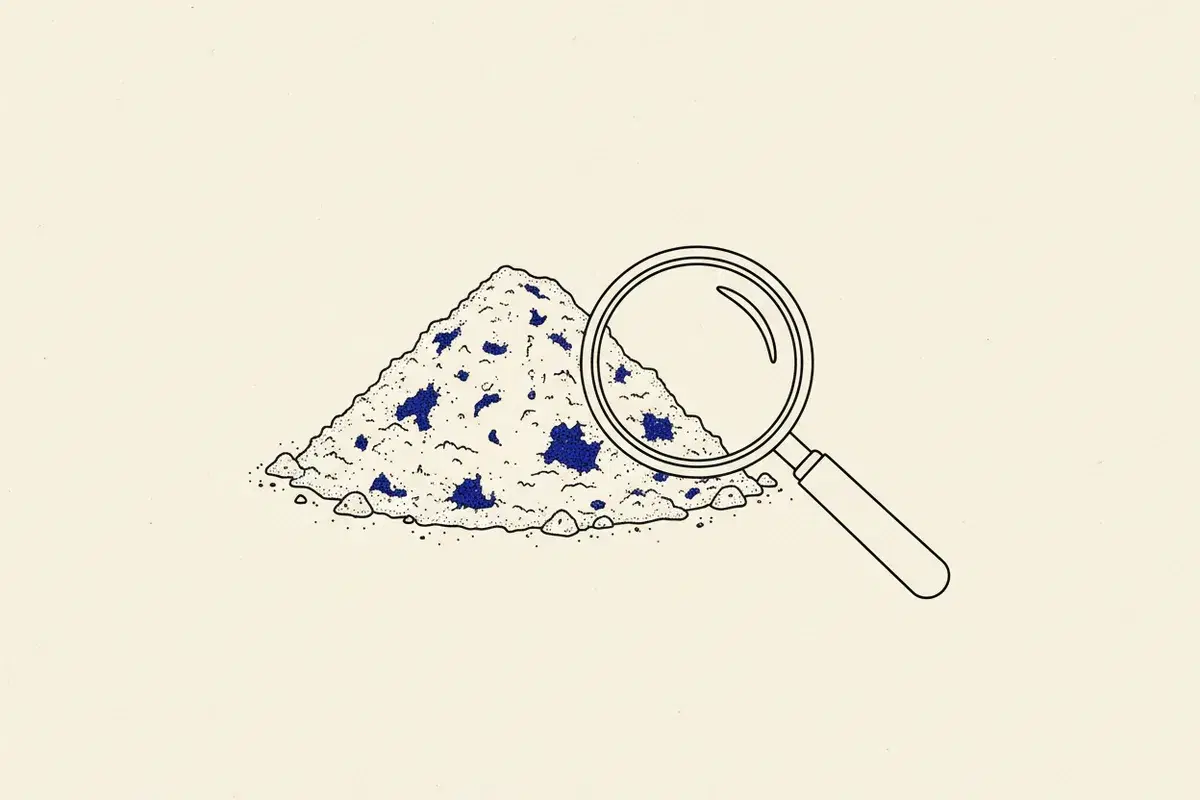
Titanium dioxide is an inorganic mineral pigment used across packaged foods, cosmetics, and pharmaceuticals to create an opaque, bright white finish. While the European Union banned it as food additive E171 in 2022 due to potential nanoparticle genotoxicity concerns, the U.S. FDA still permits it up to 1% by weight.
Key takeaways
- Titanium dioxide (E171) is an inert mineral used to brighten candies, frostings, dairy alternatives, and cosmetic formulas.
- The European Food Safety Authority (EFSA) concluded that genotoxicity could not be excluded, resulting in an EU-wide food ban in 2022.
- The U.S. FDA and other regulators maintain approval for food use, though several U.S. states have introduced targeted restrictions.
- EFSA reports that oral absorption of titanium dioxide is low, but a small fraction of nanoparticles can cross the gut barrier and may accumulate in the body over time.
- You can identify the ingredient on packaging as titanium dioxide, E171, CI 77891, or Pigment White 6.
What Is Titanium Dioxide and How Is It Made?
Titanium dioxide (chemical formula TiO2) is an odorless, insoluble mineral compound known for its exceptional light-scattering properties and high refractive index. In its pure form, it appears as an ultra-fine, chalky white powder. Because it reflects virtually all visible light wavelengths, manufacturers use it as the primary industrial standard for achieving true opacity and bright whiteness in consumer goods.
Commercial titanium dioxide is derived from naturally occurring mineral ores, primarily ilmenite (an iron titanium oxide) and rutile. To convert raw mined ore into a purified, food-grade or cosmetic-grade ingredient, chemical processors rely on one of two industrial routes: the sulfate process or the chloride process.
The sulfate process involves dissolving the raw ore in concentrated sulfuric acid, removing iron impurities, and hydrolyzing the remaining solution to yield hydrated titanium dioxide, which is then calcined at high temperatures into purified crystals. The chloride process reacts chlorinated ore with petroleum coke at elevated temperatures to create titanium tetrachloride gas, which is subsequently oxidized with pure oxygen into titanium dioxide particles. Both methods involve rigorous purification steps to strip heavy metals like lead, arsenic, and mercury to meet statutory food-grade specifications.
What Is Titanium Dioxide Used For in Food and Products?
In packaged foods, titanium dioxide acts primarily as a visual enhancer. It provides a clean, neutral white background that makes colored coatings pop, prevents oil separation from looking translucent, and produces smooth, uniform surfaces in processed goods. Similar to how synthetic colorings like what is tartrazine (yellow 5)? uses, safety, and labeling and what is red 40? uses, safety, and pending FDA regulations provide vibrant shades, titanium dioxide provides the base brightness that prevents dullness.
You will most commonly encounter titanium dioxide in the following consumer product categories:
- Confectionery: Hard candy shells, chewing gums, compressed mints, and white chocolate coatings.
- Bakery and desserts: Packaged white cake frostings, doughnut glazes, royal icing, and marshmallow fondants.
- Dairy alternatives and condiments: Coffee creamers, powdered drink mixes, salad dressings, and processed sandwich spreads.
- Pharmaceuticals and supplements: Opaque hard-shell capsules, coated dietary supplement tablets, and pediatric syrups.
- Cosmetics and personal care: Toothpastes, mineral sunscreens, foundations, and lipsticks (often listed under cosmetic color indices).
In topical sunscreens, titanium dioxide serves a functional UV-filtering role, sitting on the skin surface to physically reflect harmful UVA and UVB radiation away from delicate dermal tissue.
Is Titanium Dioxide Safe to Eat? The EU Ban vs. U.S. Policy
As of September 4, 2026, the regulatory status of titanium dioxide remains sharply split between Europe and North America. In 2021, the European Food Safety Authority published an updated safety assessment evaluating thousands of emerging studies, concluding that E171 is no longer considered safe when used as a food additive. EFSA determined that although oral absorption is low, researchers could not rule out genotoxicity, which is the ability of a substance to damage cellular DNA. Consequently, the European Commission implemented a complete ban on E171 across the EU food supply, taking full effect in 2022.
In contrast, the U.S. Food and Drug Administration (FDA) continues to classify titanium dioxide as a safe color additive exempt from certification under 21 CFR 73.575, permitting its inclusion in foods at levels not exceeding 1.0% by weight. The FDA, alongside Health Canada and the Joint FAO/WHO Expert Committee on Food Additives (JECFA), determined that the available evidence does not demonstrate direct systemic toxicity at standard dietary exposure levels.
However, regulatory scrutiny in the United States is shifting. Titanium dioxide appears on the FDA's list of select chemicals in the food supply under FDA review, and the FDA is currently reviewing a color additive petition, filed in April 2023, that asks the agency to revoke its food-use listing. At the state level, several legislatures have introduced bills to restrict titanium dioxide, such as proposals to remove it from public school meal programs. Meanwhile, the EU Scientific Committee on Consumer Safety (SCCS) continues to allow non-inhalable cosmetic uses, recognizing that dermal penetration behaves differently than ingestion.
What Are the Health Concerns Around Titanium Dioxide Nanoparticles?
The central scientific debate surrounding titanium dioxide involves particle size distribution. Food-grade E171 consists of microscale particles mixed with a notable fraction of nanoparticles measuring under 100 nanometers in diameter; EFSA notes that E171 contains at most 50% of particles in the nano range.
When ingested, most titanium dioxide passes through the gastrointestinal tract without being absorbed, and EFSA describes oral absorption as low. However, an analysis of titanium dioxide nanoparticles in food and personal care products shows that sub-micron and nanoscale particles behave differently than larger mineral grains. Because the human body lacks rapid metabolic pathways to break down insoluble inorganic minerals, EFSA concluded that absorbed particles can accumulate in the body over time. Animal data are mixed: a 90-day rat study on hepatic toxicity of titanium dioxide nanoparticles after subchronic oral exposure reported sex-dependent liver effects but did not observe accumulation of the particles in the liver.
At the cellular level, internalized nanoparticles can trigger the release of reactive oxygen species (ROS), leading to oxidative stress and localized inflammatory cascades in intestinal tissues. EFSA based its precautionary ban on the fact that when nanoparticles interact directly with cellular structures, a threshold for safe, lifetime daily intake cannot be definitively established.
Who Should Be Cautious About Titanium Dioxide Exposure?
Because dietary titanium dioxide is present in numerous everyday foods, cumulative daily exposure varies significantly across different age groups and lifestyles. While toxicologists reviewing ingredient safety and titanium dioxide dietary risks note minimal acute danger for healthy adults, specific populations may benefit from closer label scrutiny:
- Children: Relative to body weight, children consume the highest levels of titanium dioxide due to high dietary intake of brightly colored candies, frosted pastries, and chewing gum.
- Individuals with chronic gut conditions: Those diagnosed with inflammatory bowel disease (IBD), Crohn's disease, or compromised intestinal barrier function may experience localized irritation from accumulated mineral particles.
- People taking multiple daily coated medications: Individuals who rely on several opaque, film-coated prescription tablets and dietary supplements daily receive a steady baseline exposure.
- Industrial workers handling loose powders: Inhalation represents a distinct physiological hazard compared to ingestion. The International Agency for Research on Cancer (IARC) classifies inhaled titanium dioxide dust as a Group 2B possible human carcinogen due to chronic pulmonary inflammation risks.
It is important to state current research limitations plainly: scientists cannot definitively establish individual disease causality from real-world, low-dose dietary consumption, and the clinical significance of trace organ accumulation over a multi-decade human lifespan remains an active area of toxicological investigation.
How to Spot Titanium Dioxide on Food and Ingredient Labels
Identifying titanium dioxide on consumer products requires knowing the different naming conventions used across food, cosmetics, and import packaging. When scanning product panels, check the ingredients list for these common identifiers:
- Titanium dioxide (standard U.S. and Canadian food labeling term)
- E171 (the official European food additive code for titanium dioxide)
- CI 77891 (the Color Index number used on cosmetics, sunscreens, and personal care products)
- Pigment White 6 (standard industrial and chemical designation)
- Titanium white (occasionally seen on craft or specialty food-contact materials)
In the United States, FDA regulations require titanium dioxide to be declared by name in the ingredient statement; it cannot simply be hidden under vague umbrella terms like artificial colors. If you prefer to check products instantly without reading dense fine print, using a mobile ingredient tool like Aurascan allows you to scan packaging and flag additives before buying.
What Are the Natural Alternatives to Titanium Dioxide?
As consumer demand for clean labels grows and international regulatory landscapes diverge, food manufacturers are increasingly replacing titanium dioxide with natural whitening and clouding agents. Common replacements include:
- Calcium carbonate (E170): A naturally occurring mineral pigment that delivers strong opacity and whiteness, widely used in frostings and confections.
- Native and modified rice starch: Tiny starch granules that scatter light naturally, creating a cloudy, milky white appearance in plant-based milks, sauces, and creamers.
- Microcrystalline cellulose: Purified wood pulp fibers that add opacity, body, and texture stability to dairy alternatives.
- Tapioca and corn starches: Clean-label carbohydrate starches used to provide smooth white finishes on sugar coatings.
- Zinc oxide: Frequently utilized alongside or in place of titanium dioxide in topical sunscreens and diaper creams.
While matching the light-scattering efficiency of titanium dioxide often requires higher concentrations of natural alternatives, modern food science has enabled many manufacturers to formulate vibrant, opaque foods entirely free of synthetic whitening agents.
Common questions
- Why did the European Union ban titanium dioxide in food?
- The European Union banned titanium dioxide (E171) in 2022 after the European Food Safety Authority (EFSA) concluded that concerns regarding genotoxicity (DNA damage) and nanoparticle accumulation in organs could not be ruled out.
- Is titanium dioxide still allowed in food in the United States?
- Yes, the U.S. FDA permits food-grade titanium dioxide as a color additive up to 1% by weight. However, the FDA is conducting post-market safety reviews, and several U.S. states have introduced legislation to restrict it in school meals.
- What foods commonly contain titanium dioxide?
- Titanium dioxide is frequently added to hard candies, chewing gum, white cake frostings, coffee creamers, powdered drink mixes, salad dressings, and coated supplement tablets to provide bright white color and opacity.
- Is titanium dioxide safe in sunscreen and cosmetics?
- Yes, titanium dioxide is widely considered safe in non-inhalable topical products like sunscreens and lotions because mineral particles remain on the outermost layer of dead skin cells and do not penetrate into the bloodstream.
- How can I avoid titanium dioxide when reading labels?
- Look at the ingredient statement on packaging and watch for the terms titanium dioxide, E171 (on imported foods), CI 77891 (on cosmetics), or Pigment White 6. You can also look for brands that use calcium carbonate or rice starch for whitening.
- Does titanium dioxide accumulate in the human body?
- Most swallowed titanium dioxide is excreted and EFSA describes oral absorption as low, but a very small fraction of nano-sized particles can pass through the gut barrier and may accumulate in the body over time.
Sources
- Titanium dioxide: E171 no longer considered safe when used as a food additive (efsa.europa.eu)
- What's the Risk: Titanium Dioxide (cris.msu.edu)
- Gender difference in hepatic toxicity of titanium dioxide nanoparticles after subchronic oral exposure in Sprague-Dawley rats (pubmed.ncbi.nlm.nih.gov)
- Titanium dioxide nanoparticles in food and personal care products (pmc.ncbi.nlm.nih.gov)
- List of Select Chemicals in the Food Supply Under FDA Review (fda.gov)
In this series
Guide
What Is Tartrazine (Yellow 5)? Uses, Safety, and LabelingGuide
What Is Erythrosine? Uses, Labels, and SafetyGuide
What Are Steviol Glycosides? Uses, Safety, and LabelsGuide
Is Erythritol Safe? Uses, Heart Health Concerns, and SideGuide
What Is Sucralose? Uses, Safety, Baking Risks, and LabelsGuide
What Is Aspartame? Uses, Safety, and Labeling Explained
Related guides
Comparisons
Does Fruit by the Foot Have Red 40? Roll-Ups ComparedFruit by the Foot Berry Tie-Dye colors with spirulina and vegetable juice, but the Starburst flavor lists Red 40. Roll-Ups vary by flavor too. 9 g vs 7 g added sugar.
Comparisons
Which Has More Sodium, Lance or Austin? Both 330 mgLance Toast Chee and Austin peanut butter cheese crackers both list 330mg sodium and Yellow 6. Label numbers, pack sizes and the additive only Austin lists.
Comparisons
Do Totino's Pizza Rolls Have Red 40? No - Nor Bagel BitesNeither label lists Red 40. Totino's pepperoni rolls list BHA, BHT, TBHQ and imitation mozzarella; Bagel Bites list real part-skim mozzarella. Sodium per serving inside.
Try it on your own groceries
Scan your next label with Aurascan
Point the camera at any ingredient list and get the same evidence-graded read you see here.
Open the scannerGet food recall alerts + a weekly digest
An email when a food recall is announced, plus one weekly roundup of label news and new guides.
We email a confirmation link first - nothing is sent until you click it. Unsubscribe anytime. Privacy