
Ingredient Reviews · September 4, 2026 · Updated September 21, 2026 · 7 min read
What Is Erythrosine? Uses, Labels, and Safety
A plain-English review of Erythrosine: what it is, why it appears on labels, safety context, common uses, and sources.
By Chris Carrillo · Reviewed by Armin Rad, Co-Founder & CTO, Aurascan · September 21, 2026
Every article is checked against primary sources before publication. How we review
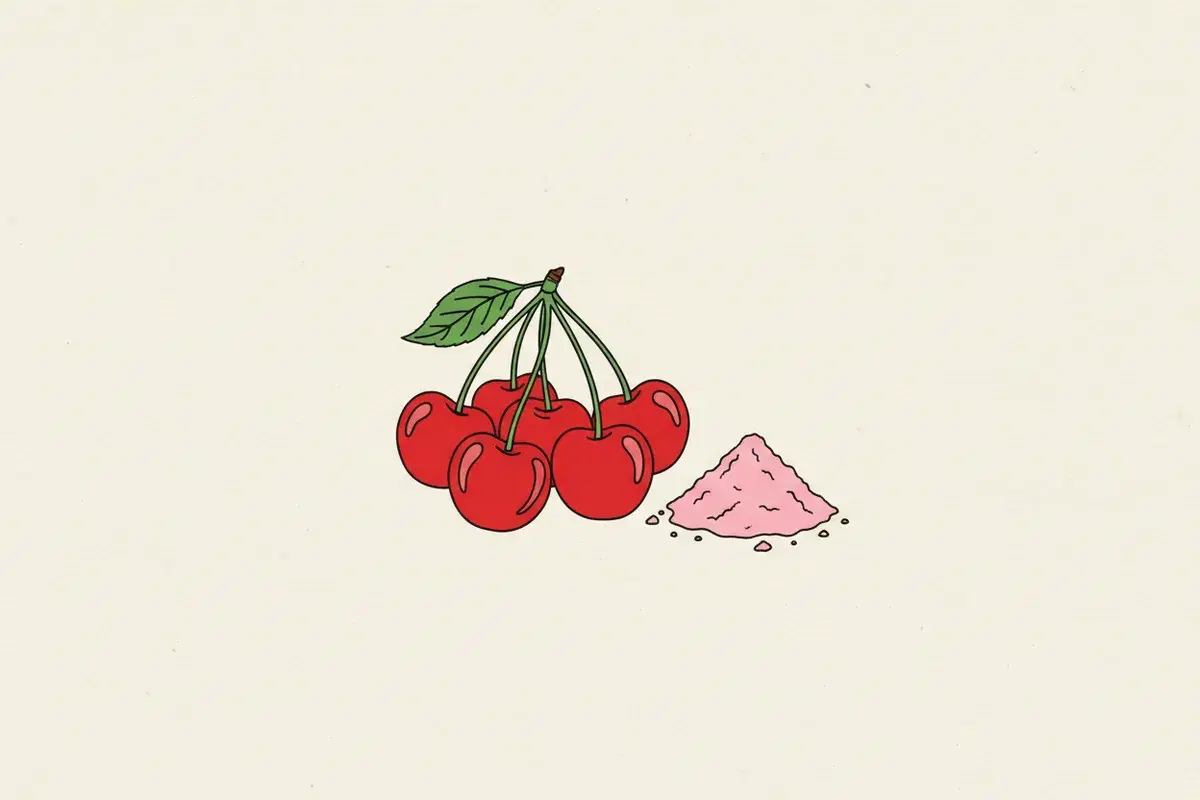
Erythrosine (FD&C Red No. 3) is a synthetic cherry-pink organoiodine food dye. In January 2025, the FDA revoked its authorization for food and ingested drugs due to animal thyroid tumor findings under the Delaney Clause. Compliance deadlines require food reformulation by January 2027 and drug reformulation by January 2028.
Key takeaways:
- In January 2025, the FDA revoked authorization for FD&C Red No. 3 in food and ingested drugs following rodent carcinogenicity findings.
- Food manufacturers must complete reformulation by January 2027, whereas ingested drug manufacturers have until January 2028.
- The European Union maintains an Acceptable Daily Intake of 0.1 mg per kg of body weight and restricts E127 primarily to candied and cocktail cherries.
- Organic iodine accounts for approximately 57.7% of erythrosine's molecular weight, directly driving its unique metabolic and biological profile.
- Check packaging labels for FD&C Red No. 3, Red 3, Erythrosine, E127, or CI Food Red 14.
What is erythrosine and how is it made?
Erythrosine is an organoiodine compound derived structurally from fluorone. Chemically known as the disodium salt of 2,4,5,7-tetraiodofluorescein, it carries the molecular formula C20H6I4Na2O5. According to the PubChem Compound Summary for erythrosine sodium, the disodium salt has a molecular weight of approximately 879.9 g/mol and appears as a reddish-brown powder that dissolves readily in water to yield a brilliant watermelon-red hue.
The synthetic manufacturing process begins with petroleum distillates or coal tar derivatives. Phthalic anhydride reacts with resorcinol to synthesize fluorescein, which subsequently undergoes comprehensive iodination. Because four heavy iodine atoms bind directly to the aromatic xanthene core, iodine constitutes approximately 57.7% of erythrosine by total molecular mass. This distinct structural feature plays a central role in how the human gastrointestinal tract and endocrine system metabolize the compound.
Unlike azo colorants that produce bluish-red or orange-red hues, erythrosine provides a sharp neon pinkish-red shade. It demonstrates remarkable resistance to light degradation and heat, making it historically popular in processed foods requiring prolonged shelf stability.
What is erythrosine used for in food and medicine?
Historically, erythrosine served as a primary coloring agent across confections, shelf-stable fruit preparations, cosmetics, and pharmaceuticals. For decades, it provided the bright pinkish-red tone in preserved maraschino cherries and canned fruit cocktail mixes because it binds tightly to plant cell walls without leaking into surrounding syrup.
In packaged groceries, consumers can still spot erythrosine across several categories:
- Seasonal confectionery, candy canes, and hard suckers
- Cake decorating gels, frostings, and decorative baking sprinkles
- Glazed cherries, fruit snacks, and fruit cocktail preparations
- Bright red popsicles, ice pops, and frozen novelty desserts
- Chewing gum coatings and hard confectionery shells
Beyond food applications, erythrosine is utilized in oral medicines. Drug companies historically incorporated it into tablet coatings, gelatin capsules, and pediatric liquid syrups for dosage differentiation and brand recognition. In dental settings, clinical evaluations like the plaque disclosure randomized crossover trial on PubMed demonstrate its classic role as a plaque disclosing agent that temporarily stains bacterial biofilm pink to guide patient brushing.
Shoppers monitoring artificial ingredients across their pantry items can also read what is sucralose? uses, safety, baking risks, and labels or compare additive functions in is carrageenan safe? uses, safety, and regulatory status to evaluate current reformulation trends.
Why did regulators ban Red No. 3?
The regulatory history of FD&C Red No. 3 in the United States spans several decades. In 1990, the FDA prohibited erythrosine in cosmetics and externally applied drugs after laboratory bioassays revealed that high dietary intake induced thyroid follicular cell adenomas and carcinomas in male rats. Due to historical administrative divisions between provisional and permanent listing lists, however, its use in food and ingested pharmaceuticals remained legally permitted.
That legal standing changed definitively in January 2025. Following extensive citizen petitions and state-level legislation such as California's Food Safety Act, the FDA formally revoked authorization for Red No. 3 in foods and ingested drugs. The decision was mandated as a matter of law by the Delaney Clause of the Food Additives Amendment of 1958, which strictly prohibits the approval of any food additive shown to induce cancer in laboratory animals or humans, regardless of risk margins.
To ensure orderly supply chain adjustments and prevent nationwide drug shortages, the FDA established a phased transition. As of September 4, 2026, food manufacturers are finalizing reformulations ahead of the January 15, 2027 food compliance deadline. Ingested pharmaceutical manufacturers producing prescription and over-the-counter medications have until January 18, 2028 to achieve full compliance.
Is erythrosine safe? Health risks and sensitive populations
The scientific discussion surrounding erythrosine centers on endocrine disruption and pediatric behavioral responses. Because erythrosine carries four iodine atoms, substantial doses can alter the peripheral metabolism of thyroid hormones by inhibiting hepatic 5'-deiodinase enzymes. Animal toxicology studies, including research on the effects of oral erythrosine on the pituitary-thyroid axis in rats on PubMed, show that chronic high-dose exposure can increase thyroid-stimulating hormone (TSH) levels, stimulating continuous follicular cell growth. Separate rat studies of erythrosine-induced hepatic biomarkers and histopathological changes report liver enzyme, lipid, and liver tissue changes at high doses.
Toxicological groups like the Joint FAO/WHO Expert Committee on Food Additives (JECFA) have noted that this rodent oncogenic mechanism relies on a sustained hormonal feedback loop that does not readily translate to human physiology at typical dietary exposures. Nevertheless, specific sensitive groups warrant consideration:
- Individuals with thyroid conditions: High exposure to bioavailable organic iodine may theoretically interfere with thyroid regulation in patients with Hashimoto's thyroiditis or preexisting goiter.
- Children and neurobehavioral sensitivity: Reviews of synthetic food dyes report that a subset of children shows heightened hyperactivity or inattention after consuming artificial color mixtures, though the proportion of children affected has not been reliably quantified.
- Hypersensitive individuals: Although true IgE-mediated allergic reactions to erythrosine are rare, adverse cutaneous reactions such as urticaria and flushing have been recorded.
It is important to emphasize scientific uncertainty: current clinical evidence cannot establish whether low, intermittent dietary exposure causes direct long-term adverse health outcomes or carcinogenicity in healthy human adults. The majority of toxicological data stems from animal bioassays utilizing high daily concentrations.
How does global regulation compare between the US and Europe?
Regulatory frameworks for erythrosine differ noticeably across global jurisdictions. In the European Union, the European Food Safety Authority (EFSA) established an Acceptable Daily Intake (ADI) of 0.1 mg per kg of body weight for erythrosine (E127). Decades ago, European regulators restricted authorized food uses almost exclusively to cocktail cherries and Bigarreaux cherries, capping concentrations at 150 mg to 200 mg per kg of product.
Consequently, conventional European foods such as baked goods, sodas, and candies avoid E127 entirely. Erythrosine belongs to the fluorone and xanthene chemical family rather than azo dyes; therefore, the mandatory EU warning label regarding activity and attention in children does not legally apply to E127. Nonetheless, retail demand has driven European manufacturers toward natural botanical colorants.
With the FDA's January 2025 revocation and enforceable 2027 and 2028 phaseout milestones, the United States is moving toward a strict stance that eliminates Red 3 from all conventional food items and ingestible drugs.
For readers following shifts across other certified colors, explore what is red 40? uses, safety, and pending FDA regulations to compare safety profiles across distinct dye classes.
How to spot erythrosine on ingredient labels
Until the mandatory compliance deadlines take full effect, erythrosine remains present on grocery shelves. Because ingredients must appear in descending order of predominance by weight, color additives typically occupy the bottom lines of the ingredient panel.
Look for these common label synonyms:
- FD&C Red No. 3 or FD&C Red #3
- Red 3 or Red No. 3
- Erythrosine or Erythrosine B
- E127 (on imported European goods)
- CI Food Red 14 or Color Index No. 45430
- Red 3 Aluminum Lake (used in fat-based confectionery coatings)
When reviewing pharmaceuticals, check the "Inactive Ingredients" panel on over-the-counter packaging or consult the pharmacist for prescription formulations.
What are the best natural and synthetic alternatives to Red 3?
Food and pharmaceutical manufacturers actively transitioning away from erythrosine utilize botanical pigments and certified synthetic alternatives. Replacing the fluorescent neon pink hue of Red 3 requires tailored formulations depending on product acidity and thermal processing.
Widely adopted alternatives include:
- Beet root juice powder (betalains): Delivers bright pink shades for ice cream, yogurt, and cold-processed frostings, though betalains degrade when exposed to baking temperatures above 100 degrees Celsius.
- Anthocyanin extracts: Sourced from red cabbage, purple sweet potato, black carrots, and elderberries, these pigments provide stable red tones in low-pH beverages and fruit snacks.
- Carmine and cochineal extract: Highly resistant to light and heat degradation, offering vivid red shades, though unsuitable for vegan or kosher formulations.
- Lycopene: Extracted from tomatoes or fungal cultures, providing warm red tones with strong oxidative stability.
- Synthetic alternatives: In regions where approved, blended solutions of FD&C Red No. 40 are adjusted to match target color specifications.
As manufacturers finalize their ingredient transitions ahead of the 2027 and 2028 deadlines, consumers will encounter an increasing variety of recognizable, plant-derived colorants across grocery aisles.
Common questions
- Is Red 3 completely banned in the United States right now?
- The FDA officially revoked authorization for FD&C Red No. 3 in food and ingested drugs in January 2025. However, the agency granted a compliance transition period: food manufacturers have until January 2027 to reformulate, while ingested drug makers have until January 2028.
- What is the difference between Red 3 and Red 40?
- Red 3 (erythrosine) is an organoiodine dye with a distinct bright cherry-pink tone that was banned by the FDA due to animal thyroid tumor studies. Red 40 (Allura Red AC) is an azo dye derived from petroleum that remains authorized for widespread food use, though it is subject to ongoing research regarding pediatric sensitivity.
- Why was Red 3 banned in cosmetics in 1990 but kept in food until 2025?
- In 1990, the FDA acted on cosmetics under the Delaney Clause based on male rat thyroid tumor data. However, due to procedural delays, separate regulatory petitions, and prolonged scientific debate regarding the relevance of the rat mechanism to humans, food authorization was not formally revoked until January 2025.
- Does erythrosine cause thyroid problems in humans?
- Erythrosine contains iodine and can alter thyroid hormone metabolism at high doses. In male rats, it causes thyroid tumors by stimulating excess thyroid-stimulating hormone. While human epidemiological evidence has not confirmed direct cancer risks at low dietary levels, the FDA banned it under statutory animal safety rules.
- Which common foods still contain Red 3 during the phaseout?
- Until reformulation deadlines conclude in January 2027, Red 3 may still appear in maraschino cherries, seasonal candy canes, decorated baked goods, sprinkles, fruit snacks, cake decorating gels, and certain liquid pediatric medications.
- What is E127 on European food packaging?
- E127 is the European additive number for erythrosine. In the European Union, its use is strictly limited to candied cherries, cocktail cherries, and specific pharmaceuticals, making it far less common on European grocery shelves.
Sources
- Evaluation of D&C Red No. 33 as an alternative to erythrosine for plaque disclosure: a randomized crossover trial (pubmed.ncbi.nlm.nih.gov)
- Erythrosine-induced hepatic biomarkers and histopathological changes in male rats: protective effects of lycopene and anthocyanin (pubmed.ncbi.nlm.nih.gov)
- Erythrosine sodium - PubChem Compound Summary (CID 27872) (pubchem.ncbi.nlm.nih.gov)
- Effects of oral erythrosine (2',4',5',7'-tetraiodofluorescein) on the pituitary-thyroid axis in rats (pubmed.ncbi.nlm.nih.gov)
- FDA to Revoke Authorization for the Use of Red No. 3 in Food and Ingested Drugs (fda.gov)
In this series
Guide
Is Erythritol Safe? Uses, Heart Health Concerns, and SideGuide
What Is Sucralose? Uses, Safety, Baking Risks, and LabelsGuide
What Is Aspartame? Uses, Safety, and Labeling ExplainedGuide
Coca-Cola Light vs. Coca-Cola: Ingredients ComparedGuide
What Are Natural Flavors? Uses, Labels, and Safety ExplainedGuide
Is Benzoyl Peroxide Safe? Stability, Regulation, and Safety
Related guides
Comparisons
Does Fruit by the Foot Have Red 40? Roll-Ups ComparedFruit by the Foot Berry Tie-Dye colors with spirulina and vegetable juice, but the Starburst flavor lists Red 40. Roll-Ups vary by flavor too. 9 g vs 7 g added sugar.
Comparisons
Which Has More Sodium, Lance or Austin? Both 330 mgLance Toast Chee and Austin peanut butter cheese crackers both list 330mg sodium and Yellow 6. Label numbers, pack sizes and the additive only Austin lists.
Comparisons
Do Totino's Pizza Rolls Have Red 40? No - Nor Bagel BitesNeither label lists Red 40. Totino's pepperoni rolls list BHA, BHT, TBHQ and imitation mozzarella; Bagel Bites list real part-skim mozzarella. Sodium per serving inside.
Try it on your own groceries
Scan your next label with Aurascan
Point the camera at any ingredient list and get the same evidence-graded read you see here.
Open the scannerGet food recall alerts + a weekly digest
An email when a food recall is announced, plus one weekly roundup of label news and new guides.
We email a confirmation link first - nothing is sent until you click it. Unsubscribe anytime. Privacy