
Product Education · September 20, 2026 · 7 min read
Is Frigo String Cheese Clean? Four Ingredients, Scanned
Pasteurized part-skim milk, cheese cultures, salt, enzymes. What the FDA standard for low-moisture mozzarella requires, and what 'enzymes' hides on a cheese label.
By Chris Carrillo · Reviewed by Armin Rad, Co-Founder & CTO, Aurascan · September 20, 2026
Every article is checked against primary sources before publication. How we review
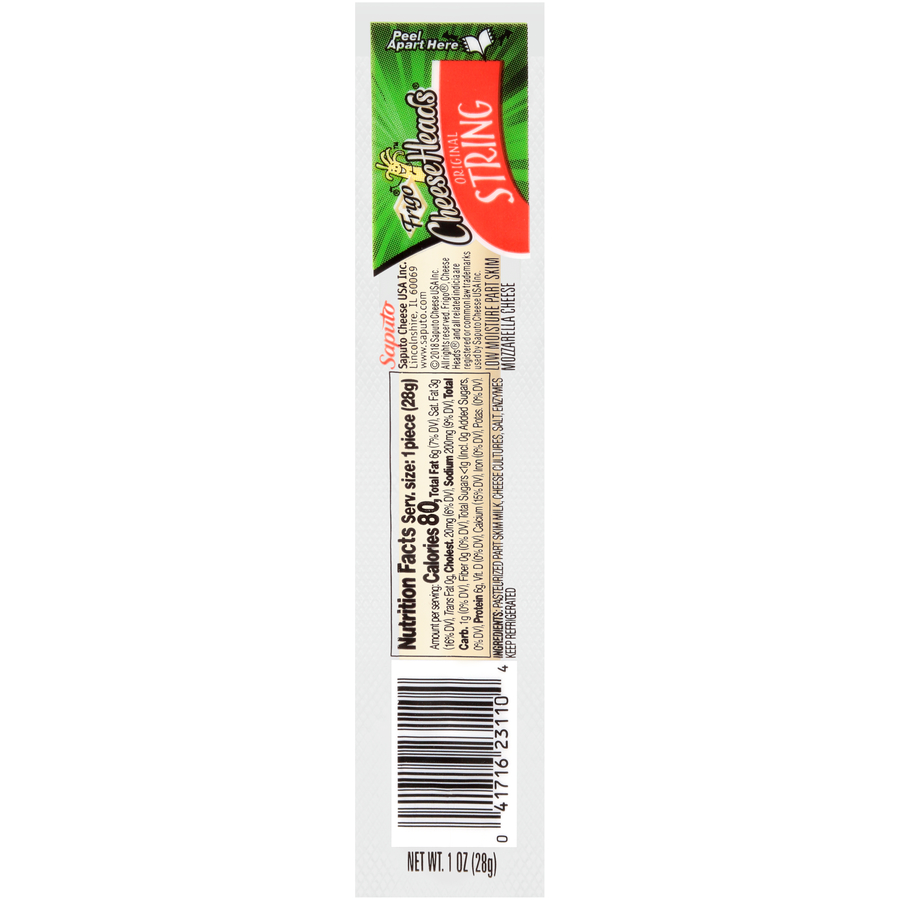
Frigo Cheese Heads Original String Cheese features a concise four-ingredient formulation: pasteurized part-skim milk, cheese cultures, salt, and enzymes. It avoids artificial preservatives, coloring agents, and anti-caking powders typically found in shredded dairy products. However, because United States regulations permit generic enzyme declarations, consumers cannot confirm whether the coagulants derive from animal or microbial sources from the package alone.
Key takeaways:
- The formulation strictly adheres to the standard of identity for low-moisture part-skim mozzarella under 21 CFR 133.158.
- The term "enzymes" does not differentiate between animal rennet and vegetarian microbial or fermentation-derived alternatives.
- The peeling peelable texture is produced via mechanical stretching (pasta filata), requiring no synthetic thickeners or starches.
- Unlike pre-shredded cheeses, this format contains no cellulose or natamycin mold inhibitors.
Why people buy it
Frigo Cheese Heads Original String Cheese has long remained a staple in school lunchboxes and office snack drawers. Shoppers frequently gravitate toward it because the front packaging promises a straightforward dairy snack without artificial flavors or chemical preservatives. The packaging specifically states that each 1-ounce stick provides 80 calories and 6 grams of protein, making it an approachable portion-controlled option for busy routines.
Parents and health-conscious eaters also appreciate its convenience and recognizable texture. Because the product is individually wrapped and offers a familiar peeling experience, it provides a mess-free whole-food alternative to heavily processed snack bars and chips. For many consumers, seeing a short ingredient panel offers immediate peace of mind on busy grocery runs.
Scan preview
Frigo
Frigo String Cheese, Original
Pasteurized Part Skim Milk · Enzymes · Cheese Cultures
Standout ingredient: Cheese Cultures
Analysis by Aurascan. Sources are listed on the product page.
What Aurascan found
Pasteurized part-skim milk and moisture standards
The primary component listed on the label is low-moisture part-skim mozzarella cheese, starting with pasteurized part-skim cow milk. Under Title 21 of the Code of Federal Regulations, specifically 21 CFR 133.158, the U.S. Food and Drug Administration (FDA) defines strict legal parameters for this food category. To qualify as low-moisture part-skim mozzarella, the dairy solids must contain a milkfat content between 30 percent and 45 percent, while the overall moisture level must fall between 45 percent and 52 percent.
These strict compositional bounds dictate how the cheese behaves and ages. Part-skim milk indicates that a portion of the cream has been skimmed away before vat setting, controlling the total butterfat ratio. The pasteurization step applies heat to neutralize potentially harmful environmental bacteria, ensuring safety without requiring chemical shelf-life stabilizers. For those managing lactose sensitivities, the natural fermentation process during cheese-making breaks down significant amounts of milk sugars, though the label carries an explicit milk allergen warning for individuals with dairy protein allergies.
Cheese cultures and natural acidification
Listed immediately after milk are cheese cultures. Cheese cultures consist of beneficial lactic acid bacteria introduced during the initial vat stage. These bacterial cultures ferment the naturally occurring lactose present in liquid milk, converting it into lactic acid. This biological drop in pH serves multiple essential functions in traditional cheesemaking.
First, natural acidification aids the curdling process by destabilizing milk proteins so that coagulating agents can work efficiently. Second, the acid environment inhibits the proliferation of spoilage organisms, acting as nature's built-in preservation mechanism. Finally, culture fermentation develops the mild, characteristic mozzarella flavor profile. Because active bacterial cultures consume the bulk of the available simple carbohydrates, the final firm cheese retains minimal residual lactose, comparable in simplicity to products explored in our analysis of Is Fage Total 0% Clean? A Two-Line Yogurt Label, Scanned.
Salt and the pasta filata stretching process
Salt appears as the third component and serves both functional and structural roles. In mozzarella manufacturing, salt controls the continued growth of starter cultures once the desired acidity is reached, regulates interior moisture levels, and enhances basic palatability. Beyond seasoning, salt plays a direct role in protein conditioning during thermal processing.
The unique peeling strand consistency of string cheese does not rely on synthetic binding agents, gums, or modified food starches. Instead, it relies on pasta filata, the traditional Italian stretched-curd technique. The acidified curds are immersed in hot water or whey, then mechanically kneaded, pulled, and aligned along a single directional axis. This thermal stretching forces casein protein strands to align parallel to one another. When you pull a stick apart, it naturally splits along these parallel protein fibers rather than crumbling.
What does "enzymes" mean on a US cheese label?
The final listed ingredient is simply "enzymes." In dairy manufacturing, enzymes refer to the coagulating preparation, historically known as rennet, required to transform liquid milk into structured curds and separate whey. Chymosin is the primary active enzyme responsible for cleaving the specific bonds in kappa-casein that keep milk proteins suspended.
Under prevailing FDA labeling rules, manufacturers are permitted to declare this functional component under the collective term "enzymes" without specifying the production source. Coagulating enzymes can come from three distinct pathways: animal-derived chymosin extracted from the stomach lining of young ruminants, microbial enzymes generated by fungi, or fermentation-produced chymosin (FPC) synthesized via genetically modified microorganisms. Because the label does not distinguish between these origins, strict vegetarians and individuals adhering to specific religious dietary codes cannot determine whether the rennet is animal-free without contacting the brand directly.
Quiz
Is Frigo string cheese clean?
Guess before you scroll.
Reveal Aurascan's verdict
Aurascan says: Flagged
The main flag is Pasteurized Part Skim Milk.
What to look for on the label
When evaluating string cheese against other packaged dairy options, inspecting the format details helps clarify what additives may be present. Block and string mozzarella represent whole-form products, whereas pre-shredded packaged cheeses typically require specialized non-dairy processing aids to prevent clumping during storage. When navigating retail dairy aisles, keep these label distinctions in mind:
- Anti-caking agents: Shredded varieties frequently contain powdered cellulose or potato starch to prevent shredded shreds from fusing. Frigo Cheese Heads string cheese contains zero anti-caking powders because individual packaging preserves physical structural integrity.
- Mold inhibitors: Sliced and shredded options often incorporate natamycin or potassium sorbate to inhibit fungal growth on exposed surfaces. This string cheese format contains no antimicrobial preservatives.
- Artificial colors: Authentic mozzarella standard of identity excludes artificial dyes. You will find no titanium dioxide or synthetic yellow colorants on this ingredient list.
- Allergen statements: Federal law requires milk to be declared, either by name in the ingredient list (as here, "pasteurized part skim milk") or in a "Contains milk" line, for people with casein or whey allergy.
- Lactose transparency: While low-moisture mozzarella has minimal residual sugar due to culturing, manufacturers are not required to specify exact lactose gram counts on the package. Consumers who tolerate yogurt or hard cheeses generally tolerate aged mozzarella, but individual digestive sensitivities vary.
Understanding these package details is essential because a short ingredient list only provides protection if every nuance is transparent. For instance, without explicit origin labeling, allergen cross-contact or trace enzymes can easily escape consumer notice, as the September 2026 Whole Foods recall of a cheese with undeclared egg lysozyme showed. Reviewing your pantry snacks alongside broader guides, such as our breakdown of whole-grain snacks in Is the Nature's Bakery Fig Bar Clean? Every Ingredient, Scanned, provides a broader perspective on single-serving shelf staples.
Scientific consensus and regulatory status
As of September 2026, nothing material has changed regarding the regulatory status of the ingredients in Frigo Cheese Heads string cheese, which comprise pasteurized part-skim milk, cheese cultures, salt, and enzymes. These components remain fully compliant with established standards of identity and Generally Recognized as Safe (GRAS) designations under the U.S. Food and Drug Administration (FDA) and the European Food Safety Authority (EFSA), facing no recent bans, restrictions, or adverse evaluations from bodies like the International Agency for Research on Cancer (IARC).
Meanwhile, research on the "dairy matrix" continues to examine whether the saturated fat in cheese behaves differently from isolated saturated fat; that question is not settled. However, current nutritional science cannot establish uniform digestive outcomes for every individual, particularly those with subclinical dairy protein intolerances or severe gut microbiome sensitivities. Evidence regarding how individual metabolisms handle variable trace enzyme remnants remains an active area of observational study.
If you want to know how individual items in your refrigerator stack up against regulatory databases and independent research, consider scanning them yourself. Aurascan is a free food-label scanner app currently in beta (available on iOS TestFlight, with a waitlist for other platforms). Rather than assigning an arbitrary, black-box numeric score, Aurascan analyzes ingredient labels one by one, cross-referencing information from Open Food Facts, the USDA, and global barcode repositories. Every citation is vetted by an automated verifier, categorizing each item into Clean, Mixed, or Flagged verdicts without corporate sponsorship.
Try Aurascan
See what is really in the food you buy.
Common questions
- Is Frigo Cheese Heads string cheese vegetarian?
- It cannot be confirmed from the packaging alone. The label lists generic 'enzymes,' which FDA regulations permit to describe animal-derived rennet, microbial enzymes, or fermentation-produced chymosin without stating the exact origin.
- Does Frigo Cheese Heads string cheese contain lactose?
- Low-moisture mozzarella contains very low levels of lactose because the bacterial cheese cultures convert most milk sugars into lactic acid during fermentation, but trace amounts may remain.
- Why does string cheese peel into strings?
- The peeling texture comes from the traditional pasta filata process, where the cheese curd is heated and mechanically stretched, aligning the natural casein milk proteins in parallel directions.
- Does Frigo string cheese contain preservatives or anti-caking agents?
- No. Unlike many shredded packaged cheeses that require cellulose powder to prevent clumping and natamycin to block mold, this individually wrapped string cheese uses no preservatives or anti-caking additives.
- What is the standard of identity for low-moisture part-skim mozzarella?
- Under FDA regulation 21 CFR 133.158, low-moisture part-skim mozzarella must have a milkfat content between 30% and 45% of its total solids and an overall moisture content between 45% and 52%.
Sources
- The Dairy Matrix: Bioaccessibility and Bioavailability of Nutrients (ncbi.nlm.nih.gov)
- Food Allergies: What You Need to Know (fda.gov)
In this series
Guide
Is the Nature's Bakery Fig Bar Clean? Every Ingredient, ScannedGuide
Is Tillamook Cookie Dough Ice Cream Clean? 25 Ingredients, ScannedGuide
Is SkinnyPop Clean? Three Ingredients, ScannedGuide
Is Häagen-Dazs Chocolate Clean? Five Ingredients, ScannedGuide
Is Fanta Pineapple Clean? Every Ingredient, ScannedGuide
Is Tillamook Cookies and Cream Clean? The Label, Scanned
Related guides
Product Education
Are Stacy's Pita Chips Clean? Every Ingredient, ScannedEnriched wheat flour, sunflower and/or canola oil, two Parmesans and a 2-percent tail with rosemary extract. Stacy's Parmesan Garlic and Herb pita chips, line by line.
Product Education
Is the Nature's Bakery Fig Bar Clean? Every Ingredient, ScannedWhole wheat flour, cane sugar, fig paste, brown rice syrup, an apple jam sub-list and canola oil. What a 'whole wheat' fig bar label actually says about sugar.
Product Education
Is Tillamook Cookie Dough Ice Cream Clean? 25 Ingredients, ScannedTillamook Chocolate Chip Cookie Dough lists 25 ingredients, most of them cookie dough. Which are dairy, which are dough, and where the gums and lecithin come in.
Try it on your own groceries
Scan your next label with Aurascan
Point the camera at any ingredient list and get the same evidence-graded read you see here.
Open the scannerLabel-reading intel, weekly.
What changed on food labels this week — bans, recalls, and new guides.