
Comparisons · October 7, 2026 · 7 min read
Fage Total 0% vs Core Power: Two Milk-Protein Labels Compared
Both start with milk. Fage lists 2 ingredients, Core Power lists 13. We compare cultures vs lactase, four sweeteners, gums and what the US yogurt rule says.
By Chris Carrillo · Reviewed by Armin Rad, Co-Founder & CTO, Aurascan · October 7, 2026
Every article is checked against primary sources before publication. How we review

Fage Total 0% nonfat plain Greek strained yogurt and Core Power Chocolate High Protein Milk Shake both start with grade A milk. After that, their ingredient lists go in very different directions: one lists 2 ingredients, the other lists 13. This comparison walks through both Open Food Facts listings line by line and sets them against what U.S. rules actually say about yogurt, sweeteners, gums and lactase.
Key takeaways:
- Fage Total 0% relies on just 2 ingredients: pasteurized skimmed milk and five distinct live active yogurt cultures.
- Core Power Chocolate lists 13 ingredients, including filtered low-fat milk, alkalized cocoa, lactase enzyme, added vitamins, and three texture ingredients.
- Core Power uses a blend of four sweetening agents (monk fruit juice concentrate, stevia leaf extract, acesulfame potassium, and sucralose) with no table sugar listed, whereas Fage contains no sweetening ingredients.
- Fage's listing names live yogurt cultures; Core Power's listing names a lactase enzyme and no cultures.
The Short Version: What Each Label Lists
Fage Total 0% lists skimmed milk and five named yogurt cultures. Its listing names no sweeteners, no thickeners and no added vitamins.
Core Power Chocolate lists filtered low fat milk, alkalized cocoa, natural flavors, four sweetening ingredients, three texture ingredients, a lactase enzyme and two added vitamins. No sugar appears in its ingredient list. Neither listing tells you protein, sugar or calorie amounts, so check each product's Nutrition Facts panel for those numbers.
Quiz
Both start with milk. Which one lists live yogurt cultures instead of a lactase enzyme?
Guess before you scroll.
Reveal Aurascan's verdict
Aurascan says: Fage Total All Natural Nonfat Plain Greek Strained Yogurt, 32 Oz
At-a-Glance Comparison: Fage Total 0% vs Core Power Chocolate
| Attribute | Fage Total 0% Plain | Core Power Chocolate |
|---|---|---|
| Open Food Facts Name | Total 0% Milkfat | Core Power Chocolate High Protein Milk Shake |
| Barcode | 689544083016 | 811620021951 |
| Total Ingredients | 2 | 13 |
| Base Dairy | Grade A pasteurized skimmed milk | Filtered low fat grade A milk |
| Sweetening Ingredients | None | Monk fruit juice concentrate, stevia leaf extract, acesulfame potassium, sucralose |
| Flavor Ingredients | None (plain) | Alkalized cocoa, natural flavors |
| Texture / Gums | None | Carrageenan, cellulose gel, cellulose gum |
| Microbiology / Enzymes | 5 live active cultures | Lactase enzyme (no live cultures) |
| Added Vitamins | None | Vitamin A palmitate, vitamin D3 |
Scan preview
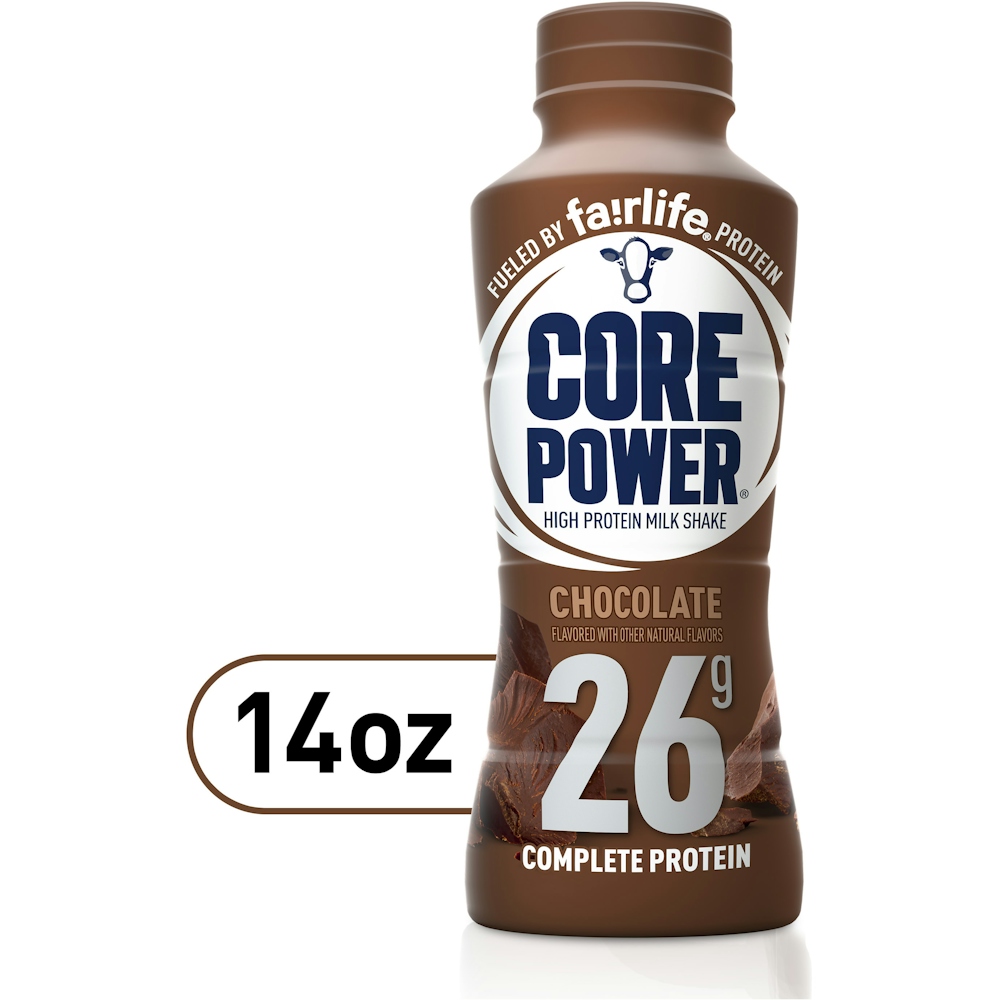
Core Power
Core Power Chocolate High Protein Milk Shake 14 Fl Oz
FILTERED LOW FAT GRADE A MILK · NATURAL FLAVORS · CARRAGEENAN
Standout ingredient: VITAMIN D3
Analysis by Aurascan. The app shows the full breakdown and its sources.
Ingredient Count and Simplicity: Two Ingredients vs Thirteen
According to its Open Food Facts listing, Fage Total 0% contains exactly two ingredients: grade A pasteurized skimmed milk and live active yogurt cultures. The cultures are explicitly identified as L. bulgaricus, S. thermophilus, L. acidophilus, bifidus, and L. casei. That is the entire ingredient statement.
Core Power Chocolate, according to its Open Food Facts listing, contains 13 ingredients: filtered low fat grade A milk, alkalized cocoa, natural flavors, monk fruit juice concentrate, stevia leaf extract, carrageenan, cellulose gel, cellulose gum, acesulfame potassium, sucralose, lactase enzyme, vitamin A palmitate, and vitamin D3.
Both products start with grade A milk as their common ground. However, Fage relies entirely on traditional dairy processing, whereas Core Power introduces functional additives to manage flavor, sweetness, physical stability, and vitamin fortification. For shoppers tracking formulations with short rosters, reviewing Food Gums on 6 Scanned Labels: From Five Thickeners to Zero provides helpful context on how multi-additive formulations compare across aisles.
How Sweetness and Flavor Are Built: Plain Dairy vs Four Sweeteners
Fage Total 0% is an unsweetened, plain fermented milk. Its ingredient listing contains no caloric sweeteners, syrups, or non-nutritive sugar substitutes. Any sweetness comes strictly from the intrinsic components of skimmed milk.
Core Power Chocolate lists no standard table sugar, yet it includes four separate sweetening ingredients:
- Monk fruit juice concentrate: The U.S. Food and Drug Administration (FDA) says Siraitia grosvenorii Swingle fruit extract (SGFE) is reported to be 100 to 250 times sweeter than sugar depending on its mogroside content, and that "an ADI has not been specified for monk fruit." Core Power lists monk fruit juice concentrate, which is not the same thing as the extract FDA describes.
- Stevia leaf extract: FDA has evaluated Generally Recognized as Safe (GRAS) notices for high-purity (95% minimum purity) steviol glycosides; the ADI of 4 mg/kg body weight per day (expressed as steviol equivalents) was set by the Joint FAO/WHO Expert Committee on Food Additives. FDA also says stevia leaf and crude stevia extracts are not considered GRAS for use as sweeteners. Core Power lists "stevia leaf extract," and the name alone does not state its purity.
- Acesulfame potassium (Ace-K): Regulated under 21 CFR 172.800 as a food additive. FDA describes it as about 200 times sweeter than table sugar and often combined with other sweeteners, and lists an ADI of 15 mg/kg body weight per day.
- Sucralose: Regulated under 21 CFR 172.831 as a food additive and approved as a general-purpose sweetener in 1999. FDA describes it as about 600 times sweeter than table sugar and lists an ADI of 5 mg/kg body weight per day.
For flavor, Core Power's listing adds alkalized cocoa and natural flavors; our review of Cocoa Processed With Alkali: What Dutch Cocoa Means on Labels covers what that cocoa wording means. The listing does not say how much of each sweetener is used.
Scan preview

Fage
Fage Total All Natural Nonfat Plain Greek Strained Yogurt, 32 Oz
Grade A Pasteurized Skimmed Milk · L. Acidophilus · L. Casei
Standout ingredient: L. Casei
Analysis by Aurascan. The app shows the full breakdown and its sources.
Texture and Viscosity: Natural Straining vs Stabilizer Gums
Fage Total 0% lists no stabilizers, starches or gums. The words "Greek" and "strained" on its name are not defined in the federal yogurt standard, so they carry no specific legal meaning there. The standard does allow stabilizers and emulsifiers as optional yogurt ingredients; Fage's listing simply uses none of them.
Core Power Chocolate lists three texture ingredients:
- Carrageenan: Regulated under 21 CFR 172.620 as a food additive, a refined hydrocolloid from listed red seaweeds, used "in the amount necessary for an emulsifier, stabilizer, or thickener in foods." See Is Carrageenan Safe? Uses, Safety, and Regulatory Status.
- Cellulose gum (sodium carboxymethylcellulose): Regulated under 21 CFR 182.1745 as GRAS when used under good manufacturing practice.
- Cellulose gel: Listed alongside cellulose gum; the listing does not describe it further.
The listing does not say what job each of these three ingredients does in this particular shake.
Bioactivity and Digestion: Live Bacterial Cultures vs Added Lactase
These two dairy products take entirely divergent approaches to digestion and microbiology.
Under the federal yogurt standard, 21 CFR 131.200, yogurt must be cultured with lactic acid-producing bacteria containing Lactobacillus delbrueckii subsp. bulgaricus and Streptococcus thermophilus. Fage lists both of these foundational cultures, plus three optional additions permitted under 21 CFR 131.200(d)(1): Lactobacillus acidophilus, bifidus, and Lactobacillus casei. The Open Food Facts listing notes live active cultures, though specific colony forming units (CFU) are not disclosed.
Core Power contains no bacterial cultures. Instead, it includes lactase enzyme. The listing simply names "lactase enzyme" without specifying the microbial source organism or stating the remaining lactose content or extent of lactose reduction in the finished beverage.
FDA's rule for one lactase source, a preparation from Kluyveromyces lactis, describes the enzyme as one "which converts lactose to glucose and galactose" and says it is used in milk to make lactase-treated or lactose-reduced milk. Core Power's listing does not name its lactase source.
The National Institute of Diabetes and Digestive and Kidney Diseases (NIDDK) suggests people with lactose intolerance "try eating yogurt and hard cheeses, which some people find easier to tolerate than other milk products," and says lactose-free and lactose-reduced products "may help you lower the amount of lactose in your diet." Neither listing claims the product is lactose-free; they simply take different routes, cultures in one and an added enzyme in the other.
Nutritional Fortification and the FDA Dairy Standards
Federal regulations set precise boundaries for dairy labeling. Because Fage Total 0% contains zero percent milkfat, it falls below the standard 3.25 percent fat threshold in 21 CFR 131.200(a). As outlined in 21 CFR 131.200(g)(1), products below 2.44 percent milkfat are governed under 21 CFR 130.10 as modified foods carrying nutrient content claims (such as "nonfat").
While 21 CFR 130.10(b)(1) generally requires nonfat modified foods to add nutrients to prevent nutritional inferiority compared to full-fat counterparts, 21 CFR 130.10(b)(2) explicitly exempts yogurt containing less than 3.25 percent milkfat from that rule with respect to vitamin A fortification. Fage Total 0%'s listing names no added vitamins.
Core Power's listing names vitamin A palmitate and vitamin D3. The listing does not give the amounts; the Nutrition Facts panel shows the vitamin D and other nutrient values per serving.
Try Aurascan
See what is really in the food you buy.
Common questions
- Does Fage Total 0% contain any added sugar or sweeteners?
- No. The Open Food Facts listing for Fage Total 0% plain Greek yogurt lists only grade A pasteurized skimmed milk and five live active yogurt cultures; no sugar or other sweetening ingredient appears in that listing.
- What sweeteners are inside Core Power Chocolate?
- Core Power Chocolate contains four distinct sweetening ingredients: monk fruit juice concentrate, stevia leaf extract, acesulfame potassium (Ace-K), and sucralose.
- Are either of these products verified lactose-free?
- Neither product listing states that the item is entirely lactose-free. Fage relies on live bacterial fermentation, while Core Power adds lactase enzyme without specifying finished lactose content.
- Why does Core Power contain carrageenan and cellulose gums?
- The Open Food Facts listing for Core Power names carrageenan, cellulose gel and cellulose gum. FDA's carrageenan rule allows it in the amount necessary as an emulsifier, stabilizer or thickener, but the listing does not say what job each ingredient does in this shake.
- Why does Core Power have added vitamins while Fage Total 0% does not?
- Core Power's listing names vitamin A palmitate and vitamin D3. Fage's names none, and under 21 CFR 130.10(b)(2), yogurt containing less than 3.25 percent milkfat is specifically exempt from mandatory vitamin A fortification.
Sources
- 21 CFR 131.200 - Yogurt (ecfr.gov)
- Aspartame and Other Sweeteners in Food (fda.gov)
- Eating, Diet, & Nutrition for Lactose Intolerance (niddk.nih.gov)
In this series
Guide
Fruit on the Ingredient List: 5 Scanned Products, 5 Different JobsGuide
Ultra-Processed Food and Heart Risk: Waist Size Explains HalfGuide
Front-of-pack claims vs nutrition: 145,609 foods testedGuide
To Protect Taste: 6 Scanned Labels That Explain Their IngredientsGuide
Baked Lay's vs Pringles Hot Honey: Two Dried-Potato CrispsGuide
Stacy's Pita Chips vs SkinnyPop: Ingredient Lists Compared
Related guides
Comparisons
Chobani vs Fage Greek Yogurt: Protein, Sugar and CulturesChobani Nonfat Plain vs Fage Total 0% Greek yogurt: protein per 3/4 cup, sugar, sodium, live cultures and the one-line ingredient lists compared.
Comparisons
Gatorade vs Powerade: Sugar, Sodium and ElectrolytesPer 12 fl oz Powerade lists 240mg sodium and 80mg potassium; Gatorade 160mg and 50mg. Compare sugars, HFCS vs sugar and dextrose, dyes and additives.
Guides
Sodium Beyond Salt: 6 Scanned Labels With Sodium AdditivesSprite lists no salt but two sodium compounds. How MSG, baking soda, sodium citrate and sodium benzoate show up on 6 scanned labels, and what FDA says.
Try it on your own groceries
Scan your next label with Aurascan
Point the camera at any ingredient list and get the same evidence-graded read you see here.
Open the scannerGet food recall alerts + a weekly digest
An email when a food recall is announced, plus one weekly roundup of label news and new guides.
We email a confirmation link first - nothing is sent until you click it. Unsubscribe anytime. Privacy