
Guides · October 4, 2026 · 8 min read
To Protect Taste: 6 Scanned Labels That Explain Their Ingredients
Sprite, Fresca, Monster, Stacy's, Tillamook and Nature's Bakery add words like (to protect taste) or (for color). What FDA requires and what it leaves open.
By Chris Carrillo · Reviewed by Armin Rad, Co-Founder & CTO, Aurascan · October 4, 2026
Every article is checked against primary sources before publication. How we review

Ingredient lists frequently include curious notes in parentheses, such as "(to protect taste)," "(preservative)," or "(for color)." Under U.S. Food and Drug Administration (FDA) rules, a chemical preservative must be declared with a separate description of its function, while the rules for color additives leave brands several ways to declare a color. The words in parentheses tell you the job the brand declared; they never tell you how much of the ingredient is in the food.
Key takeaways:
- 21 CFR 101.22(j) requires a chemical preservative to carry a description of its function; "preservative" is one of the regulation's examples, while "to protect taste" is a brand's own wording.
- The parentheticals in these six listings name three kinds of jobs: preservative or taste protection, antioxidant, and color.
- The regulation lists its phrases as examples ("e.g."), so wording varies from brand to brand.
- Not every parenthetical names a job: "(processed with alkali)" describes how cocoa was made, and "(vit, b3)" identifies a vitamin. A missing parenthetical does not mean an ingredient has no job.
The Six Labels in This Roundup
The six products below are products whose Open Food Facts listings, fetched on October 4, 2026, put a word or phrase in parentheses next to at least one ingredient: Sprite, Fresca, Monster Energy, Stacy's Parmesan Garlic & Herb pita chips, Tillamook Cookies & Cream ice cream and Nature's Bakery Apple Cinnamon Fig Bar. Each section quotes the listing as recorded, typos included.
Roundup
6 scanned labels that explain an ingredient's job
Sprite
Sprite Lemon Lime Caffeine Free Soda Soft Drink Fridge Pack Cans
Analysis by Aurascan. The app shows the full breakdown and its sources.
Fresca
Fresca Grapefruit Citrus Sparkling Soda Water
Analysis by Aurascan. The app shows the full breakdown and its sources.
Monster
Monster Energy Drink Green 16 Oz Can
Analysis by Aurascan. The app shows the full breakdown and its sources.
Stacy's
Stacy's Baked, Parmesan Garlic & Herb, Pita Chips
Analysis by Aurascan. The app shows the full breakdown and its sources.
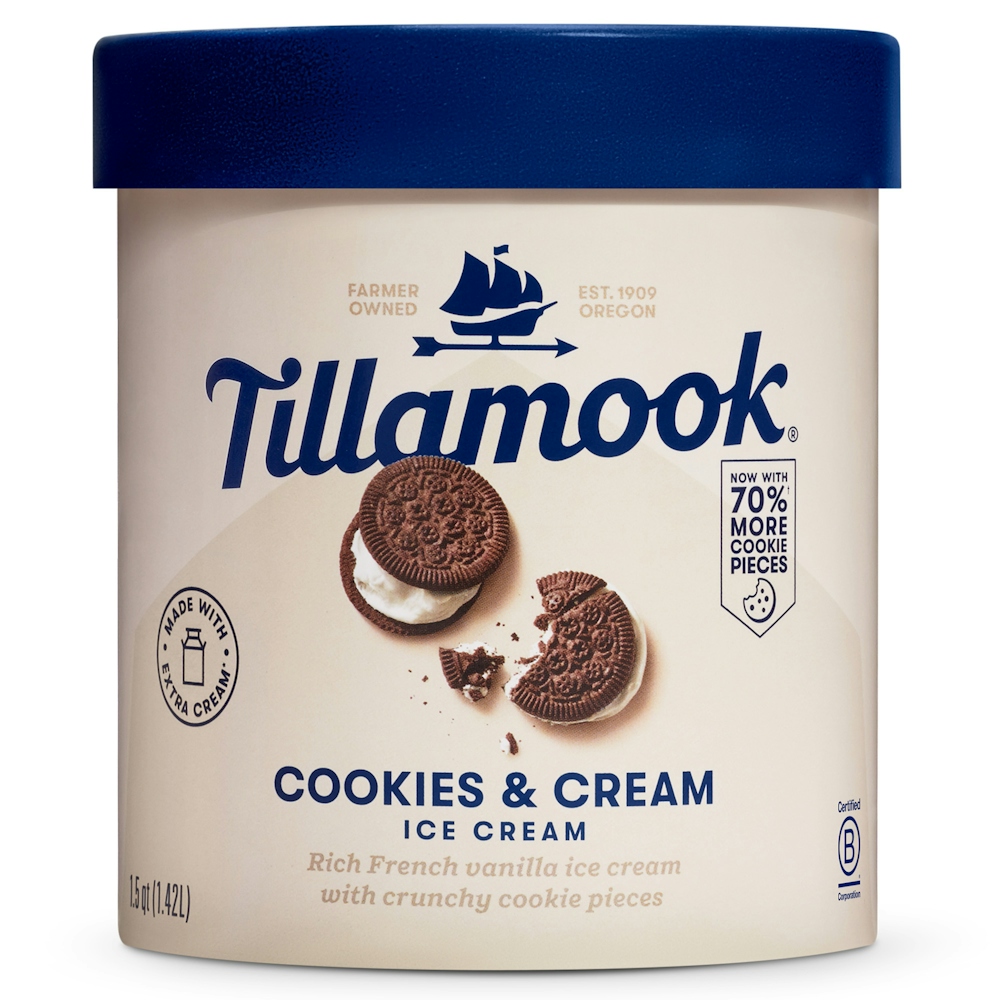
Tillamook
Tillamook Cookies And Cream Ice Cream, 48fl-oz
Analysis by Aurascan. The app shows the full breakdown and its sources.
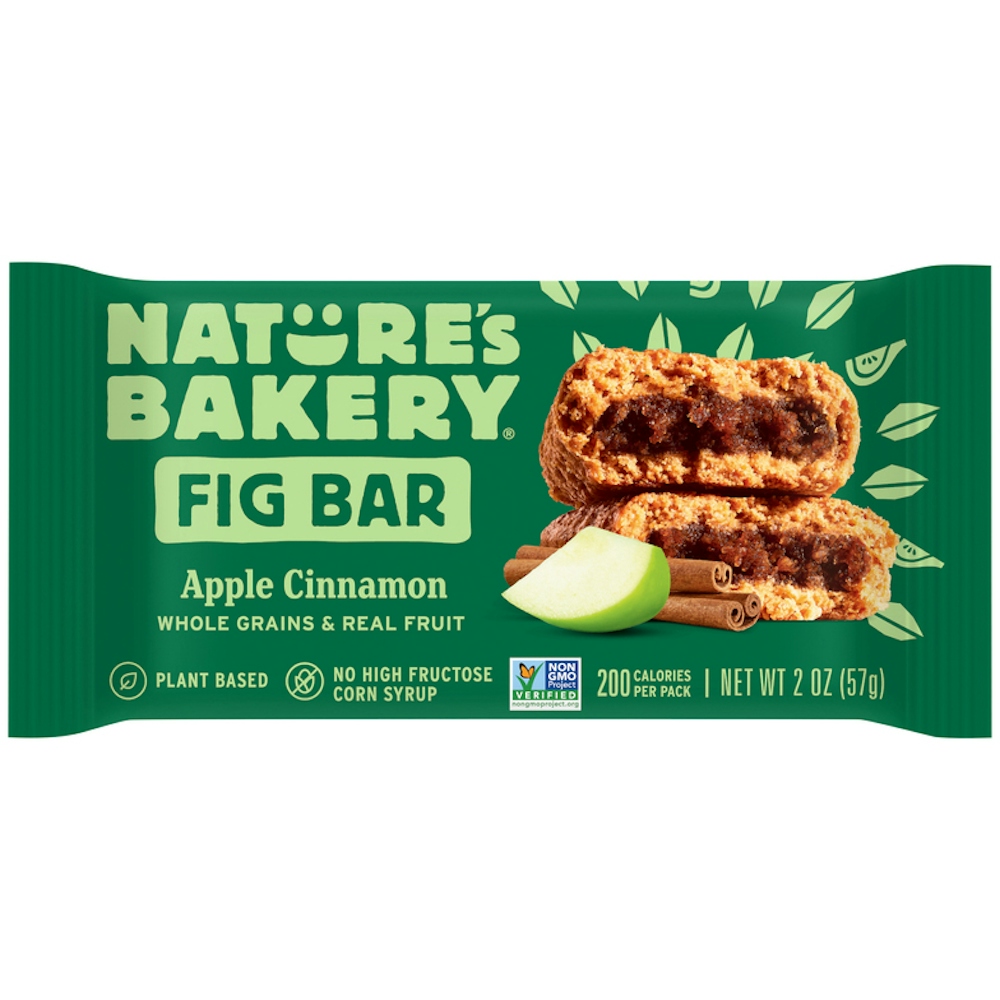
Nature's Bakery
Nature's Bakery Whole Wheat Apple Cinnamon Fig Bar
Analysis by Aurascan. The app shows the full breakdown and its sources.
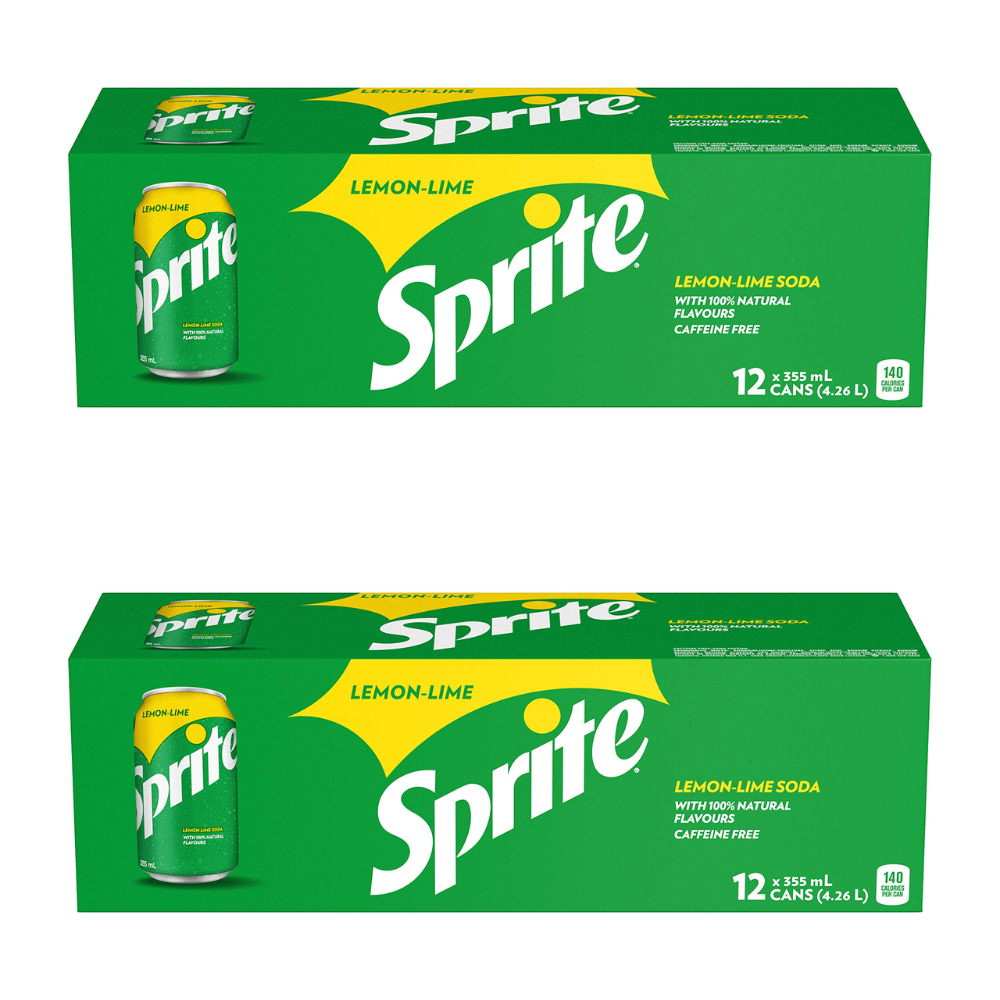
1. Sprite Lemon Lime: Sodium Benzoate '(to protect taste)'
In the Open Food Facts listing for Sprite Lemon Lime (barcode 049000028928), the ingredients appear as follows:
"carbonated water, high fructose corn syrup, citric acid, natural flavors, sodium citrate, sodium benzoate (to protect taste)."
Here, sodium benzoate carries the single parenthetical phrase "(to protect taste)." Under 21 CFR 101.22(j), a chemical preservative must be accompanied by an explanatory phrase such as "to retard spoilage," "a mold inhibitor," or "to help protect flavor." The listing uses the brand's own wording, "to protect taste," rather than one of the regulation's example phrases; why the brand chose it is not disclosed.
Notice what does not have a parenthetical: citric acid and sodium citrate. A missing parenthetical does not mean an ingredient has no job; it means the listing does not state one. For more details on shelf-life agents, read our guide on Preservatives on Ingredient Lists Explained: Benzoate to BHA.
Scan preview
Fresca
Fresca Grapefruit Citrus Sparkling Soda Water
Citric Acid · Concentrated Grapefruit Juice · Potassium Citrate
Analysis by Aurascan. The app shows the full breakdown and its sources.
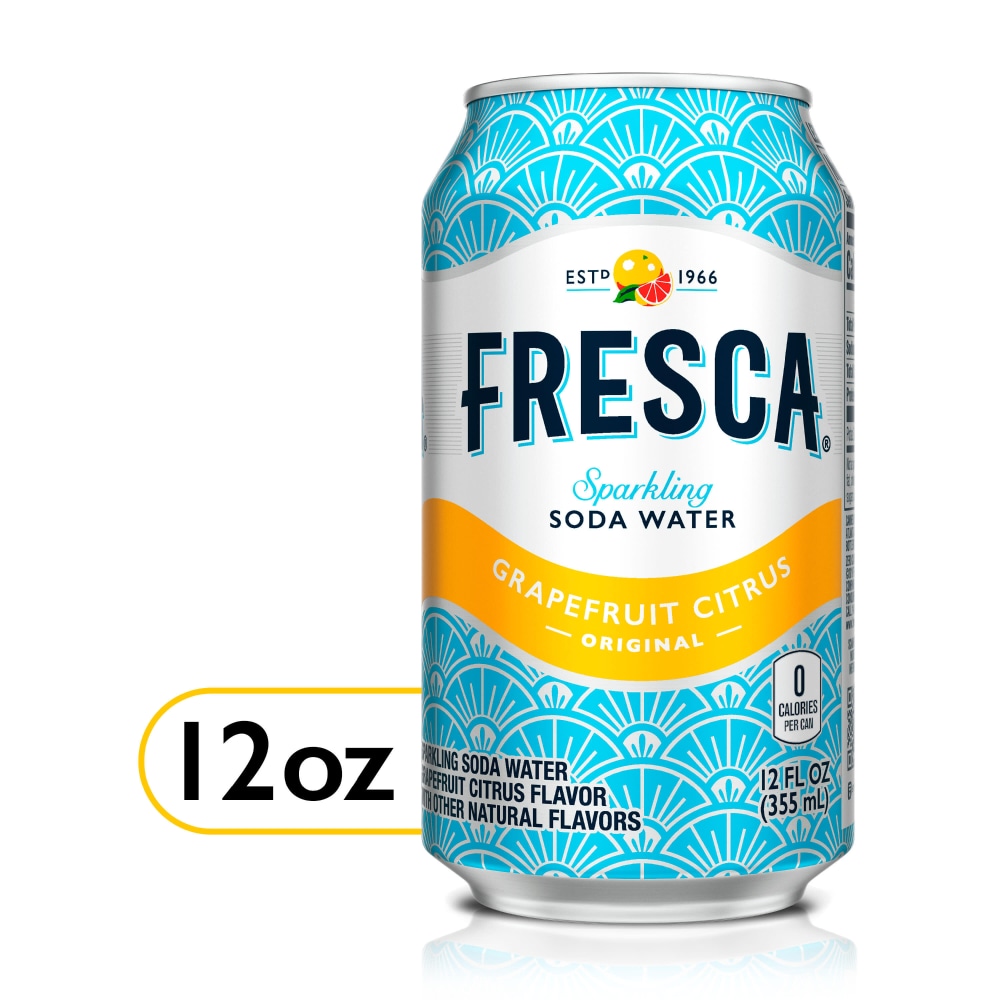
2. Fresca Sparkling Soda Water: Three 'To Protect Taste' Tags
The Open Food Facts listing for Fresca Sparkling Soda Water Grapefruit Citrus (barcode 049000002485) reads:
"carbonated water, citric acid, concentrated grapefruit juice, potassium citrate, aspartame, potassium sorbate (to protect tasté), acacia gum, acesulfame potassium, natural flavors, glycerol ester of rosin, potassium benzoate and calcium disodium edta (to protect taste), carob bean gum. phenylketonurics: contains phenylalanine"
In this entry, three distinct ingredients carry flavor-protection phrasing: potassium sorbate (recorded with an accent mark typo "tasté" in the source), potassium benzoate, and calcium disodium EDTA. Under 21 CFR 172.120, the FDA permits calcium disodium EDTA in canned carbonated soft drinks to "promote flavor retention," matching Fresca's stated wording in spirit.
The Open Food Facts listing does not disclose the container type or the exact parts-per-million concentration of calcium disodium EDTA, potassium sorbate, or potassium benzoate. Acacia gum and carob bean gum appear without any parenthetical. You can learn more about texturizers in Food Gums on 6 Scanned Labels: From Five Thickeners to Zero.
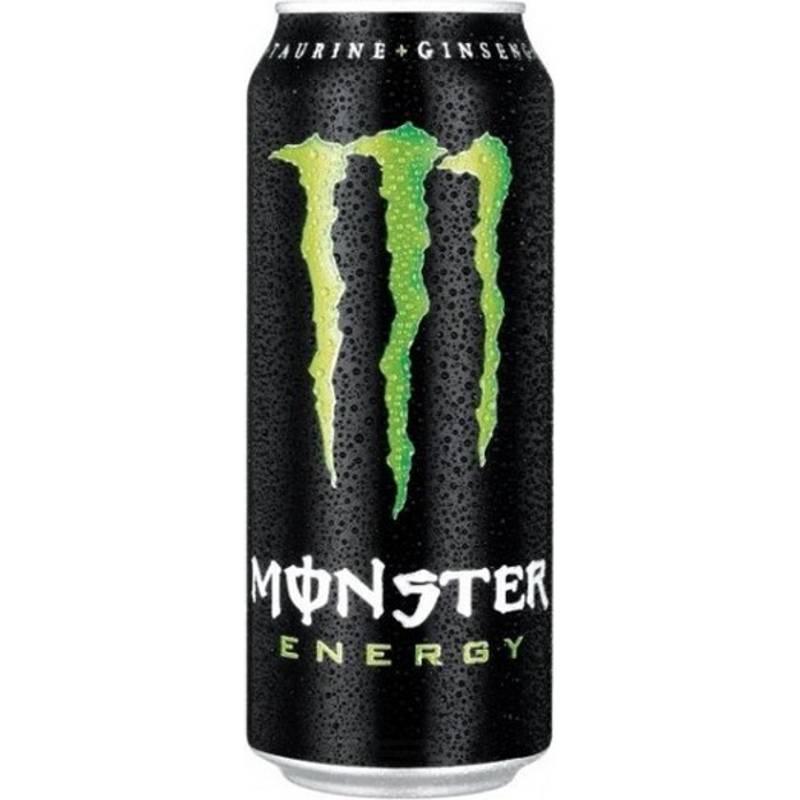
3. Monster Energy: Explicit '(preservative)' and Vitamin Tags
The Open Food Facts listing for Monster Energy (green, barcode 070847811169) reads:
"carbonated water, sugar, glucose, citric acid, natural flavors, taurine, sodium citrate, color added, panax ginseng extract, l-carnitine l-tartrate, caffeine, sorbic acid (preservative), benzoic acid (preservative), niacinamide (vit, b3), sucralose, salt, d-glucuronolactone, inositol, guarana extract, pyridoxine hydrochloride (vit, b6), riboflavin (vit, b2), maltodextrin, cyanocobalamin (vit, b12),"
Monster uses the plain word "(preservative)" for both sorbic acid and benzoic acid. This phrasing matches the FDA example in 21 CFR 101.22(j) verbatim.
Additionally, this listing uses parentheticals for nutritional identity rather than additive function. Tags like "(vit, b3)," "(vit, b6)," "(vit, b2)," and "(vit, b12)" identify which vitamin each chemical name refers to; they describe identity, not a job. For more on vitamin chemical names, see Niacinamide, Cyanocobalamin: Vitamin Names on Labels Decoded. Monster also includes the collective phrase "color added," leaving the specific coloring agent unnamed.
Quiz
Monster tags two preservatives but lists its coloring only as color added. Would you want the color named?
Guess before you scroll.
Reveal Aurascan's verdict
Aurascan says: Flagged
The main flag is SUGAR.
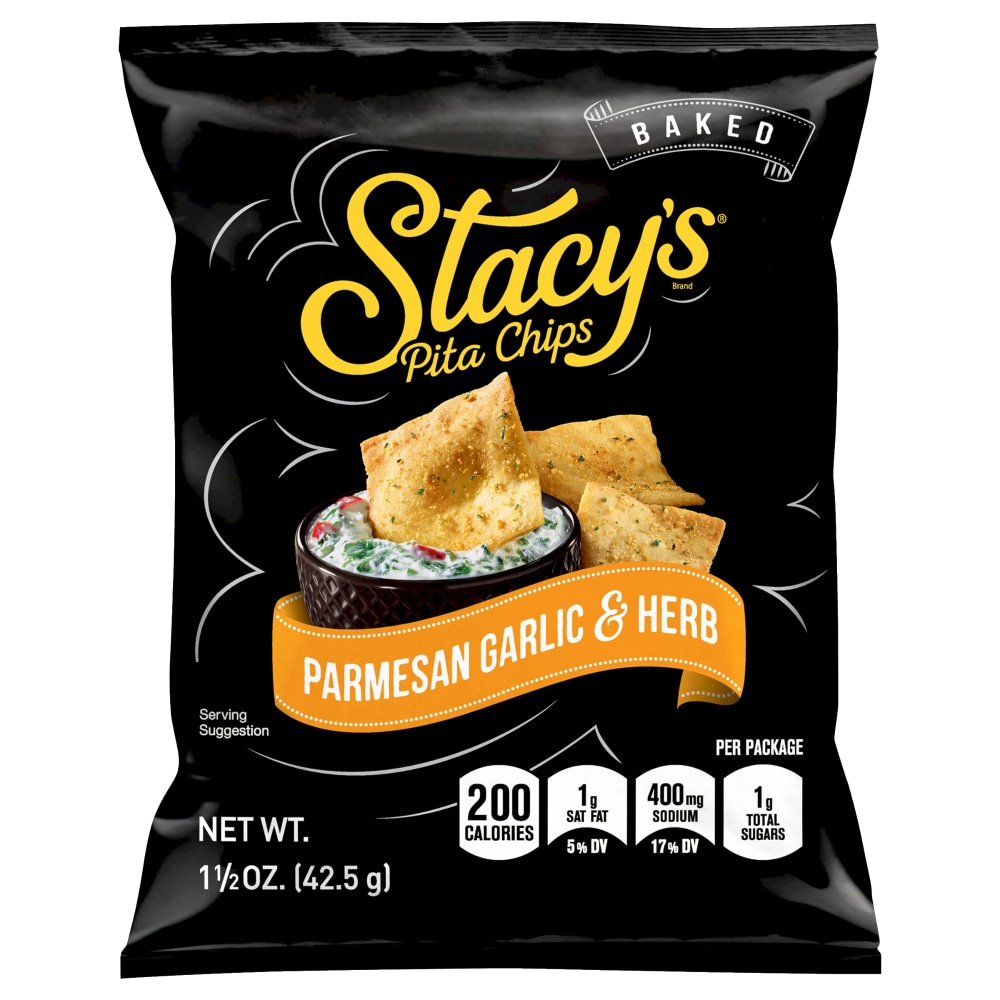
4. Stacy's Pita Chips: Rosemary Extract and Ascorbic Acid '(antioxidant)'
Turning to savory baked snacks, the Open Food Facts listing for Stacy's Parmesan Garlic & Herb pita chips (barcode 028400094498) concludes with:
"... malted barley flour, rosemary extract (antioxidant), ascorbic acid (antioxidant)."
Both rosemary extract and ascorbic acid carry the parenthetical "(antioxidant)." FDA does not require that exact word; it is the job the listing declares. For context, the FDA definition of a chemical preservative in 21 CFR 101.22(a)(5) excludes "common salt, sugars, vinegars, spices, or oils extracted from spices."
The Open Food Facts listing does not disclose the concentration of rosemary extract or ascorbic acid in the chips. To see how this formulation compares to other crunchy snacks, explore Stacy's Pita Chips vs SkinnyPop: Ingredient Lists Compared.
5. Tillamook Cookies & Cream Ice Cream: Annatto '(color)' vs Processing Tags
The Open Food Facts listing for Tillamook Cookies & Cream ice cream (barcode 072830081054) reads:
"cream, skim milk, milk, sugar, enriched cts flour (wheat flour, niacin, reduced iron, thiamin mononitrate, riboflavin, folic acid), pasteurized ege yolks, palm oil, wheat flour, water, cocoa (processed with alkali), salt, vanilla extract, soy lecithin, baking soda, invert sugar, palm kernel oil, guar gum, tara gum, natural flavor, citric acid, annatto (color), xanthan gum, locust bean gum."
In this listing ("cts" and "ege" are typos in the database text), two parentheticals serve very different roles:
- "annatto (color)": Annatto extract is listed under 21 CFR 73.30 as a color additive exempt from batch certification. Under 21 CFR 101.22(k)(3), a coloring added to butter, cheese, or ice cream "need not be declared in the ingredient list" unless a color regulation requires it, though FDA states that "voluntary declaration of all colorings added to butter, cheese, and ice cream, however, is recommended." Tillamook's listing names annatto and adds "(color)."
- "cocoa (processed with alkali)": This describes how the cocoa was made, not an added ingredient's job.
The listing also uses parentheses for the sub-ingredients of the enriched flour, which is a third use: listing what a compound ingredient contains. For more on this color, see Annatto: The Seed Color in Cheese and Snacks.
6. Nature's Bakery Fig Bar: Fruit Juice '(for color)' Disclosure
The Open Food Facts listing for Nature's Bakery Whole Wheat Apple Cinnamon Fig Bar (barcode 047495112559) reads:
"Whole Wheat Flour, Cane Sugar, Fig Paste, Brown Rice Syrup, Apple Jam (Cane Sugar, Naturally Milled Sugar, Rice Starch, Apple Powder, Evaporated Apples, Glycerin, Natural Flavor, Pectin, Citric Acid, Cinnamon, Locust Bean Gum), Canola Oil, Whole Grain Oats, Glycerin, Fruit Juice (for color), Sea Salt, Natural Flavor, Citric Acid, Baking Soda."
Here, the brand declares "Fruit Juice (for color)." Under 21 CFR 73.250, the color additive fruit juice is "prepared either by expressing the juice from mature varieties of fresh, edible fruits, or by the water infusion of the dried fruit," and FDA's summary of color additives lists it among those exempt from batch certification. FDA regulation 21 CFR 101.22(k)(2) permits exempt color additives to be declared as "Colored with " or " color." Nature's Bakery's "(for color)" states the job the brand declared for this juice.
The Open Food Facts listing does not disclose which specific fruit varieties were processed to create the coloring juice, nor how much is added.
The Rules Behind the Parentheses
The parentheticals vary because preservatives and colors fall under different paragraphs of the same FDA regulation, and most other ingredients fall under neither.
Under 21 CFR 101.22(j), the FDA requires that any food containing an added chemical preservative declare both the common or usual name of the ingredient and a separate description of its function. The regulation gives examples ("e.g."): "preservative," "to retard spoilage," "a mold inhibitor," "to help protect flavor," or "to promote color retention." Because these are examples, Sprite's "to protect taste" and Monster's "preservative" both appear on listings.
Color additives operate under separate requirements outlined in 21 CFR 101.22(k) and FDA's Color Additives Questions and Answers for Consumers. FDA says that, with the exception of carmine/cochineal extract, color additives exempt from certification "can be listed collectively as 'artificial colors,' 'artificial color added,' 'color added,' or equally informative terms, without naming each one." The regulation also allows "Colored with " or " color," naming the additive. Monster used the collective term, so its listing does not say which color is added.
Evidence limitations: Existing labeling rules do not require manufacturers to reveal exact additive concentrations, formulation ratios, or the reasons behind their chosen parenthetical phrasing.
How to Use This List to Decode Parenthetical Food Additives
When scanning ingredient statements on packaged foods, use this quick framework to decode parenthetical text:
- Identify the core substance: Separate the chemical name from the parentheses. For instance, in "sodium benzoate (to protect taste)," sodium benzoate is the substance, and protecting taste is the declared job.
- Check for preservative wording: "preservative," "to protect taste" or "a mold inhibitor" is the function description 21 CFR 101.22(j) requires for a chemical preservative.
- Spot color declarations: "(color)" or "(for color)" tells you the brand declared color as that ingredient's job; "color added" tells you a color was used without naming it.
- Distinguish processing methods: Words like "(processed with alkali)" tell you how an ingredient was treated during processing, not that a preservative was added.
- Read sub-lists: a parenthetical string after an ingredient such as enriched flour lists what that ingredient contains.
To see how any of these six products reads ingredient by ingredient, scan it yourself with the free Aurascan app (iOS beta on TestFlight; waitlist for other platforms), which explains each ingredient with cited evidence.
Try Aurascan
See what is really in the food you buy.
Common questions
- Why does my soda say 'to protect taste' instead of preservative?
- FDA regulation 21 CFR 101.22(j) requires a chemical preservative to be declared with a description of its function. The regulation gives 'preservative' and 'to help protect flavor' as examples, so brands word the function description differently. Why a brand picks its wording is not disclosed on the listing.
- Does 'for color' mean an ingredient is artificial?
- Not necessarily. Under FDA regulations (21 CFR 101.22(k) and 21 CFR 73), ingredients exempt from batch certification, such as annatto extract or fruit juice, include pigments from natural sources such as vegetables, minerals, or animals, according to FDA. FDA does not call them 'natural' in a legal sense; it calls them exempt from certification.
- Why do some ingredients have no words in parentheses?
- Parenthetical function words are legally mandated for chemical preservatives under 21 CFR 101.22(j) and used for certain color disclosures. Many other ingredients, such as citric acid or acacia gum in these listings, appear without one; that does not mean they have no job.
- What does 'cocoa (processed with alkali)' mean in an ingredient list?
- It describes how the cocoa was made rather than a job the cocoa does. It is not a function declaration like '(preservative)' or '(color)'.
- Are parenthetical words required by law on food packages?
- Yes, for specific categories. 21 CFR 101.22(j) explicitly requires that added chemical preservatives bear a functional description. For color additives exempt from certification, regulations permit collective terms like 'color added' or naming the additive, as in 'Colored with ____' or '____ color'.
Sources
- 21 CFR 101.22 -- Food labeling: Foods; labeling of spices, flavorings, colorings and chemical preservatives (ecfr.gov)
- 21 CFR 172.120 -- Calcium disodium EDTA (ecfr.gov)
- Color Additives Questions and Answers for Consumers (fda.gov)
- Summary of Color Additives for Use in the United States in Foods, Drugs, Cosmetics, and Medical Devices (fda.gov)
In this series
Guide
Stacy's Pita Chips vs SkinnyPop: Ingredient Lists ComparedGuide
Nutri-Score 2023 tested on 408,399 EU food labelsGuide
KIND Bar vs SkinnyDipped Almonds: Two Nut Snack LabelsGuide
California Creates a 'Non-Ultraprocessed Certified' Food SealGuide
FDA Warns Seller Over 'Anti-Cancer' Goji and Cacao LabelsGuide
Food Gums on 6 Scanned Labels: From Five Thickeners to Zero
Related guides
Guides
Sodium Beyond Salt: 6 Scanned Labels With Sodium AdditivesSprite lists no salt but two sodium compounds. How MSG, baking soda, sodium citrate and sodium benzoate show up on 6 scanned labels, and what FDA says.
Comparisons
Fage Total 0% vs Core Power: Two Milk-Protein Labels ComparedBoth start with milk. Fage lists 2 ingredients, Core Power lists 13. We compare cultures vs lactase, four sweeteners, gums and what the US yogurt rule says.
Comparisons
Gatorade vs Powerade: Sugar, Sodium and ElectrolytesPer 12 fl oz Powerade lists 240mg sodium and 80mg potassium; Gatorade 160mg and 50mg. Compare sugars, HFCS vs sugar and dextrose, dyes and additives.
Try it on your own groceries
Scan your next label with Aurascan
Point the camera at any ingredient list and get the same evidence-graded read you see here.
Open the scannerGet food recall alerts + a weekly digest
An email when a food recall is announced, plus one weekly roundup of label news and new guides.
We email a confirmation link first - nothing is sent until you click it. Unsubscribe anytime. Privacy