
Comparisons · October 2, 2026 · 8 min read
KIND Bar vs SkinnyDipped Almonds: Two Nut Snack Labels
Both pair nuts with dark chocolate. KIND lists 16 ingredients incl. glucose syrup and palm kernel oil; SkinnyDipped lists five. Side-by-side label check.
By Chris Carrillo · Reviewed by Armin Rad, Co-Founder & CTO, Aurascan · October 2, 2026
Every article is checked against primary sources before publication. How we review
If you want a portable snack bar made with soy protein isolate and added syrups, pick KIND Peanut Butter Dark Chocolate; if you want a chocolate-coated almond snack made without palm oil, soy, or added functional fibers, pick SkinnyDipped Dark Chocolate Cocoa Almonds. While SkinnyDipped presents a much shorter ingredient deck of 5 top-level items compared to KIND's 16, both products end up with nearly identical total sugar levels per 100 grams.
Key Takeaways
- Despite SkinnyDipped having only 5 top-level ingredients compared to KIND's 16, both snacks yield almost the same total sugars per 100 grams (approximately 22.5 grams in KIND versus approximately 23.1 grams in SkinnyDipped).
- Federal labeling rules mandate listing ingredients by descending weight predominance: KIND's second ingredient is glucose syrup, whereas almonds are the first ingredient in SkinnyDipped.
- KIND adds soy protein isolate and palm kernel oil, while SkinnyDipped relies on natural nut protein and includes dairy milk fat inside its chocolate coating.
- Every sweetening agent used across both products (glucose syrup, honey, sugar, cane sugar, and maple sugar) meets the regulatory standard for added sugars.
KIND vs SkinnyDipped at a Glance
When comparing packaged chocolate snacks, a shorter ingredient list does not always mean a drastic cut in total sugar. Both KIND Peanut Butter Dark Chocolate and SkinnyDipped Dark Chocolate Cocoa Almonds deliver rich flavor through nuts and cocoa, but they construct their textures and formulas very differently.
KIND builds a bar from nuts, three sweeteners, soy protein isolate and palm kernel oil. SkinnyDipped coats almonds in dark chocolate, maple sugar and cocoa powder. Knowing How to Read a Food Label: The Ingredient List, Line by Line helps cut through marketing claims to see how those recipe differences affect nutrition.
| Attribute | KIND Peanut Butter Dark Chocolate | SkinnyDipped Dark Chocolate Cocoa Almonds |
|---|---|---|
| Top-Level Ingredients | 16 ingredients | 5 ingredients (10 with chocolate sub-ingredients) |
| Primary Ingredient | Peanuts | Almonds |
| Sweetening Agents | Glucose syrup, honey, sugar | Cane sugar, maple sugar |
| Protein Sources | Peanuts, soy protein isolate, peanut butter | Almonds |
| Added Fats | Palm kernel oil, cocoa butter | Cocoa butter, milk fat |
| Fiber Sources | Nuts, chicory root fiber | Almonds, cocoa |
| Emulsifier | Soy lecithin | Sunflower lecithin |
| Saturated Fat (per 100 g) | 10 g (50% DV) | ~7.7 g (~38.5% DV) |
| Total Sugars (per 100 g) | 22.5 g | ~23.1 g |
| Protein (per 100 g) | 17.5 g | ~15.4 g |
Quiz
KIND lists 16 ingredients, SkinnyDipped lists five. Which nut-and-chocolate snack goes in your bag?
Guess before you scroll.
Reveal Aurascan's verdict
Aurascan says: It's a tie
Nutrition Comparison: The 100-Gram Normalized Breakdown
Because Open Food Facts reports nutrient values for SkinnyDipped without a listed single-serving size, direct evaluation requires a normalized 100-gram comparison. Looking at 100 grams puts both products on the same footing.
Per 100 grams, KIND delivers 500 kcal, 35 grams of total fat, 10 grams of saturated fat, 40 grams of carbohydrates, 22.5 grams of sugars, 7.5 grams of fiber, and 17.5 grams of protein. For readers tracking a single KIND bar, the individual 40-gram unit provides 200 kcal, 14 grams of fat, 4 grams of saturated fat, 16 grams of carbohydrates, 9 grams of sugars, 3 grams of fiber, and 7 grams of protein.
SkinnyDipped delivers approximately 462 kcal, 38.5 grams of total fat, 7.7 grams of saturated fat, 38.5 grams of carbohydrates, 23.1 grams of sugars, 7.7 grams of fiber, and 15.4 grams of protein per 100 grams. Despite the distinct formats, the carbohydrate and sugar numbers track remarkably close to one another.
KIND is somewhat higher in protein (it is also the only one of the two that lists soy protein isolate), with 17.5 grams versus 15.4 grams per 100 grams. However, KIND also brings higher saturated fat at 10 grams per 100 grams compared to SkinnyDipped's 7.7 grams. Based on the 20-gram Daily Value (DV) established in 21 CFR 101.9, 100 grams of KIND accounts for 50 percent of the saturated fat ceiling, while SkinnyDipped represents roughly 38.5 percent.
Scan preview
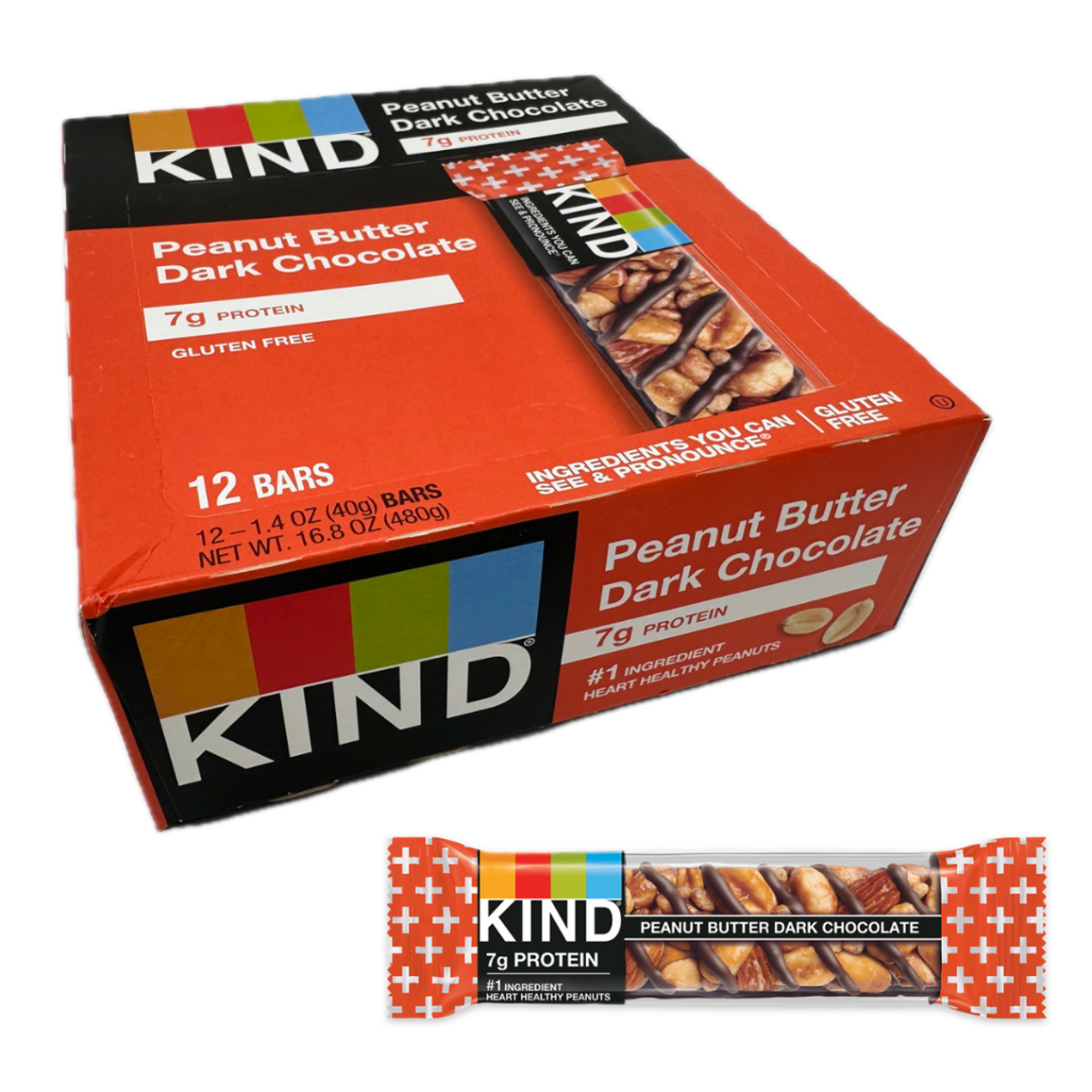
Kind
Kind Bar - Peanut Butter Dark Chocolate Plus Protein
PEANUTS · GLUCOSE SYRUP · SUGAR
Standout ingredient: SOY PROTEIN ISOLATE
Analysis by Aurascan. The app shows the full breakdown and its sources.
Ingredient Lists: 16 Top-Level Items Versus 5
Under federal labeling regulation 21 CFR 101.4(a)(1), ingredients must be declared in descending order of predominance by weight. Examining the top of each list reveals what makes up the physical bulk of the product.
KIND Peanut Butter Dark Chocolate lists 16 top-level ingredients: peanuts, glucose syrup, almonds, honey, sugar, soy protein isolate, palm kernel oil, peanut butter (peanuts, sea salt), unsweetened chocolate, alkalized cocoa, tapioca starch, chicory root fiber, soy lecithin, sea salt, natural flavor, and cocoa butter. Because glucose syrup ranks second, it outweighs almonds, honey, and every subsequent component on the label.
SkinnyDipped Dark Chocolate Cocoa Almonds lists 5 top-level ingredients: almonds, dark chocolate (unsweetened chocolate processed with alkali, cane sugar, cocoa butter, milk fat, sunflower lecithin, vanilla), maple sugar, sea salt, and cocoa powder. When breaking out the dark chocolate sub-components, the full formula contains 10 distinct ingredients led by almonds.
Neither package utilizes a 2 percent or less exemption statement under 21 CFR 101.4(a)(2). That means KIND's soy protein isolate outweighs its palm kernel oil, which in turn outweighs the peanut butter. SkinnyDipped's list contains no syrups or starches.
Scan preview
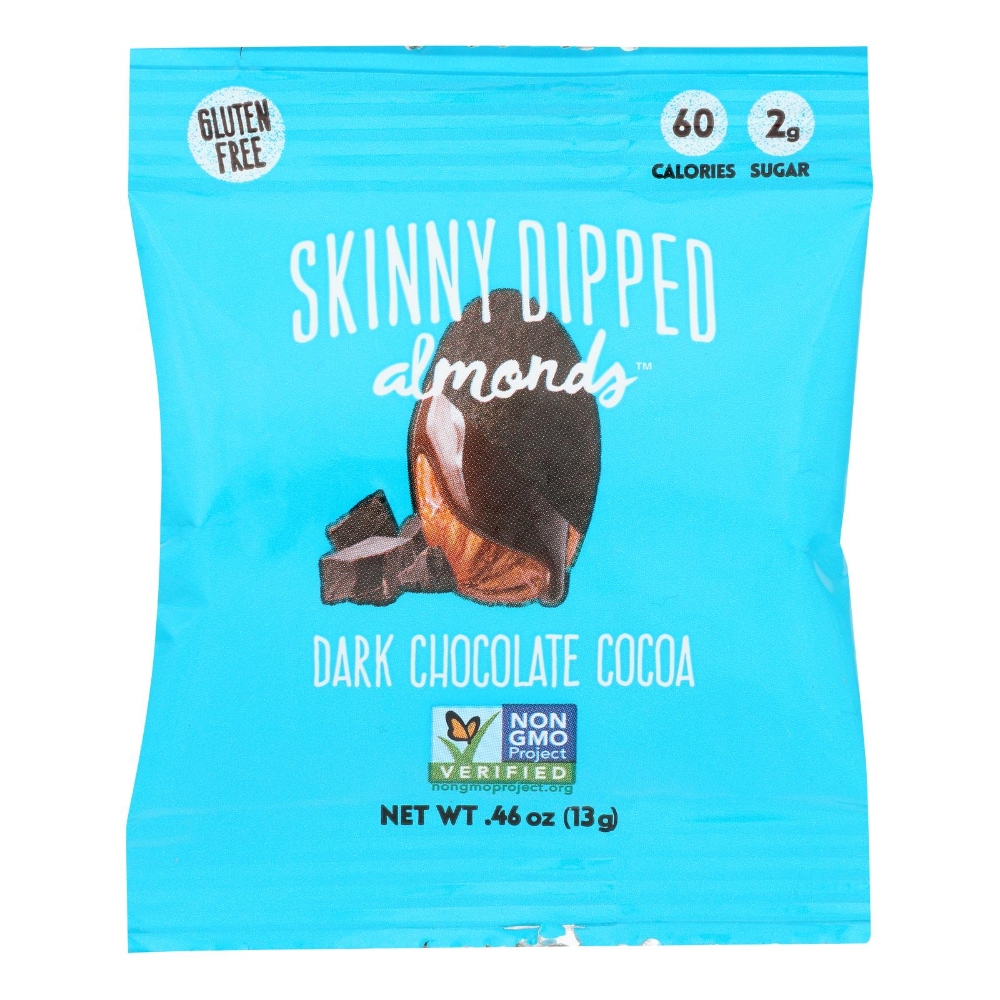
Skinny Dipped Almonds
Skinny Dipped Almonds SkinnyDipped Dark Chocolate Cocoa Covered - Case Of 24/.46
Almonds · Dark Chocolate · Cane Sugar
Standout ingredient: Sunflower Lecithin
Analysis by Aurascan. The app shows the full breakdown and its sources.
Added Sugars: Three Sweeteners vs Two
Many consumers turn to minimalist labels hoping to cut back on sugar. However, comparing these formulations shows that fewer sweetener types does not necessarily translate to a lower sugar total.
According to 21 CFR 101.9(c)(6)(iii) and the FDA Added Sugars guidance, added sugars include sugars added during processing, sugars from syrups, and sugars from honey. The federal Daily Value is set at 50 grams per day, with public health guidelines recommending less than 10 percent of daily calories from added sugars.
KIND relies on three sweetening agents: glucose syrup (ranked second), honey (ranked fourth), and sugar (ranked fifth). SkinnyDipped uses two sweetening agents: cane sugar (as part of the dark chocolate coating) and maple sugar. Every single one of these five ingredients is categorized legally as an added sugar.
Per 100 grams, KIND has 22.5 grams of total sugars and SkinnyDipped about 23.1 grams. Even with two fewer ingredients overall and one fewer sweetener, SkinnyDipped's sugar per gram is nearly identical to KIND's. Open Food Facts' added-sugar figures for both products conflict with their ingredient lists, so we don't quote them here; check the Added Sugars line on the package.
Fat and Protein: Palm Kernel Oil and Soy vs Milk Fat and Nuts
Beyond sweetness, the sources of dietary fats and proteins represent a fundamental divide between these two snacks.
Alongside peanuts and almonds, KIND lists soy protein isolate. It also lists palm kernel oil next to cocoa butter. KIND has 10 grams of saturated fat per 100 grams; how much of that comes from palm kernel oil versus the nuts and chocolate is not disclosed.
SkinnyDipped lists no added protein ingredient, yet still reaches about 15.4 grams of protein per 100 grams. Its fats come from almonds, plus cocoa butter and milk fat in the chocolate coating. Milk fat is a milk-derived ingredient, so the snack is not vegan and is not for anyone avoiding milk.
Shoppers watching specific dietary fats can explore Seed Oils on a Label: What It Tells You, What It Doesn't to better evaluate processed vegetable oils against traditional dairy and nut fats.
Fiber and Additives: Chicory Root Fiber to Emulsifiers
Both products deliver notable dietary fiber, with KIND posting 7.5 grams and SkinnyDipped posting approximately 7.7 grams per 100 grams (against a 28-gram Daily Value). However, the underlying botanical sources are quite different.
SkinnyDipped lists no added fiber ingredient. KIND also lists chicory root fiber. According to the FDA Questions and Answers on Dietary Fiber, the FDA intends to propose adding inulin and inulin-type fructans to its dietary fiber definition and, until that rulemaking is finished, plans to use enforcement discretion so manufacturers can count them in the fiber declaration. The KIND label does not say which type of chicory fiber it uses.
A randomized crossover study by Bonnema et al. (2010) evaluated gastrointestinal tolerance of chicory fibers in 26 healthy adults. The researchers noted that chicory inulin fibers tended to mildly increase GI symptoms like flatulence and bloating. The study observed that native inulin doses up to 10 grams per day and oligofructose up to 5 grams per day were well-tolerated. The open database records for KIND do not disclose the exact amount or subtype of chicory root fiber present.
Emulsifiers also diverge. KIND uses soy lecithin, while SkinnyDipped uses sunflower lecithin. Readers can read more about how manufacturers use these ingredients in Emulsifiers on Ingredient Lists Explained: Lecithin to Polysorbate 80.
According to the FDA major food allergens list, the nine major allergens include milk, eggs, fish, shellfish, tree nuts, peanuts, wheat, soybeans, and sesame. KIND explicitly declares peanuts, almonds (tree nut), and soy, with advisory statements for other tree nuts and sesame seeds. SkinnyDipped contains almonds and dairy milk fat, making it free from soy and peanut ingredients but problematic for those avoiding dairy or tree nuts.
It is important to state plainly what available evidence cannot establish: Open Food Facts does not disclose the single-serving nutrition facts for SkinnyDipped, the exact proportion of saturated fat originating from palm kernel oil versus nuts in KIND, or the meaning behind the asterisks on SkinnyDipped's cocoa and chocolate components. Furthermore, individual digestive responses to added fibers vary, and studies on isolated cohorts cannot predict every individual reaction.
Which Should You Pick? Label Scenarios for Shoppers
Choosing between these two chocolate snacks comes down to your personal health priorities and dietary restrictions.
Pick KIND Peanut Butter Dark Chocolate if:
- You want a pre-portioned 40-gram bar.
- You are seeking extra protein supported by isolated soy protein (17.5 grams per 100 grams).
- You do not react poorly to functional fibers such as chicory root fiber.
- You need to avoid dairy ingredients like milk fat.
Pick SkinnyDipped Dark Chocolate Cocoa Almonds if:
- You prefer a short ingredient list without palm kernel oil or glucose syrup.
- You avoid soy products, as it uses sunflower lecithin rather than soy lecithin.
- You experience bloating or digestive discomfort from inulin or chicory root extracts.
- You want almonds as the first ingredient by weight.
To inspect package panels and unmask hidden sugars or unexpected emulsifiers yourself, download the free Aurascan app on iOS TestFlight and scan your next grocery item.
Quiz
SkinnyDipped has five ingredients but about as much sugar per 100 g as the KIND bar. Keep it or pass?
Guess before you scroll.
Reveal Aurascan's verdict
Aurascan says: Flagged
The main flag is Almonds.
Try Aurascan
See what is really in the food you buy.
Common questions
- Does SkinnyDipped have less sugar than KIND?
- Not when normalized by weight. Per 100 grams, SkinnyDipped Dark Chocolate Cocoa Almonds contains approximately 23.1 grams of sugar, while KIND Peanut Butter Dark Chocolate contains 22.5 grams. Both products share a very similar sugar concentration.
- Why is glucose syrup so high on the KIND label?
- KIND does not say why it uses glucose syrup. What the label does show is its weight rank: under 21 CFR 101.4, ingredients are listed in descending order by weight, so glucose syrup in second place outweighs almonds, honey and sugar.
- Is SkinnyDipped dairy-free and vegan?
- No. The dark chocolate coating in SkinnyDipped Dark Chocolate Cocoa Almonds contains milk fat, making it unsuitable for strictly dairy-free or vegan diets.
- Can chicory root fiber cause digestive issues?
- Clinical research indicates that chicory inulin fibers tended to mildly increase gastrointestinal symptoms, mostly gas and bloating, in a small trial of 26 healthy adults, while doses up to 10 grams per day of native inulin were well tolerated. How much chicory root fiber KIND contains is not disclosed.
- Which snack has more saturated fat?
- KIND has more saturated fat, providing 10 grams per 100 grams (50% Daily Value), compared to SkinnyDipped's approximately 7.7 grams per 100 grams (38.5% Daily Value). How much of KIND's saturated fat comes from palm kernel oil versus nuts and chocolate is not disclosed.
Sources
- 21 CFR 101.4 - Food; designation of ingredients (ecfr.gov)
- 21 CFR 101.9 - Food labeling: nutrition labeling of food (ecfr.gov)
- Added Sugars on the Nutrition Facts Label (fda.gov)
- Questions and Answers on Dietary Fiber (fda.gov)
- Gastrointestinal Tolerance of Chicory Inulin Products (pubmed.ncbi.nlm.nih.gov)
- Food Allergies: What You Need to Know (fda.gov)
In this series
Guide
California Creates a 'Non-Ultraprocessed Certified' Food SealGuide
FDA Warns Seller Over 'Anti-Cancer' Goji and Cacao LabelsGuide
Food Gums on 6 Scanned Labels: From Five Thickeners to ZeroGuide
Whey on Food Labels: What It Is and Who Should Watch ItGuide
Niacinamide, Cyanocobalamin: Vitamin Names on Labels DecodedGuide
Mono- and Diglycerides: Hidden Trans Fat or Harmless Emulsifier?
Related guides
Comparisons
Gatorade vs Powerade: Sugar, Sodium and ElectrolytesPer 12 fl oz Powerade lists 240mg sodium and 80mg potassium; Gatorade 160mg and 50mg. Compare sugars, HFCS vs sugar and dextrose, dyes and additives.
Comparisons
Chobani vs Fage Greek Yogurt: Protein, Sugar and CulturesChobani Nonfat Plain vs Fage Total 0% Greek yogurt: protein per 3/4 cup, sugar, sodium, live cultures and the one-line ingredient lists compared.
Comparisons
Fage Total 0% vs Core Power: Two Milk-Protein Labels ComparedBoth start with milk. Fage lists 2 ingredients, Core Power lists 13. We compare cultures vs lactase, four sweeteners, gums and what the US yogurt rule says.
Try it on your own groceries
Scan your next label with Aurascan
Point the camera at any ingredient list and get the same evidence-graded read you see here.
Open the scannerGet food recall alerts + a weekly digest
An email when a food recall is announced, plus one weekly roundup of label news and new guides.
We email a confirmation link first - nothing is sent until you click it. Unsubscribe anytime. Privacy