
Ingredient Reviews · September 25, 2026 · 7 min read
Annatto: The Seed Color in Cheese and Snacks
Annatto (E 160b) is a seed-based orange color used in cheddar, butter and snacks. What FDA and EFSA allow, the ADIs, and rare allergy reports.
By Chris Carrillo · Reviewed by Armin Rad, Co-Founder & CTO, Aurascan · September 25, 2026
Every article is checked against primary sources before publication. How we review
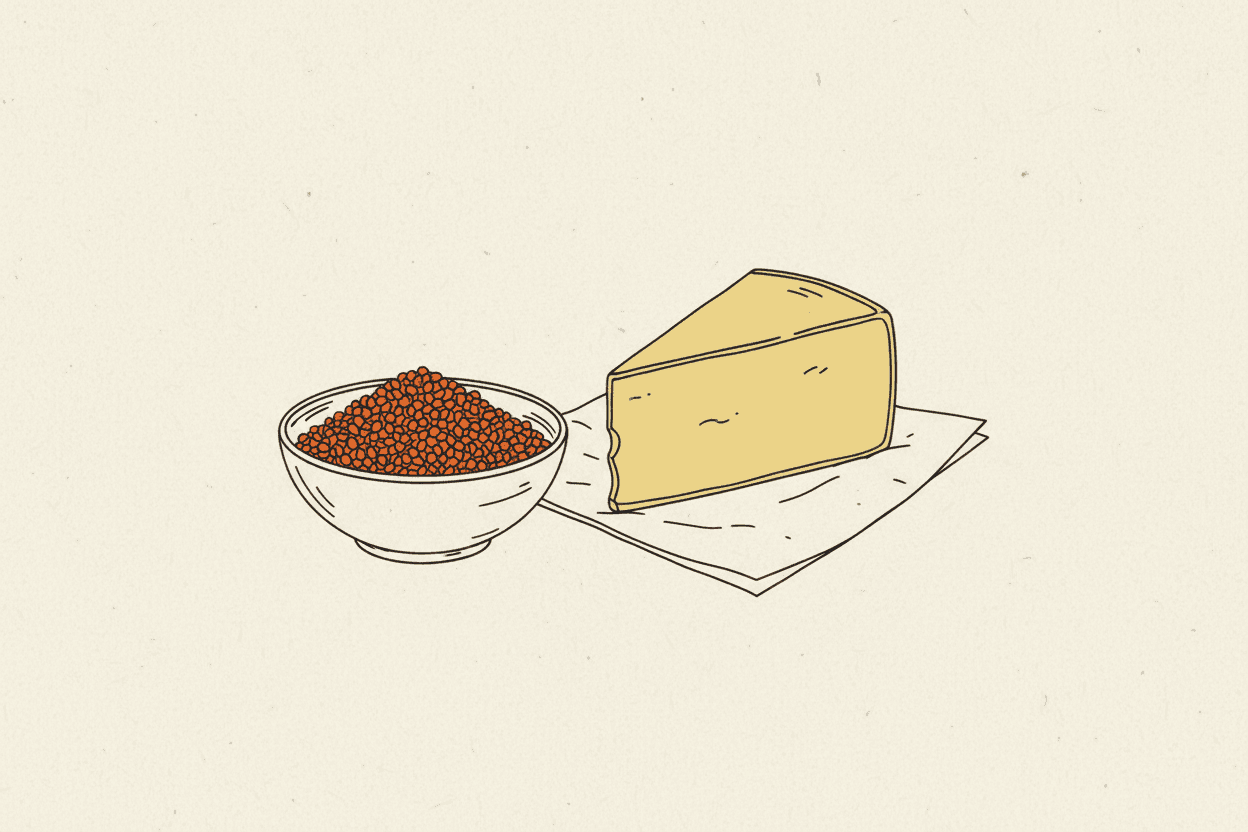
Annatto is a natural, plant-derived food coloring extracted from the seeds of the tropical Bixa orellana tree. It provides yellow to reddish-orange shades in everyday staples like cheddar cheese, butter, crackers, and breakfast cereals without relying on synthetic petroleum dyes. Major food safety authorities consider annatto safe within established intake levels, though rare allergic reactions can occur. Food manufacturers increasingly rely on annatto as consumer demand pushes packaged goods away from artificial colorings.
Key takeaways
- Annatto is extracted from the seeds of Bixa orellana and primarily consists of oil-soluble bixin and water-soluble norbixin.
- International authorities, including the US Food and Drug Administration (FDA), the European Food Safety Authority (EFSA), and the Joint FAO/WHO Expert Committee on Food Additives (JECFA), recognize annatto as safe within defined limits.
- Food brands frequently use annatto as an alternative to certified petroleum-based dyes like Yellow 6 (Sunset Yellow) and Tartrazine (Yellow 5).
- Under United States regulations, annatto does not always have to be listed specifically by name and can be declared as "color added" or even left off labels in standardized butter, cheese, and ice cream.
- Documented allergic reactions, including hives and rare instances of anaphylaxis, exist in medical literature but remain very uncommon.
What is annatto and where does it come from?
Annatto is a natural pigment harvested from the seeds of the achiote tree (Bixa orellana), a tropical shrub native to Central and South America. The exterior coat of these small, triangular seeds is rich in carotenoids, which give the extract its signature golden-yellow to deep orange hue. Indigenous cultures have utilized annatto for centuries as both a culinary spice and a vibrant dye for textiles and body paint.
In modern industrial food production, annatto is prized because it delivers stable, warm colors without synthetic synthesis. In the United States, federal regulations classify annatto extract under 21 CFR 73.30 as a color additive exempt from batch certification. This means that unlike certified artificial colorants, annatto is derived from natural plant material and does not undergo batch-by-batch chemical testing by the government before commercial use.
Because it comes directly from a plant, annatto fits the criteria many brands seek when reformulating their recipes for cleaner labeling. It is not synthetic and not one of the major food allergens, and it is widely used in packaged foods.
What is annatto used for in food?
Annatto serves primarily as a visual colorant, helping processed foods maintain an appetizing, uniform appearance. While traditional Latin American cooking uses ground annatto seeds (often called achiote paste) for both flavor and color, commercial food processing uses highly purified extracts that contribute rich pigment with virtually no perceptible flavor or aroma.
One of the most famous historical uses of annatto is in dairy products. Centuries ago, high-quality spring and summer milk in England contained natural beta-carotene from fresh grass pastures, giving butter and cheese a rich, yellowish tint. Winter milk from hay-fed cows looked pale. Cheesemakers began adding annatto to standardise the color year-round, a tradition that survives today in bright orange cheddar, Colby, and Red Leicester cheeses.
Beyond dairy, annatto provides warm yellow and orange tones to a wide range of packaged goods. You will frequently find it in breakfast cereals, snack crackers, margarine spreads, salad dressings, popcorn seasonings, and baked snacks. As major manufacturers continue to clean up ingredient decks, annatto serves as a primary replacement for synthetic petroleum-based dyes like Tartrazine (Yellow 5) and Yellow 6.
How is annatto made into bixin and norbixin?
The coloring power of annatto comes from two related carotenoid pigments: bixin and norbixin. To extract them, processors remove the outer seed coating of Bixa orellana using mechanical abrasion, edible vegetable oils, or food-grade alkaline and solvent solutions.
The natural seed extract is predominantly composed of bixin. Bixin is an oil-soluble pigment, which makes it ideal for coloring fatty matrices like butter, oils, margarine, processed cheeses, and oil-based snack coatings. Because bixin dissolves readily in lipids, it disperses smoothly without clumping or altering the food's texture.
When food manufacturers require a water-soluble dye, bixin is converted into norbixin using aqueous alkaline processing. Norbixin dissolves easily in water, making it suitable for dairy drinks, yogurt, bakery doughs, breakfast cereals, and ice creams. By balancing these two forms, food chemists can achieve shades ranging from pale lemon-yellow to dark reddish-orange across diverse food systems.
Is annatto safe according to global health regulators?
Food safety agencies across the globe have evaluated annatto extracts extensively and confirm that they are safe when used in standard food applications.
In the European Union, annatto pigments are designated as food additive E 160b. Following comprehensive toxicity and toxicokinetic reviews, the European Food Safety Authority (EFSA) established acceptable daily intakes (ADIs) in 2016 of 6 mg per kilogram of body weight per day for bixin and 0.3 mg per kilogram of body weight per day for norbixin. Later, an EFSA 2019 exposure assessment evaluated actual dietary intake data across European populations. The panel found that norbixin dietary exposure reached its ADI only at the 95th percentile in toddlers in a single country, leading EFSA to conclude that exposure to bixin and norbixin does not raise a safety concern.
Similarly, the Joint FAO/WHO Expert Committee on Food Additives (JECFA) evaluated annatto in 2006. JECFA established an ADI of 0 to 12 mg/kg body weight for bixin and 0 to 0.6 mg/kg body weight for norbixin. In the United States, regulators permit annatto extract in foods generally under good manufacturing practice (GMP) under 21 CFR 73.30, except in foods that have specific standards of identity prohibiting added colors.
Does annatto cause allergies or adverse side effects?
Despite its strong overall safety record, annatto can occasionally trigger adverse immune responses in sensitive individuals. Because annatto comes from a seed, traces of seed protein may remain in the extract, which is one proposed explanation for allergic reactions.
Published reports are few. In 1991, Nish and colleagues published a clinical case study (PMID 1994783) describing a patient who experienced severe anaphylaxis after eating breakfast cereal colored with annatto. Positive skin prick testing confirmed hypersensitivity to the extract, and the authors described annatto as a potential rare cause of anaphylaxis.
It is important to keep these risks in perspective. Annatto is not one of the major food allergens recognized by law (such as peanuts, milk, soy, or tree nuts), and confirmed reactions are extremely infrequent compared to common food allergies. Nevertheless, consumers with unexplained hives or idiopathic reactions after consuming intensely colored yellow or orange foods should discuss the possibility of annatto sensitivity with an allergist.
How do you spot annatto on ingredient labels?
Identifying annatto on ingredient labels depends largely on the jurisdiction and the specific product category. Under United States labeling rules detailed in 21 CFR 101.22(k), certified synthetic dyes must be listed by their specific name (such as Yellow 5), but colorings exempt from certification enjoy broader flexibility.
Manufacturers can list annatto under several distinct label names:
- "Annatto"
- "Annatto extract"
- "Annatto color"
- "Color added"
- "Artificial color" (permitted wording for exempt colors under 21 CFR 101.22(k))
- "E 160b" (on European and international packaging)
- "Bixin" or "Norbixin"
A notable quirk of US food law applies to dairy staples. Under 21 CFR 101.22, colorings added to butter, cheese, and ice cream do not need to be declared on the ingredient panel unless explicitly mandated by an individual standard of identity. Consequently, a shopper could purchase an orange cheddar cheese or yellow butter containing annatto without seeing the word "annatto" anywhere on the packaging.
What natural alternatives exist for yellow and orange dyes?
Brands seeking to color foods without synthetic dyes or annatto have several other plant and mineral alternatives available. Depending on the processing temperature, acidity, and fat content of the food, manufacturers frequently choose between these common coloring agents:
- Beta-Carotene: Derived from algae, fungi, or carrots, beta-carotene produces a pleasant yellow to soft orange tone. Like bixin, it is naturally fat-soluble and often used in spreads and baked foods.
- Turmeric (Curcumin): Extracted from the roots of Curcuma longa, turmeric imparts an intense, brilliant lemon-yellow color. It is sensitive to light but excels in dry mixes and pickling.
- Paprika Oleoresin: Extracted from sweet red peppers (Capsicum annuum), paprika delivers rich, warm red-orange hues. It works well in savory snacks, dressings, and processed meats, though high inclusion levels can leave a faint pepper note.
- Carrot and Pumpkin Concentrates: Increasingly used in the European Union and the US as coloring foods, these whole vegetable juices provide gentle yellow and orange shades with minimal processing.
Evidence limitations and scientific uncertainty
While regulatory evaluations confirm annatto's safety across typical dietary exposures, scientific limitations remain. Human clinical trials directly testing chronic, high-dose exposure to isolated bixin and norbixin are sparse, with most safety parameters extrapolated from animal toxicological studies. Furthermore, because US labeling exemptions allow annatto to be grouped under generic terms like "color added" in butter and cheese, real-world population exposure cannot always be calculated with exact precision. Individual immune tolerances vary, and available research cannot identify ahead of time which people will experience rare hypersensitivity flare-ups.
Try Aurascan
See what is really in the food you buy.
Common questions
- Is annatto a synthetic dye?
- No. Annatto is a plant-derived color additive obtained from the reddish-orange seed coat of the tropical Bixa orellana tree. It is not synthesized from petroleum.
- Is annatto banned anywhere?
- No, annatto is not banned. Food regulators worldwide, including the US FDA, EFSA in Europe, and JECFA, permit annatto for use in food under specified safety and purity guidelines.
- Why is annatto in cheddar cheese?
- Annatto has been used for centuries to give cheddar cheese an appetizing, consistent yellow-orange color, standardizing variations that naturally occur between summer and winter milk.
- Can annatto cause allergic reactions?
- Yes, although it is rare. Documented cases show that annatto can cause hives, swelling, and in very isolated instances, anaphylaxis, likely due to residual natural seed proteins.
- Why isn't annatto always listed on cheese and butter labels?
- Under US regulation 21 CFR 101.22, color additives exempt from certification do not have to be declared on labels for butter, cheese, and ice cream unless specifically required by that food's standard of identity.
- What is the difference between bixin and norbixin?
- Bixin is the primary oil-soluble carotenoid pigment naturally found in annatto seeds. Norbixin is the water-soluble version created by processing bixin in aqueous alkaline solutions.
Sources
- Safety of annatto extracts (E 160b) (pmc.ncbi.nlm.nih.gov)
- 21 CFR Section 73.30 - Annatto extract (law.cornell.edu)
- 21 CFR Section 101.22 - Foods; labeling of spices, flavorings, colorings and chemical preservatives (law.cornell.edu)
- JECFA Chemical Technical Assessment: Annatto Extracts (apps.who.int)
In this series
Guide
Is Caramel Color (E150) Safe? 4-MEI, Classes, and LabelsGuide
EU Warning-Label Additives Still Allowed in the USGuide
Is Blue 1 (Brilliant Blue FCF, E133) Safe? Uses and LabelsGuide
Is Yellow 6 (Sunset Yellow, E110) Safe? Uses, Labels, RisksGuide
What Is Titanium Dioxide? Uses, Safety, and LabelingGuide
What Is Tartrazine (Yellow 5)? Uses, Safety, and Labeling
Related guides
Ingredient Reviews
Sodium Phosphate in Food: Who Actually Needs to Worry?Sodium phosphate is in boxed mac and cheese, deli chicken and cereal. What FDA and EFSA say, the kidney evidence, and how to spot it.
Ingredient Reviews
Calcium Propionate: The Bread Mold Inhibitor, ExplainedCalcium propionate (E 282) keeps bread mold-free. What FDA and EFSA concluded, and what small human studies on blood sugar hormones found.
Ingredient Reviews
Citric Acid on Food Labels: Mold-Made, but Is It Safe?Citric acid (E 330) is mostly made by fermentation with Aspergillus niger. What FDA, JECFA and a 2018 case series actually say, and how to spot it.
Try it on your own groceries
Scan your next label with Aurascan
Point the camera at any ingredient list and get the same evidence-graded read you see here.
Open the scannerLabel-reading intel, weekly.
What changed on food labels this week — bans, recalls, and new guides.