
Comparisons · October 8, 2026 · 7 min read
Barebells vs Ryse Loaded Protein: Two Sucralose Labels Compared
Both use sucralose. Barebells adds maltitol and polydextrose; Ryse adds ace-K, agave inulin and a carrageenan gum blend. What FDA and EFSA say.
By Chris Carrillo · Reviewed by Armin Rad, Co-Founder & CTO, Aurascan · October 8, 2026
Every article is checked against primary sources before publication. How we review
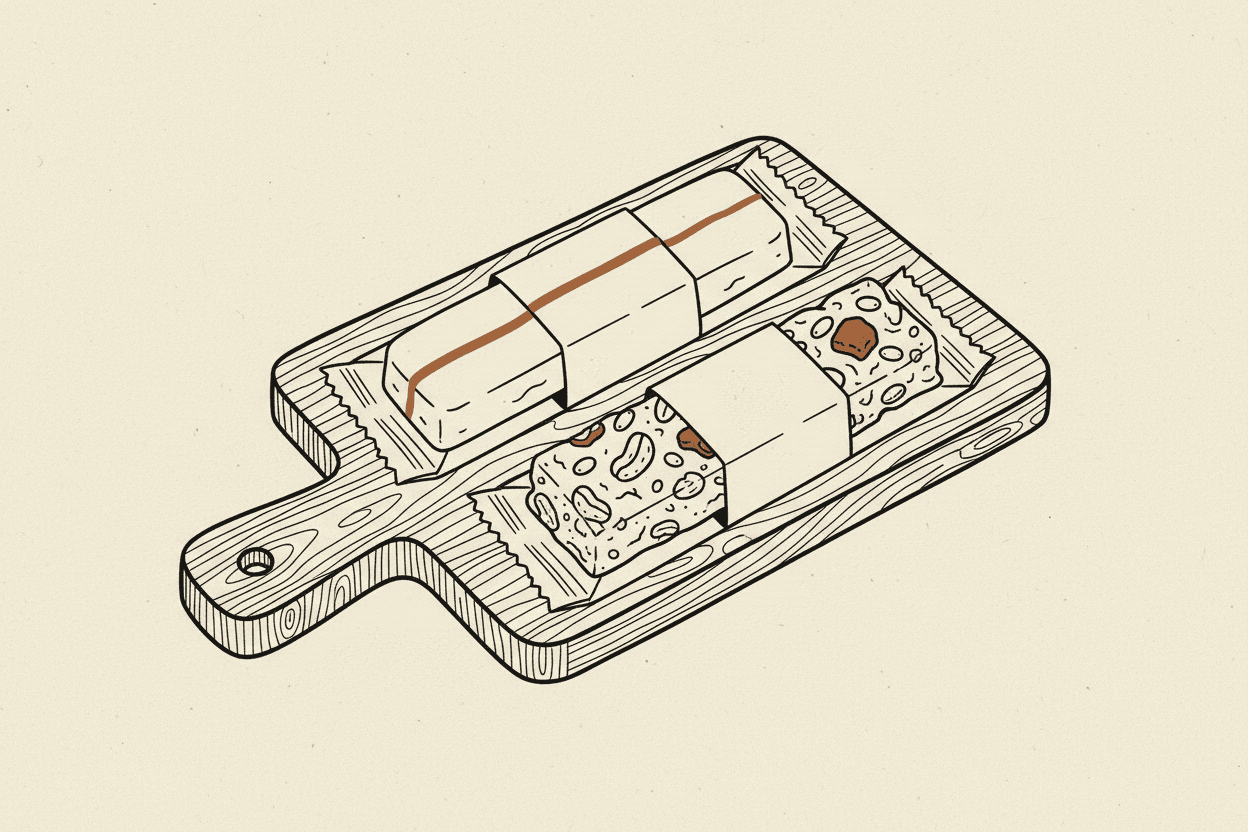
Barebells Chocolate Dough bars and Ryse Loaded Protein Cinnamon Toast mix both list sucralose. After that, their Open Food Facts listings go different ways. Barebells pairs sucralose with maltitol and adds polydextrose, glycerol and collagen. Ryse pairs it with acesulfame potassium and adds agave inulin, whey and a gum blend that includes carrageenan.
Neither listing names sugar. Below we compare the two ingredient lists line by line and set out what FDA and EFSA say about the sweeteners and fiber-type ingredients. One is a 55 g bar and the other a powder you mix, so we do not compare per-serving nutrition.
Key takeaways:
- While both formulas rely on sucralose, Barebells pairs it with the sugar alcohol maltitol, whereas Ryse uses acesulfame potassium (ace-K).
- Ryse lists whey protein isolate and whey protein concentrate, whereas Barebells lists milk proteins, collagen hydrolysate, whole milk powder and soy protein.
- Barebells lists polydextrose, glycerol (as humectant) and tapioca starch; Ryse lists organic agave inulin and a cellulose, xanthan and carrageenan gum blend.
- Neither listing names sugar. Ryse is the only one of the two that declares artificial flavors; Barebells lists "flavourings" and cocoa.
Barebells vs Ryse: At-a-Glance Ingredient Comparison
Open Food Facts records the bar at 55 g and the Ryse tub at 720 g, so this table compares ingredients, not amounts. The Barebells Chocolate Dough Open Food Facts listing contains 16 ingredient entries, using European-style class names such as "humectant" and "emulsifier", which may not match the wording on the current US wrapper. The Ryse Loaded Protein Cinnamon Toast Open Food Facts listing has 13 entries.
| Functional Component | Barebells Chocolate Dough Bar | Ryse Loaded Protein Powder Mix |
|---|---|---|
| High-Intensity Sweeteners | Sucralose | Sucralose, Acesulfame Potassium (Ace-K) |
| Bulk Sweeteners / Polyols | Maltitol | None listed |
| Fiber / Bulking Agents | Polydextrose | Organic Agave Inulin, Gum Acacia |
| Primary Protein Sources | Milk proteins, Collagen hydrolysate, Soy protein | Whey protein isolate, Whey protein concentrate |
| Texturizers & Gums | Glycerol (humectant), Tapioca starch | Gum blend (Cellulose, Xanthan, Carrageenan) |
| Fat Sources | Cocoa butter, Cocoa mass, Sunflower oil, Whole milk powder | MCT oil powder (Medium chain triglycerides) |
| Emulsifiers | Emulsifier (lecithins) | Soy lecithin, Sunflower lecithin |
| Flavorings | Flavourings, Cocoa powder | Natural flavors, Artificial flavors, Ground cinnamon |
| Salt | Salt | Salt |
Quiz
Both list sucralose. Which one pairs it with maltitol instead of acesulfame potassium?
Guess before you scroll.
Reveal Aurascan's verdict
Aurascan says: It's a tie
Sweetener Stacks: Sucralose with Maltitol vs Acesulfame Potassium
Both products list sucralose, a high-intensity sweetener that the U.S. Food and Drug Administration (FDA) notes is about 600 times sweeter than table sugar. Under 21 CFR 172.831, sucralose is cleared as a general-purpose sweetener in foods under current good manufacturing practice. The FDA established an Acceptable Daily Intake (ADI) of 5 mg/kg body weight per day for sucralose. In the EU, EFSA's 2026 sucralose re-evaluation found no safety concerns for genotoxicity and saw no need to revise its ADI of 15 mg/kg body weight per day. The two agencies' ADIs differ. For other labels that combine sweeteners, see Sweetener Stacks: 4 Scanned Drinks That Blend Sweeteners.
Barebells pairs sucralose with maltitol under a single "sweeteners" listing. Maltitol belongs to the sugar alcohol (polyol) family. According to the FDA, sugar alcohols vary from 25% to 100% as sweet as sugar, are slightly lower in calories, and do not promote tooth decay or sudden spikes in blood glucose. Under 21 CFR 101.9(c)(6)(iv), declaring sugar alcohol on the Nutrition Facts panel is voluntary unless the label makes a claim about sugar alcohol or total sugars, or about added sugars when sugar alcohols are present. We have not checked whether Barebells' panel declares sugar alcohol, and the listing does not give the amount of maltitol.
Ryse lists no sugar alcohol. It pairs sucralose with acesulfame potassium (ace-K), its last listed ingredient. Cleared under 21 CFR 172.800, ace-K may be used as a general-purpose sweetener and flavor enhancer in foods generally, except in meat and poultry. FDA says it is about 200 times sweeter than table sugar and often combined with other sweeteners, and lists an ADI of 15 mg/kg body weight per day. In its 2025 re-evaluation, the European Food Safety Authority (EFSA) found no safety concerns for genotoxicity and set an ADI of 15 mg/kg body weight per day, replacing the earlier figure of 9 mg/kg.
Scan preview
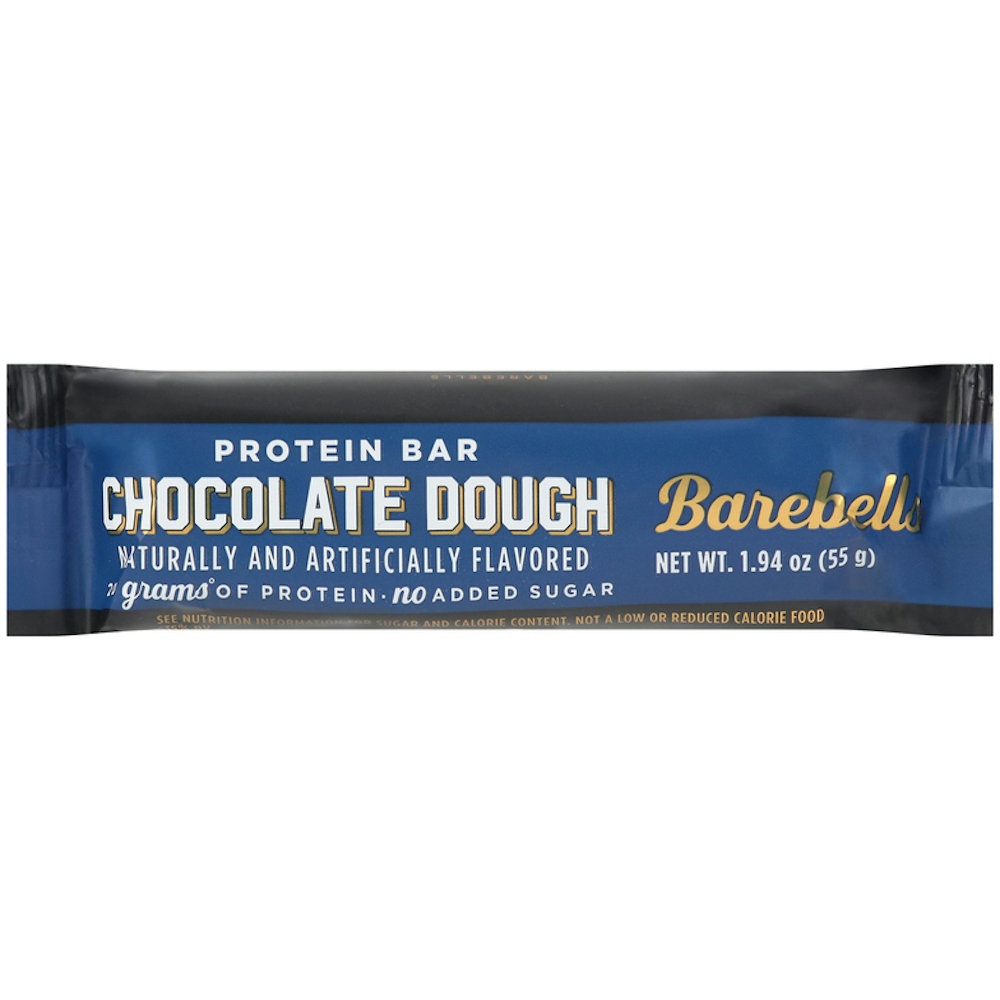
Barebells
Barebells Protein Bar Chocolate Dough, 1.94 Ounce
PROTEIN BLEND · CALCIUM CASEINATE · WHEY PROTEIN CONCENTRATE
Standout ingredient: WHEY PROTEIN ISOLATE
Analysis by Aurascan. The app shows the full breakdown and its sources.
Carb and Fiber Profiles: Polydextrose vs Organic Agave Inulin
Each listing includes a non-digestible carbohydrate that FDA's dietary fiber guidance covers.
Barebells includes polydextrose as its fifth listed ingredient. Under 21 CFR 172.841, polydextrose is prepared by the condensation of a melt consisting of roughly 89 to 90 percent D-glucose, 10 percent sorbitol, and either citric acid or phosphoric acid. The rule allows it as a bulking agent, formulation aid, humectant and texturizer; the listing does not say which job it does in the bar. Food in which a single serving would be expected to contain more than 15 grams of polydextrose must carry the statement "Sensitive individuals may experience a laxative effect from excessive consumption of this product." The amount of polydextrose in the bar is not known, so we cannot say whether that applies. EFSA's 2021 re-evaluation found absorption is limited and part of polydextrose is fermented in the large intestine into short-chain fatty acids. It saw no need for a numerical ADI and no safety concern at the reported uses.
Ryse incorporates organic agave inulin as its fourth ingredient, alongside gum acacia found inside its MCT oil powder. For more on this ingredient, see our inulin review. FDA's dietary fiber Q&A says FDA intends to propose adding inulin and inulin-type fructans, polydextrose and acacia (gum arabic) to the definition of dietary fiber. Until then, it intends to use enforcement discretion so they can be counted as dietary fiber, and to allow a caloric value of 1 kcal/g for polydextrose. So both products' fiber-type ingredients sit in the same FDA category. We have not verified the organic certification of Ryse's agave inulin.
Protein Sources: Milk Protein and Collagen vs Whey
Protein sources are one of the clearest differences between the two listings.
The Barebells Open Food Facts listing reveals a multi-source protein blend:
- Milk proteins (listed first)
- Collagen hydrolysate (listed second)
- Whole milk powder
- Soy protein
The Open Food Facts listing does not disclose the animal origin (such as bovine, porcine, or marine) of the collagen hydrolysate, nor the exact proportions among the milk, soy, and collagen sources.
Ryse Loaded Protein lists whey:
- Whey protein isolate (listed first)
- Whey protein concentrate (listed second)
Ryse lists no collagen and no soy protein, though it does list soy lecithin further down. For more on this protein, see our whey review. Because one product is a solid bar and the other a drink mix, their absolute protein amounts per serving cannot be directly compared from these ingredient texts alone.
Texture Architecture: Glycerol Humectant vs a Carrageenan Gum Blend
Barebells lists glycerol third under the EU-style class name "humectant (glycerol)," and also lists tapioca starch. None of the sources cited here classify glycerol as a sugar alcohol.
Ryse lists a gum blend, plus gum acacia elsewhere:
- Cellulose gum
- Xanthan gum
- Carrageenan
- Gum acacia (incorporated within the MCT oil powder)
Under 21 CFR 172.620, carrageenan is the refined hydrocolloid extracted with water from listed red seaweed species, used in the amount necessary as an emulsifier, stabilizer or thickener. The listing does not say what each gum does in the mix. Our carrageenan review covers the evidence.
Quiz
Ryse lists sucralose, acesulfame potassium and a gum blend with carrageenan. Would you still scoop it?
Guess before you scroll.
Reveal Aurascan's verdict
Aurascan says: Flagged
The main flag is INSTANTIZED WHEY PROTEIN ISOLATE.
Fats, Flavorings, and Emulsifiers: Cocoa Butter vs MCT Oil Powder
Barebells lists these fat sources:
- Cocoa butter
- Cocoa mass
- Sunflower oil
- Whole milk powder
For an emulsifier, Barebells lists "emulsifier (lecithins)" without naming the botanical source, although it separately lists soy protein.
Ryse lists MCT oil powder (medium chain triglycerides, gum acacia), and names soy lecithin and sunflower lecithin as its emulsifiers.
Flavor approaches also diverge:
- Barebells declares "flavourings," cocoa mass, and cocoa powder.
- Ryse lists natural flavors, artificial flavors, and ground cinnamon.
Ryse is the only product between the two that explicitly declares artificial flavors. Both list salt.
What These Listings Can't Tell You
Ingredient lists show what is in a product, not how much. The two Open Food Facts listings do not give protein, sugar alcohol, fiber or calorie amounts, or how much sucralose, maltitol, ace-K, polydextrose or inulin either product contains. They do not say where Barebells' collagen hydrolysate or lecithins come from, or what either product's flavors are. Barebells' listing uses EU-style wording that may not match the current US wrapper. For amounts, check the Nutrition Facts panel on the package.
Nothing here shows that either product is healthier or safer than the other. All four sweeteners named here are permitted in US food, and the ingredient differences are what this comparison sets out. This article is not medical advice.
Try Aurascan
See what is really in the food you buy.
Common questions
- Do Barebells or Ryse contain added sugar?
- Neither Open Food Facts listing names sugar. Barebells lists sucralose with the sugar alcohol maltitol, while Ryse lists sucralose and acesulfame potassium. Check the Nutrition Facts panel for added sugars amounts.
- What is the difference in protein sources between Barebells and Ryse?
- Barebells Chocolate Dough uses a blend of milk proteins, collagen hydrolysate, whole milk powder, and soy protein. Ryse Loaded Protein lists whey protein isolate and whey protein concentrate.
- Which product contains sugar alcohols?
- Barebells lists maltitol, which is a sugar alcohol (polyol). Ryse Loaded Protein's Open Food Facts listing names no sugar alcohol.
- Does Ryse Loaded Protein contain carrageenan?
- Yes. Ryse lists carrageenan in its gum blend, alongside cellulose gum and xanthan gum. The listing does not say what each gum does.
- Are the fiber sources the same in both products?
- No. Barebells lists polydextrose, a polymer made from glucose and sorbitol, whereas Ryse lists organic agave inulin plus gum acacia inside its MCT oil powder. FDA's dietary fiber guidance covers all three.
- Does either product disclose artificial flavors?
- Ryse explicitly declares artificial flavors alongside natural flavors and ground cinnamon. Barebells lists 'flavourings' without declaring artificial flavors.
Sources
- 21 CFR 172.831 - Sucralose (ecfr.gov)
- 21 CFR 172.800 - Acesulfame potassium (ecfr.gov)
- 21 CFR 172.841 - Polydextrose (ecfr.gov)
- 21 CFR 172.620 - Carrageenan (ecfr.gov)
- Aspartame and Other Sweeteners in Food (fda.gov)
- Questions and Answers on Dietary Fiber (fda.gov)
- Re-evaluation of sucralose (E 955) as a food additive (pmc.ncbi.nlm.nih.gov)
- Re-evaluation of acesulfame K (E 950) as food additive (pmc.ncbi.nlm.nih.gov)
- Re-evaluation of polydextrose (E 1200) as a food additive (pmc.ncbi.nlm.nih.gov)
- 21 CFR 101.9 - Nutrition labeling of food (sugar alcohol, (c)(6)(iv)) (ecfr.gov)
In this series
Guide
Acesulfame K at High Doses Disrupts Zebrafish LarvaeGuide
Diet drinks vs water for weight loss: 2-year trial resultsGuide
Sweetener Stacks: 4 Scanned Drinks That Blend SweetenersGuide
EFSA: no safety concern for new enzyme-made Reb MGuide
6 Scanned Labels That List Sugar More Than One WayGuide
Sweeteners in Urine and Breast Cancer: What a New Study Found
Related guides
Comparisons
Alani Nu vs Red Bull Caffeine: 200 mg vs 114 mg per 12 ozA 12 oz Alani Nu lists 200 mg caffeine vs 114 mg in a 12 oz Red Bull. Alani has 0 g sugar and 15 calories; Red Bull has 38 g sugar and 160 calories.
Latest News
Cyclamate Worsened Colitis in Mice, New Study ReportsA mouse study found the sweetener sodium cyclamate made chemically induced colitis worse. Cyclamate is banned in US food but used in many other countries.
Latest News
Acesulfame K at High Doses Disrupts Zebrafish LarvaeA zebrafish study tied very high acesulfame K (ace-K) doses to developmental and movement changes in larvae; the authors say it is hazard data, not a risk estimate.
Try it on your own groceries
Scan your next label with Aurascan
Point the camera at any ingredient list and get the same evidence-graded read you see here.
Open the scannerGet food recall alerts + a weekly digest
An email when a food recall is announced, plus one weekly roundup of label news and new guides.
We email a confirmation link first - nothing is sent until you click it. Unsubscribe anytime. Privacy