
Latest News · October 4, 2026 · 7 min read
Diet drinks vs water for weight loss: 2-year trial results
A 2-year UK trial of 493 adults found diet drinks and water led to similar weight loss in a diet programme. It was funded by the American Beverage Association.
By Chris Carrillo · Reviewed by Armin Rad, Co-Founder & CTO, Aurascan · October 4, 2026
Every article is checked against primary sources before publication. How we review
A two-year randomized equivalence trial run by researchers at the University of Liverpool found that adults consuming non-nutritive sweetened beverages maintained weight loss comparable to those drinking plain water. Over 104 weeks, participants in a structured weight-management program who drank diet beverages sweetened with aspartame, acesulfame potassium, or sucralose maintained an average reduction of 4.8 kg, while those assigned to water maintained 3.7 kg, yielding a between-group difference that was not statistically significant. Everyone in the trial was also in a structured weight-management programme, fewer than half of participants completed the two years, and the trial was funded by the American Beverage Association.
Key takeaways:
- In the 104-week SWITCH trial published in the British Journal of Nutrition, participants drinking diet beverages maintained 4.8 kg of weight loss versus 3.7 kg with water, showing no statistically significant between-group difference.
- The diet drinks contained aspartame, acesulfame potassium and sucralose; the University of Liverpool says sweetener levels were well within established European Food Safety Authority (EFSA) safety thresholds.
- Small statistical differences in HbA1c, diastolic blood pressure, and total cholesterol emerged between groups, but researchers deemed them not clinically meaningful.
- Trial completion fell below 50% by week 104 (220 out of 493 enrolled finished), and the single-site study did not collect race or ethnicity metrics, limiting broad generalizability.
What happened
On September 29, 2026, the University of Liverpool issued a public release detailing the 104-week outcomes of the SWITCH randomized controlled trial. The full paper was published online in the British Journal of Nutrition on August 4, 2026, tracking long-term body weight adjustments in adults with overweight or obesity. The research examined whether consuming commercially available non-nutritive sweetened beverages compromised or matched weight maintenance achieved with water.
The investigation, registered on ClinicalTrials.gov under identifier NCT02591134, enrolled 493 adults with a body mass index between 27 and 35 kg/m2 who regularly consumed cold drinks. Recruitment ran from July 2016 through December 2021. Participants were randomized into two parallel arms: 246 individuals assigned to drink water and 247 assigned to consume non-nutritive sweetened beverages.
Both groups were embedded into an identical multi-stage behavioral weight-management program. This structure began with 12 weeks of weekly group sessions focused on weight reduction, followed by 40 weeks of monthly assisted maintenance. The second year was an unassisted, voluntary 52-week period that ended with a final visit at week 104.
Participants were instructed to consume at least two 330 ml servings per day of their assigned drink. For those in the water arm, researchers requested complete abstinence from all non-nutritive sweetened drinks, including sweeteners in hot drinks.
What changed
The paper reports the two drinks as equivalent for weight over two years, but that word carries the authors' own definition: equivalence meant a two-sided P value greater than 0.05 at week 104, in other words no statistically significant difference. The paper does not state a separate pre-specified equivalence margin in kilograms. The trial was statistically powered at 90% to detect a 1.5-kg weight change difference between the two arms.
At the final 104-week checkpoint, complete-case data showed that participants in the water arm went from a baseline average weight of 89.9 kg down to 86.1 kg, maintaining a loss of 3.7 kg. The diet beverage group shifted from a baseline of 89.4 kg to 84.6 kg, reflecting a maintained loss of 4.8 kg. The between-group difference was 1.1 kg, which was not statistically significant.
These results follow previously published interim data. After the initial 12-week weight loss phase, weight reductions between groups were statistically equivalent. By week 52, as reported in the International Journal of Obesity, the diet beverage cohort exhibited a statistically greater, though not clinically meaningful, weight loss.
Waist and hip circumference fell in both groups, with no between-group difference.
Certain minor metabolic differences reached statistical significance. Total cholesterol was higher in the diet beverage group, while HbA1c and diastolic blood pressure were slightly lower in the water group. The study authors explicitly concluded that these deviations were not clinically relevant, noting that participant sample sizes were small, changes were below clinical thresholds, and total cholesterol stayed below 5.0 mmol/L in both groups.
Subjective hunger ratings increased slightly over the two years in both cohorts, reaching statistical significance within the diet beverage group alone, though the between-group difference was non-significant. Total dietary sugar intake decreased across both study arms.
Who is affected
The direct data apply specifically to adults with an elevated body mass index who are actively enrolled in a structured lifestyle or weight-management intervention. SWITCH was an open-label trial at a single site in England. The authors list 'potential lack of generalisability (the trial was conducted at one site in England and did not collect race/ethnicity data) and low completion rate at the week-104 time point' as limitations.
Attrition matters for reading these results. Out of the 493 initially enrolled individuals, only 220 completed the full 104-week assessment: 117 in the water cohort and 103 in the beverage cohort. A total of 273 participants withdrew or were prematurely excluded for non-compliance reasons. The authors suggest COVID-19, the two-year length and the voluntary final phase as possible reasons for the low completion rate.
The findings do not establish outcomes for children, people with diabetes, or populations using these beverages outside the boundaries of a calorie-conscious behavioral program. Furthermore, the trial was not designed to evaluate clinical endpoints such as cardiovascular disease, cancer incidence, or diabetes onset.
The paper does not report results for individual sweeteners. Participants drank commercially available diet beverages containing aspartame, acesulfame potassium and sucralose; the brands supplied were not disclosed, and average sweetener levels came from blinded, aggregated industry data.
Scan preview
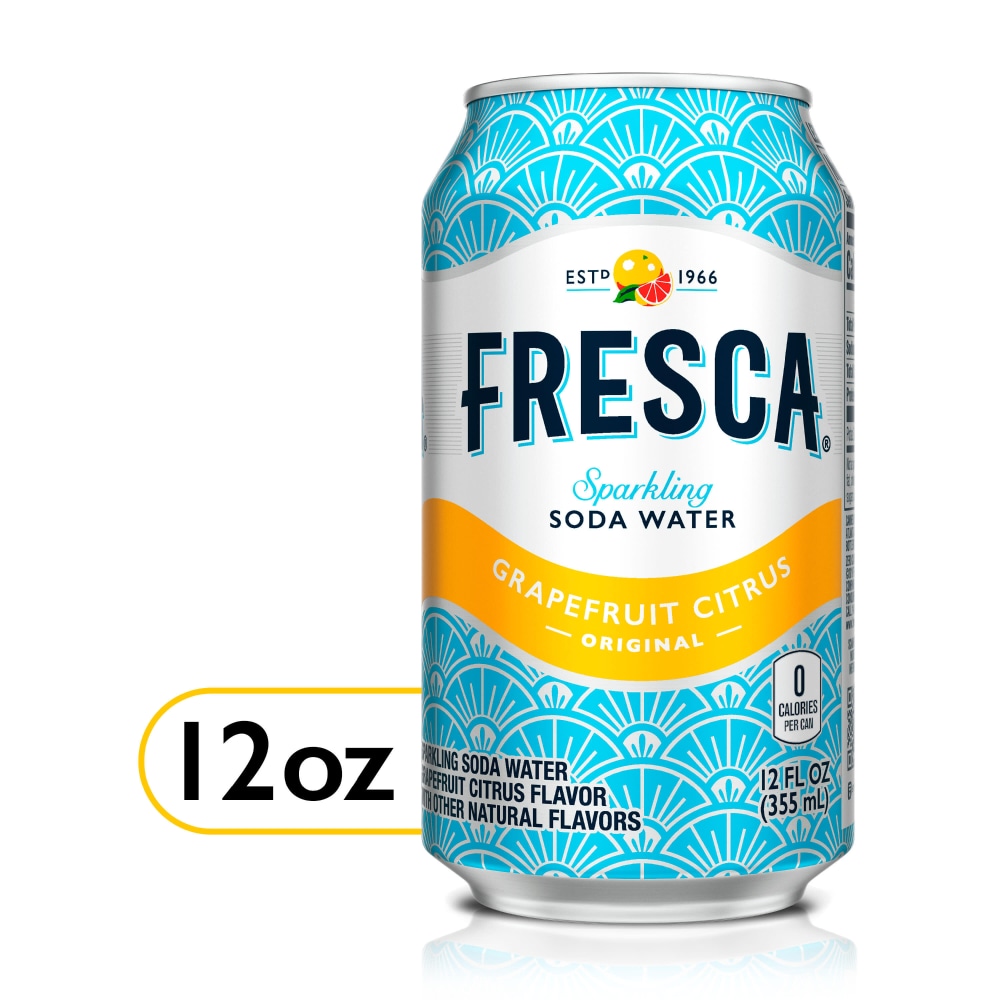
Fresca
Fresca Grapefruit Citrus Sparkling Soda Water
Citric Acid · Concentrated Grapefruit Juice · Potassium Citrate
Analysis by Aurascan. The app shows the full breakdown and its sources.
What it means for shoppers
For shoppers, the SWITCH result is narrow: inside a structured weight-management programme, adults who drank diet beverages lost about as much weight over two years as adults who drank water. It does not show that diet drinks cause weight loss on their own, and it does not show they beat water.
Shoppers evaluating carbonated soft drinks frequently encounter multi-ingredient formulations. For an in-depth breakdown of these ingredient combinations, see our guide to Sweetener Stacks: 4 Scanned Drinks That Blend Sweeteners.
According to the U.S. FDA, sweeteners it has authorized are safe for the general population under certain conditions of use. FDA describes acesulfame potassium and aspartame as each about 200 times sweeter than table sugar, and sucralose as about 600 times sweeter. People with phenylketonuria (PKU) should avoid or restrict aspartame, which is why labels of products containing it carry a phenylalanine statement.
One example of these sweeteners on a US label is Fresca Grapefruit Citrus (barcode 049000002485): its Open Food Facts listing names aspartame and acesulfame potassium along with the statement "Phenylketonurics: Contains Phenylalanine". It is shown here only as a label example; the paper does not say which drinks were used in the trial.
Diet beverages are not a standalone weight-loss treatment: everyone in SWITCH, in both groups, was also in a group behavioural weight-management programme. If you are checking labels for sugar in other forms, see our reference on Added Sugar Has Dozens of Label Names: The Ones to Know.
The background
In May 2023, the World Health Organization released guidance advising against using non-sugar sweeteners for body weight control or to reduce noncommunicable disease risks. The World Health Organization rated this recommendation as conditional. WHO said its systematic review suggested non-sugar sweeteners do not confer a long-term benefit in reducing body fat, and that there may be potential undesirable effects from long-term use. The guidance applies to everyone except people with pre-existing diabetes.
The University of Liverpool press release says the SWITCH findings directly address that WHO guidance.
The funding disclosures matter too. The trial was funded by the American Beverage Association. According to the study disclosures, the American Beverage Association was not involved in the design, conduct, analysis of data or interpretation of the trial, although an association representative was granted the opportunity to review the manuscript prior to publication. A medical writer was supported by the ABA, and Biofortis audited the data. Several authors report other funding outside this work, including from the International Sweeteners Association and studentships funded by Coca-Cola.
What to watch next
The WHO guideline has not changed.
SWITCH measured weight and a handful of biomarkers. It was not designed to establish long-term safety or to rule out effects on diabetes, heart disease or cancer, and it did not test children or people outside a weight-management programme. Questions like those need other evidence.
Want to see which sweeteners are in the drinks you buy? Scan the can or bottle with the free Aurascan app, which explains each ingredient one by one with cited evidence.
Try Aurascan
See what is really in the food you buy.
Common questions
- Did diet drinks cause more weight loss than water in the SWITCH trial?
- No. At week 104 of the SWITCH trial, participants drinking diet beverages maintained an average loss of 4.8 kg compared to 3.7 kg in the water group. The 1.1-kg difference was not statistically significant, so diet drinks did not outperform water; the authors defined equivalence as a non-significant P value at week 104.
- Which specific sweeteners were studied in the trial?
- The trial evaluated commercially available diet beverages containing aspartame, acesulfame potassium, and sucralose. However, the trial did not publish brand names or separate results for each individual sweetener.
- Who funded the 104-week SWITCH study?
- The trial was funded by the American Beverage Association. The authors stated that the funder did not design, conduct, or analyze the study, but an ABA representative had the opportunity to review the final manuscript before publication.
- Does this trial contradict the 2023 WHO sweetener guideline?
- The University of Liverpool release says the trial's two-year results directly address the conditional WHO recommendation against sweeteners for weight control. The WHO guideline itself has not changed.
- Were there any adverse metabolic side effects noted in the diet drink group?
- Small statistical differences were observed: total cholesterol was slightly higher in the diet drink cohort, while HbA1c and diastolic blood pressure were slightly lower in the water cohort. The authors judged these differences not clinically relevant.
Sources
- Effect of non-nutritive sweetened beverages v. water on body weight: long-term results of a randomised controlled trial (doi.org)
- Major trial examines no-sugar sweetened soft drinks (news.liverpool.ac.uk)
- Non-nutritive sweetened beverages versus water after a 52-week weight management programme: a randomised controlled trial (pmc.ncbi.nlm.nih.gov)
- WHO advises not to use non-sugar sweeteners for weight control in newly released guideline (who.int)
- Aspartame and Other Sweeteners in Food (fda.gov)
In this series
Guide
Sweetener Stacks: 4 Scanned Drinks That Blend SweetenersGuide
EFSA: no safety concern for new enzyme-made Reb MGuide
6 Scanned Labels That List Sugar More Than One WayGuide
Sweeteners in Urine and Breast Cancer: What a New Study FoundGuide
Sucralose and Gut Bacteria: New Review of 10 Human TrialsGuide
Does Stevia Spike Insulin? New Trials and an EFSA Reb M Opinion
Related guides
Latest News
Acesulfame K at High Doses Disrupts Zebrafish LarvaeA zebrafish study tied very high acesulfame K (ace-K) doses to developmental and movement changes in larvae; the authors say it is hazard data, not a risk estimate.
Latest News
Cyclamate Worsened Colitis in Mice, New Study ReportsA mouse study found the sweetener sodium cyclamate made chemically induced colitis worse. Cyclamate is banned in US food but used in many other countries.
Comparisons
Barebells vs Ryse Loaded Protein: Two Sucralose Labels ComparedBoth use sucralose. Barebells adds maltitol and polydextrose; Ryse adds ace-K, agave inulin and a carrageenan gum blend. What FDA and EFSA say.
Try it on your own groceries
Scan your next label with Aurascan
Point the camera at any ingredient list and get the same evidence-graded read you see here.
Open the scannerGet food recall alerts + a weekly digest
An email when a food recall is announced, plus one weekly roundup of label news and new guides.
We email a confirmation link first - nothing is sent until you click it. Unsubscribe anytime. Privacy