
Latest News · October 3, 2026 · 7 min read
EFSA: no safety concern for new enzyme-made Reb M
EFSA's additives panel found no safety concern for stevia-derived rebaudioside M made with enzymes from GM E. coli. What it means and what it doesn't.
By Chris Carrillo · Reviewed by Armin Rad, Co-Founder & CTO, Aurascan · October 3, 2026
Every article is checked against primary sources before publication. How we review

The European Food Safety Authority (EFSA) Panel on Food Additives and Flavourings (FAF) has published a scientific opinion on rebaudioside M (Reb M) made by enzymatic conversion of stevia leaf extract, using enzymes produced by a genetically modified Escherichia coli strain. The opinion, first published online on September 17, 2026, found no safety concern for the sweetener made this way. Batch tests found no viable cells and no DNA of the production strain in the final product.
Key takeaways
- On September 17, 2026, EFSA published a scientific opinion finding no safety concern for rebaudioside M produced by enzymatic conversion using enzymes from a GM E. coli strain.
- No viable cells or DNA of the production strain were found in the final product, and genome sequencing confirmed the production strain does not carry the antimicrobial resistance genes used during its genetic modification.
- The Panel considered this Reb M to have the same physicochemical characteristics as Reb M already covered by E 960c, so earlier toxicological data were applied; no new toxicity studies were part of this opinion.
- The panel advised establishing a distinct new entry under Commission Regulation (EU) No 231/2012 rather than modifying existing E 960c specifications.
- The opinion serves as scientific advice; legal commercial authorization in the European Union remains subject to formal adoption by the European Commission and member states.
What happened
On September 17, 2026, EFSA published a scientific opinion that its Panel on Food Additives and Flavourings adopted on June 30, 2026. The documentation listed in the opinion names Manus Bio as the applicant, with a technical dossier dated November 2024 and additional data in July 2025, March 2026 and May 2026. The full text is published in the EFSA Journal (doi: 10.2903/j.efsa.2026.10232, PMC13583920).
The panel evaluated an enzymatic bioconversion pathway designed to produce rebaudioside M (Reb M). Under this method, purified steviol glycosides extracted from Stevia rebaudiana Bertoni leaves undergo biocatalytic conversion into Reb M using three specialized enzymes: UDP-glucosyltransferase, UTP-glucose-1-phosphate uridylyltransferase, and sucrose synthase. The opinion says these enzymes are "produced using a newly developed genetically modified strain of Escherichia coli (K-12 DSM 35119)."
The Panel's conclusion reads: "The Panel concluded that there is no safety concern with respect to rebaudioside M (Reb M) produced via enzymatic conversion of purified steviol glycosides leaf extracts (95% steviol glycosides)." The final additive is composed predominantly of Reb M (more than 95%), and the Panel considered it to have the same physicochemical characteristics as the Reb M in E 960c(i) and (ii), so the biological and toxicological data from previous evaluations also apply.
What changed
The opinion is scientific advice, not an authorisation. In the EU, EFSA assesses safety, while the decision to authorise the additive and create any new specification entry rests with the European Commission and member states; the opinion does not say when that will happen. Commercial brand names and production timelines for this ingredient were not disclosed in the opinion.
Much of the opinion deals with whether anything from the production organism or its enzymes carries over into the sweetener. In the Panel's words, "no viable cells nor DNA of the production strain remained in the final product; in addition, the food enzyme-total organic solid (TOS) are removed to at least 99%, and consequently, the exposure to the food enzyme-TOS can be considered negligible."
The batch data reported in the opinion cover four points:
- Viable cells: three batches, tested in triplicate, showed no viable cells of the production strain.
- Production-strain DNA: five batches, tested in triplicate, showed no DNA of the strain, with a detection limit of 0.1 ng of spiked DNA per gram.
- Antibiotic resistance genes: whole-genome sequencing confirmed that the antimicrobial resistance genes used during the genetic modification are absent from the production strain's genome.
- Residual protein: five batches measured 31.6 to 68.8 mg/kg, within the proposed specification of less than 75 mg/kg.
Because the Panel read across from earlier steviol glycoside evaluations, the opinion contains no new animal or human studies.
Who is affected
The opinion matters first to food and drink makers that use stevia sweeteners in the EU. The applicant reported a sweetness "approximately between 150 and 350 times higher than sucrose at 5% sucrose equivalency" for this Reb M.
The proposed uses are the same as for the steviol glycosides already authorised (E 960a-d), so no new exposure assessment was provided; the Panel said exposure "will not be higher than the latest EFSA estimate of exposure to steviol glycosides (E960a-d)." EFSA's acceptable daily intake (ADI) for steviol glycosides, set in 2010, is 4 mg/kg body weight per day, expressed as steviol equivalents. This opinion does not change it.
Young children are where the numbers come closest to the limit. In a 2024 opinion (EFSA Journal 22(11):e9045, doi:10.2903/j.efsa.2024.9045, PMC11533382), the panel concluded there was insufficient justification to increase the ADI, noting that conservative exposure under the proposed extension would increase the exceedance of the ADI for toddlers at the 95th percentile. The 2026 opinion restates that at current maximum permitted levels, conservative exposure estimates were below the ADI in all population groups except infants and toddlers at the upper range of the estimates in one country (4.1 and 4.8 mg steviol equivalents/kg bw per day, respectively).
For how stevia sweeteners have fared in recent blood-sugar trials, see Does Stevia Spike Insulin? New Trials and an EFSA Reb M Opinion.
Scan preview
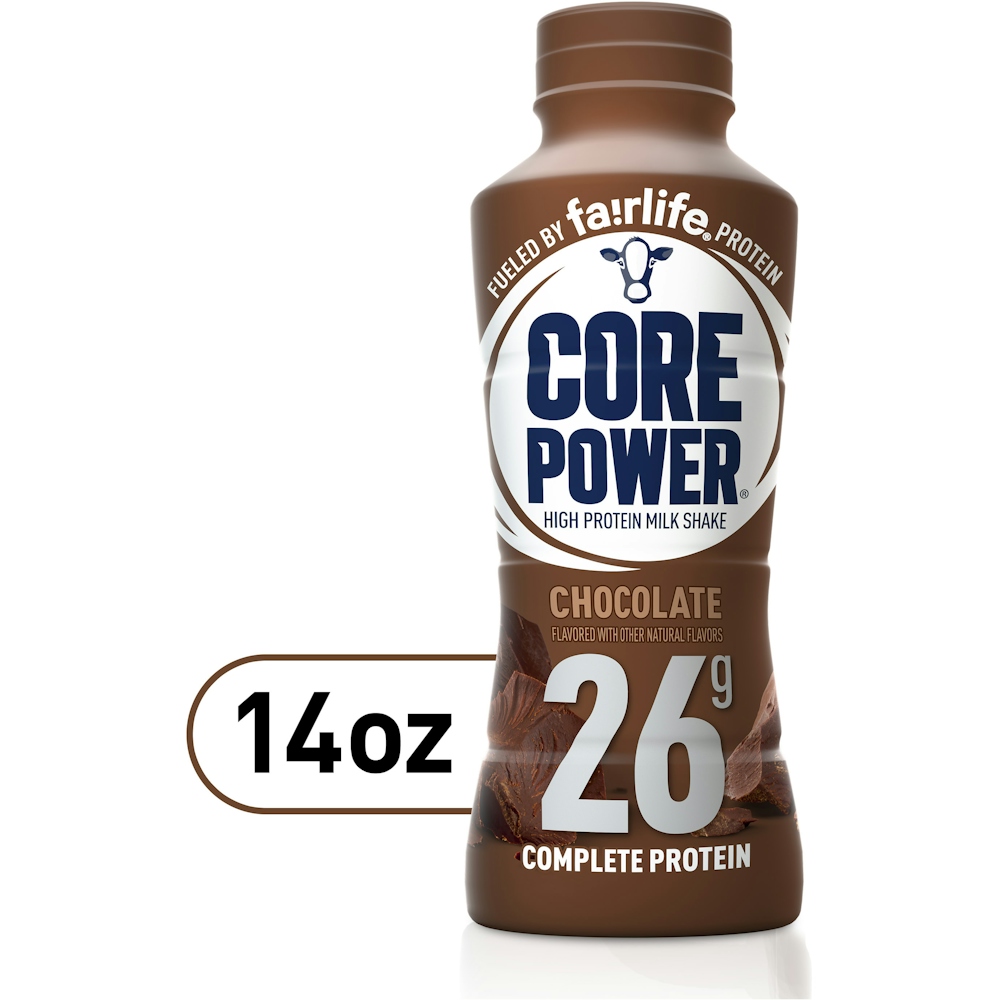
Core Power
Core Power Chocolate High Protein Milk Shake 14 Fl Oz
FILTERED LOW FAT GRADE A MILK · NATURAL FLAVORS · CARRAGEENAN
Standout ingredient: VITAMIN D3
Analysis by Aurascan. The app shows the full breakdown and its sources.
What it means for shoppers
If this Reb M is authorised, shoppers should not expect to see E. coli or the enzymes named on an ingredient list: the opinion found no viable cells or DNA of the production strain in the final additive, which is more than 95% Reb M.
How the ingredient appears depends on jurisdiction:
- In the European Union, steviol glycosides are labeled by their functional class followed by their specific name or E-number. The group currently encompasses E 960a (extracted from plant leaves), E 960b(i) (produced via fermentation by Yarrowia lipolytica, added in April 2025), E 960c (enzymatically produced), and E 960d (glucosylated steviol glycosides). The Panel considered that a new entry in Commission Regulation (EU) No 231/2012 would be more appropriate than amending the existing E 960c specifications, so the final E-number entry for this Reb M has not been set.
- In the United States, the Food and Drug Administration maintains guidance on high-potency sweeteners on its official portal (FDA Sweeteners Overview). The FDA notes that it has evaluated numerous Generally Recognized as Safe (GRAS) notices for high-purity (minimum 95 percent) steviol glycosides, which it describes as 200 to 400 times sweeter than table sugar. On US packaging, these ingredients typically appear as "stevia leaf extract", "steviol glycosides", or "Reb M". For example, the Open Food Facts listing for Core Power Chocolate includes "stevia leaf extract". That is simply how a stevia sweetener shows up on a US label; nothing indicates the drink uses the Reb M in this EFSA opinion.
For how labels can list more than one sweetener, see 6 Scanned Labels That List Sugar More Than One Way.
The background
Stevia rebaudiana leaves contain a mixture of steviol glycosides, and the EU already lists several ways of making them: extraction from the leaf (E 960a), fermentation (E 960b), enzymatic production (E 960c) and glucosylation (E 960d).
In the process assessed here, purified steviol glycosides from the leaf are the starting material, and enzymes made by a genetically modified microbe convert them to Reb M.
Because a genetically modified production strain is involved, EFSA's assessment looked at whether cells, DNA or antibiotic resistance genes from that strain could end up in the product. Detailed genetic modification data and some manufacturing details were kept confidential.
What to watch next
After the opinion, several steps remain open:
- EU decision: the European Commission and member states decide whether to authorise the additive and how to list it under Regulation (EU) No 231/2012. The date and outcome were not disclosed.
- US status: the opinion does not say whether this specific ingredient has a GRAS notice with the FDA.
- Young children: the 2026 opinion repeats that conservative upper-range exposure estimates for infants (4.1) and toddlers (4.8 mg steviol equivalents/kg bw per day) in one country are above the 4 mg/kg ADI.
Evidence limitations: this EFSA opinion assesses a manufacturing process and the identity and purity of its product. It contains no new toxicology or human data, and it does not show that stevia sweeteners are healthy or unhealthy.
Try Aurascan
See what is really in the food you buy.
Common questions
- Did EFSA approve a new GM stevia sweetener for sale?
- No. EFSA issued a scientific safety opinion finding no safety concerns for rebaudioside M produced by this enzymatic process. Legal commercial authorization and official entry into EU regulations must be decided and enacted by the European Commission and member states.
- Does the finished rebaudioside M sweetener contain GMOs or E. coli?
- No. EFSA's panel found no viable cells and no DNA of the production strain in the final additive, and sequencing confirmed the antimicrobial resistance genes used during the modification are absent from the strain. The enzyme residues (TOS) are removed to at least 99%.
- What is the acceptable daily intake (ADI) for steviol glycosides?
- EFSA maintains an Acceptable Daily Intake (ADI) of 4 mg per kilogram of body weight per day, expressed as steviol equivalents. EFSA set it in 2010; in 2024 its panel found insufficient justification to raise it, and the 2026 Reb M opinion does not change it.
- How will this ingredient appear on grocery package ingredient lists?
- In the European Union, it will be labeled by its functional class followed by its specific name or assigned E-number once authorized. In the United States, high-purity stevia sweeteners typically appear on ingredient lists as 'stevia leaf extract', 'steviol glycosides', or 'Reb M'.
- Why do food manufacturers use enzymes to make rebaudioside M?
- The process converts purified steviol glycosides extracted from stevia leaves into Reb M. The opinion does not discuss the applicant's commercial reasons; it assesses only whether the process and product raise a safety concern.
- What evidence limitations exist in the EFSA Reb M evaluation?
- The EFSA opinion evaluates chemical identity, manufacturing purity, and absence of biological residues. It contains no new toxicology or human studies; safety rests on data from earlier steviol glycoside evaluations.
Sources
- Safety evaluation of the food additive rebaudioside M produced via enzymatic conversion of purified steviol glycosides leaf extracts (pmc.ncbi.nlm.nih.gov)
- Safety evaluation of the proposed extension of use of steviol glycosides (E 960a-d) (doi.org)
- Aspartame and Other Sweeteners in Food (fda.gov)
- Safety evaluation of the food additive rebaudioside M produced via enzymatic conversion of purified steviol glycosides leaf extracts (EFSA Journal 2026;24(9):e10232) (doi.org)
In this series
Guide
6 Scanned Labels That List Sugar More Than One WayGuide
Sweeteners in Urine and Breast Cancer: What a New Study FoundGuide
Sucralose and Gut Bacteria: New Review of 10 Human TrialsGuide
Does Stevia Spike Insulin? New Trials and an EFSA Reb M OpinionGuide
Sorbitol: Why "Sugar-Free" Can Upset Your StomachGuide
Erythritol and Heart Risk: Blood Levels Fell and Risk Scores Improved
Related guides
Latest News
Acesulfame K at High Doses Disrupts Zebrafish LarvaeA zebrafish study tied very high acesulfame K (ace-K) doses to developmental and movement changes in larvae; the authors say it is hazard data, not a risk estimate.
Latest News
Cyclamate Worsened Colitis in Mice, New Study ReportsA mouse study found the sweetener sodium cyclamate made chemically induced colitis worse. Cyclamate is banned in US food but used in many other countries.
Comparisons
Barebells vs Ryse Loaded Protein: Two Sucralose Labels ComparedBoth use sucralose. Barebells adds maltitol and polydextrose; Ryse adds ace-K, agave inulin and a carrageenan gum blend. What FDA and EFSA say.
Try it on your own groceries
Scan your next label with Aurascan
Point the camera at any ingredient list and get the same evidence-graded read you see here.
Open the scannerGet food recall alerts + a weekly digest
An email when a food recall is announced, plus one weekly roundup of label news and new guides.
We email a confirmation link first - nothing is sent until you click it. Unsubscribe anytime. Privacy