
Latest News · October 1, 2026 · 7 min read
Sweeteners in Urine and Breast Cancer: What a New Study Found
An Italian study measured six sweeteners in urine and found no overall breast cancer link. A sucralose signal in younger women is exploratory, not proof.
By Chris Carrillo · Reviewed by Armin Rad, Co-Founder & CTO, Aurascan · October 1, 2026
Every article is checked against primary sources before publication. How we review
On September 9, 2026, researchers evaluating Italy's long-running Moli-sani study published a case-cohort analysis in Nutrients testing whether objective urinary biomarkers for six non-nutritive sweeteners were linked to breast cancer risk. Across a median follow-up of 13.2 years among 11,443 women, the study observed no association between overall breast cancer incidence and total urinary sweetener excretion or individual sweetener markers. A secondary statistical correlation linking sucralose presence to premenopausal breast cancer was characterized by the authors as exploratory, imprecise, and strictly hypothesis-generating.
Key takeaways
- No overall association: Neither individual sweetener biomarkers nor a combined urinary sweetener score showed a statistically significant link to overall breast cancer risk (hazard ratio 1.09; 95% CI 0.80 to 1.48).
- Exploratory sucralose signal: The presence of sucralose correlated with premenopausal breast cancer (HR 5.90; 95% CI 1.44 to 24.20), but this relied on only 38 premenopausal cases, lost statistical significance after false discovery rate adjustment (FDR-adjusted p = 0.084), and cannot establish causality.
- Biomarker baseline realities: Saccharin accounted for 76.7% of total urinary sweetener concentrations, while over 50% of the subcohort had undetectable or near-threshold urinary levels for all other measured sweeteners.
- Regulatory safety limits: Global benchmarks remain stable, with the FDA maintaining its 5 mg/kg body weight acceptable daily intake (ADI) for sucralose, and the European Food Safety Authority (EFSA) reaffirming its 15 mg/kg body weight ADI for authorized uses in February 2026.
What happened
On September 9, 2026, an Italian research team led by Marialaura Bonaccio and Licia Iacoviello published an investigation titled "Urinary Concentrations of Non-Nutritive Sweeteners and Breast Cancer: A Case-Cohort Analysis of the Moli-sani Study" in Nutrients (full text on PubMed Central).
The Moli-sani study originally recruited 24,325 men and women aged 35 and older from the Molise region of southern Italy between 2005 and 2010. For this specific case-cohort investigation, researchers analyzed 11,443 cancer-free adult women who provided complete baseline data, tracking their health outcomes over a median period of 13.2 years.
Over the follow-up period, 272 incident breast cancer cases occurred, comprising 38 premenopausal and 234 postmenopausal diagnoses. The researchers compared these confirmed incident cases against a randomly selected representative subcohort of 988 women (mean age 54.5 years, standard deviation 11.6) using weighted Cox proportional hazards regression models.
The project received public research support from the Italian Ministry of Health under Ricerca Corrente 2025-2027. Study funders exerted no influence over experimental design or data interpretation. One co-author, Jacopo Troisi, was employed by Theoreo Srl, while the remaining investigators declared no competing financial conflicts.
What changed
Traditional nutritional epidemiology often relies on self-reported dietary recalls or food frequency questionnaires, which can be vulnerable to recall bias and underreporting. In contrast, this new study evaluated direct biological exposure by measuring six parent sweetener compounds in a baseline spot urine specimen via liquid chromatography-mass spectrometry: aspartame, acesulfame potassium, saccharin, sucralose, cyclamate, and steviol glycosides.
All urinary concentrations were standardized against urinary creatinine (micrograms per milligram). Investigators modeled each sweetener compound as present versus absent and compiled an aggregate urinary sweetener score ranging from 0 to 6, which was subsequently grouped into low exposure (0 to 1) or high exposure (2 to 5).
Saccharin represented the dominant sweetener detected across the Italian cohort, making up 76.7% of total urinary sweetener mass concentrations, followed by cyclamate at 7.9% and steviol glycosides at 6.0%. For every compound other than saccharin, more than 50% of the reference subcohort had urinary levels falling below or lingering near analytical detection limits.
When evaluating the primary research question, a high total urinary sweetener score showed no significant association with overall breast cancer incidence compared to a low score (hazard ratio 1.09; 95% CI 0.80 to 1.48). Furthermore, none of the individual parent sweeteners demonstrated a statistically meaningful association with overall or postmenopausal breast cancer incidence.
The investigators identified one isolated subgroup anomaly: the detectable presence of sucralose showed an association with premenopausal breast cancer (hazard ratio 5.90; 95% CI 1.44 to 24.20; p = 0.014). However, the study authors explicitly emphasized that this statistical estimate was highly imprecise due to the small sample of just 38 premenopausal cases. When applying a false discovery rate correction, the adjusted p-value shifted to 0.084, losing statistical significance. The authors concluded that this finding must be treated strictly as exploratory and hypothesis-generating.
Scan preview
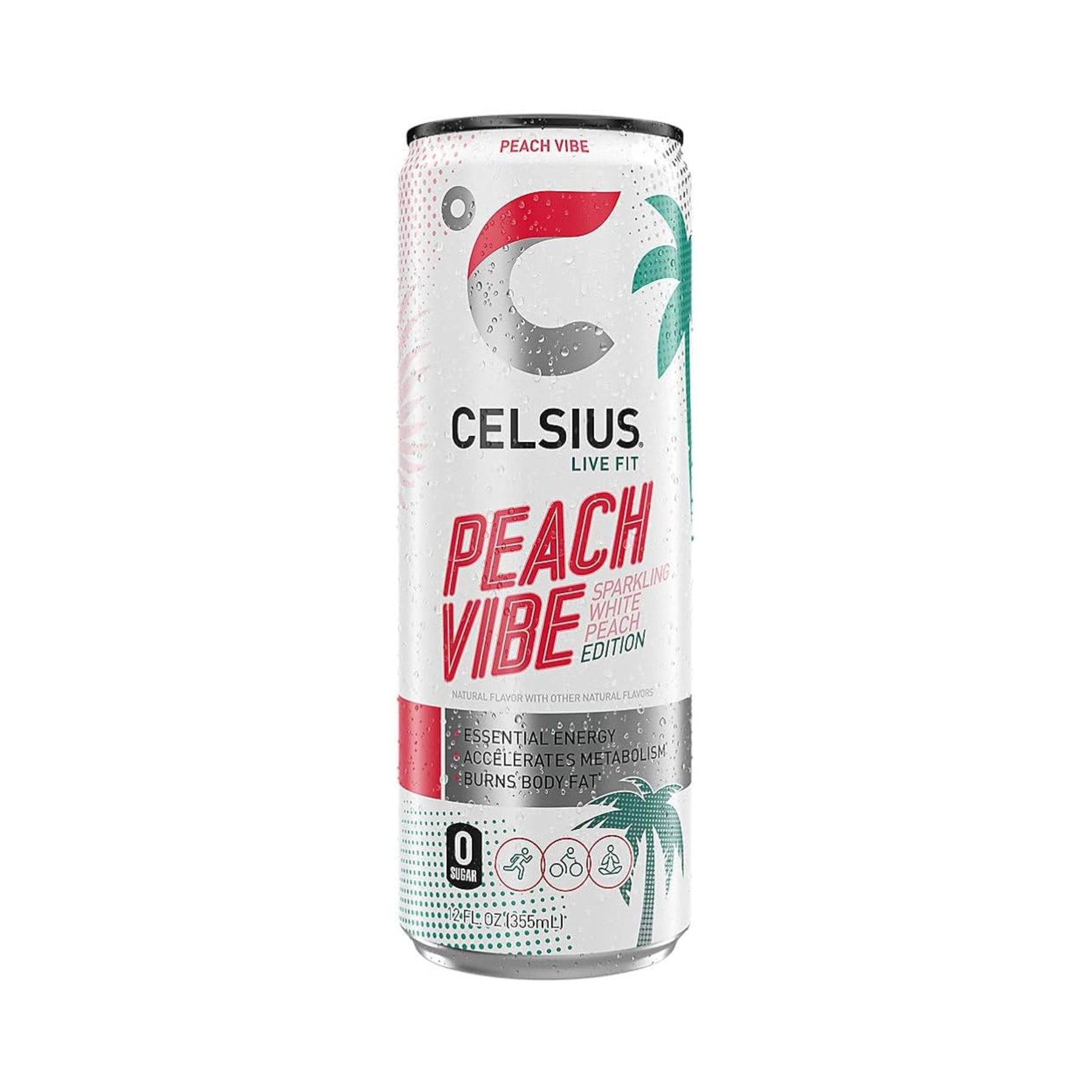
Celsius
Celsius Sparkling Peach Vibe Energy Drink - 12 Fl Oz Can
Citric Acid · Green Tea Extract · Natural Flavor
Standout ingredient: Ascorbic Acid
Analysis by Aurascan. The app shows the full breakdown and its sources.
Who is affected
This prospective dataset reflects the biological exposure of adult Italian women who provided biospecimens between 2005 and 2010. Consequently, the findings primarily describe dietary habits and additive usage patterns typical of southern Europe during that era.
Participants displaying higher urinary sweetener scores tended to share specific demographic characteristics: they had lower socioeconomic status, higher body mass index (BMI), and were more likely to smoke. Observational studies like this one cannot fully rule out confounding by such factors.
Because baseline urine samples were gathered between 2005 and 2010, the study does not describe current sweetener use patterns, and it did not measure which products participants consumed.
This analysis included only women aged 35 and older from one region of Italy, so it does not speak to men, children or US intake levels. For broader context on how individual non-nutritive additives perform in comparative safety assessments, readers can review our detailed analysis on Aspartame vs Sucralose: Which Sweetener Is Safer for You?.
Quiz
This chocolate protein shake lists sucralose, acesulfame potassium and stevia leaf extract. Keep it or swap it?
Guess before you scroll.
Reveal Aurascan's verdict
Aurascan says: Flagged
The main flag is FILTERED LOW FAT GRADE A MILK.
What it means for shoppers
For everyday consumers browsing grocery aisles, the main Moli-sani finding is that, across more than a decade of follow-up, biological presence of non-nutritive sweeteners was not linked to overall breast cancer development.
One label point is worth knowing:
- Recognizing additive names: In the European Union, sweeteners can appear on ingredient lists by name or by E number, including saccharin (E 954), cyclamate (E 952), steviol glycosides (E 960), and sucralose (E 955). In the United States, ingredients must be listed by their common or usual commercial names.
The study also has clear limits for shoppers. It cannot say whether a specific diet soda, low-calorie yogurt or tabletop sweetener carries a different risk, and a single urine sample is not a measure of lifetime intake.
Shoppers seeking to understand the historical safety reviews and regulatory thresholds governing older non-nutritive sweeteners can consult our background article on Is Saccharin (E954) Safe? Cancer History, ADI, and Labels.
The background
Regulatory authorities establish acceptable daily intake (ADI) levels by identifying the highest no-observed-adverse-effect level in animal toxicity bioassays and applying conservative safety uncertainty factors, typically dividing by 100.
The U.S. Food and Drug Administration (FDA) currently authorizes six high-intensity sweetener food additives: saccharin, aspartame, acesulfame potassium, sucralose, neotame, and advantame. The FDA maintains an ADI of 5 mg per kilogram of body weight per day for sucralose (FDA) and 15 mg/kg body weight per day for saccharin. Cyclamate does not appear on the FDA's list of approved sweeteners.
In Europe, the European Food Safety Authority (EFSA) published a comprehensive re-evaluation of sucralose (E 955) in February 2026 (EFSA Journal, DOI 10.2903/j.efsa.2026.9854). EFSA concluded that sucralose presents no safety concern at currently authorized use levels, confirming its established ADI of 15 mg/kg body weight per day for authorized applications.
However, EFSA could not conclude on a proposed extension of sucralose use to fine bakery wares, because of uncertainty about chlorinated compounds that can form when sucralose is baked.
Emerging research also continues to scrutinize non-neoplastic biological outcomes, particularly metabolic signaling and gastrointestinal responses. Consumers curious about digestive interactions can examine our comprehensive review on Sucralose and Gut Bacteria: New Review of 10 Human Trials.
What to watch next
Independent research teams must replicate the isolated premenopausal sucralose signal in larger, dedicated cohorts before any public health conclusions can be drawn. The Moli-sani study authors documented several substantial methodological limitations that prevent causal claims:
- Unmeasured metabolites: The mass spectrometry protocol detected only intact parent molecules. Aspartame, for example, breaks down into aspartic acid, phenylalanine and methanol, which the study did not measure.
- Absence of fecal biospecimens: Because no stool samples were collected, the study could not evaluate non-absorbed sweetener fractions or intestinal microbial transformations.
- Single spot urine collections: A single spot urine void captured at baseline does not reflect long-term habitual consumption as reliably as longitudinal, repeated 24-hour biospecimen collections.
- Limited subgroup statistical power: The premenopausal breast cancer subgroup comprised only 38 incident cases, producing wide confidence intervals and causing the sucralose signal to lose statistical significance once multiple comparison testing adjustments were applied.
The EFSA and FDA sweetener pages cited here do not comment on this study.
If you want to know exactly which sweeteners, emulsifiers, or texturizers are included in your packaged groceries, consider scanning your items with the free Aurascan app on iOS TestFlight to review transparent, evidence-based ingredient breakdowns without numeric scores or brand sponsorships.
Try Aurascan
See what is really in the food you buy.
Common questions
- Did the Moli-sani study show that non-nutritive sweeteners cause breast cancer?
- No. The prospective case-cohort study observed no statistically significant association between overall breast cancer risk and any individual urinary sweetener or total urinary sweetener score over a 13.2-year median follow-up period.
- Why did sucralose show a potential correlation with premenopausal breast cancer?
- The researchers observed a statistical correlation between detectable urinary sucralose and premenopausal breast cancer, but emphasized that it was based on only 38 premenopausal cases, lost statistical significance after false discovery rate correction (adjusted p = 0.084), and must be regarded as exploratory.
- Which sweetener was detected most frequently in the study urine samples?
- Saccharin was the predominant compound, accounting for 76.7% of total urinary sweetener concentrations. For every other sweetener tested, more than 50% of the subcohort had concentrations below or near laboratory detection limits.
- What are the current acceptable daily intake limits for sucralose?
- The U.S. FDA maintains an acceptable daily intake of 5 mg per kilogram of body weight per day, while the European Food Safety Authority (EFSA) maintains an acceptable daily intake of 15 mg per kilogram of body weight per day for authorized uses.
- What were the major limitations of the Moli-sani study design?
- Exposure was evaluated from a single baseline spot urine sample collected between 2005 and 2010, which may not capture habitual long-term intake. Additionally, the study only measured intact parent compounds, did not analyze stool samples, and had limited statistical power in the premenopausal subgroup.
Sources
- Urinary Concentrations of Non-Nutritive Sweeteners and Breast Cancer: Full Text (pmc.ncbi.nlm.nih.gov)
- Re-evaluation of Sucralose (E 955) as a Food Additive (doi.org)
- Aspartame and Other Sweeteners in Food (fda.gov)
In this series
Guide
Sucralose and Gut Bacteria: New Review of 10 Human TrialsGuide
Does Stevia Spike Insulin? New Trials and an EFSA Reb M OpinionGuide
Sorbitol: Why "Sugar-Free" Can Upset Your StomachGuide
Erythritol and Heart Risk: Blood Levels Fell and Risk Scores ImprovedGuide
Allulose 'Zero Sugar' Lawsuits Spread to KIND, Liquid Death, DavidGuide
Court Says Allulose Is a Sugar. 'Zero Sugar' Labels Are in Trouble
Related guides
Latest News
Cyclamate Worsened Colitis in Mice, New Study ReportsA mouse study found the sweetener sodium cyclamate made chemically induced colitis worse. Cyclamate is banned in US food but used in many other countries.
Latest News
Acesulfame K at High Doses Disrupts Zebrafish LarvaeA zebrafish study tied very high acesulfame K (ace-K) doses to developmental and movement changes in larvae; the authors say it is hazard data, not a risk estimate.
Comparisons
Barebells vs Ryse Loaded Protein: Two Sucralose Labels ComparedBoth use sucralose. Barebells adds maltitol and polydextrose; Ryse adds ace-K, agave inulin and a carrageenan gum blend. What FDA and EFSA say.
Try it on your own groceries
Scan your next label with Aurascan
Point the camera at any ingredient list and get the same evidence-graded read you see here.
Open the scannerGet food recall alerts + a weekly digest
An email when a food recall is announced, plus one weekly roundup of label news and new guides.
We email a confirmation link first - nothing is sent until you click it. Unsubscribe anytime. Privacy