
Latest News · October 7, 2026 · 6 min read
Acesulfame K at High Doses Disrupts Zebrafish Larvae
A zebrafish study tied very high acesulfame K (ace-K) doses to developmental and movement changes in larvae; the authors say it is hazard data, not a risk estimate.
By Chris Carrillo · Reviewed by Armin Rad, Co-Founder & CTO, Aurascan · October 7, 2026
Every article is checked against primary sources before publication. How we review
A laboratory study published online on September 19, 2026, in the journal Tissue & Cell exposed zebrafish embryos and larvae to high concentrations of the sweetener acesulfame potassium (ace-K) in their water. The abstract reports developmental abnormalities, reduced movement and shorter motor neuron synapses at the highest concentrations. The authors themselves say the doses substantially exceeded typical environmental levels and that the results are hazard data, not a risk assessment.
Key takeaways
- A study published online in Tissue & Cell on September 19, 2026, associated acute high-dose acesulfame potassium (ace-K) exposure with developmental abnormalities in zebrafish, and 400 and 800 mg/L with reduced swimming and weaker stimulus responses in larvae.
- The authors said the concentrations substantially exceeded typical environmental exposure levels, so the findings are acute high-dose hazard-characterization evidence rather than a direct assessment of environmental risk.
- The FDA lists an Acceptable Daily Intake (ADI) for ace-K of 15 mg/kg body weight per day, and EFSA's 2025 re-evaluation established the same 15 mg/kg bw per day ADI. The paper reports no regulatory response.
- The study does not establish any effect in humans, did not test low or chronic exposure, and the authors call the gene casp3 a candidate hub rather than a validated mediator.
What happened
The paper, "Acute high-dose acesulfame exposure induces developmental and neurobehavioral toxicity," by Xing Y, Wang M, Zhang X, Chen D and Li D, was published online on September 19, 2026 (DOI 10.1016/j.tice.2026.103972; PubMed record). It is assigned to volume 104, the February 2027 issue. Funding listed in the publisher metadata is the Natural Science Foundation of Shandong Province, award No. ZR2022MH281; a conflict-of-interest statement was not accessible.
The full text is paywalled, so the details here come from the structured abstract. Zebrafish embryos and larvae were exposed to acesulfame potassium at 100, 200, 400 and 800 milligrams per liter (mg/L) for up to 144 hours.
The researchers assessed developmental phenotypes, locomotor behavior, sensorimotor responsiveness and motor neuron morphology. The abstract describes ace-K as a widely used low-calorie artificial sweetener that is frequently detected in aquatic environments; the study exposed the fish through their water, not through food.
What changed
According to the abstract, "Acute high-dose ACE exposure was associated with developmental abnormalities." The abstract does not list which of the four concentrations produced each abnormality.
In the behavioral tests, "Larvae exposed to 400 and 800 mg/L ACE showed reduced swimming distance and speed, increased immobility, and attenuated responses to light-dark transitions and mechanical stimulation."
To look at nerve cells, the team used Tg(hb9) transgenic zebrafish. The abstract reports that "At 144 hpf, exposure to 800 mg/L ACE was also associated with shortened motor neuron synaptic length." Network (PPI) and KEGG pathway analyses identified apoptosis-related pathways and prioritized casp3 as a candidate hub gene, and qPCR "revealed significant alterations in several apoptosis-associated genes."
The authors were careful to outline explicit boundaries regarding their findings. They emphasized that CASP3 represents "a candidate hub rather than a functionally validated mediator." Most importantly, the researchers explicitly stated: "Because the experimental concentrations substantially exceeded typical environmental exposure levels, these findings should be interpreted as acute high-dose hazard-characterization evidence rather than a direct assessment of environmental risk. Further studies using environmentally relevant chronic exposure conditions and mechanistic validation are warranted."
Who is affected
The direct findings apply to zebrafish embryos and larvae exposed in laboratory water. The study did not measure people, did not test food products, and the authors did not compare the concentrations with human dietary intake.
In food, ace-K is a low-calorie sweetener. The U.S. Food and Drug Administration says it is about 200 times sweeter than table sugar and is often combined with other sweeteners. Our ingredient review Is Acesulfame Potassium (Ace-K) Safe? Uses and Labels covers where it shows up and how it is regulated.
Because ace-K is so often paired with another sweetener, it can appear next to sweeteners such as aspartame or sucralose on an ingredient list. Sweetener Stacks: 4 Scanned Drinks That Blend Sweeteners walks through real labels that combine them.
Scan preview
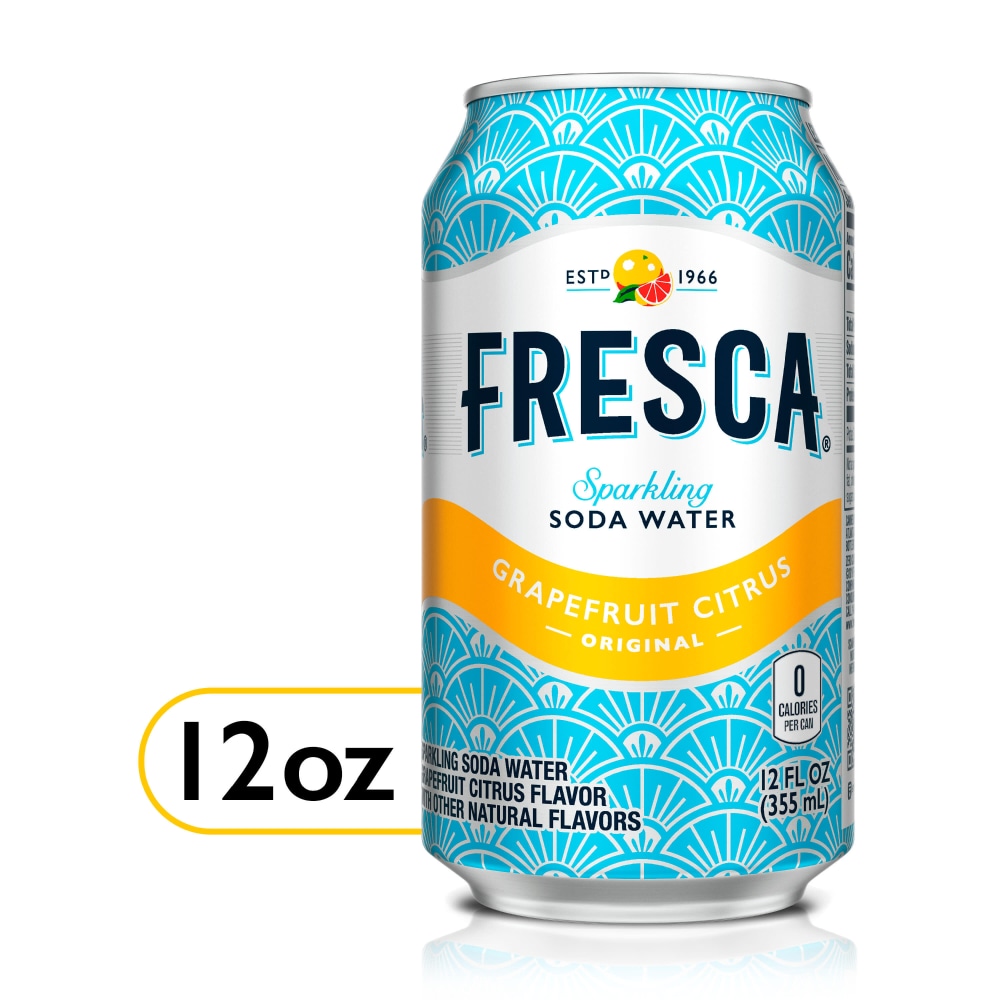
Fresca
Fresca Grapefruit Citrus Sparkling Soda Water
Citric Acid · Concentrated Grapefruit Juice · Potassium Citrate
Analysis by Aurascan. The app shows the full breakdown and its sources.
What it means for shoppers
For shoppers, this zebrafish study does not translate into a number of drinks or a daily limit. The exposure was a concentration in fish water, and the authors did not convert it into a human dose, so neither should anyone reading the paper.
Spotting the ingredient is simple. FDA says it is included in the ingredient list on the food label as "acesulfame K, acesulfame potassium, or Ace-K". For example, the Open Food Facts listing for Fresca Grapefruit Citrus includes both aspartame and acesulfame potassium.
Sweeteners such as ace-K are named in the ingredient list, so that is where to look rather than the Nutrition Facts panel. For research on how diet drinks compare with water in people, see Diet drinks vs water for weight loss: 2-year trial results. When reading an ingredient statement, look for:
- Acesulfame potassium, acesulfame K, or Ace-K stated clearly in the list of ingredients.
- Complementary sweetening agents such as sucralose, aspartame, or stevia leaf extracts.
The background
For food additives, regulators set an Acceptable Daily Intake (ADI): the amount considered safe to consume every day over a lifetime.
The FDA lists an ADI for acesulfame potassium of 15 mg per kilogram of body weight per day (mg/kg bw/d).
In Europe, the European Food Safety Authority (EFSA) published its re-evaluation of acesulfame K (E 950) in the EFSA Journal on April 30, 2025 (full opinion via PMC). EFSA established an ADI of 15 mg/kg body weight per day, which replaces the ADI of 9 mg/kg bw per day previously set by the Scientific Committee on Food (SCF), and noted that the highest estimate of exposure to acesulfame K was generally below the ADI in all population groups.
What to watch next
The authors' own next step is clear: "Further studies using environmentally relevant chronic exposure conditions and mechanistic validation are warranted." In other words, the study tells us what very high concentrations do to developing zebrafish, not what everyday exposure does to fish in rivers or to people.
The limitations are worth stating plainly: the work is in zebrafish larvae, the concentrations were high, the exposure was short, the number of larvae per group is not given in the abstract, and casp3 has not been functionally validated as the cause of the changes.
Aurascan is a free food-label scanner app in beta on iOS TestFlight, with a waitlist for other platforms. Rather than a single score, it explains every ingredient one by one with cited evidence. Scan a drink that lists acesulfame potassium and read the evidence on each sweetener for yourself.
Try Aurascan
See what is really in the food you buy.
Common questions
- What did the September 2026 zebrafish study find regarding acesulfame potassium?
- The study, published in Tissue & Cell on September 19, 2026, associated acute high-dose acesulfame potassium exposure with developmental abnormalities in zebrafish. Larvae exposed to 400 and 800 mg/L swam less and responded less to stimuli, and 800 mg/L was associated with shortened motor neuron synaptic length.
- Does this zebrafish study indicate that acesulfame potassium is unsafe for humans?
- It does not test that. The study used zebrafish larvae, and the authors said the concentrations substantially exceeded typical environmental exposure levels and should be read as hazard-characterization evidence, not a risk assessment. The FDA and EFSA both list an ADI of 15 mg/kg body weight per day.
- What is the official Acceptable Daily Intake (ADI) for acesulfame potassium?
- Both the U.S. FDA and the European Food Safety Authority (EFSA) have established an Acceptable Daily Intake (ADI) of 15 mg per kilogram of body weight per day.
- How is acesulfame potassium declared on commercial food labels?
- FDA says it is included in the ingredient list on the food label as acesulfame K, acesulfame potassium, or Ace-K. In the European Union, it is identified as E 950.
- Why do beverage companies blend acesulfame potassium with other sweeteners?
- FDA notes that acesulfame potassium is about 200 times sweeter than table sugar and is often combined with other sweeteners. Labels such as Fresca Grapefruit Citrus list it alongside aspartame.
- Did European regulators recently update their safety opinion on acesulfame potassium?
- Yes. In an opinion published in April 2025, the European Food Safety Authority (EFSA) re-evaluated food additive E 950 and established an ADI of 15 mg/kg body weight per day replacing the ADI of 9 mg/kg bw per day set earlier by the SCF.
Sources
- Acute high-dose acesulfame exposure induces developmental and neurobehavioral toxicity (pubmed.ncbi.nlm.nih.gov)
- Acute high-dose acesulfame exposure induces developmental and neurobehavioral toxicity (doi.org)
- Re-evaluation of acesulfame K (E 950) as a food additive (pmc.ncbi.nlm.nih.gov)
- Aspartame and Other Sweeteners in Food (fda.gov)
In this series
Guide
Diet drinks vs water for weight loss: 2-year trial resultsGuide
Sweetener Stacks: 4 Scanned Drinks That Blend SweetenersGuide
EFSA: no safety concern for new enzyme-made Reb MGuide
6 Scanned Labels That List Sugar More Than One WayGuide
Sweeteners in Urine and Breast Cancer: What a New Study FoundGuide
Sucralose and Gut Bacteria: New Review of 10 Human Trials
Related guides
Latest News
Cyclamate Worsened Colitis in Mice, New Study ReportsA mouse study found the sweetener sodium cyclamate made chemically induced colitis worse. Cyclamate is banned in US food but used in many other countries.
Comparisons
Barebells vs Ryse Loaded Protein: Two Sucralose Labels ComparedBoth use sucralose. Barebells adds maltitol and polydextrose; Ryse adds ace-K, agave inulin and a carrageenan gum blend. What FDA and EFSA say.
Latest News
Study: Most Critics of the Nova UPF System Had Industry TiesA review in AJPH found 68.5% of authors of 69 articles critiquing the Nova ultra-processed food system had food-industry ties. What it does and does not show.
Try it on your own groceries
Scan your next label with Aurascan
Point the camera at any ingredient list and get the same evidence-graded read you see here.
Open the scannerGet food recall alerts + a weekly digest
An email when a food recall is announced, plus one weekly roundup of label news and new guides.
We email a confirmation link first - nothing is sent until you click it. Unsubscribe anytime. Privacy