
Comparisons · October 14, 2026 · Updated October 26, 2026 · 9 min read
Does Ghost Have More Caffeine Than Monster? Yes, 200 mg
Yes: per 16 oz can, GHOST Energy lists 200 mg caffeine and 0 g sugar; original green Monster lists 160 mg caffeine, 54 g sugar and 230 calories.
By Chris Carrillo · Reviewed by Armin Rad, Co-Founder & CTO, Aurascan · October 26, 2026
Every article is checked against primary sources before publication. How we review

Yes, GHOST Energy has more caffeine than Monster: 200 mg per 16 fl oz can versus 160 mg for the original green Monster. Both cans hold 16 fl oz, so the comparison is like for like per can. GHOST lists 0 g sugar and 5 calories, while Monster lists 54 g sugar and 230 calories. The sections below place each label factor side by side so you can weigh them yourself.
Key takeaways
- Per 16 fl oz can, GHOST Energy Citrus lists 200 mg caffeine, 5 calories and 0 g sugar. Original Monster lists 160 mg caffeine, 230 calories and 54 g sugar.
- Sweetener systems differ: GHOST uses sucralose and acesulfame potassium, while Monster uses sugar, glucose and sucralose.
- Sodium is 30 mg for GHOST per its nutrition panel. Monster's 370 mg figure comes from Open Food Facts, and Monster's sodium could not be confirmed on the brand page.
- GHOST's label states it is only intended for persons 18 years or older.
- Check the physical can for current age wording, full nutrition panels and ingredient lists, since some details are not disclosed in public records.
What Is the Core Difference Between GHOST Energy and Original Monster on a 16 fl oz Can?
Because both products come in the same 16 fl oz can, you can compare the per-can numbers directly. The largest differences are sugar and calories, followed by caffeine, sodium, and sweetener and preservative systems. GHOST Energy Citrus is marketed with the phrase 'AUTHENTIC FLAVORS. ZERO SUGARS.* NO BS.' and its panel notes that 'GHOST ENERGY IS LOW IN CALORIES.' The original Monster green can uses sugar and glucose as sweeteners alongside sucralose.
| Factor (per 16 fl oz can) | GHOST Energy Citrus | Original Monster Energy (green) |
|---|---|---|
| Calories | 5 | 230 |
| Total sugars | 0 g | 54 g |
| Added sugars | 0 g | 54 g |
| Total carbohydrate | 1 g | 58 g |
| Caffeine | 200 mg | 160 mg |
| Caffeine per fl oz | 12.5 mg | 10 mg |
| Sodium | 30 mg | 370 mg |
| Total fat | 0 g | 0 g |
| Protein | 0 g | 0 g |
| Sweeteners | Sucralose, acesulfame potassium | Sugar, glucose, sucralose |
| Preservatives | Sodium benzoate, potassium sorbate | Benzoic acid, sorbic acid |
The GHOST figures come from the GHOST Energy Citrus product page and apply to the Citrus flavor only. Monster figures come from the Open Food Facts record for the US 16 oz can, because the Monster brand page blocked automated access and could not be read directly. Vitamin percentages for the original Monster can are not disclosed in that record, so no vitamin comparison appears in the table.
Does GHOST Energy Have More Caffeine Than Monster?
Yes: 200 mg per 16 fl oz can versus 160 mg for Monster. GHOST contains 40 mg (25%) more per can. Per fluid ounce, that is 12.5 mg for GHOST and 10 mg for Monster. GHOST labels its caffeine as natural caffeine from coffee bean. The Monster record does not specify a caffeine source, and the Monster caffeine figure could not be confirmed on the brand page.
The U.S. Food and Drug Administration's consumer update, current as of 08/28/2024, says that for most adults, 400 mg a day is an amount not generally associated with negative effects, roughly two to three 12-fluid-ounce cups of coffee. The agency also notes wide variation in how sensitive people are to caffeine and how quickly they clear it from the body (FDA: how much caffeine is too much). As simple arithmetic, 400 mg equals two GHOST cans or 2.5 Monster cans. That is a unit conversion, not guidance on how much to drink. The same FDA page says toxic effects such as seizures have been estimated with rapid consumption of around 1,200 mg of caffeine.
Scan preview
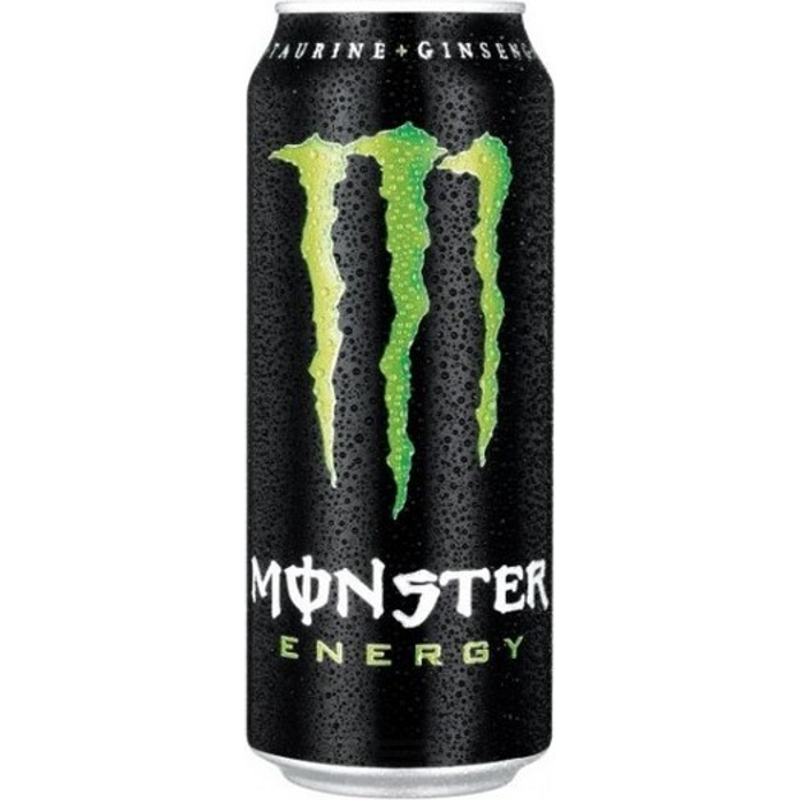
Monster
Monster Energy Drink Green 16 Oz Can
SUGAR · GLUCOSE · CITRIC ACID
Standout ingredient: CAFFEINE
Analysis by Aurascan. The app shows the full breakdown and its sources.
How Much Sugar and How Many Calories Are in GHOST Energy vs Original Monster Energy?
How Much Sugar Is in Monster vs Ghost?
Monster lists 54 g sugar per 16 fl oz can; GHOST lists 0 g. GHOST Energy Citrus lists 0 g total sugars and 0 g added sugars per 16 fl oz can, with 5 calories. Original Monster lists 54 g sugars, all of it added, and 230 calories per 16 fl oz can, according to Open Food Facts. Carbohydrates are 1 g for GHOST and 58 g for Monster.
The FDA sets the Daily Value for added sugars at 50 grams per day based on a 2,000 calorie diet. The 54 g of added sugar in one Monster can equals 108% of that Daily Value. The FDA also says that for most Americans, the main sources of added sugars are sugar-sweetened beverages, baked goods, desserts and sweets. When you check a label yourself:
- Start with the serving size. Both figures here are for one 16 fl oz can.
- Compare Total Sugars with Includes Added Sugars to see how much was added.
- Read calories from the Nutrition Facts panel on a 16 fl oz can, since the 5 calorie GHOST and 230 calorie Monster figures above apply to one can.
- Read the footnotes beside claims such as Zero Sugars. GHOST's footnote points to its low calorie content, so the panel numbers still matter.
How Much Sodium Is in GHOST Energy vs Original Monster Energy, and What Was Not Disclosed?
GHOST Energy Citrus lists 30 mg of sodium per 16 fl oz can, which is 1% of the Daily Value on its nutrition panel. Original Monster lists 370 mg, or 0.37 g, per 16 fl oz can in the Open Food Facts record. That makes the Monster figure about 12 times the GHOST figure.
The Monster sodium number could not be confirmed on the brand page, so treat it as a database figure and check the Nutrition Facts panel on the can. Several sodium-containing ingredients appear on each list, including sodium benzoate in GHOST and sodium citrate and salt in Monster. The amount each one contributes is not disclosed by either brand.
Which Sweeteners Do GHOST Energy and Original Monster Energy Use?
GHOST Energy Citrus is sweetened with sucralose and acesulfame potassium, while original Monster Energy uses sugar, glucose and sucralose. Sucralose is the only sweetener both labels share. The per-can amounts of sucralose and acesulfame potassium are not disclosed by either brand.
The FDA states that sucralose is approved for use in food as a sweetener and is about 600 times sweeter than table sugar. Acesulfame potassium is also approved as a food sweetener and is about 200 times sweeter than table sugar. The FDA lists acceptable daily intakes of 5 mg per kg of body weight per day for sucralose and 15 mg per kg of body weight per day for acesulfame potassium. These are per-kilogram limits, so they do not translate into a number of cans.
Preservatives follow a similar pattern. GHOST uses sodium benzoate and potassium sorbate, while Monster uses benzoic acid and sorbic acid. For a related side-by-side on Monster's sweeteners and preservatives, see Monster vs Red Bull: Caffeine, Sweeteners and Preservatives.
Does GHOST Energy have sucralose?
Yes. Sucralose appears in the GHOST Energy Citrus ingredient list alongside acesulfame potassium. It is also on the Monster list, making it the only sweetener the two labels share.
What Is in the Full Ingredient List of GHOST Energy Citrus vs Original Monster Energy?
GHOST Energy Citrus lists 18 ingredients, and the original Monster list in Open Food Facts includes 23. Ingredients are generally listed by weight, so the first items are usually the largest by weight. The GHOST list in label order is: carbonated water, citric acid, natural and artificial flavor, L-carnitine L-tartrate, taurine, caffeine, sucralose, alpha-GPC, sodium benzoate (preservative), potassium sorbate (preservative), ascorbic acid, acesulfame potassium, coffee fruit extract, niacinamide, astragalus root extract, panax notoginseng root extract, pyridoxal-5-phosphate and methylcobalamin.
The Monster list in label order, as transcribed in Open Food Facts, is: carbonated water, sugar, glucose, citric acid, natural flavors, taurine, sodium citrate, color added, panax ginseng extract, L-carnitine L-tartrate, caffeine, sorbic acid (preservative), benzoic acid (preservative), niacinamide, sucralose, salt, d-glucuronolactone, inositol, guarana extract, pyridoxine hydrochloride, riboflavin, maltodextrin and cyanocobalamin.
Both lists share carbonated water, citric acid, taurine, L-carnitine L-tartrate, caffeine, sucralose, niacinamide and a benzoate and sorbate preservative pair. Only GHOST lists acesulfame potassium, alpha-GPC, coffee fruit extract, astragalus and panax notoginseng. Only Monster lists sugar, glucose, panax ginseng extract, guarana extract, inositol, d-glucuronolactone, salt and maltodextrin. What 'color added' refers to on the Monster can is not specified.
GHOST discloses per-can amounts for its actives: 1,000 mg L-carnitine L-tartrate, 1,000 mg taurine, 200 mg natural caffeine, 150 mg alpha-GPC, 100 mg coffee fruit extract and 25 mg of astragalus and panax notoginseng root extracts. Its panel also lists vitamin C at 90 mg (100% DV), niacin at 16 mg (100%), vitamin B6 at 1.7 mg (100%) and vitamin B12 at 2.4 mcg (100%). The Monster amounts for taurine, ginseng, L-carnitine, guarana, inositol and glucuronolactone are not disclosed.
Do GHOST or Monster Carry an Age Statement on the Can?
GHOST Energy Citrus's label states 'ONLY INTENDED FOR PERSONS 18 YEARS OR OLDER.' That is a statement printed on the label, not a safety assessment of the drink. Its caution panel says it is not for people sensitive to caffeine and not for those who are pregnant or nursing. Age and caution wording for the original Monster can is not disclosed in the record used here, so check the label on the can you are holding.
For how England is handling energy-drink sales to under-16s, see England Bans Energy Drinks for Under-16s. US Labels Hide Caffeine.
Who Should Be Careful With High-Caffeine Energy Drinks?
The FDA's consumer page notes that medical experts advise against energy drinks for children and teens because of their sugar and caffeine levels, according to the American Academy of Pediatrics. The same page stresses wide variation in how sensitive people are to caffeine and how fast they eliminate it.
Neither brand's figures tell you how an individual will respond to a can. People with heart conditions, blood pressure concerns, caffeine sensitivity, or who are pregnant or nursing may want to speak with a health professional about their own situation.
How Can You Compare Energy Drink Labels Side by Side Before You Buy?
Use the same checklist for any two cans, and look at per-container figures as well as per-serving ones.
- Caffeine: find the milligrams per can and per fluid ounce, and confirm whether the can is a single serving.
- Calories and sugars: compare total sugars with added sugars, then check calories on the same panel.
- Sodium: compare the milligram figure and the % Daily Value.
- Sweeteners: note each name, such as sucralose, acesulfame potassium, sugar or glucose.
- Preservatives: note the named pair, such as sodium benzoate with potassium sorbate.
- Warnings and age statements: read the caution panel and any age wording.
- Ingredients: scan the full list, remembering it is generally ordered by weight.
Brand web pages and retailer listings can show older versions of a label, so the can in your hand is the most current source for that product.
To see each ingredient on a can explained with cited sources, scan your next label with Aurascan and compare the ingredients on the can itself.
Try Aurascan
See what is really in the food you buy.
Common questions
- How much caffeine is in GHOST Energy Citrus vs original Monster Energy per 16 fl oz can?
- GHOST Energy Citrus lists 200 mg of caffeine per 16 fl oz can, and original Monster Energy lists 160 mg per 16 fl oz can. That makes GHOST 40 mg (25%) higher per can.
- How much sugar is in Monster vs GHOST Energy?
- Monster lists 54 g sugar per 16 fl oz can, according to the Open Food Facts record; GHOST lists 0 g. The 54 g equals 108% of the FDA's 50 g added sugars Daily Value.
- Does GHOST Energy contain sucralose?
- Yes. GHOST Energy Citrus lists sucralose and acesulfame potassium as its sweeteners. Original Monster also lists sucralose, alongside sugar and glucose. Per-can amounts of these sweeteners are not disclosed.
- How many calories are in GHOST Energy vs Monster Energy?
- GHOST Energy Citrus lists 5 calories per 16 fl oz can, and original Monster lists 230 calories per 16 fl oz can, according to Open Food Facts.
- How much sodium is in GHOST Energy vs original Monster?
- GHOST Energy Citrus lists 30 mg of sodium per 16 fl oz can, which is 1% DV. Original Monster lists 370 mg per 16 fl oz can in the Open Food Facts record, and that figure could not be confirmed on the brand page.
- How much caffeine is too much per day?
- The FDA's consumer update, current as of 08/28/2024, cites 400 mg a day as an amount not generally associated with negative effects for most adults, while noting wide variation in individual sensitivity. It estimates toxic effects such as seizures with rapid consumption of around 1,200 mg.
Sources
- GHOST Energy Citrus product page (drinkghost.com)
- Spilling the Beans: How Much Caffeine Is Too Much? (fda.gov)
- Added Sugars on the Nutrition Facts Label (fda.gov)
- Aspartame and Other Sweeteners in Food (fda.gov)
In this series
Guide
Celsius vs Prime Energy Caffeine: 200 mg vs 200 mg per CanGuide
Bloom vs Celsius Caffeine: 180 mg vs 200 mg per 12 oz CanGuide
Alani Nu vs Red Bull Caffeine: 200 mg vs 114 mg per 12 ozGuide
Reign vs Monster Caffeine: 300 mg vs 160 mg per 16 oz CanGuide
Monster Zero Ultra vs Red Bull Sugarfree: 150 vs 80 mg CaffeineGuide
Celsius vs Ghost Energy: Caffeine (200 vs 200 mg), Sweeteners
Related guides
Comparisons
Is Honest Kids Healthier Than Capri Sun? 0 g vs 8 g Added SugarCapri Sun Fruit Punch lists 50 calories, 11 g sugar and 8 g added sugar per 6 fl oz pouch; Honest Kids Super Fruit Punch lists 35, 8 g and 0 g added.
Comparisons
Does Prego Have Added Sugar? Yes, 4 g vs Ragú's <1 gPrego Traditional lists 4 g added sugar per 1/2 cup; Ragú Old World Style Traditional lists under 1 g. Sodium, oil and ingredient order compared.
Comparisons
Doctor's Best vs Nature Made Magnesium: Both 200 mgBoth list 200 mg magnesium (48% DV) per 2-unit serving. Doctor's Best uses a lysinate glycinate chelate; Nature Made lists bisglycinate. Labels compared.
Try it on your own groceries
Scan your next label with Aurascan
Point the camera at any ingredient list and get the same evidence-graded read you see here.
Open the scannerGet food recall alerts + a weekly digest
An email when a food recall is announced, plus one weekly roundup of label news and new guides.
We email a confirmation link first - nothing is sent until you click it. Unsubscribe anytime. Privacy