
Latest News · September 20, 2026 · 7 min read
England Bans Energy Drinks for Under-16s. US Labels Hide Caffeine
England will bar energy drink sales to under-16s from April 2027, with Croatia and Spain moving too. The US has no age limit and no required caffeine milligrams.
By Chris Carrillo · Reviewed by Armin Rad, Co-Founder & CTO, Aurascan · September 20, 2026
Every article is checked against primary sources before publication. How we review
On 16 July 2026, the UK government confirmed England will ban high-caffeine energy drink sales to under-16s starting April 2027. The law restricts drinks exceeding 150 mg caffeine per litre with retailer fines up to £2,500. In contrast, as of September 2026, the US FDA does not require caffeine milligrams to be printed on beverage packaging.
Key takeaways:
- England will prohibit energy drink sales exceeding 150 mg caffeine per litre to under-16s starting April 2027, backed by local authority fines reaching £2,500.
- Across Europe, restrictions are expanding rapidly: Croatia enacted an under-18 ban on 1 June 2026, while Spain announced national limits alongside regional bans already active in Galicia and the Balearic Islands.
- The US FDA requires added caffeine to be listed as an ingredient, but exact milligram amounts remain voluntary for manufacturers.
- Proprietary blends on US dietary supplement cans can obscure individual amounts of caffeine, guarana, taurine, and glucuronolactone.
- The FDA placed draft caffeine-labeling guidance on its 2026 regulatory priority agenda, though quantitative milligram rules are not yet in force.
What happened
On 16 July 2026, the UK government confirmed plans to outlaw the sale of high-caffeine energy drinks to anyone under the age of 16 across England, according to the UK Department of Health and Social Care. The decision followed a formal public consultation period that ran from 3 September to 26 November 2025, which drew 1,095 responses from health professionals, parents, retailers, and beverage manufacturers.
Ministers announced that the nationwide ban will officially take effect in April 2027, as detailed in the official consultation outcome. Enforcement will fall under the remit of local trading standards authorities, who will carry the statutory power to issue civil penalties of up to 2,500 pounds against retailers caught selling restricted drinks to minors.
The government said the drinks affect children's sleep and concentration, can cause anxiety, and are linked to tooth decay and an increased risk of high blood pressure. Government estimates indicate that roughly 100,000 children in England consume a high-caffeine energy drink every single day. The British Soft Drinks Association described the statutory ban as "unnecessary"; most large UK supermarket chains have voluntarily refused to sell energy drinks to under-16s since 2018.
Scan preview
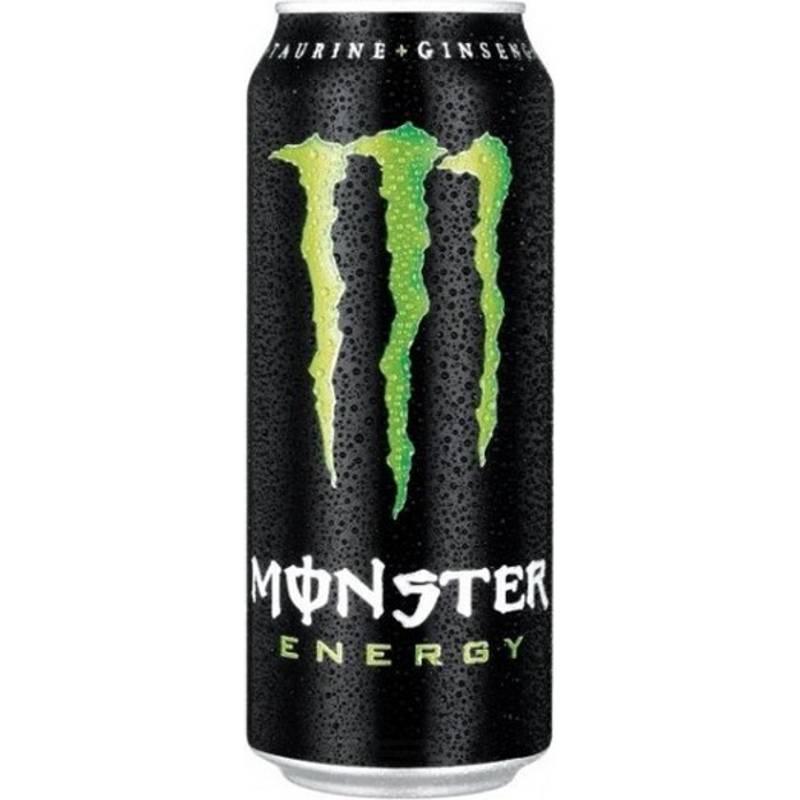
Monster
Monster Energy Drink Green 16 Oz Can
SUGAR · NATURAL FLAVORS · CARBONATED WATER
Standout ingredient: CYANOCOBALAMIN (VIT. B12)
Analysis by Aurascan. Sources are listed on the product page.
What changed?
The confirmed statutory threshold establishes a hard regulatory standard: any soft drink containing more than 150 milligrams of caffeine per litre (mg/L) cannot be legally sold to individuals younger than 16 years old. Traditional hot beverages, specifically brewed tea and coffee, remain exempt from the legislation regardless of their natural caffeine content.
Mainstream brands widely sold in grocery stores, convenience shops, and vending machines will fall squarely within the scope of the restriction. Standard formulations of Red Bull, Monster, Relentless, and Prime all exceed the 150 mg/L threshold. The government says retailers themselves will be responsible for ensuring the drinks are not sold to under-16s, with local authorities enforcing the ban.
While England finalized its implementation timetable, other European governments moved ahead with even stricter measures throughout 2026. In Croatia, a nationwide ban prohibiting the sale of energy drinks to anyone under 18 years old took effect on 1 June 2026. Croatian retailers must refuse the sale to anyone they believe is under 18 unless valid identification is shown, a rule that also applies at self-service checkouts.
In Spain, the Ministry of Consumer Affairs announced a comprehensive national restriction on 25 February 2026. The Spanish proposal sets a baseline sales ban for under-16s, extended to under-18s for formulations exceeding 32 mg of caffeine per 100 ml (equivalent to 320 mg/L). Regional governments in Spain moved ahead of the national framework: Galicia enforced a regional sales ban in March 2026, followed by the Balearic Islands on 12 August 2026. The Spanish national rule was not yet in force at the time of the ministry announcement.
Who is affected?
The primary population impacted by England's measure is the estimated 100,000 children under 16 who drink high-caffeine beverages daily, along with their parents and schools. Shops, convenience stores, delivery services and vending operators will all need a way to check age before April 2027.
Manufacturers selling in England face a choice: accept age-gated sales for anything over 150 mg/L, or reformulate below the threshold.
In the United States, however, adolescent consumers encounter a completely different regulatory landscape. There is no federal age limit on buying an energy drink; any restriction is down to the retailer's own policy.
To understand how caffeine levels and sweeteners vary across widely available formulations, you can read our comparison of Monster vs Red Bull: Caffeine, Sweeteners and Preservatives.
Quiz
Is a can of Celsius Peach Vibe clean?
Guess before you scroll.
Reveal Aurascan's verdict
Aurascan says: Flagged
The main flag is Natural Flavor.
What it means for shoppers
For shoppers in England, shopping after April 2027 will involve mandatory age prompts at checkout counters for products exceeding the caffeine cap. In the United States, however, the primary challenge for consumers is simply figuring out how much caffeine is inside the can, as highlighted by Food Dive.
Under US Food and Drug Administration (FDA) regulations, when caffeine is added to a conventional beverage, the manufacturer is legally required to list caffeine by name in the ingredient list. However, federal regulations do not require the company to disclose the exact quantity in milligrams. While many mainstream brands choose to print the milligram count voluntarily on the front or side panel, finding the exact amount is not guaranteed.
When evaluating a US energy drink, shoppers should check whether the product carries a standard Nutrition Facts panel or a Supplement Facts panel:
- Conventional Beverages (Nutrition Facts): Added caffeine must appear in the ingredient list. The total milligrams per serving or per can are disclosed strictly at the manufacturer discretion.
- Dietary Supplements (Supplement Facts): Companies may group functional ingredients into a proprietary blend or energy blend. Federal rules require disclosing the total combined weight of the blend, but individual milligram quantities of specific stimulants do not need to be broken out.
- Herbal Stimulant Sources: Ingredients like guarana extract naturally contain concentrated caffeine. On US labels, guarana may be listed without quantifying how much caffeine it contributes to the finished drink.
- Non-Caffeine Synergists: Additives like taurine, glucuronolactone, and B vitamins (such as niacin, B6, and B12) are frequently formulated alongside stimulants. Regulators evaluate these as food additives or dietary ingredients, but labels do not show how they might interact with high doses of caffeine. You can read our dedicated taurine ingredient review to learn more about how it functions in popular blends.
For a deeper breakdown of stimulant formulations and ingredient panels, explore our side-by-side analysis of Red Bull vs Celsius: Caffeine, Sweeteners, and Ingredients. If you want to understand general label rules and additive disclosures, check out our guide on How to Read a Food Label: The Ingredient List, Line by Line.
The background
The policy divergence between the UK and the United States stems from fundamentally different regulatory philosophies. In the UK and the broader European Union, food safety laws operate under a precautionary framework. Since 2014, European regulations have required any beverage containing more than 150 mg/L of caffeine to carry a prominent front-facing warning: "High caffeine content. Not recommended for children or pregnant or breast-feeding women," followed by the precise caffeine concentration in mg per 100 ml.
The US labelling gap is not new. A 2013 paper in the Journal of Caffeine Research argued that all products with added caffeine should be required to state the quantity, noting that no food or beverage was required to do so; that remains the position today. Children are the group most affected, because a given dose of caffeine is larger relative to their body weight.
In the US, the FDA's consumer guidance says 400 milligrams a day is not generally associated with negative effects in healthy adults, while giving no safe level for children. Caffeine is listed as generally recognized as safe in cola-type beverages at up to 0.02 percent; energy drinks are formulated outside that cola category, and some are sold as dietary supplements, which under the Dietary Supplement Health and Education Act of 1994 (DSHEA) do not undergo pre-market approval.
Scientific evidence cannot establish identical physiological reactions across every individual. A person's metabolic response to caffeine depends heavily on genetic variations in the CYP1A2 liver enzyme, body weight, pre-existing cardiac conditions, and co-ingestion with other compounds. Regulatory guidelines rely on population-level averages, leaving uncertainties regarding how specific individuals tolerate multi-stimulant blends.
What to watch next
Ahead of England's April 2027 enforcement deadline, UK retailers and trade groups will coordinate guidance on verification protocols, particularly for rapid online delivery services and automated checkout lines. Public health advocates will also monitor whether manufacturers reformulate flagship recipes below the 150 mg/L limit to protect youth sales volume.
Across the Atlantic, the one concrete federal step is that the FDA placed caffeine-content labelling guidance on its 2026 Human Foods Program priority list.
Shoppers should recognize that a priority-list item is guidance the agency intends to draft, not an enforceable federal rule. The listing does not set a binding compliance date, nor does it guarantee a final mandate requiring exact caffeine milligrams on all cans. For now, US consumers must inspect the Nutrition Facts panel, scrutinize proprietary blends, and review the ingredient list manually.
Try Aurascan
See what is really in the food you buy.
Common questions
- What is the caffeine limit for England's energy drink ban?
- England's confirmed policy bans the sale of drinks containing more than 150 milligrams of caffeine per litre (mg/L) to anyone under the age of 16. Traditional brewed tea and coffee are explicitly exempt from the restriction.
- When does the energy drink sales ban take effect in England?
- The UK government confirmed that the ban will become legally enforceable across England in April 2027, with local trading standards authorities empowered to fine non-compliant retailers up to 2,500 pounds.
- Does the US FDA require energy drinks to show caffeine milligrams?
- No. The FDA requires added caffeine to appear by name in the ingredient list, but it does not mandate printing the exact milligram count per serving. Disclosing specific milligrams on the label remains voluntary for manufacturers.
- Which other European countries ban energy drink sales to minors?
- Croatia enacted a nationwide ban prohibiting energy drink sales to anyone under 18 starting 1 June 2026. Spain announced a national sales ban for under-16s (and under-18s for drinks above 32 mg/100 ml), with regional bans taking effect in Galicia in March 2026 and the Balearic Islands in August 2026.
- What is a proprietary energy blend on a US beverage label?
- When an energy drink is sold as a dietary supplement under a Supplement Facts panel, federal rules allow manufacturers to list a proprietary blend. This discloses the total combined weight of the blend but does not state the individual milligram amounts of caffeine, guarana, taurine, or other additives.
- Why are ingredients like taurine and guarana added to energy drinks?
- Guarana is a plant extract that contains naturally occurring caffeine, providing an additional stimulant source. Taurine is an amino sulfonic acid involved in cellular hydration, while ingredients like glucuronolactone and B vitamins are included to support cellular metabolism. Regulators assess them individually, but amounts within proprietary blends are often unlisted.
Sources
- Banning the sale of high-caffeine energy drinks to children: consultation outcome (gov.uk)
- Children's health further protected with energy drinks ban (gov.uk)
- Spilling the Beans: How Much Caffeine is Too Much? (fda.gov)
- Energy Drinks: Health Risks and Regulatory Approaches (pmc.ncbi.nlm.nih.gov)
- Caffeine Labeling and Regulatory Guidance for Functional Beverages (fooddive.com)
In this series
Guide
Monster vs Red Bull: Caffeine, Sweeteners and PreservativesGuide
Red Bull vs Celsius: Caffeine, Sweeteners, and IngredientsGuide
Dietary Guidelines Name 4 Things No Food Label ShowsGuide
5 Snacks and Sodas Scanned for Artificial DyesGuide
Seed Oils on a Label: What It Tells You, What It Doesn'tGuide
E Numbers Explained: The EU Code for US Additives
Related guides
Latest News
Ultra-Processed Food and Kidney Disease: What a New Study FoundIn 2,661 adults over 65, animal-sourced ultra-processed foods had the strongest link to chronic kidney disease. The numbers and the caveats.
Latest News
UK-EU Food Deal Would Swap British Approvals for EU RulesAn FSA board paper says GB food authorisations would end under the planned UK-EU SPS deal. What it could mean for titanium dioxide, nitrites and UK labels.
Latest News
Avocado Oil Chips Lawsuit: Most Tested Chips Were Blended OilsUC Davis found 93 percent of avocado-oil chip samples it tested failed authenticity checks, and Utz now faces a lawsuit. How to read the oil line on a chip bag.
Try it on your own groceries
Scan your next label with Aurascan
Point the camera at any ingredient list and get the same evidence-graded read you see here.
Open the scannerLabel-reading intel, weekly.
What changed on food labels this week — bans, recalls, and new guides.