
Comparisons · September 29, 2026 · 9 min read
Celsius vs Monster: Which Energy Drink Label Is Cleaner?
Celsius swaps sugar for sucralose and adds green tea extract; Monster pairs 54 g of sugar with sucralose. We scanned both labels line by line.
By Chris Carrillo · Reviewed by Armin Rad, Co-Founder & CTO, Aurascan · September 29, 2026
Every article is checked against primary sources before publication. How we review
Celsius Peach Vibe is the leaner label: no added sugar, 10 calories and no listed preservative, but more caffeine per ounce (about 16.7 mg per fluid ounce, from the 200 mg printed on the can). Original Monster Energy carries 54 grams of added sugars and 230 calories per 16 fl oz can, per Open Food Facts, plus sucralose and two preservatives, at about 10 mg of caffeine per fluid ounce.
Key takeaways:
- Celsius Peach Vibe (12 fl oz) prints "Caffeine Content: 200mg" on its can, about 16.7 mg per fluid ounce versus Monster's ~10 mg. It is sweetened with sucralose and also lists green tea extract, guarana and ginger root extract.
- A standard 16 fl oz can of Monster delivers 54 grams of added sugar (230 calories) alongside sucralose, whereas Celsius contains zero added sugar and 10 calories.
- Monster lists two preservatives, sorbic acid and benzoic acid; the Celsius ingredient list names no preservative.
- One can of either drink sits below the 400 mg a day the FDA cites for most healthy adults, but medical experts advise against energy drinks for children and teens, and the Celsius can says it is not recommended for anyone under 18 or who is pregnant or nursing.
Which Energy Drink Should You Choose for Your Routine?
Choosing between Celsius Peach Vibe and original Monster Energy comes down to your nutritional goals, sweetener preferences, and caffeine tolerance. For the other two sides of this triangle, see Red Bull vs Celsius: Caffeine, Sweeteners, and Ingredients and Monster vs Red Bull: Caffeine, Sweeteners and Preservatives.
In a 12 fl oz can, Celsius Peach Vibe provides 10 calories, no added sugar and 200 mg of caffeine, alongside green tea extract, ginger root extract and chromium. Its ingredient list has no caloric sugar; it is sweetened with sucralose.
Original Monster Energy is packaged in a larger 16 fl oz can. Per Open Food Facts it delivers 230 calories, driven by 54 grams of added sugars (sugar and glucose), and it also lists sucralose. If you want to avoid added sugar and preservatives, Celsius is the cleaner formulation on paper; if caffeine per ounce is your main concern, Monster is the milder of the two.
Quiz
Celsius Peach Vibe or Monster Energy: which label scans cleaner?
Guess before you scroll.
Reveal Aurascan's verdict
Aurascan says: It's a tie
At-a-Glance Comparison: Celsius Peach Vibe vs Monster Original
Nutritional panels and ingredient lists show sharp contrasts in serving size, caloric load, and additive selection. Celsius nutrition figures below come from the Nutrition Facts panel photographed on its Open Food Facts page; Monster figures are Open Food Facts nutriment records. Here is how the two products compare based on ingredient text and nutriment records from Celsius Sparkling White Peach - Open Food Facts and Monster Energy - Open Food Facts.
| Feature | Celsius Peach Vibe (12 fl oz) | Monster Energy Original (16 fl oz) |
|---|---|---|
| Open Food Facts Barcode | 889392010190 | 070847811169 |
| Calories | 10 kcal | 230 kcal |
| Carbohydrates | 0 g (can label) | 58 g |
| Added Sugars | 0 g | 54 g |
| Sodium | 5 mg (can label) | 370 mg |
| Stated Caffeine per Can | 200 mg (printed on can) | 160 mg |
| Caffeine Concentration | ~16.7 mg / fl oz | ~10 mg / fl oz |
| Sweetening Agents | Sucralose | Sugar, Glucose, Sucralose |
| Botanicals & Specialty | Green tea extract, Ginger root extract, Guarana seed | Panax ginseng extract, Guarana extract |
| Added Amino / Metabolites | Taurine, Glucuronolactone | Taurine, L-Carnitine L-Tartrate, Inositol, D-Glucuronolactone |
| Preservatives | None listed (Ascorbic acid present) | Sorbic acid, Benzoic acid |
| Color | Beta-carotene listed (role not stated) | Unspecified "color added" |
Quiz
Monster has 54 g of sugar AND sucralose per 16 oz can. Guess the verdict Aurascan gives it.
Guess before you scroll.
Reveal Aurascan's verdict
Aurascan says: Flagged
The main flag is SUGAR.
Which Drink Has More Caffeine Per Ounce?
When evaluating energy drinks, total caffeine per container can be misleading if you do not account for fluid volume. A standard 16 fl oz can of Monster Energy provides 160 mg of total caffeine, which equals 10 mg of caffeine per fluid ounce.
In contrast, the Celsius Peach Vibe can photographed on Celsius Sparkling White Peach - Open Food Facts prints "Caffeine Content: 200mg" for a 12 fl oz (355 mL) can, about 16.7 mg per fluid ounce (the database's own nutriment table records 184 mg, so check your can). That makes Celsius about two-thirds more concentrated in caffeine than original Monster, although the per-can totals are closer: 200 mg versus 160 mg.
A single can of either drink sits below the daily figure in the FDA Consumer Update Spilling the Beans: How Much Caffeine is Too Much?. The FDA cites 400 milligrams a day, roughly two to three 12-fluid-ounce cups of coffee, as an amount not generally associated with negative effects in healthy adults. However, the FDA warns of wide variation in individual sensitivity and notes that rapid consumption of around 1,200 milligrams can produce toxic effects such as seizures.
Under federal regulations (21 CFR 182.1180 - Caffeine), caffeine is classified as Generally Recognized as Safe (GRAS) when used in cola-type beverages up to a tolerance of 0.02 percent (approximately 0.2 mg/mL). Simple arithmetic on the stated caffeine and can sizes shows that both products exceed this 0.02% figure: Monster at roughly 0.034% and Celsius at approximately 0.056%. The specific regulatory basis or self-affirmed GRAS determination the brands rely on for non-cola energy beverages is not stated on either label.
How Do Their Sweeteners and Sugar Loads Differ?
The sweetener strategies of these two drinks represent entirely different dietary categories. Celsius Peach Vibe contains zero grams of added sugar. Its sweetness comes from sucralose (What Is Sucralose? Uses, Safety, Baking Risks, and Labels), a non-nutritive sweetener permitted under 21 CFR 172.831 - Sucralose for general food use in accordance with current good manufacturing practice.
Monster Energy uses a hybrid sweetening system. Per Monster Energy - Open Food Facts, a single 16 fl oz can packs 54 grams of sugars (all classified as added sugars), consisting of table sugar and glucose, yielding 58 grams of total carbohydrates. However, Monster also lists sucralose near the middle of its ingredient list. Formulations can also vary by production region and manufacturing date.
For consumers monitoring blood glucose or adhering to strict low-carbohydrate diets, Monster's 58 grams of carbohydrate per can is a large sugar load, whereas Celsius lists no carbohydrate on its can.
Scan preview
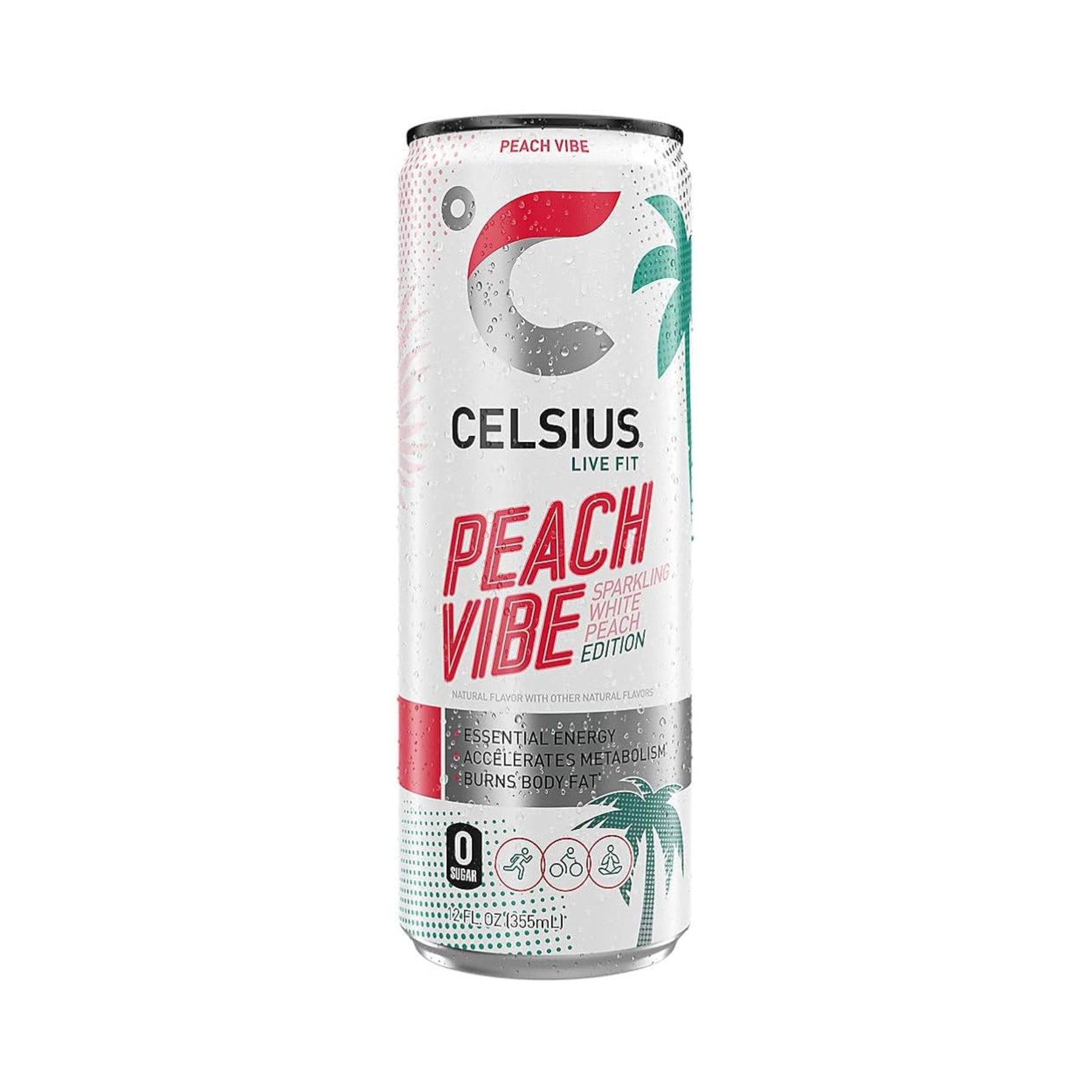
Celsius
Celsius Sparkling Peach Vibe Energy Drink - 12 Fl Oz Can
Citric Acid · Green Tea Extract · Natural Flavor
Standout ingredient: Ascorbic Acid
Analysis by Aurascan. The app shows the full breakdown and its sources.
What Functional Add-Ins Are in Celsius vs Monster?
Beyond basic stimulants and flavorings, both brands pack their formulas with functional add-ins, though their ingredient philosophies diverge.
Shared ingredients include taurine, glucuronolactone, guarana, and several B vitamins (niacinamide, pyridoxine hydrochloride, riboflavin, and cyanocobalamin). For a detailed look at the safety and metabolic role of taurine, read Is Taurine Safe? Energy Drinks, EFSA Limits, and Labels. In both drinks, neither label discloses the exact quantitative milligrams of taurine, glucuronolactone, or guarana. Furthermore, it is not disclosed on either label whether the caffeine naturally present in guarana seed extract is included in the stated caffeine total or added on top.
A research paper by Rubio et al., Caffeine, D-glucuronolactone and Taurine Content in Energy Drinks: Exposure and Risk Assessment, examined exposure levels across commercial energy drinks. The authors noted that energy drinks generally contain around 4,000 mg/L of taurine and 2,400 mg/L of D-glucuronolactone. They observed that a margin of safety of 100 or higher for D-glucuronolactone was only observed when energy drink consumption was limited to 250 mL for individuals weighing over 60 kg. This was a broad market estimate and not a direct laboratory measurement of Celsius or Monster, but it highlights the lack of transparency regarding specific add-in dosages across the energy drink industry.
Where the two formulas split:
- Celsius-Only Add-Ins: Celsius includes green tea extract, ginger root extract, chromium chelate, biotin, calcium carbonate, and ascorbic acid. Green tea extract contains catechins like epigallocatechin gallate (EGCG). According to EFSA's ANS Panel in its Scientific opinion on the safety of green tea catechins, traditional green tea infusions are considered safe, but intake equal to or above 800 mg EGCG per day in supplement form has been shown to induce statistically significant increases in serum transaminases. Because Celsius does not disclose its exact EGCG content, consumers cannot verify where a single can falls relative to that threshold.
- Monster-Only Add-Ins: Monster features Panax ginseng extract, L-carnitine L-tartrate, inositol, and maltodextrin. The label does not disclose how much of each is used.
Are Preservatives and Artificial Additives Present?
The preservation and color systems on these labels reflect distinct formulation approaches. Celsius Peach Vibe lists no chemical preservatives. It lists citric acid and ascorbic acid (vitamin C), and its last ingredient is beta-carotene; the label does not say whether that is there for colour or as a vitamin A source. You can learn more about how flavoring mixtures are evaluated in our guide on What Are Natural Flavors? Uses, Labels, and Safety Explained.
Monster Energy lists two preservatives: sorbic acid and benzoic acid. Monster also incorporates sodium citrate to buffer acidity, along with added salt. For visual appearance, Monster lists an unspecified "color added" on the Open Food Facts ingredient text. This ingredient list does not identify any specific colorant.
Both beverages also add B vitamins. The Celsius can lists 2 mg of vitamin B6 (120% Daily Value), 6 mcg of vitamin B12 (250% DV) and 300 mcg of biotin (1000% DV) per can, alongside pantothenic acid, niacin and riboflavin. It is worth noting that under 21 CFR 104.20 - Nutritional quality guidelines for foods: Fortification policy, specifically section 104.20(a), the FDA explicitly states that it "does not encourage indiscriminate addition of nutrients to foods, nor does it consider it appropriate to fortify ... snack foods such as candies and carbonated beverages." While this federal regulation represents agency policy guidance rather than an outright prohibition, it shows the FDA does not consider carbonated beverages an appropriate vehicle for fortification.
What Are the Safety Profiles and Regulatory Limits?
When evaluating the overall safety profiles of Celsius Peach Vibe and Monster Energy, the sources point to a daily caffeine figure for most adults and clear cautions for some groups.
First, the FDA Consumer Update notes that medical experts advise against energy drinks for children and teens because of their levels of sugar and caffeine, according to the American Academy of Pediatrics, and the Celsius can says it is not recommended for anyone under 18. The FDA also advises pregnant and breastfeeding individuals to consult their healthcare providers regarding caffeine limits.
Second, the FDA says how much caffeine is too much varies with body weight, medications, certain medical conditions and individual sensitivity, and it lists signs of too much caffeine that include increased heart rate, palpitations, insomnia, jitters, anxiety, upset stomach, nausea and headache.
Finally, clinical evidence has important limitations. Available published data does not establish the long-term health outcomes of daily multi-can energy drink consumption over decades. And because neither label gives amounts of guarana, glucuronolactone or the botanical extracts, shoppers cannot tell how much of each they are getting.
Which Should You Pick for Your Goals?
Match the label to what you are trying to avoid:
- Avoiding added sugar: Celsius Peach Vibe lists no added sugar and 10 calories; Monster lists 54 grams of added sugars per can.
- Watching caffeine: Monster has less caffeine per can (160 mg vs 200 mg) and per ounce, but either can is a large single dose if you are caffeine-sensitive.
- Low-calorie or low-carb diets: Celsius Peach Vibe is the clear winner, at 10 calories and 0 grams of carbohydrate on its can, compared with Monster's 230 calories and 58 grams of carbohydrate.
- Avoiding preservatives: Celsius lists neither sorbic acid nor benzoic acid.
- Avoiding sucralose: neither works; both ingredient lists include it.
Try Aurascan
See what is really in the food you buy.
Scan preview
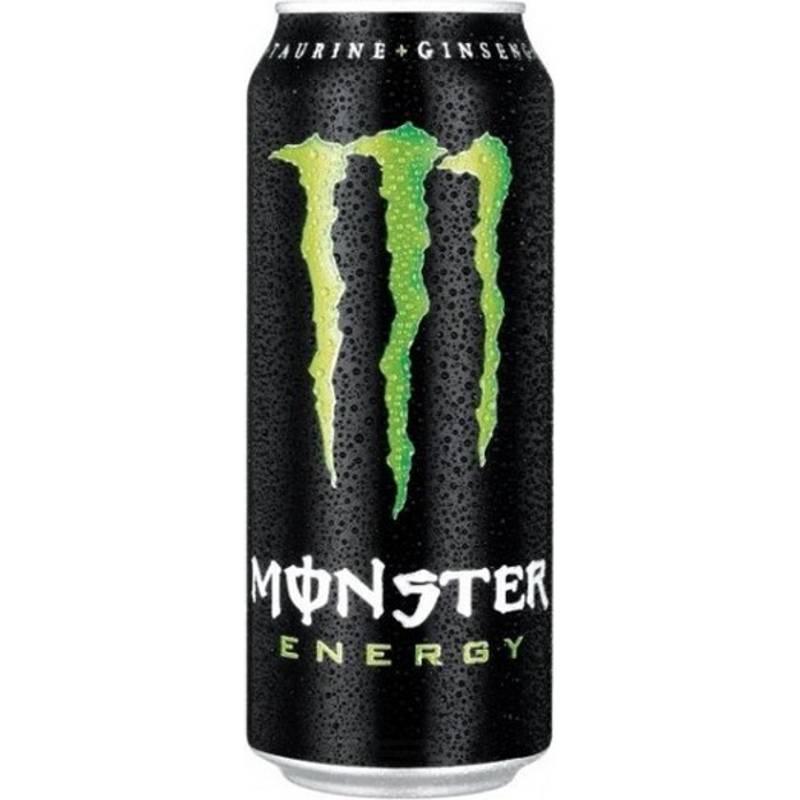
Monster
Monster Energy Drink Green 16 Oz Can
SUGAR · CITRIC ACID · NATURAL FLAVORS
Standout ingredient: CYANOCOBALAMIN (VIT. B12)
Analysis by Aurascan. The app shows the full breakdown and its sources.
Common questions
- Which drink has more caffeine: Celsius Peach Vibe or Monster Energy?
- Celsius Peach Vibe, both per can and per ounce. Its 12 fl oz can prints 200 mg of caffeine (about 16.7 mg per fl oz), while original Monster Energy has 160 mg per 16 fl oz can (about 10 mg per fl oz), per Open Food Facts.
- Does original Monster Energy contain artificial sweeteners?
- Yes. According to the Open Food Facts ingredient list, original Monster Energy contains sucralose in addition to caloric sugars (sugar and glucose). Formulations may vary by region and production date.
- Are Celsius energy drinks completely sugar-free?
- Celsius Peach Vibe lists no sugar in its ingredients and 10 calories per 12 fl oz can; its sweetness comes from sucralose, a non-nutritive sweetener.
- What preservatives are used in Monster Energy compared to Celsius?
- Monster Energy lists sorbic acid and benzoic acid as preservatives. The Celsius Peach Vibe ingredient list names no preservative.
- Are energy drinks safe for teenagers and children?
- Medical experts advise against energy drinks for children and teens because of their levels of sugar and caffeine, according to the American Academy of Pediatrics as cited by the FDA. The Celsius can says it is not recommended for anyone under 18.
Sources
- Spilling the Beans: How Much Caffeine is Too Much? (fda.gov)
- 21 CFR 182.1180 - Caffeine (law.cornell.edu)
- 21 CFR 172.831 - Sucralose (law.cornell.edu)
- 21 CFR 104.20 - Nutritional quality guidelines for foods: Fortification policy (law.cornell.edu)
- Scientific opinion on the safety of green tea catechins (pmc.ncbi.nlm.nih.gov)
- Caffeine, D-glucuronolactone and Taurine Content in Energy Drinks: Exposure and Risk Assessment (pmc.ncbi.nlm.nih.gov)
- Celsius Sparkling White Peach - Open Food Facts (world.openfoodfacts.org)
- Monster Energy - Open Food Facts (world.openfoodfacts.org)
In this series
Guide
Sodium Phosphate in Food: Who Actually Needs to Worry?Guide
Is Silicon Dioxide Bad for You? The Anti-Caking AdditiveGuide
Is Soy Lecithin Safe? Uses, Allergy Facts, and Label NamesGuide
Is Taurine Safe? Energy Drinks, EFSA Limits, and LabelsGuide
What Are Natural Flavors? Uses, Labels, and Safety ExplainedGuide
Is Benzoyl Peroxide Safe? Stability, Regulation, and Safety
Related guides
Comparisons
Coffee mate vs International Delight: Ingredients and SugarCoffee mate vs International Delight French Vanilla creamer: soybean/canola oil vs palm oil, sugar per tablespoon, carrageenan and the other additives on each label.
Latest News
Two Weeks of Ultra-Processed Food Didn't Dull Satiety HormonesA small Dutch trial fed young adults diets of about 95% ultra-processed food for two weeks. Gut fullness hormones did not change, though hunger ratings shifted slightly.
Ingredient Reviews
Pectin: The Fruit Fiber in Friendly's Bars and Nature's BakeryFriendly's Orange Cream bars and Nature's Bakery fig bars both list pectin. What it is, where it comes from, its US GRAS and fiber status, and EFSA's view.
Try it on your own groceries
Scan your next label with Aurascan
Point the camera at any ingredient list and get the same evidence-graded read you see here.
Open the scannerGet food recall alerts + a weekly digest
An email when a food recall is announced, plus one weekly roundup of label news and new guides.
We email a confirmation link first - nothing is sent until you click it. Unsubscribe anytime. Privacy