
Latest News · September 22, 2026 · 6 min read
Cyclospora Lettuce Outbreak Over: 12,883 Sick. What FDA Wants Now
CDC closed the Cyclospora outbreak tied to iceberg lettuce from Mexico on September 11, 2026. What happened, what FDA asked growers, and how to read produce recalls.
By Chris Carrillo · Reviewed by Armin Rad, Co-Founder & CTO, Aurascan · September 22, 2026
Every article is checked against primary sources before publication. How we review
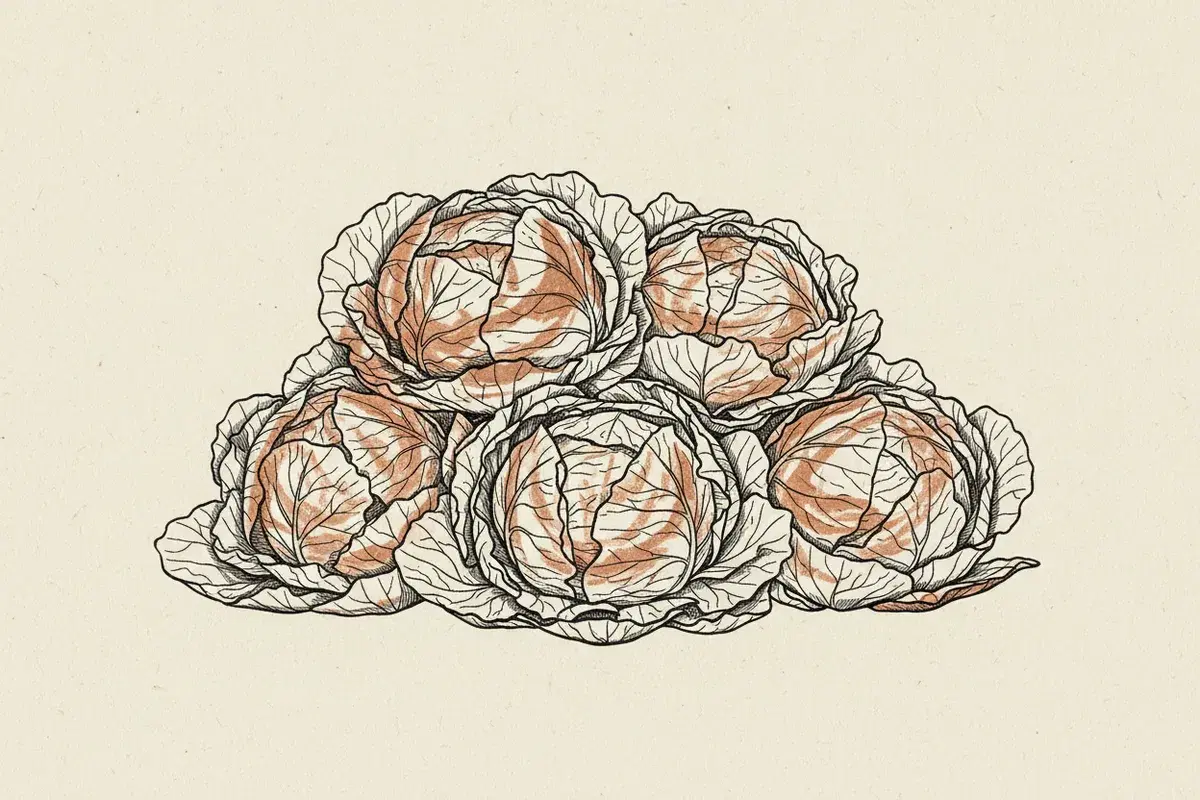
Federal health officials have closed their investigation into a multistate parasite outbreak linked to processed iceberg lettuce. On September 11, 2026, the Centers for Disease Control and Prevention (CDC) declared that the Cyclospora outbreak tied to iceberg lettuce sourced from central Mexico is over, ending a months-long inquiry that recorded 12,883 illnesses, 570 hospitalizations, and two deaths across 21 states.
Key takeaways
- The CDC declared the Cyclospora outbreak officially over on September 11, 2026, following a July voluntary recall that drove daily case counts from over 1,000 down to fewer than two by August.
- The Food and Drug Administration (FDA) classified the voluntary Taylor Farms de Mexico recall as Class I on August 28, 2026, reflecting the serious life-threatening risk posed by contaminated lettuce.
- On September 11, 2026, the FDA sent a Letter to Industry calling for collaboration on agricultural water, worker hygiene and supplier verification under the Produce Safety Rule and related rules.
- Routine kitchen washing does not reliably eliminate Cyclospora cayetanensis oocysts, making growing-field water management and supply-chain verification the primary defense for consumers.
What happened
On September 11, 2026, the CDC released its final outbreak summary announcing the end of the Cyclospora cayetanensis illness wave traced to processed iceberg lettuce. The final count was 12,883 cases spread across 21 states, resulting in 570 patient hospitalizations and two deaths. The federal investigation determined that the contaminated product originated from Taylor Farms de Mexico operations located in central Mexico.
Earlier in the summer, consumer illness reports surged rapidly, peaking at more than 1,000 newly reported cases per day before public health officials isolated the contaminated supply lines. In response to preliminary epidemiological and traceback data, Taylor Farms de Mexico initiated a voluntary recall on July 17, 2026, pulling all iceberg lettuce sourced from its central Mexico fields.
The swift removal of affected greens halted transmission through distribution networks. By August 2026, the rolling average of newly confirmed cases plummeted to fewer than two illnesses per day, allowing federal epidemiologists to trace remaining sporadic reports and monitor regional recovery.
On August 28, 2026, the FDA formally designated the Taylor Farms de Mexico action as a Class I recall. A Class I classification is the agency's highest hazard level, reserved for situations where exposure to a violative product carries a reasonable probability of serious adverse health consequences or death.
What changed
Simultaneously with the CDC closure notice on September 11, 2026, the FDA wrote to produce growers, packers and importers. Donald A. Prater, Acting Deputy Commissioner for Food, signed a Letter to Industry calling for collaboration across the fresh-cut produce supply chain to prevent future Cyclospora outbreaks.
The letter points to existing rules under the Food Safety Modernization Act (FSMA). It cites mandatory adherence to the Produce Safety Rule (codified in 21 CFR part 112), which governs growing, harvesting, packing, and holding standards for domestic and imported produce. It also cites the current good manufacturing practice and preventive controls rule (21 CFR part 117).
It also cites the Foreign Supplier Verification Program (FSVP), established under 21 CFR part 1 subpart L. Under FSVP, United States importers must maintain documented verification activities ensuring that foreign suppliers implement safety standards that offer the same level of public health protection required of domestic farms.
The letter asks the industry to focus on agricultural water quality, worker hygiene and field sanitation, and supplier verification, and calls for an integrated One Health approach, acknowledging the direct overlap between human activity, livestock management, adjacent environmental terrain, and fresh produce cultivation.
Who is affected
The multi-state outbreak reached consumers across 21 states, affecting people who ate the processed iceberg lettuce. Anyone can get cyclosporiasis; the CDC notes that illness can be longer and more severe in people with weakened immune systems.
From an agricultural standpoint, commercial operations growing, packing, or importing leafy greens from international growing hubs are directly affected by the regulatory fallout.
The recalled lettuce is well past its shelf life, so there is nothing left to throw out at home. The letter is aimed at the people who grow, pack, process and import produce.
What it means for shoppers
For everyday grocery shoppers standing in the produce aisle, this regulatory intervention highlights the complexities of packaging disclosures. Bagged-salad packaging generally identifies the manufacturing packer, distributor, and often the country of origin, but it rarely reveals the exact farm or canal where individual heads of lettuce were grown.
When federal agencies issue recalls, the notices rely on brand names, production lot numbers, and pack dates printed directly on plastic film bags. Checking those codes against the FDA recall notice is the only reliable way to know whether a bag in your fridge is affected. The same fine-print habit helps with allergens; see Food Allergen Labels Explained: 9 Allergens and Their Hidden Names.
Critically, consumers should understand that packages labeled "triple-washed" or "pre-washed" are not guaranteed to be parasite-free. While industrial wash sanitizers like chlorine or peracetic acid successfully lower bacterial loads such as E. coli and Salmonella, they do not reliably kill or detach microscopic Cyclospora oocysts clinging to leaf folds. Re-washing pre-washed lettuce in a home sink does not eliminate this risk and can unintentionally contaminate clean kitchen counters.
Shoppers must rely on rigorous commercial preventive controls at the farm level rather than home washing to protect against parasitological contamination.
The background
Cyclospora cayetanensis is a microscopic, single-celled protozoan parasite that causes a severe intestinal illness known as cyclosporiasis. Humans contract the organism by ingesting food or water contaminated with human feces. Unlike common foodborne bacteria that reproduce rapidly in food or ambient environments, Cyclospora requires an incubation period in the environment to become infectious and cannot multiply outside a living human host.
Symptoms typically develop roughly one week after swallowing mature oocysts. The hallmark symptom of cyclosporiasis is watery, explosive diarrhea that can persist for weeks or even months if left untreated. Patients frequently suffer severe abdominal cramps, bloating, nausea, low-grade fever, fatigue, and significant dehydration.
Standard over-the-counter anti-diarrheal treatments are often insufficient to resolve a full clinical infection. Cyclosporiasis requires medical diagnosis via specialized stool parasite testing and is specifically treated with a targeted course of antibiotics, typically trimethoprim-sulfamethoxazole (TMP-SMX).
The physical structure of the Cyclospora oocyst makes it uniquely resilient in outdoor agricultural settings. The parasite possesses a thick, protective outer cyst wall that resists common chemical disinfectants, chlorine wash systems, and varying soil temperatures. Because the oocysts adhere tightly to the waxy surfaces of leafy greens, conventional washing cannot be relied upon to remove them once water carries the parasite into an open field.
What to watch next
The letter is a request for collaboration, not a new rule. What to watch is whether growers and importers change agricultural water practices and supplier checks before the next warm-season Cyclospora peak, which the CDC sees most years in late spring and summer.
Testing is part of the problem. Detecting Cyclospora in produce and water requires laboratory molecular methods, which is one reason the FDA's Cyclospora prevention, response and research action plan puts weight on better detection.
There are limits to what a label or a wash can do here. How the parasite reached the lettuce is a question for investigators, and it cannot be answered from the bag.
Understanding what is inside packaged foods requires vigilance beyond raw farm commodities. Aurascan is a free food-label scanner app currently in beta (available on iOS TestFlight, with a waitlist for other devices). It breaks down ingredients individually using verified regulatory citations rather than assigning an opaque numeric score. Product records are referenced against the USDA, Open Food Facts, and barcode databases, giving ingredient-level verdicts of Clean, Mixed, or Flagged without commercial sponsorship. Download the app to review your pantry items and scan your next label with Aurascan.
Try Aurascan
See what is really in the food you buy.
Common questions
- What caused the 2026 Cyclospora outbreak?
- The outbreak was caused by the intestinal parasite Cyclospora cayetanensis linked to processed iceberg lettuce sourced from Taylor Farms de Mexico operations in central Mexico.
- Can washing iceberg lettuce remove Cyclospora parasites?
- No. Routine kitchen washing and industrial wash sanitizers do not reliably kill or remove Cyclospora oocysts from leafy greens because the parasite has a tough outer wall that adheres tightly to plant tissue.
- How is a Cyclospora infection treated?
- Cyclosporiasis is diagnosed using specialized stool tests and is treated with a specific course of antibiotics, typically trimethoprim-sulfamethoxazole (TMP-SMX).
- What is the difference between a Class I recall and other recalls?
- An FDA Class I recall is the most urgent recall level, applied when there is a reasonable probability that exposure to the violative product will cause serious adverse health consequences or death.
- What regulations did the FDA cite in its Letter to Industry?
- The FDA cited the Produce Safety Rule (21 CFR part 112), preventive controls regulations (21 CFR part 117), and the Foreign Supplier Verification Program (21 CFR part 1 subpart L).
Sources
- Investigation of Multistate Outbreak of Cyclospora Illnesses: Iceberg Lettuce (July 2026) (fda.gov)
- Cyclospora Outbreak Investigation Final Update: Iceberg Lettuce (cdc.gov)
- Cyclospora Prevention, Response, and Research Action Plan (fda.gov)
- Preventing Cyclosporiasis: Produce Safety and Water Guidelines (cdc.gov)
- Letter to Industry Calling for Collaboration to Prevent Future Cyclospora Outbreaks (fda.gov)
In this series
Guide
Emulsifiers on Ingredient Lists Explained: Lecithin to Polysorbate 80Guide
Preservatives on Ingredient Lists Explained: Benzoate to BHAGuide
RYSE Loaded Protein vs Core Power: Powder vs Shake, Label by LabelGuide
Are Stacy's Pita Chips Clean? Every Ingredient, ScannedGuide
Is Frigo String Cheese Clean? Four Ingredients, ScannedGuide
Is the Nature's Bakery Fig Bar Clean? Every Ingredient, Scanned
Related guides
Latest News
Frozen Berry E. coli Outbreak Over; Chilean Supplier on Import AlertCDC closed the E. coli O145 outbreak tied to frozen blueberries from Chile: 17 sick in Florida and Georgia. Which bags were recalled and how to read frozen fruit labels.
Latest News
Walmart bettergoods Lemon Alfredo Fettuccine Listeria RecallFrozen bettergoods Lemon Alfredo Fettuccine sold at Walmart was recalled for possible Listeria. The UPC, lot codes and how to check your freezer.
Latest News
Lobster in Ravioli, Soy in Chips: When Allergen Labels FailTwo September recalls, Deano's ravioli with undeclared lobster and J. HIGGS chips with undeclared soy, show why a correct ingredient list is not enough.
Try it on your own groceries
Scan your next label with Aurascan
Point the camera at any ingredient list and get the same evidence-graded read you see here.
Open the scannerLabel-reading intel, weekly.
What changed on food labels this week — bans, recalls, and new guides.