
Latest News · September 25, 2026 · 6 min read
Lobster in Ravioli, Soy in Chips: When Allergen Labels Fail
Two September recalls, Deano's ravioli with undeclared lobster and J. HIGGS chips with undeclared soy, show why a correct ingredient list is not enough.
By Chris Carrillo · Reviewed by Armin Rad, Co-Founder & CTO, Aurascan · September 25, 2026
Every article is checked against primary sources before publication. How we review
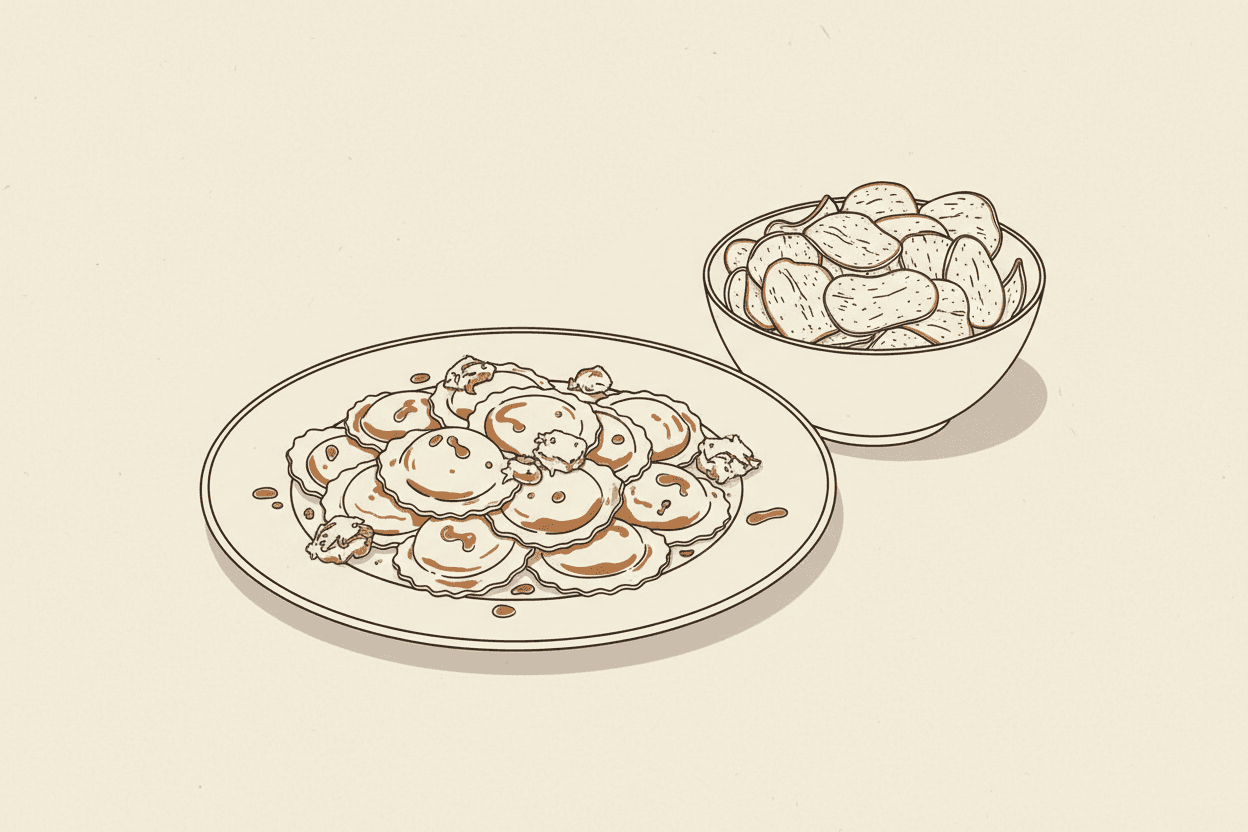
In mid-September 2026, federal regulators published separate allergy alerts warning that frozen cheese ravioli contained undeclared lobster and seasoned potato chips contained undeclared soy. The twin actions from the Food and Drug Administration illustrate how manufacturing and packaging disconnects can make printed ingredient lists fail consumers who live with life-threatening food allergies.
Key takeaways:
- Deano's Pasta and Saratoga Potato Chips issued September 2026 allergy alerts for undeclared lobster in frozen triangoli ravioli and undeclared soy in flavored potato chips.
- Crustacean shellfish and soy are among the nine major U.S. food allergens mandated for declaration under federal law, and undeclared allergens are a leading reason for US food recalls.
- Packaging breakdowns mean a printed ingredient list can be legally compliant on paper while failing to reflect the physical contents inside the bag.
- Shoppers managing food allergies must cross-reference UPCs and specific lot or best-by codes, retain original packaging, and exercise caution if a food item deviates from its normal appearance, smell, or taste.
What happened
On September 24, 2026, the FDA published an official company recall notice from Deano's Pasta of Somerville, Massachusetts. According to the Deano's Pasta allergy alert notice, the firm initiated a voluntary recall of approximately 20 pounds of Pear and Pecorino Triangoli Ravioli because the product may contain undeclared lobster. The issue came to light after a single consumer complaint prompted an immediate internal audit. That review discovered lobster-containing pasta had been distributed in packaging that did not reveal the presence of lobster. The company attributed the mix-up to a temporary breakdown in its production and packaging processes. No illnesses have been reported.
Six days earlier, on September 18, 2026, the FDA posted a separate alert detailed in the Saratoga Potato Chips allergy alert notice from Saratoga Potato Chips of Fort Wayne, Indiana. The manufacturer recalled 7.75-ounce bags of J. HIGGS Loaded Bacon and Cheddar Potato Chips because the packages failed to declare soy. The FDA notice did not specify the root cause of the labeling error. As with the pasta, no illnesses have been reported.
These concurrent announcements highlight how easily an allergen can slip through commercial packaging controls. Whether producing filled pasta in New England or snack chips in the Midwest, manufacturers face ongoing hurdles in ensuring that what is inside a retail pouch matches the exterior label.
What changed?
Both announcements triggered immediate market withdrawals of the affected production runs. Recalled units should be returned or thrown away.
Deano's Pasta recalled four specific lots of one product rather than its whole ravioli line.
For Saratoga Potato Chips, the recall removed two specific date codes from discount grocery shelves across multiple states. While federal allergen requirements under the Food Allergen Labeling and Consumer Protection Act have not changed, enforcement mechanisms rely heavily on these targeted, batch-specific alerts to mitigate exposure risks once an omission is uncovered.
Who is affected?
The two recalls affect different products, stores and states.
The Deano's Pasta recall is limited geographically to Massachusetts. The affected Pear and Pecorino Triangoli Ravioli was sold frozen in 1-pound clear plastic bags across retail stores in Massachusetts between August 10 and September 22, 2026. Consumers should check their freezers for the following packaging markers:
- Product Name: Deano's Pasta Pear and Pecorino Triangoli Ravioli
- Net Weight: 1 lb (frozen)
- UPC: 644216993994
- Lot Codes: 090126126, 082526126, 081826126, and 073126126 (printed directly under the best-by date)
The Saratoga Potato Chips recall affects a broader geographic footprint through Save A Lot grocery stores. The recalled J. HIGGS Loaded Bacon and Cheddar Potato Chips were distributed to retail outlets in five states: Indiana, Kentucky, Ohio, Tennessee, and Maryland. The affected product details include:
- Product Name: J. HIGGS Loaded Bacon and Cheddar Flavored Potato Chips
- Package Size: 7.75 oz bags
- UPC: 0-51933-31645-4
- Date Codes: "Best if USED BY DEC 11 26" and "DEC 18 26" printed on the top-right corner of the bag
The populations most critically at risk are individuals who live with severe allergies to crustacean shellfish or soy. For these shoppers, accidental ingestion of an undeclared allergen can trigger rapid immunological responses, including hives, swelling, gastrointestinal distress, and life-threatening anaphylaxis.
What it means for shoppers
These recalls underscore a harsh reality of packaged foods: an ingredient list can be completely compliant on paper for the recipe it was designed to describe, yet entirely wrong for the physical food inside the wrapper. A shopper reading the pear and pecorino label would have had no warning of lobster.
When verifying food at home, checking only the brand name or front-of-pack description is not enough. Shoppers managing food allergies must cross-reference the UPC barcode alongside the lot code or best-by date string. If both match the recall alert, the food should not be sampled or consumed.
Beyond code matching, it is sensible for people with food allergies to stop eating a packaged food that looks, smells or tastes different from usual. In the Deano's Pasta incident, it was an alert consumer complaint that initially triggered the company audit.
Shoppers should also adopt the habit of keeping original retail packaging until the entire contents are consumed. Discarding a cardboard sleeve or outer pouch leaves leftover food untraceable when mid-month recall notices appear. Those who want a deeper understanding of labeling exemptions can read our explainer on food allergen labels explained.
The background
Under the Food Allergen Labeling and Consumer Protection Act (FALCPA) of 2004, federal law requires clear labeling of major food allergens. Originally covering eight categories, the law was expanded by the FASTER Act of 2021, which added sesame as the ninth major allergen effective in 2023. Today, the major U.S. allergens identified by the FDA food allergies guidance are milk, eggs, peanuts, tree nuts, wheat, fish, crustacean shellfish, soybeans, and sesame.
Despite clear statutory rules, undeclared allergens remain a leading reason for food recalls across the United States. The causes described in recall notices are usually ordinary production or packaging errors rather than deliberate concealment.
Such breakdowns include running the correct product through a packaging line loaded with the wrong film, failing to update label artwork following a spice blend reformulation, or experiencing cross-contact on shared production equipment. Similar labeling friction exists throughout the industry, as explored in reports like the Whole Foods cheese recall over undeclared egg lysozyme and in restaurant rules such as the 2026 FDA Food Code's sesame and allergen menu changes.
It is important to note the scientific limitations of recall reporting: published government notices cannot predict individual biological sensitivity. Allergen threshold levels vary widely across sensitized individuals, and regulatory notices do not establish the exact parts-per-million concentration present in every individual mislabeled package.
What to watch next?
Consumers who possess the affected lots of Deano's ravioli or J. HIGGS potato chips should return them to the place of purchase for a full refund or safely dispose of them.
The Deano's notice attributes its error to a temporary breakdown in production and packaging processes; the Saratoga notice does not give a cause. Neither company has reported illnesses.
Try Aurascan
See what is really in the food you buy.
Common questions
- Why was Deano's Pasta ravioli recalled in September 2026?
- Deano's Pasta recalled approximately 20 pounds of frozen Pear and Pecorino Triangoli Ravioli because an audit following a customer complaint revealed the product may contain undeclared lobster due to a packaging breakdown.
- Which states were included in the J. HIGGS potato chips recall?
- The recalled J. HIGGS Loaded Bacon and Cheddar Potato Chips, distributed by Saratoga Potato Chips, were sold at Save A Lot stores across Indiana, Kentucky, Ohio, Tennessee, and Maryland.
- What are the nine major food allergens regulated in the United States?
- Under federal law, the nine major allergens are milk, eggs, peanuts, tree nuts, wheat, fish, crustacean shellfish, soybeans, and sesame.
- How can an allergen be present if it is not on the ingredient list?
- Packaging errors, line mix-ups, or recipe modifications can result in the correct printed pouch being filled with an unintended food product, leaving dangerous allergens off the label.
- What should consumers do if they have recalled ravioli or chips?
- Consumers who have purchased the matching UPC and lot or best-by codes should not consume the product, especially if allergic, and should return it to the retailer for a refund or discard it.
- Are undeclared allergens a common cause of food recalls?
- Yes. Undeclared allergens are one of the most frequent reasons for US food recalls, which is why matching UPCs and lot codes against recall notices matters for people with food allergies.
Sources
In this series
Guide
Lior Ground Cinnamon Recalled for Lead After State TestingGuide
Brown and Powdered Sugar Recalled for Possible Wheat KernelsGuide
FDA's Front-of-Package Nutrition Box Is Still Not FinalGuide
FDA Puts Caffeine Labeling on Its 2026 Agenda: What Cans HideGuide
Red 3 Has Four Months Left in U.S. Food: What to CheckGuide
New York's Food Chemical Disclosure Act Awaits Hochul
Related guides
Latest News
Walmart bettergoods Lemon Alfredo Fettuccine Listeria RecallFrozen bettergoods Lemon Alfredo Fettuccine sold at Walmart was recalled for possible Listeria. The UPC, lot codes and how to check your freezer.
Latest News
So Delicious Salted Caramel Cluster Recalled Again for StonesDanone recalled So Delicious Salted Caramel Cluster pints for stones in the cashew pieces, nine months after the first recall. Dates and UPC.
Latest News
Graziers Raw Milk Cheese Recall: E. coli Outbreak Sickens 13Graziers raw milk cheddar and jack cheeses were recalled after an E. coli O26 outbreak hit 13 people, most of them 5 or younger. What to check.
Try it on your own groceries
Scan your next label with Aurascan
Point the camera at any ingredient list and get the same evidence-graded read you see here.
Open the scannerLabel-reading intel, weekly.
What changed on food labels this week — bans, recalls, and new guides.