
Does the FDA currently require caffeine milligram amounts on energy drink cans?
No. Under current federal law, FDA requires caffeine to be declared in the ingredient list when added directly, but listing the exact milligram quantity is voluntary.
The FDA listed caffeine-content labeling guidance as a 2026 priority. Today the amount is voluntary. What a Monster or Celsius can tells you, and what it does not.
9/14/2026 · 6 min read · Chris Carrillo · Reviewed by Armin Rad, Co-Founder & CTO, Aurascan · Last reviewed 9/14/2026
Editorial accountability
Written by Chris Carrillo. Reviewed by Armin Rad, Co-Founder & CTO, Aurascan. It cites 3 sources; use the source list and methodology to check the evidence directly.
Walk through a crawlable sample result, including what comes from the label, what needs evidence, and what the scanner cannot conclude.
View the sample resultWASHINGTON - Earlier this year, the US Food and Drug Administration placed draft guidance titled "Labeling Caffeine Content in Foods and Beverages" on its 2026 Human Foods Program agenda. While federal law mandates caffeine on ingredient lists when added directly, it does not require exact milligram disclosures on energy drink cans.
Key takeaways:
On July 2, 2026, Food Dive reported that the US FDA updated its Human Foods Program guidance agenda for 2026 to include upcoming draft guidance titled "Labeling Caffeine Content in Foods and Beverages." The listing is a first federal step toward standardizing how caffeine is quantified on consumer goods.
Under existing federal regulations, manufacturers must declare caffeine in the ingredient statement if it is added directly as an isolated substance. However, federal law has never forced beverage makers to declare the specific milligram quantity anywhere on the Nutrition Facts or Supplement Facts panels.
This agenda update comes at a time of heightened scrutiny from public health organizations, consumer advocacy groups, and state regulators. State-level actions, including an inquiry opened by the Texas Attorney General into Celsius Holdings in June 2026 regarding its marketing and product disclosures, reflect growing concern over how high-caffeine beverages are presented to the public, particularly younger demographics.
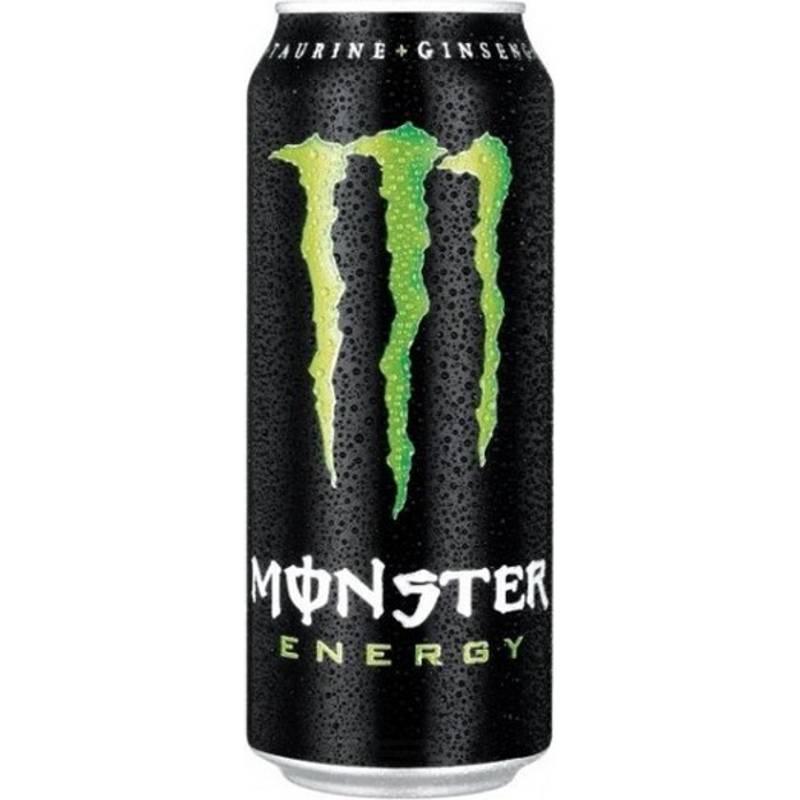
Monster
Monster Energy Drink Green 16 Oz Can
Standout ingredient: CYANOCOBALAMIN (VIT. B12)
The planned FDA guidance will formally introduce agency recommendations on how food and beverage makers should declare caffeine concentrations. While the draft guidance is still pending publication, its inclusion on the active 2026 Human Foods Program agenda signals a shift toward explicit milligram declarations on commercial packaging.
Historically, the FDA has treated caffeine under conventional food standards (21 CFR 182.1180), which recognizes caffeine in cola-type beverages up to 0.02 percent (roughly 71 mg per 12 fluid ounces) as Generally Recognized as Safe (GRAS). However, that standard applies specifically to colas, leaving modern energy drinks, canned cold brews, and functional seltzers in a distinct category without a specific, mandatory milligram cap or uniform quantitative disclosure mandate.
If the forthcoming draft guidance mirrors standard nutritional labeling frameworks, brands may soon face uniform recommendations to publish exact caffeine levels per serving and per container. This shift would harmonize transparency between conventional energy drinks and energy beverages classified as dietary supplements.
The scope of this regulatory development spans conventional beverage makers, dietary supplement brands, and everyday shoppers who consume caffeinated products. Energy drink producers, including major brands like Monster, Celsius, Red Bull, and Alani Nu, sit at the center of this transition.
Currently, energy drinks on grocery shelves fall into two distinct regulatory pathways with differing label formats:
Adolescents, pregnant individuals, and people with underlying cardiovascular conditions represent sensitive populations heavily affected by hidden or ambiguous caffeine levels. Clear milligram declarations help these groups monitor their daily intake and avoid accidental overconsumption across combined sources.
Is a can of Celsius Peach Vibe clean?
Guess before you scroll.
Aurascan says: Flagged
The main flag is Citric Acid.
When a shopper picks up an energy drink can today, what they can and cannot see depends entirely on how the manufacturer chooses to package the product. In many cases, voluntary declarations already exist, but standard placement is not legally uniform.
When examining a can of Monster Energy or Celsius today:
Shoppers should also note that dietary variables create vast differences in individual tolerance. One major uncertainty in nutritional science is individual caffeine metabolism, which is influenced by genetic variations in the CYP1A2 liver enzyme and cannot be predicted simply by reading a label.
Federal oversight of caffeine has evolved through a patchwork of food additive rules, advisory updates, and targeted safety enforcement. According to official consumer guidance from the FDA, up to 400 milligrams of caffeine per day is not generally associated with dangerous, negative effects in healthy adults.
Despite this adult threshold, commercial energy drinks typically contain between 41 mg and 246 mg of caffeine per 12 fluid ounces, according to regulatory data. Consumers must check the Nutrition Facts panel or verified manufacturer label disclosures to determine the specific milligram count for a given container, as individual brand formulations vary widely across product sizes.
In recent years, the FDA took strong enforcement action against bulk pure and highly concentrated caffeine powders and liquids under dietary supplements guidance, deeming them adulterated due to the severe risk of accidental lethal overdose. However, RTD (ready-to-drink) packaged energy drinks remained governed by general food labeling standards.
State-level initiatives such as New York's Food Chemical Disclosure Act and Texas' paused 44-ingredient warning label have intensified the focus on ingredient transparency across the beverage industry. For what the cans themselves contain, see our Red Bull vs Celsius comparison and the taurine review.
The agenda lists the caffeine labeling document as a priority but gives no release date. Once the draft is published, it will open a public comment period in which food scientists, beverage manufacturers, and health advocates can submit formal feedback.
Key developments to monitor include:
See what is really in the food you buy.
Scan it yourself. Get the Aurascan appIf you want to know exactly what is inside your favorite canned drinks and packaged foods, you can scan the barcode using the Aurascan app to break down every ingredient and additive with cited scientific evidence.
No. Under current federal law, FDA requires caffeine to be declared in the ingredient list when added directly, but listing the exact milligram quantity is voluntary.
The FDA states that 400 milligrams per day, equivalent to about four to five cups of brewed coffee, is not generally associated with dangerous, negative effects in healthy adults.
According to FDA guidance data, commercial energy drinks typically range between 41 mg and 246 mg of caffeine per 12 fluid ounces, depending on the brand and formulation.
Manufacturers choose whether to market their beverage as a conventional food (requiring a Nutrition Facts panel) or as a liquid dietary supplement (requiring a Supplement Facts panel), which involves different labeling rules.
The FDA included the draft guidance titled 'Labeling Caffeine Content in Foods and Beverages' on its Human Foods Program guidance agenda for 2026, as reported in July 2026.
Aurascan turns product labels into plain-English ingredient explanations and source-backed context.
Scan your next label with AurascanWhat changed on food labels this week — bans, recalls, and new guides.
Source labels distinguish peer-reviewed research, regulatory material, and Aurascan label data when that classification is available.
FDA's dye pledge tracker (updated Sept 10, 2026) lists In-N-Out as done: Red 40 out of the strawberry shake and pink lemonade. What replaced it, what's next.
Texas SB 25 would put a warning on foods with any of 44 ingredients (dyes, BHT, bromate) from Jan 1, 2027. A federal court paused it. Who it covers, what to watch.
General Mills says every U.S. cereal is now free of certified dyes (Aug 27, 2026), yet the FDA tracker still lists it 'In progress.' What remains and what to look for.