
Latest News · October 7, 2026 · 6 min read
Do Sweetener Blends Add Up? A New Review Says No
A toxicology review says six common low- and no-calorie sweeteners share no target organs or modes of action, so the authors argue their risks do not add up.
By Chris Carrillo · Reviewed by Armin Rad, Co-Founder & CTO, Aurascan · October 7, 2026
Every article is checked against primary sources before publication. How we review

A new toxicology review published on October 3, 2026, concludes that low- and no-calorie sweeteners do not share the common mechanisms, chemical structures, or target organ effects needed to trigger cumulative risk assessments. Analyzing safety data across six major sweeteners, the authors argue that the evidence reinforces "the adequacy of individual acceptable daily intakes (ADIs) for safety evaluation."
Key Takeaways
- A peer-reviewed toxicology paper published October 3, 2026, reviewed six low- and no-calorie sweeteners and concluded they lack the shared structures, target organs, or biological mechanisms required for cumulative risk assessment.
- The authors conclude that "evidence supports no cumulative effects at typical intake levels," which they say reinforces the adequacy of individual acceptable daily intakes (ADIs).
- Some packaged foods list several sweeteners at once; the Open Food Facts listing for Core Power Chocolate High Protein Milk Shake names monk fruit juice concentrate, stevia leaf extract, acesulfame potassium and sucralose.
- The paper is a review of existing toxicology and microbiome evidence, not a new feeding study of sweetener mixtures, and its funding and conflict-of-interest statements were not available to us.
What happened
On October 3, 2026, researchers H. R. Schaefer, C. L. Frankenfeld, and D. Wikoff published a peer-reviewed review titled "Low- and No-Calorie Sweeteners Lack Shared Target Organs or Modes of Action Required for Cumulative Risk Assessment" in the Elsevier journal Food and Chemical Toxicology (article 116424, doi:10.1016/j.fct.2026.116424; PubMed abstract).
The full text of the publication is behind a publisher paywall, so the details here reflect what the abstract reports. According to the abstract, the research examined regulatory cumulative risk assessment (CRA) frameworks to test whether grouping low- and no-calorie sweeteners (LNCS) together under combined hazard models is scientifically warranted. The abstract frames the question this way: "interest has grown in potential combined effects from concurrent exposure." The review set out to examine "(a) whether existing cumulative risk assessment (CRA) frameworks are appropriate for LNCS and (b) their applicability to aspartame, saccharin, sucralose, acesulfame-K, steviol glycosides, and cyclamate."
The authors' affiliations, funding sources and conflict-of-interest statements were not included in the Europe PMC or Crossref records, and the full text is paywalled, so we could not report who funded the work. Readers weighing the conclusion should keep that gap in mind.
What changed
This publication does not change any regulator's rules; it is an argument about method. According to the abstract, existing cumulative risk assessment frameworks "rely on grouping chemicals with shared structure or mode of action." The authors asked whether the six sweeteners meet that test.
In the abstract's words: "Regulatory CRA guidance and safety evaluations for each LNCS were reviewed. Toxicological data from repeat-dose and reproductive/developmental studies were synthesized by organ system and effect thresholds. A structured review of human microbiome studies was also conducted." Evidence was then "assessed for shared structure, target organ toxicity, and mode of action relevant to CRA frameworks." They evaluated six compounds: aspartame, saccharin, sucralose, acesulfame potassium (ace-K), steviol glycosides, and cyclamate. Cyclamate is not approved as a sweetener in U.S. food; the review includes it because it is used in other countries.
The abstract reports three main findings:
- "Existing frameworks rely on grouping chemicals with shared structure or mode of action; however, LNCS lack common structural features, toxicological profiles, and target organ effects."
- "Kidney findings observed at high doses were inconsistent, species-specific, and considered toxicologically insignificant."
- "Microbiome effects were variable, sweetener-specific, and not indicative of cumulative impact."
Based on these findings, the authors concluded that "LNCS do not exhibit properties necessary for cumulative assessment under established CRA methods. Evidence supports no cumulative effects at typical intake levels, reinforcing the adequacy of individual acceptable daily intakes (ADIs) for safety evaluation."
Who is affected
The question matters because sweeteners are often used together. The FDA's page on aspartame and other sweeteners notes that acesulfame potassium "is often combined with other sweeteners." On a label, that shows up as more than one sweetener in the same ingredient list.
One example from our scanned catalog: the Open Food Facts listing for Core Power Chocolate High Protein Milk Shake includes monk fruit juice concentrate, stevia leaf extract, acesulfame potassium and sucralose. That is four sweetening ingredients in one bottle. Two of them, acesulfame potassium and sucralose, are among the six sweeteners the review covers, and stevia leaf extract is a source of steviol glycosides, a third. Monk fruit was not part of the review.
The review does not test Core Power or any other specific product. It asks a general question: if a person takes in several of these sweeteners, should regulators assess their risks together rather than one at a time?
Scan preview
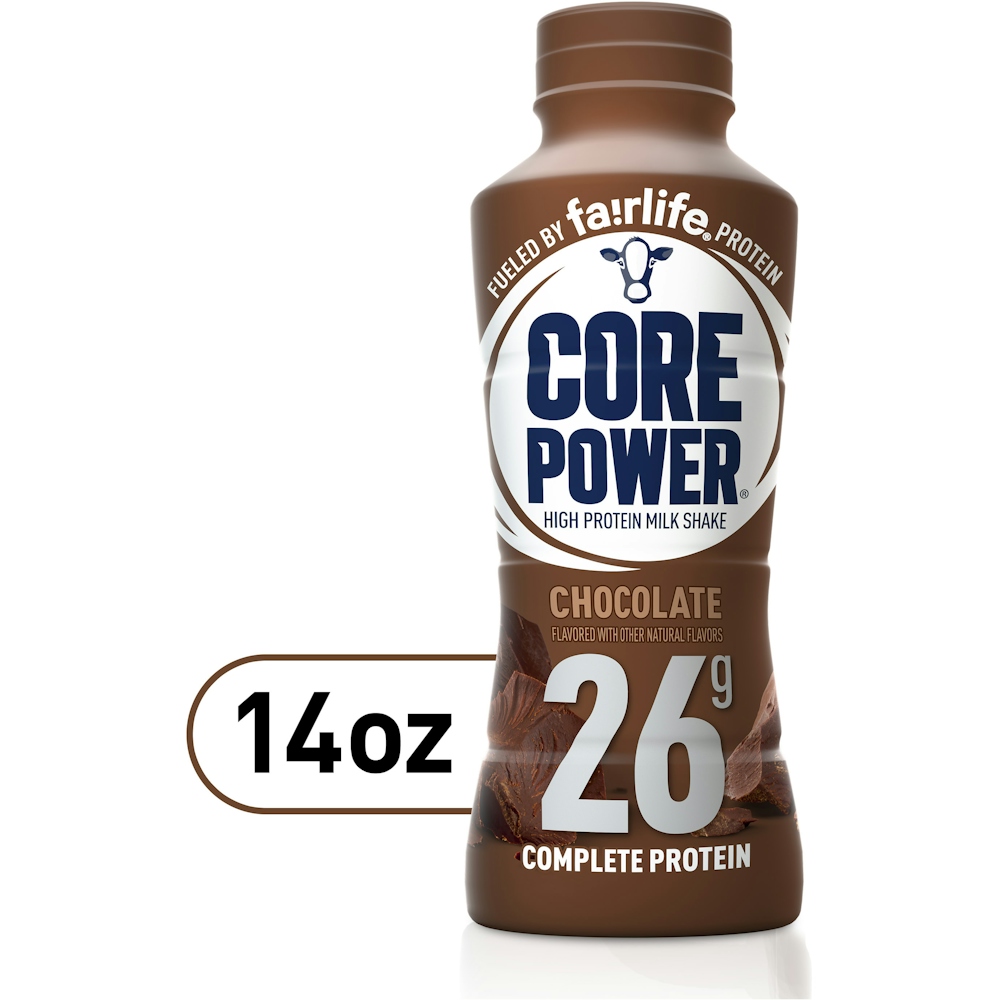
Core Power
Core Power Chocolate High Protein Milk Shake 14 Fl Oz
FILTERED LOW FAT GRADE A MILK · NATURAL FLAVORS · CARRAGEENAN
Standout ingredient: VITAMIN D3
Analysis by Aurascan. The app shows the full breakdown and its sources.
What it means for shoppers
For shoppers, the practical point is that the safety numbers regulators publish are per sweetener. The FDA lists a separate acceptable daily intake (ADI) for each one.
The FDA's sweeteners page lists these ADIs:
- Aspartame: 50 milligrams per kilogram of body weight per day (mg/kg bw/d)
- Acesulfame potassium (Ace-K): 15 mg/kg bw/d
- Sucralose: 5 mg/kg bw/d
- Saccharin: 15 mg/kg bw/d
- Rebaudioside A (a steviol glycoside): 12 mg/kg bw/d
Each of these numbers applies to one sweetener on its own. They are not meant to be added together into a combined limit, and neither the FDA page nor the review offers a combined figure for blends. The review's argument is that, because the six sweeteners do not share target organs or modes of action, assessing each against its own ADI is adequate.
This review is one view in an ongoing debate, not a regulatory decision. Its conclusion is stated for "typical intake levels," and it is based on existing studies rather than a new experiment with sweetener mixtures.
The background
The cumulative-risk question arises because many labels list more than one sweetener, and each sweetener was evaluated separately. The authors' case rests on the grouping rule: cumulative frameworks group chemicals that share a structure or a mode of action, and the abstract says the six sweeteners "lack common structural features, toxicological profiles, and target organ effects."
Two of the findings address specific organ systems. On the kidney, the abstract says findings at high doses "were inconsistent, species-specific, and considered toxicologically insignificant." On the gut, the authors' structured review of human microbiome studies found effects that "were variable, sweetener-specific, and not indicative of cumulative impact." Neither finding means the sweeteners have no effects; the claim is that their effects do not line up in a way that would add together.
For what each sweetener is and how it appears on labels, see Is Acesulfame Potassium (Ace-K) Safe? Uses and Labels and What Is Sucralose? Uses, Safety, Baking Risks, and Labels. For a separate review of sucralose and gut bacteria in human trials, see Sucralose and Gut Bacteria: New Review of 10 Human Trials.
What to watch next
Several limits apply to this review:
- The paper is an analytical review of previously collected studies, not a newly conducted clinical feeding trial directly exposing animals or humans to multi-sweetener mixtures.
- The authors' conclusion regarding absent cumulative risk specifically applies to "typical intake levels" and does not provide new empirical safety data for outlier high-intake populations.
- The review focused exclusively on six specific compounds (aspartame, saccharin, sucralose, ace-K, steviol glycosides, and cyclamate), leaving out other common market sweeteners such as monk fruit extracts, allulose, advantame, neotame, and sugar alcohols like erythritol or xylitol.
- The abstract does not detail the inclusion criteria, weighting methodology, or underlying quality assessments applied during the authors' structured review of human microbiome studies.
- The abstract does not report any regulator endorsing or adopting the authors' conclusion.
- The authors' funding and conflict-of-interest statements were not available to us.
For now, the FDA's published ADIs remain per sweetener, which is the approach this review argues is adequate.
Try Aurascan
See what is really in the food you buy.
Common questions
- What is cumulative risk assessment for food additives?
- Cumulative risk assessment evaluates the combined health risks from simultaneous exposure to multiple chemicals that act through a shared biological mechanism or damage the same target organ.
- Which sweeteners were evaluated in the October 2026 review?
- The review analyzed six specific sweeteners: aspartame, saccharin, sucralose, acesulfame potassium (ace-K), steviol glycosides, and cyclamate.
- Is cyclamate approved for food products in the United States?
- No. Cyclamate is not approved as a sweetener in U.S. food; the review included it because it is used in other countries.
- Why do food manufacturers combine multiple sweeteners in one product?
- The FDA notes that acesulfame potassium "is often combined with other sweeteners." Individual manufacturers' reasons for a given blend are not stated on the label.
- Can you add individual Acceptable Daily Intakes together to find a total limit?
- No. The FDA lists a separate ADI for each sweetener, and neither the FDA nor this review gives a combined figure for blends. The review argues that assessing each sweetener against its own ADI is adequate at typical intake levels.
- Did the study include new animal feeding experiments on sweetener mixtures?
- No. The paper is a review of existing regulatory guidance, safety evaluations, repeat-dose and reproductive/developmental toxicology data, and human microbiome studies.
Sources
- Low- and No-Calorie Sweeteners Lack Shared Target Organs or Modes of Action Required for Cumulative Risk Assessment (doi.org)
- Low- and No-Calorie Sweeteners Lack Shared Target Organs or Modes of Action Required for Cumulative Risk Assessment (PubMed Record) (pubmed.ncbi.nlm.nih.gov)
- Aspartame and Other Sweeteners in Food (fda.gov)
In this series
Guide
Cocoa Processed With Alkali: What Dutch Cocoa Means on LabelsGuide
Ultra-Processed Food, Sleep and Type 2 Diabetes RiskGuide
Red Meat vs Plant-Based Meat: 10-Week Trial ResultsGuide
Acacia Gum (Gum Arabic): What It Is and Why FDA Calls It FiberGuide
Inulin and Chicory Root Fiber: What the Label MeansGuide
Sugary drinks and ADHD symptoms: what a new review found
Related guides
Latest News
Two Weeks of Ultra-Processed Food Didn't Dull Satiety HormonesA small Dutch trial fed young adults diets of about 95% ultra-processed food for two weeks. Gut fullness hormones did not change, though hunger ratings shifted slightly.
Latest News
Study: Most Critics of the Nova UPF System Had Industry TiesA review in AJPH found 68.5% of authors of 69 articles critiquing the Nova ultra-processed food system had food-industry ties. What it does and does not show.
Ingredient Reviews
Glycerol Ester of Rosin: The Pine Ingredient in Fanta and FrescaFanta Orange and Fresca both list glycerol ester of rosin. What this pine-derived ester gum is, the US 100 ppm drink cap, and EFSA's 2023 ADI.
Try it on your own groceries
Scan your next label with Aurascan
Point the camera at any ingredient list and get the same evidence-graded read you see here.
Open the scannerGet food recall alerts + a weekly digest
An email when a food recall is announced, plus one weekly roundup of label news and new guides.
We email a confirmation link first - nothing is sent until you click it. Unsubscribe anytime. Privacy