
Latest News · October 1, 2026 · 8 min read
California Will Flag Sugary Restaurant Drinks With an Icon
SB 869, signed Sept. 28, makes 20+ location chains mark drinks with 50g+ added sugar with a sugar-cube icon by 2029. What counts and what's exempt.
By Chris Carrillo · Reviewed by Armin Rad, Co-Founder & CTO, Aurascan · October 1, 2026
Every article is checked against primary sources before publication. How we review
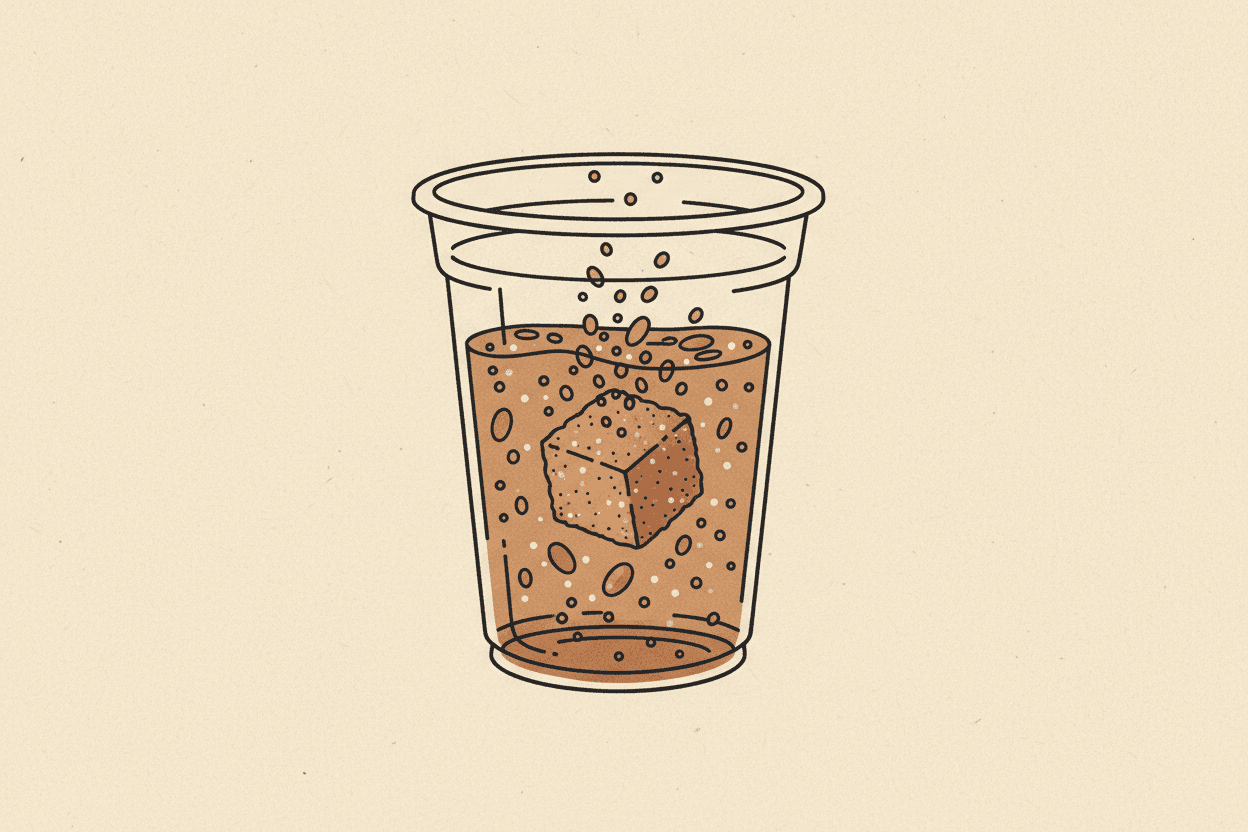
California Governor Gavin Newsom signed Senate Bill 869 into law on September 28, 2026, establishing a mandatory added-sugar safety warning for chain restaurant drink menus across the state. Under the new statute, qualifying dining establishments must place a dedicated icon depicting a sugar cube inside a black triangle next to prepared fountain and blended drinks that contain a full day's worth of added sugar. The statutory compliance deadline gives restaurant operators until January 1, 2029, to implement the graphics and required explanatory statements across physical, drive-through, and digital menus.
Key takeaways:
- Governor Gavin Newsom signed SB 869 on September 28, 2026, creating an added-sugar safety warning requirement in the California Retail Food Code.
- By January 1, 2029, chain restaurants with 20 or more locations must display an icon showing a sugar cube inside a black triangle next to standard beverage items containing 50 grams or more of added sugars.
- The regulation specifically applies to prepared and poured fountain drinks and blended beverages that meet or exceed 100 percent of the FDA Daily Value for added sugars.
- Prepackaged beverages that already carry added sugar labeling, alcoholic drinks, and spoonable frozen dairy products are explicitly exempt from the menu rule.
- Drive-through menu boards must display the icon directly adjacent to qualifying items, while dining room operators can use physical menu boards or digital QR code alternatives backed by printed materials.
What happened
On September 28, 2026, Governor Gavin Newsom signed Senate Bill 869, titled "Restaurant menus: added sugar warnings" (bill text), introduced by Senator Akilah Weber Pierson. The legislation was approved as Chapter 723 and filed with the California Secretary of State on the same day. The signing was part of a broader package of food and public health legislation that also included Assembly Bill 2244 and Senate Bill 977.
SB 869 formally amends the California Retail Food Code by adding Article 8.7, designated as "Added Sugar Safety Warnings" within Health and Safety Code Sections 114094.15 through 114094.17. The new statute creates a standardized visual warning mandate for high-sugar beverages sold at large restaurant chains operating within California borders.
The law gives covered chains until January 1, 2029, to add the icon and the explanatory statement to their drive-through, in-store and digital menus.
What changed
SB 869 establishes a strict, objective threshold for what constitutes a high-added-sugar beverage on a restaurant menu. Under the statute, "high added sugar content" is defined as containing 100 percent or more per serving of the daily value for added sugar established by the U.S. Food and Drug Administration (FDA) as of January 1, 2026. According to official FDA guidance, the Daily Value for added sugars is 50 grams per day based on a standard 2,000-calorie diet, aligning with federal dietary guidance recommending that individuals limit added sugars to less than 10 percent of total daily caloric intake.
Whenever a covered chain restaurant offers a standard menu beverage item that meets or exceeds this 50-gram threshold, it must clearly and conspicuously display an "added sugar icon." The statute specifies the visual format of this symbol as an image of a sugar cube inside a black triangle. Specific artwork dimensions beyond this descriptive phrase were not disclosed in the legislative text.
Along with the graphic icon, chain restaurants must provide a clear and conspicuous statement explaining its presence. The statement must inform consumers that the icon indicates the drink contains added sugar meeting or exceeding the total recommended daily limit. Notably, the bill specifies that the literal word "warning" is not legally required to appear within this accompanying statement.
Menu placement rules vary depending on how the customer orders:
- Drive-through menus: The sugar cube icon must appear directly and visibly on the drive-through board, situated immediately adjacent to each qualifying beverage and adjacent to each specific size that crosses the 50-gram threshold.
- In-store ordering: Chains may place the icon directly on physical menus or printed menu boards, or they may choose a digital format. Permissible digital formats include a prominent QR code linking directly to an online menu or nutrition guide. Chains choosing the digital path must include a statement notifying diners of the digital disclosure and maintain a physical backup, such as a printed handout, booklet, chart, or grid for patrons who cannot access digital tools.
The statute allows enforcement officers to verify compliance visually or through other reasonable verification methods. According to the Legislative Counsel's digest, violations of the California Retail Food Code are misdemeanors, so SB 869 expands the scope of an existing crime. The bill does not set fine amounts specific to SB 869.
Who is affected
The scope of SB 869 is strictly defined around specific types of retail food businesses and menu offerings. A business is deemed a "chain restaurant" under the new Article 8.7 if it meets three statutory criteria: it is a restaurant or similar retail food establishment (including a cafe or deli located inside another host retail store), it operates as part of a network of 20 or more locations, and those locations operate under the same commercial brand name offering substantially the same menu items.
The warning requirement applies exclusively to a "standard menu beverage item." This covers beverages prepared or poured at the establishment and listed explicitly on the chain's menu boards or menus, including fountain drinks, blended beverages and variable items listed as a single menu entry.
Conversely, the law outlines clear carve-outs where the sugar-cube icon is not required:
- Prepackaged beverages: Bottled or canned drinks that already carry added sugar labeling are exempt from the menu warning icon.
- Temporary and test items: Drinks appearing on a menu for fewer than 60 days per year, or market-testing items offered for fewer than 90 consecutive days, do not need to display the icon.
- Customer customizations: Standard beverages that do not inherently exceed 50 grams of added sugar, but cross the threshold only because a customer requests extra syrup pumps, sweeteners, or flavor shots, are exempt.
- Excluded beverage classes: Alcoholic drinks and spoonable frozen dairy products are expressly excluded from the scope of standard menu beverage items.
- Third-party delivery apps: Menus hosted on third-party online delivery platforms not controlled by the chain restaurant are exempt from the statutory definition of a menu under this article.
The legislative text did not disclose a comprehensive list of specific chains, brands, or distinct beverage items that currently cross the 50-gram threshold, nor did it disclose an estimate of the total proportion of restaurant drinks that will require the icon.
What it means for shoppers
For consumers at a fast-food counter, cafe or drive-through lane in California, SB 869 turns label math into a visual cue. Packaged grocery items show exact gram amounts of added sugar on the Nutrition Facts panel, but fountain and blended drinks poured behind the counter have no such panel. If you want to spot added sugar on packaged labels, see Added Sugar Has Dozens of Label Names: The Ones to Know.
When the law takes full effect on January 1, 2029, a shopper ordering a large sweetened beverage will immediately see the black-triangle sugar-cube icon next to qualifying sizes. Because the warning triggers at 100 percent of the Daily Value, the icon means one serving meets or exceeds the 50-gram Daily Value for added sugars, which is based on a 2,000-calorie diet.
A few practical details to keep in mind:
- Size matters: A small or medium fountain drink might fall under 50 grams, while a large or extra-large pour of the exact same recipe triggers the icon. Menus that list individual sizes must place the icon adjacent to each specific size that qualifies.
- Digital menus: Where a chain uses a QR code instead of icons on the in-store menu board, it must also offer an alternative, such as a menu handout, booklet, chart or grid, for customers who cannot access the digital version.
- Added sugar, not total sugar: The icon tracks added sugar, not total sugar.
SB 869 was signed alongside AB 2244, which creates a California non-ultraprocessed seal; for background, see California's Non-Ultraprocessed Seal: Newsom Decides by Sept 30 and the Governor's announcement.
The background
Packaged foods in grocery aisles already list Added Sugars on the Nutrition Facts panel, and the FDA sets the Daily Value for added sugars at 50 grams per day. Drinks poured behind a restaurant counter carry no such panel, which is the gap SB 869 targets for large chains.
Senator Akilah Weber Pierson authored the measure. Because it sits in the California Retail Food Code, the same rule applies statewide.
There are limits to what is known. SB 869 does not cite specific clinical health-outcome data within the bill text itself. Furthermore, it is not known whether restaurant or beverage industry groups intend to pursue legal challenges against the state before the 2029 implementation date.
What to watch next
January 1, 2029, is the statutory compliance deadline. Before then, a few things are worth watching.
First, watch whether state or county health agencies publish guidance or standard artwork. The bill describes the icon only as an image of a sugar cube inside a black triangle; official dimensions were not disclosed.
Second, watch whether chains reformulate drinks to fall below the threshold rather than carry the icon; the bill does not list which drinks qualify. Third, watch whether chains choose printed menu icons or QR code disclosures with printed backups.
Want to see how much added sugar is in the bottled and canned drinks you buy? Scan the barcode with the free Aurascan app to see each ingredient explained with cited evidence.
Try Aurascan
See what is really in the food you buy.
Common questions
- What is California SB 869?
- California SB 869 is a state law signed on September 28, 2026, that requires chain restaurants with 20 or more locations to place an added-sugar safety warning icon next to prepared drinks containing 50 grams or more of added sugars.
- What does the added-sugar warning icon look like?
- The statutory warning icon consists of an image of a sugar cube inside a black triangle, placed immediately adjacent to qualifying menu items and sizes.
- When must restaurants comply with SB 869?
- Chain restaurants must fully implement the warning icon and required explanatory statements on or before January 1, 2029.
- What drinks are exempt from the sugar-cube warning?
- Exemptions include prepackaged drinks that already carry added sugar labeling, alcoholic beverages, spoonable frozen dairy products, drinks on the menu under 60 days a year, test items offered under 90 consecutive days, and drinks that exceed 50 grams only due to custom customer additions.
- Do drive-through menus have to display the warning?
- Yes. The law requires the added-sugar icon to appear directly on drive-through menu boards next to each qualifying drink item and size.
- Can restaurants use QR codes instead of printing the icon on dining room boards?
- Yes. For in-store ordering, restaurants may use a digital menu format such as a QR code, provided they notify customers and offer a written alternative like a booklet or handout for customers who cannot access the digital menu.
Sources
- Senate Bill No. 869 Chapter 723 - California Legislative Information (leginfo.legislature.ca.gov)
- Governor Newsom Signs Legislation Advancing California's Healthcare Strategy (gov.ca.gov)
- Added Sugars on the Nutrition Facts Label (fda.gov)
In this series
Guide
Court Shuts Food Warehouse Over Rodent InfestationGuide
EFSA Can't Confirm Safety of a New Cricket Protein PowderGuide
Alfalfa Sprouting Seeds Recalled in E. coli OutbreakGuide
Mezzetta Peperoncini Recall: Check Lot 720106Guide
Ultra-Processed Food and Kidney Disease: What a New Study FoundGuide
So Delicious Salted Caramel Cluster Recalled Again for Stones
Related guides
Latest News
Todd's Seeds Alfalfa Sprouting Seeds Recalled: E. coli, SalmonellaTodd's Seeds alfalfa sprouting seeds (lot SAL2-24JB) and 5 seed mixes sold on Amazon, use by 12/31/2029, are recalled for E. coli and Salmonella. Lots inside.
Latest News
7UP Tropical Zero Sugar Cans Recalled: Full-Sugar Soda InsideCans labeled 7UP Tropical Zero Sugar (lot UT06176, best by Mar 17, 2027) in Utah 7UP Tropical 12-packs held full-sugar soda. How to check yours.
Latest News
Gardeners Basics Broccoli Sprouting Seeds Recalled: SalmonellaGardeners Basics broccoli sprouting seeds sold on Amazon, Walmart, TikTok Shop, eBay and Etsy are recalled, linked to a 32-case Salmonella outbreak.
Try it on your own groceries
Scan your next label with Aurascan
Point the camera at any ingredient list and get the same evidence-graded read you see here.
Open the scannerGet food recall alerts + a weekly digest
An email when a food recall is announced, plus one weekly roundup of label news and new guides.
We email a confirmation link first - nothing is sent until you click it. Unsubscribe anytime. Privacy