
Latest News · September 29, 2026 · 7 min read
Alfalfa Sprouting Seeds Recalled in E. coli Outbreak
Berlin Seeds recalled 950 lbs of alfalfa sprouting seed sold online to 44 states. The seed lot is tied to a 55-illness E. coli and Salmonella sprouts outbreak.
By Chris Carrillo · Reviewed by Armin Rad, Co-Founder & CTO, Aurascan · September 29, 2026
Every article is checked against primary sources before publication. How we review
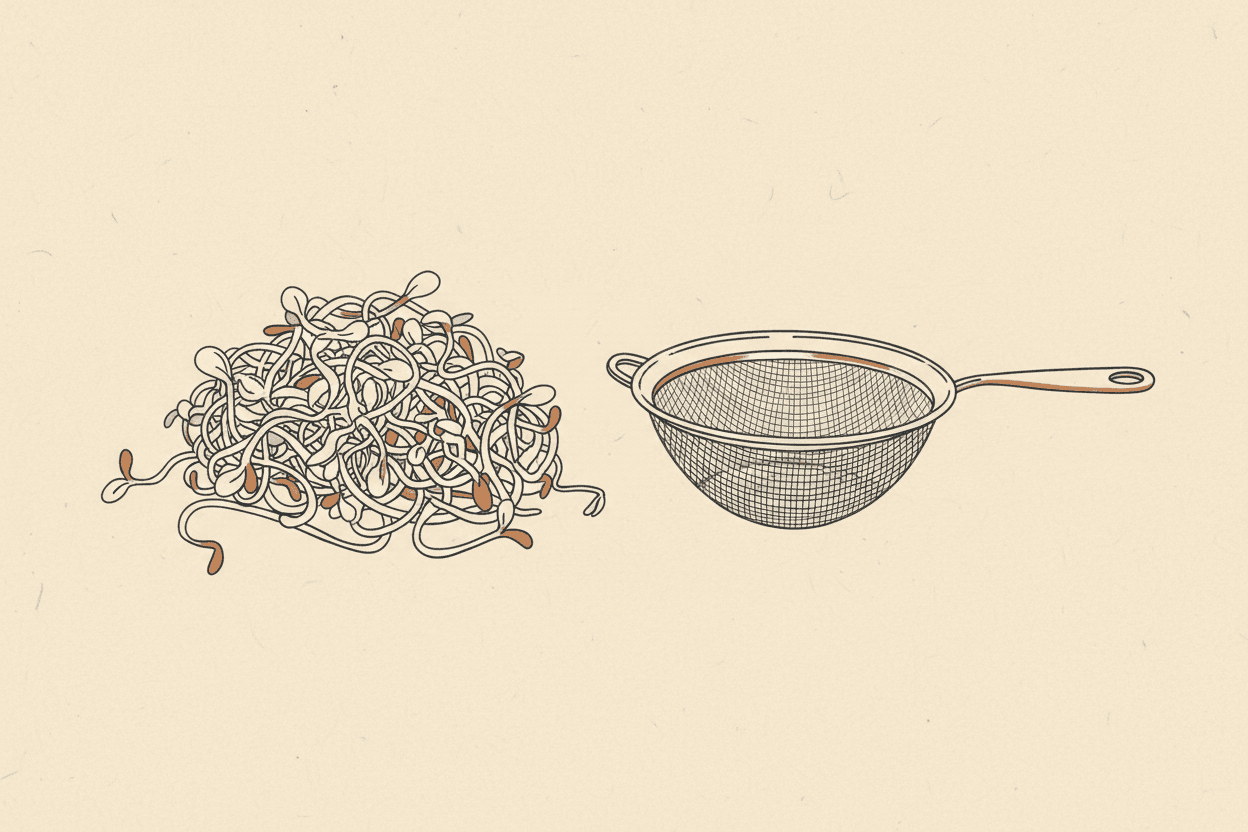
On September 23, 2026, Berlin Seeds recalled 950 pounds of Alfalfa Sprouting Seed sold through its website to customers in 44 states and at its Ohio store. The action follows federal tracebacks linking the inventory to a 55-case, multistate outbreak of Shiga toxin-producing E. coli and Salmonella Agona spanning 15 states.
The U.S. Food and Drug Administration (FDA) says its investigation is ongoing.
Key takeaways
- Berlin Seeds recalled 950 pounds of Alfalfa Sprouting Seed sold online to 44 states and at its Ohio store after the seed was linked to a 55-case E. coli and Salmonella outbreak.
- Smaller consumer packages (1/4 lb, 1/2 lb, and 1 lb) carry no printed lot code, leaving purchase dates between February 13 and August 23, 2026, as the primary identifier.
- The contamination trace stems from seed lot SAL2-24JB from an unnamed seed supplier; a spent irrigation water sample from one of the supplier's alfalfa seed lots tested positive for E. coli.
- The FDA reports 55 illnesses, 4 hospitalizations and no deaths in 15 states.
- Consumers should discard any matching seed or homegrown sprouts immediately and sanitize all jars, trays, and kitchen surfaces.
What happened
On September 23, 2026, Berlin Seeds of Millersburg, Ohio, initiated a recall of 950 pounds of Alfalfa Sprouting Seed due to potential contamination with Shiga toxin-producing E. coli (STEC) and Salmonella. The seeds were sold directly to consumers at the firm's Millersburg retail location and shipped across the country via internet orders between February 13, 2026, and August 23, 2026.
According to the recall notice published by the Food and Drug Administration (FDA), Berlin Seeds acted after being notified by its seed supplier. That supplier explained that regulatory traceback efforts had tied the seed supply to a commercial sprout grower involved in an active federal outbreak investigation. A spent irrigation water sample from one of the supplier's alfalfa seed lots tested positive for E. coli, precipitating the action. One illness has been reported directly to Berlin Seeds.
Sprouting is a warm, humid process, and the conditions that help seeds sprout can also help bacteria grow, which is why a contaminated seed lot matters even in a home jar.
What changed in the federal investigation?
The outbreak first surfaced through finished sprouts: in August 2026, Everything Sprouts, LLC recalled several alfalfa sprout and sprout-mix products. The Berlin Seeds recall moves the story upstream, to seed sold for home sprouting. Sprouts have been tied to other outbreaks this year, including the Broccoli Sprouts Salmonella Outbreak: 32 Sick in 6 States.
With the Berlin Seeds action, home sprouters are now directly in scope. They have no practical way to test seed for bacteria themselves, so they depend on recalls like this one.
Recalling the seed itself aims to stop contamination before anyone sprouts it. That is why the recall notice tells consumers not to sprout, plant or give away the seed at all.
Who is affected across the country?
The distribution footprint covers internet customers across 44 states: AK, AL, AR, AZ, CA, CO, CT, DE, FL, IA, ID, IL, IN, KS, KY, MA, MD, ME, MI, MN, MO, MS, MT, NC, ND, NE, NH, NM, NY, OH, OK, OR, PA, SC, SD, TN, TX, UT, VA, VT, WA, WI, WV, and WY, as well as in-person shoppers at the Millersburg, Ohio retail store.
The seeds were packaged in five specific sizes: 1/4 lb, 1/2 lb, 1 lb, and 5 lb resealable bags, along with a 50 lb poly woven bag. Notably, only the 5 lb and 50 lb bags display lot code SAL2-24JB in the bottom right-hand corner of the label. The 1/4 lb, 1/2 lb, and 1 lb packages carry no lot code whatsoever, so buyers of those sizes have to go by purchase date: the recall covers seed sold from February 13 to August 23, 2026.
According to the FDA outbreak investigation update, the broader outbreak has sickened 55 individuals across 15 states, resulting in 4 hospitalizations and 0 deaths. The states reporting confirmed illnesses are FL, IN, IA, KS, MI, MN, NH, NY, NC, ND, PA, SC, SD, WA, and WI.
The FDA lists the last illness onset as August 8, 2026. The Centers for Disease Control and Prevention (CDC) reports the same 55 cases, 4 hospitalizations and 15 states; its page was last updated September 1, 2026, before the Berlin Seeds recall. The outbreak strains include STEC serogroups O26:H11, O103:H25, O168:H8, and Salmonella Agona.
What it means for shoppers
Anyone who purchased alfalfa sprouting seed from Berlin Seeds between February 13, 2026, and August 23, 2026, should stop using the product immediately. The recall notice tells consumers not to sprout the seeds, plant them in gardens, or give them away to others. Throw away any sprouts grown from these seeds.
Because bacterial pathogens easily spread across kitchen tools, consumers should thoroughly clean and sanitize sprouting jars, trays, sprouters and any surfaces the seeds or sprouts touched. Similar cross-contact management is crucial in other food safety contexts, such as handling unpasteurized dairy highlighted in the Graziers Raw Milk Cheese Recall: E. coli Outbreak Sickens 13.
If you have Berlin Seeds packages in your pantry, take the following steps:
- Inspect 5 lb and 50 lb bags for lot code SAL2-24JB printed on the bottom right of the label.
- Treat all 1/4 lb, 1/2 lb, and 1 lb bags purchased during the six-month window as affected, as they lack printed codes.
- Do not sprout, plant or give away the seed; throw it and any sprouts away.
- Clean and sanitize jars, trays, sprouters and surfaces that touched the seed or sprouts.
According to the FDA, STEC symptoms can begin a few days to as long as nine days after eating contaminated food and include severe stomach cramps, diarrhea, fever, nausea and vomiting; some infections lead to hemolytic uremic syndrome (HUS), a type of kidney failure. Salmonella illness usually starts 12 to 72 hours after eating contaminated food, with diarrhea, fever and abdominal cramps. Children under five, older adults and people with weakened immune systems are more likely to get seriously ill. Anyone with these symptoms after eating recalled sprouts should contact a healthcare provider.
The background
The outbreak surfaced earlier in the summer. In August 2026, Everything Sprouts, LLC of Minneapolis issued a recall for Calco and Everything Sprouts alfalfa sprouts, Crunchy Protein Sprout Mix, Zesty Garlic Mix cups, and specific lots of Robust Radish Sprout Mix. The FDA outbreak page notes that the best-by dates for those retail items have since passed.
According to Berlin Seeds, traceback identified its seed as seed that had been used by a sprout grower whose sprouts were part of the FDA investigation, and the FDA says the common seed supplier recalled lot SAL2-24JB. That lot was distributed widely to sprout growers and wholesale entities in CA, FL, HI, IL, MA, MN, MO, MT, NY, OH, OR, PA, SC, TN, TX, UT, and Puerto Rico, as well as international destinations including Canada, Mexico, Tahiti, and Venezuela.
The FDA outbreak page notes that on August 31, 2026, the common seed supplier had not yet responded to the FDA's formal recall recommendation. By September 15, 2026, the supplier agreed to initiate a recall of lot SAL2-24JB. Berlin Seeds announced its own recall on September 23.
Sprouts are a recurring outbreak risk because bacteria on contaminated seed can survive and grow during sprouting, which is why this investigation traced back to a single seed lot.
What to watch next in the investigation?
The FDA's outbreak investigation remains open and active. The FDA says it is working to determine whether the recalled seed was distributed to other states and will update its advisory as needed.
There remain distinct gaps in the publicly available data. Regulators have not disclosed the commercial name of the common seed supplier, nor has the agency confirmed whether the single illness reported directly to Berlin Seeds is officially tabulated within the 55 federal outbreak cases. Furthermore, current evidence cannot establish the exact number of retail packages distributed, the precise farm where the seed was grown, or how the original agricultural crop became contaminated with STEC and Salmonella.
Shoppers should monitor subsequent recall notifications, as additional repackaged brands or regional seed suppliers may issue matching alerts as downstream distribution audits conclude.
Try Aurascan
See what is really in the food you buy.
Common questions
- Which states received the recalled Berlin Seeds alfalfa seed?
- The recalled seeds were sold online to customers in 44 states: AK, AL, AR, AZ, CA, CO, CT, DE, FL, IA, ID, IL, IN, KS, KY, MA, MD, ME, MI, MN, MO, MS, MT, NC, ND, NE, NH, NM, NY, OH, OK, OR, PA, SC, SD, TN, TX, UT, VA, VT, WA, WI, WV, and WY, as well as in-store in Ohio.
- How can I tell if my small bag of alfalfa seed is included in the recall?
- Packages sized 1/4 lb, 1/2 lb, and 1 lb do not have a lot code printed on them. If you purchased these sizes from Berlin Seeds between February 13, 2026, and August 23, 2026, they are included in the recall and should be thrown away.
- Which lot code appears on the larger recalled bags?
- Only the 5 lb resealable bags and the 50 lb poly woven bags carry the lot code SAL2-24JB, located on the bottom right-hand corner of the label.
- What health risks are linked to the alfalfa sprouting seed recall?
- The seeds may be contaminated with Shiga toxin-producing E. coli (STEC) and Salmonella. These pathogens can cause severe gastrointestinal illness, diarrhea, abdominal cramps, and fever.
- Has anyone gotten sick from the Berlin Seeds products?
- One illness was reported directly to Berlin Seeds. Across the broader related multistate outbreak, federal officials have recorded 55 illnesses and 4 hospitalizations.
Sources
In this series
Guide
Ultra-Processed Food and Kidney Disease: What a New Study FoundGuide
So Delicious Salted Caramel Cluster Recalled Again for StonesGuide
FDA Adds Tejocote Weight-Loss Products to Yellow Oleander WarningGuide
Cutting Ultra-Processed Food Eased Depression in a Pilot TrialGuide
Graziers Raw Milk Cheese Recall: E. coli Outbreak Sickens 13Guide
Walmart bettergoods Lemon Alfredo Fettuccine Listeria Recall
Related guides
Latest News
Todd's Seeds Alfalfa Sprouting Seeds Recalled: E. coli, SalmonellaTodd's Seeds alfalfa sprouting seeds (lot SAL2-24JB) and 5 seed mixes sold on Amazon, use by 12/31/2029, are recalled for E. coli and Salmonella. Lots inside.
Latest News
Gardeners Basics Broccoli Sprouting Seeds Recalled: SalmonellaGardeners Basics broccoli sprouting seeds sold on Amazon, Walmart, TikTok Shop, eBay and Etsy are recalled, linked to a 32-case Salmonella outbreak.
Latest News
Eden Brothers Broccoli Seeds Recalled From Lot W4105A second seller recalls Calabrese broccoli seeds from supplier lot W4105, the lot behind the Amazon HOME GROWN sprouting-seed recall. Lots, sizes and refunds.
Try it on your own groceries
Scan your next label with Aurascan
Point the camera at any ingredient list and get the same evidence-graded read you see here.
Open the scannerGet food recall alerts + a weekly digest
An email when a food recall is announced, plus one weekly roundup of label news and new guides.
We email a confirmation link first - nothing is sent until you click it. Unsubscribe anytime. Privacy