
Latest News · October 12, 2026 · 9 min read
Todd's Seeds Alfalfa Sprouting Seeds Recalled: E. coli, Salmonella
Todd's Seeds alfalfa sprouting seeds (lot SAL2-24JB) and 5 seed mixes sold on Amazon, use by 12/31/2029, are recalled for E. coli and Salmonella. Lots inside.
By Chris Carrillo · Reviewed by Armin Rad, Co-Founder & CTO, Aurascan · October 12, 2026
Every article is checked against primary sources before publication. How we review
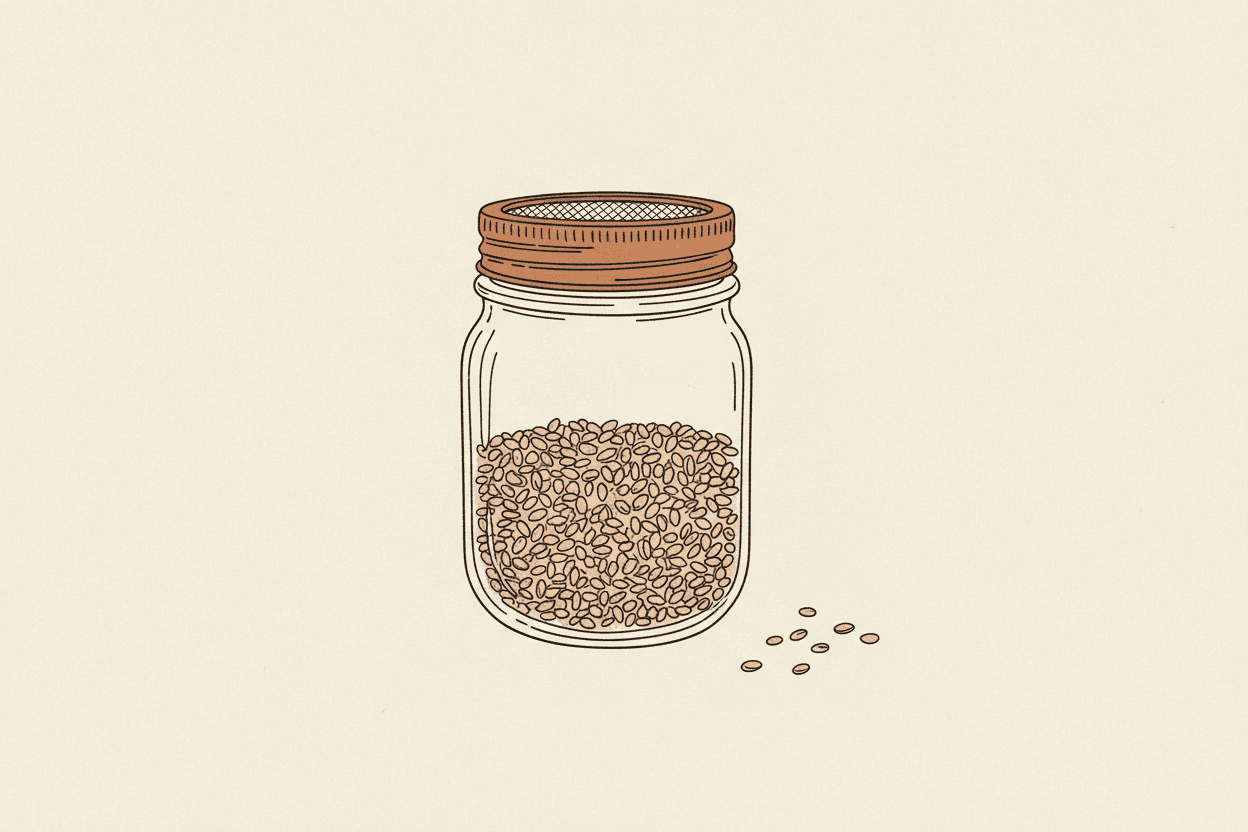
Todd's Seeds recalled its Alfalfa Sprouting Seeds and five sprouting seed mixes, 37,481 retail units sold nationwide through Amazon or direct to consumers, because they contain alfalfa seed that may be contaminated with E. coli and/or Salmonella. The recall was initiated September 11, 2026, and the FDA Enforcement Report dated October 7, 2026 lists it as Class I under Event ID 99887. The alfalfa seed lot SAL2-24JB printed on the 1/4, 1/2 and 1 lb. Todd's Seeds alfalfa bags is the same lot code named in FDA's outbreak advisory, but that advisory does not name Todd's Seeds as a source.
Key takeaways
- Six Todd's Seeds products are in scope, 37,481 retail units, sold nationwide through Amazon or direct to consumer. Recall initiation was September 11, 2026.
- Lot SAL2-24JB is printed on the 1/4, 1/2 and 1 lb. alfalfa sprouting seed bags, and FDA's outbreak advisory names the same lot code.
- FDA's October 1, 2026 update reports 76 illnesses, 6 hospitalizations and no deaths across 16 states.
- Every listed lot carries a use-by date of 12/31/2029, so bags may still be in home pantries.
- The supplier name, any illness tied specifically to Todd's Seeds products, and refund or return instructions have not been disclosed.
What happened
On September 11, 2026, Todd's Seeds LLC of Cookeville, Tennessee, initiated a voluntary recall of six sprouting seed products. The firm notified its customers by e-mail, and the recall status is listed as ongoing. FDA classified the action as Class I with a center classification date of September 30, 2026. The record was posted October 1, 2026 and appears in the FDA Enforcement Report record dated October 7, 2026.
The recall reason is the same for all six products. The record states that the products contain alfalfa seed recalled by the supplier and may be contaminated with E. coli and/or Salmonella, and it describes the action as a downstream recall. The FDA record does not name the supplier, and no company announcement for this recall is posted on fda.gov.
What changed
The Todd's Seeds action is a voluntary recall, which the FDA record lists as 'Voluntary: Firm initiated.' The change for shoppers is that six specific Todd's Seeds products and their lot codes are now listed in FDA's Enforcement Report with a Class I classification.
FDA's own explanation of the Enforcement Report matters here. The report states that classification and posting 'should not be seen as an expansion or change to a firm's voluntary public warning.' It also notes that firms often initiate voluntary recalls and issue public notifications well before FDA completes classification and posts the action to the report. A later posting date therefore does not mean the recall began later.
Who is affected
The recall covers Todd's Seeds alfalfa sprouting seeds, four sprouting seed mixes and a variety pack, sold in bag sizes ranging from 1 oz. sample packets to 5 lb. The distribution pattern is listed as nationwide, through Amazon or direct to consumer. The sale date range has not been disclosed, so a purchase date cannot be used to rule a bag in or out.
Sensitive groups deserve particular attention. FDA says children under 5 years, adults older than 65 and people with weakened immune systems are more likely to develop severe illness from pathogenic E. coli. FDA's Salmonella guidance says children, the elderly, pregnant women and persons with weakened immune systems should avoid eating raw sprouts of any kind. Households with people in these groups may want to treat any recalled lot as a reason to check their supplies.
What it means for shoppers
Label checks should focus on the lot code, not only the product name. The FDA record lists several lot codes across the six products, and the lot code is the detail that matches the outbreak advisory. Check these points on any sprouting seed bag or package:
- The product name, including whether it is an alfalfa sprouting seed or one of the mixes.
- The bag size, since lot codes differ by size for some products.
- The lot code printed on the bag, compared against the recall list in the next section.
- The use-by date, which is 12/31/2029 on every listed lot.
A use-by date does not show whether a bag is in the recall, because all listed lots share the same date. The lot code and bag size are the details to compare.
The background
FDA describes pathogenic E. coli as capable of causing severe stomach cramps, diarrhea, fever, nausea and vomiting, and some infections can lead to hemolytic uremic syndrome, a type of kidney failure. FDA lists contaminated vegetables and sprouts among the primary sources of STEC outbreaks. Salmonella illness typically begins 12 to 72 hours after infection and usually lasts four to seven days.
According to FDA's outbreak advisory, FDA and CDC are investigating a multistate outbreak of Shiga toxin-producing E. coli (serotypes O26:H11, O103:H25 and O168:H8) and Salmonella Agona linked to recalled alfalfa seed lot SAL2-24JB. In the October 1, 2026 update, FDA reported 76 total illnesses, 6 hospitalizations and no deaths. The last illness onset was September 7, 2026, and cases were reported in FL, IN, IA, KS, MI, MN, NH, NY, NC, ND, OR, PA, SC, SD, WA and WI. Of the 50 people interviewed, 40 (80%) reported eating sprouts and 35 (70%) specified alfalfa sprouts.
The advisory names Berlin Seeds, which recalled products on September 23, 2026, and Everything Sprouts. It does not name Todd's Seeds. Aurascan covered the earlier seed recall in Alfalfa Sprouting Seeds Recalled in E. coli Outbreak. For wider context on how FDA tallies outbreaks across a year, see FDA's 2025 Outbreak Report: 69 Incidents, 11 Advisories.
What to watch next
The FDA outbreak investigation is listed as ongoing, and the most recent advisory update in the record is dated October 1, 2026. The advisory does not say whether Todd's Seeds will be added to it. The Todd's Seeds recall status is also listed as ongoing, so the product list could change as FDA updates the Enforcement Report.
Several next steps have not been disclosed, including a company announcement, a phone number, and refund or return instructions for Todd's Seeds customers. Readers should watch the FDA outbreak page and the Enforcement Report record for changes rather than relying on secondhand summaries.
Which Todd's Seeds products are in the recall and how to read the lot codes
Is alfalfa seed lot SAL2-24JB recalled?
Yes, FDA's outbreak advisory describes SAL2-24JB as a recalled alfalfa seed lot, and the same code is printed on Todd's Seeds 1/4, 1/2 and 1 lb. alfalfa sprouting seed bags. The advisory does not say that Todd's Seeds is the source of the seed lot, and the supplier is not named in the Todd's Seeds record.
Which Todd's Seeds products are recalled, and what are their lot codes?
The FDA record lists six products, each with a use-by date of 12/31/2029:
- Todd's Seeds Alfalfa Sprouting Seeds (1/4, 1/2, 1, 2.5 and 5 lb. bags): lot SAL2-24JB for 1/4, 1/2 and 1 lb.; TS-1462-2.5-4 for 2.5 lb. only; TS-1462-5-3 for 5 lb. only.
- Todd's Seeds Broccoli & Friends Sprouting Seed Mix (broccoli, alfalfa, radish, clover; 1 oz. sample packets and 1/4 to 5 lb. bags): lot TS-245-MIX-13.
- Todd's Seeds Sprouting Seed Mix (broccoli, radish, alfalfa; 1/4, 1/2, 1 and 5 lb. bags): lot TS-111-MIX-13.
- Todd's Seeds Salad Sprouting Mixture (broccoli, mustard, alfalfa, cabbage; 1/4, 1/2 and 1 lb. bags): lot TS-633-2.
- Todd's Seeds Alfalfa & Mung Bundle (1 lb. each, packaged separately): lot TS-229-4-MK.
- Todd's Seeds Variety Pack of Sprouting Seeds (broccoli, alfalfa, radish, mung and clover; 2 oz. bags in a multi-pack): lot TS-VARSPRT-1.
The lot codes on the other products are TS-prefixed and differ from SAL2-24JB. The FDA record does not say which supplier seed lot, if any, is in each mix.
Why the outbreak lot and the recalled seed lot matter for home sprouters
The matching lot code is the most specific public link between this recall and the outbreak. The advisory and the Todd's Seeds record both point to SAL2-24JB, but the advisory does not identify Todd's Seeds as a source of illness. Accurate wording is that the Todd's Seeds alfalfa bags carry the same lot code as the outbreak seed lot.
Public records cannot establish whether any particular person became ill from a Todd's Seeds product. They also do not show how any individual bag was stored or handled.
What are the symptoms of E. coli from sprouts?
FDA says people infected with pathogenic E. coli can start to notice symptoms a few days after eating contaminated food or as much as nine days later, and the usual symptoms are severe stomach cramps, diarrhea, fever, nausea and/or vomiting. Anyone who ate recalled sprouts and has symptoms that resemble an STEC or Salmonella infection should contact a health care provider promptly, as FDA advises.
What has not been disclosed about this recall
- The name of the seed supplier, and which supplier seed lot is in the five Todd's Seeds mixes.
- Whether any illnesses are linked specifically to Todd's Seeds products.
- A Todd's Seeds company announcement on fda.gov, a phone number, or refund and return instructions.
- UPC or barcode numbers for the affected products.
- The sale date range for the affected lots.
- Whether FDA's outbreak advisory will add Todd's Seeds.
How to handle sprouts and seed at home after a seed recall
What should I do with recalled sprouting seeds?
FDA advises not to use or sell recalled sprouting seeds and not to eat, sell or serve recalled sprouts. FDA also advises checking refrigerators and freezers for recalled seeds or sprouts, throwing them away or returning them to the place of purchase, and carefully cleaning and sanitizing any surfaces or containers that touched them.
Because refund and return instructions for Todd's Seeds have not been disclosed, the place of purchase may be the only documented route for now. Shoppers who bought through Amazon can use their order history to confirm the product and bag size, then compare the lot code printed on the bag. Readers comparing other recent sprout and seed actions can also review Gardeners Basics Broccoli Sprouting Seeds Recalled: Salmonella.
For raw sprouts, FDA's guidance on sensitive groups still applies. Children, older adults, pregnant women and people with weakened immune systems are the groups FDA singles out for avoiding raw sprouts of any kind.
One limitation remains. The public record cannot show how a given household handled a given bag, and it cannot predict individual outcomes. For questions about personal health, a health care provider is the right contact.
If you want to check packaged foods the same way, you can scan your next product yourself with the Aurascan app. Aurascan is a food-label scanner for iPhone with a free tier. It explains each ingredient one at a time with cited evidence, rather than a single score, so you can read the details for yourself.
Try Aurascan
See what is really in the food you buy.
Common questions
- Is alfalfa seed lot SAL2-24JB recalled?
- FDA's outbreak advisory describes SAL2-24JB as a recalled alfalfa seed lot. The same code is printed on Todd's Seeds 1/4, 1/2 and 1 lb. alfalfa sprouting seed bags, but the supplier is not named in the Todd's Seeds record.
- Which Todd's Seeds products are in the recall?
- Six products are listed: Alfalfa Sprouting Seeds, Broccoli & Friends Sprouting Seed Mix, Sprouting Seed Mix (broccoli, radish, alfalfa), Salad Sprouting Mixture, Alfalfa & Mung Bundle, and a Variety Pack of Sprouting Seeds. Each lists a use-by date of 12/31/2029, and the total is 37,481 retail units.
- Does FDA say Todd's Seeds caused the E. coli and Salmonella outbreak?
- No. The outbreak advisory names Berlin Seeds and Everything Sprouts and does not name Todd's Seeds. The Todd's Seeds alfalfa bags carry the same lot code as the outbreak seed lot, and whether any illness is linked specifically to Todd's Seeds products has not been disclosed.
- What are the symptoms of E. coli from sprouts?
- FDA says symptoms can start a few days after eating contaminated food or as much as nine days later. They generally include severe stomach cramps, diarrhea, fever, nausea and/or vomiting. Some infections can cause severe bloody diarrhea and hemolytic uremic syndrome.
- What should I do with recalled sprouting seeds?
- FDA advises not to use or sell recalled sprouting seeds and not to eat, sell or serve recalled sprouts. Check refrigerators and freezers, throw the product away or return it to the place of purchase, and clean and sanitize any surfaces or containers that touched it.
- Are there refund or return instructions for Todd's Seeds recalled seeds?
- Refund and return instructions from Todd's Seeds have not been disclosed in the FDA record, which lists no phone number. FDA's general advice is to return the product to the place of purchase.
- What does Class I mean for a food recall?
- FDA defines a Class I recall as a situation in which there is a reasonable probability that the use of or exposure to a violative product will cause serious adverse health consequences or death.
- Who is most at risk from pathogenic E. coli and Salmonella in sprouts?
- FDA says children under 5, adults older than 65 and people with weakened immune systems are more likely to develop severe E. coli illness. FDA's Salmonella guidance says children, the elderly, pregnant women and persons with weakened immune systems should avoid eating raw sprouts of any kind.
Sources
- FDA Enforcement Report record, Event ID 99887 (accessdata.fda.gov)
- Outbreak Investigation of Shiga Toxin-producing E. coli and Salmonella: Sprouts (August 2026) (fda.gov)
- Escherichia coli (E. coli) (fda.gov)
- Salmonella (Salmonellosis) (fda.gov)
- Recalls Background and Definitions (fda.gov)
- Enforcement Reports (fda.gov)
In this series
Guide
Gardeners Basics Broccoli Sprouting Seeds Recalled: SalmonellaGuide
Starfish Smoked Salmon Trio Recalled for Listeria RiskGuide
FDA Warns Venezuelan Cheese Maker Over Roaches and No Safety PlanGuide
Eden Brothers Broccoli Seeds Recalled From Lot W4105Guide
Baby Sleep Gripe Water Recalled Over Undeclared MethanolGuide
RAPTURE Pre-Workout Recalled After FDA Finds DMAA
Related guides
Latest News
Saint Francis Frozen Pizzas Recalled for Undeclared SoyFour Saint Francis frozen pizzas left soy sub-ingredients off the label. Where they were sold in Ohio and Kentucky, and how sub-ingredient labeling works.
Latest News
Gardeners Basics Broccoli Sprouting Seeds Recalled: SalmonellaGardeners Basics broccoli sprouting seeds sold on Amazon, Walmart, TikTok Shop, eBay and Etsy are recalled, linked to a 32-case Salmonella outbreak.
Latest News
7UP Tropical Zero Sugar Cans Recalled: Full-Sugar Soda InsideCans labeled 7UP Tropical Zero Sugar (lot UT06176, best by Mar 17, 2027) in Utah 7UP Tropical 12-packs held full-sugar soda. How to check yours.
Try it on your own groceries
Scan your next label with Aurascan
Point the camera at any ingredient list and get the same evidence-graded read you see here.
Open the scannerGet food recall alerts + a weekly digest
An email when a food recall is announced, plus one weekly roundup of label news and new guides.
We email a confirmation link first - nothing is sent until you click it. Unsubscribe anytime. Privacy