
Latest News · September 29, 2026 · 5 min read
FDA Weighs Calcium Sulfate as a New Food Color
FDA filed a petition to list calcium sulfate as a color in coated candies, creamers and icings, foods that often use titanium dioxide, whose ban is still under review.
By Chris Carrillo · Reviewed by Armin Rad, Co-Founder & CTO, Aurascan · September 29, 2026
Every article is checked against primary sources before publication. How we review
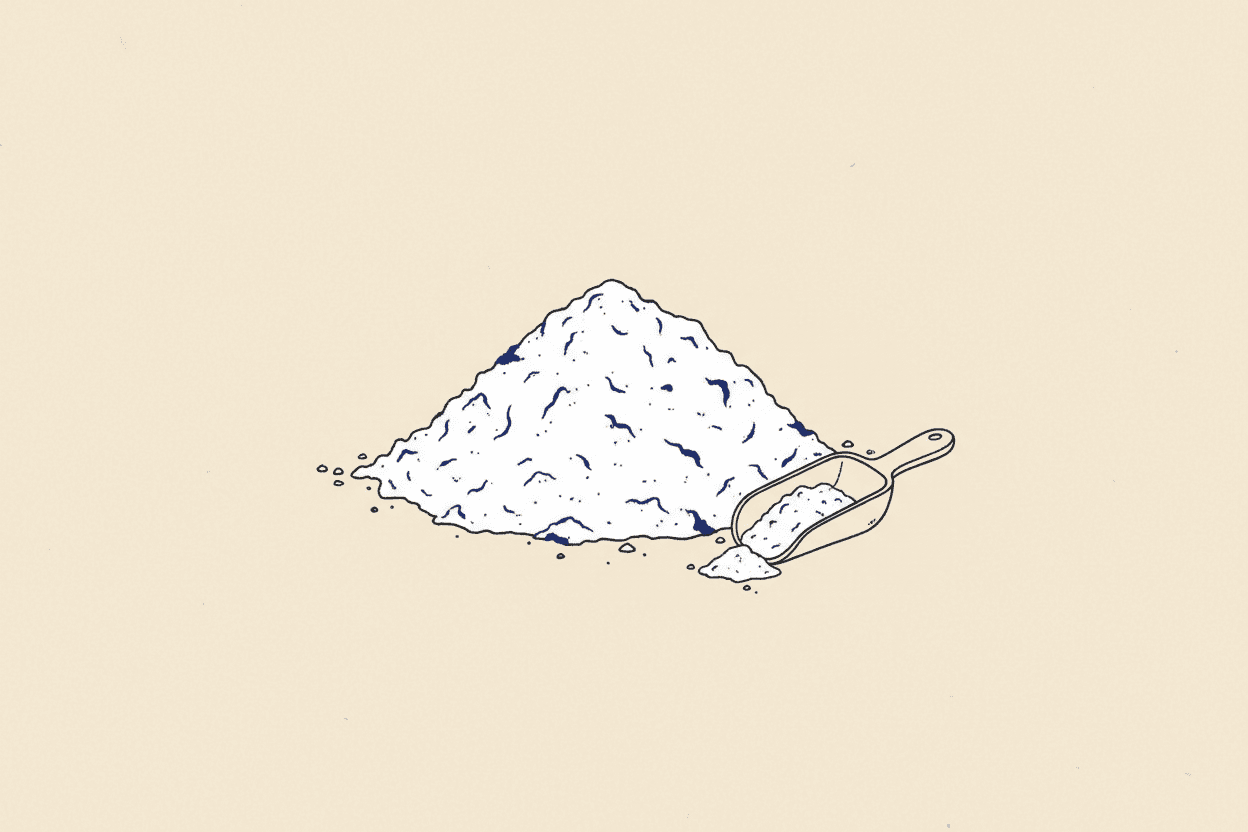
On September 25, 2026, the FDA announced the filing of a color additive petition from Doehler GmbH proposing to amend 21 CFR Part 73. The petition asks to permit calcium sulfate as a color in 5 food categories at levels consistent with good manufacturing practice. A filing is not an approval.
Key takeaways:
- On September 25, 2026, the FDA announced the filing of color additive petition CAP 6C0342 from Doehler GmbH.
- The petition proposes amending 21 CFR Part 73 to authorize calcium sulfate as an exempt color additive used at levels consistent with good manufacturing practice.
- Scope covers five specific food categories: coated candies, powdered creamers, icings and baked good fillings, dry milk, and whey products.
- Filing the petition formalizes agency review; it does not grant approval, does not open a public comment deadline, and does not alter current label rules.
- Several of the categories overlap with foods that can use titanium dioxide, whose listing is under a pending revocation petition, but the filing does not say calcium sulfate is meant to replace it.
What happened
In the Federal Register of September 25, 2026, the FDA announced the filing of a color additive petition, CAP 6C0342 (Docket No. FDA-2026-C-10597). The petition was submitted by Doehler GmbH through its legal counsel, Hogan Lovells Cadwalader in Washington, DC. According to the notice, the petition was filed on September 10, 2026.
The regulatory notice was signed by Grace R. Graham, Deputy Commissioner for Policy, Legislation, and International Affairs. The designated regulatory contact for the filing is Stephen DiFranco within the Office of Food Chemical Safety, Dietary Supplements, and Innovation, part of the FDA Human Foods Program.
This notice is a filing, not an approval. It does not open a public comment period or give a date for a decision. Background documents can be found under the docket number on regulations.gov.
What changed
The petition asks the FDA to amend 21 CFR Part 73, which governs color additives exempt from batch certification. Under current food regulations, every color additive used in the United States requires affirmative authorization from the FDA; color additives cannot bypass review via the Generally Recognized as Safe (GRAS) pathway. Doehler GmbH is seeking regulatory permission to add calcium sulfate to this exempt list for specific, defined categories.
The petitioner proposes that calcium sulfate be permitted at levels consistent with good manufacturing practice (GMP). The notice does not propose a numerical maximum.
The petitioner also claimed categorical exclusions from environmental review: that the substance is meant to be eaten and does not replace macronutrients, and that calcium sulfate occurs naturally in the environment and the proposed uses would not significantly change its concentration or distribution. The FDA has not yet ruled on those claims. The notice itself does not include toxicology data, exposure estimates, or a numerical upper limit.
Who is affected?
The petition explicitly limits its proposed scope to five targeted food categories. If authorized, manufacturers producing items in these categories could formulate with calcium sulfate as an exempt color additive:
- Coated candies
- Dry milk
- Whey products
- Powdered creamers
- Icings and baked good fillings
The filing does not identify specific food brands, retail products, or commercial manufacturers that might adopt the ingredient if approved. Similarly, the federal register notice does not disclose what specific visual shade, opacity, or color profile calcium sulfate is intended to produce, omitting any explicit reference to whitening or lightening.
What it means for shoppers
For shoppers, nothing changes on packaging today. The FDA has only filed the petition, so calcium sulfate is not listed as a color additive in 21 CFR Part 73, and no product can use it as a color on the strength of this filing.
The notice does not say how calcium sulfate would be named on ingredient lists if it were approved.
Colors exempt from certification already include plant-derived options such as Annatto: The Seed Color in Cheese and Snacks. For how US color rules differ from Europe's, see our guide on EU Warning-Label Additives Still Allowed in the US.
The background
Color additives occupy a unique legal status under the Federal Food, Drug, and Cosmetic Act. While many food ingredients qualify for use through GRAS notifications, Congress excluded color additives from the GRAS process. Every color used in food must have an explicit regulation issued by the FDA under 21 CFR Part 73 (exempt from certification) or 21 CFR Part 74 (subject to certification).
The best-known white color in US food is titanium dioxide. On its page Titanium Dioxide as a Color Additive in Foods, the FDA notes that titanium dioxide (TiO2) is "a synthetically produced white pigment" used in products "such as bakery products and candy". Under 21 CFR 73.575, titanium dioxide is currently permitted in foods up to 1 percent by weight (10,000 ppm) and appears on ingredient lists as "artificial color" or "colored with titanium dioxide". More details on this compound are covered in What Is Titanium Dioxide? Uses, Safety, and Labeling.
However, titanium dioxide faces ongoing regulatory scrutiny. The FDA's petitions-under-review inventory shows that petition CAP 3C0325, from the Environmental Defense Fund, Center for Environmental Health, Center for Food Safety, CSPI, and the Environmental Working Group, is still listed as under review. The FDA says the TiO2 petition was filed on April 14, 2023. That petition requests the complete revocation of 21 CFR 73.575 to end titanium dioxide's use in food, as documented in the FDA's public Color Additive Petitions Under Review tracking database.
Some of the five categories in Doehler's petition, such as coated candies and icings, overlap with the bakery products and candy where the FDA says titanium dioxide is used, but the petition itself does not state an intention to replace titanium dioxide. Any link between the two is our context, not a claim in Doehler's filing detailed in the Federal Register notice.
What to watch next
The primary focus moving forward is the FDA Human Foods Program and its scientific review of CAP 6C0342. The agency will evaluate whether the proposed uses are safe. The agency has not published a projected timeline or final decision date for the petition.
A limitation: the filing notice does not publish Doehler's safety data, exposure estimates, or what color effect calcium sulfate is meant to give, so the public cannot yet judge the evidence behind the petition. A second thing to watch is the separate titanium dioxide petition, which has no published decision date.
Try Aurascan
See what is really in the food you buy.
Common questions
- Has the FDA approved calcium sulfate as a food color additive?
- No. On September 25, 2026, the FDA announced only the filing of a petition (CAP 6C0342) from Doehler GmbH. Filing starts the FDA's review but does not authorize the ingredient's use as a color additive.
- Which food categories are included in the Doehler petition?
- The petition requests authorization for calcium sulfate at good manufacturing practice levels in five specific categories: coated candies, powdered creamers, icings and baked good fillings, dry milk, and whey products.
- Is calcium sulfate intended to replace titanium dioxide?
- The regulatory filing does not state an intention to replace titanium dioxide. While both substances share overlapping application categories such as candies and baked goods, any link is context, not a claim made by the petitioner.
- Can color additives be approved through the GRAS process?
- No. Under U.S. federal law, color additives cannot bypass formal regulatory listing through the Generally Recognized as Safe (GRAS) pathway. All food colors require explicit FDA authorization under 21 CFR Part 73 or Part 74.
- How will calcium sulfate be declared on ingredient lists if approved?
- The FDA filing notice does not disclose proposed labeling rules. Labeling specifications would be established only if the FDA ultimately drafts and finalizes an authorizing regulation in 21 CFR Part 73.
- What does filing mean compared to an approval for an FDA petition?
- Filing means the FDA has accepted the petition for review and announced it in the Federal Register. It does not mean the agency has found the additive safe or authorized its use.
Sources
- Filing of Color Additive Petition From Doehler GmbH; Request To Amend the Color Additive Regulations (federalregister.gov)
- Titanium Dioxide as a Color Additive in Foods (fda.gov)
- Color Additive Petitions Under Review (hfpappexternal.fda.gov)
In this series
Guide
Annatto: The Seed Color in Cheese and SnacksGuide
Is Caramel Color (E150) Safe? 4-MEI, Classes, and LabelsGuide
EU Warning-Label Additives Still Allowed in the USGuide
Is Blue 1 (Brilliant Blue FCF, E133) Safe? Uses and LabelsGuide
Is Yellow 6 (Sunset Yellow, E110) Safe? Uses, Labels, RisksGuide
What Is Titanium Dioxide? Uses, Safety, and Labeling
Related guides
Latest News
Sunset Yellow in Pregnancy: New Rat Study Finds Few EffectsA new rat study of the dye Sunset Yellow (Yellow 6) during pregnancy found no harm to mothers or fetal growth, with one preliminary finding at the highest dose.
Guides
Color Added vs Named Colors: 6 Scanned Labels Without FD&C DyesAnnatto, paprika extract, fruit juice, or just color added: how 6 scanned products name colors that skip FDA batch certification, and what 21 CFR 101.22 allows.
Latest News
Acesulfame K at High Doses Disrupts Zebrafish LarvaeA zebrafish study tied very high acesulfame K (ace-K) doses to developmental and movement changes in larvae; the authors say it is hazard data, not a risk estimate.
Try it on your own groceries
Scan your next label with Aurascan
Point the camera at any ingredient list and get the same evidence-graded read you see here.
Open the scannerGet food recall alerts + a weekly digest
An email when a food recall is announced, plus one weekly roundup of label news and new guides.
We email a confirmation link first - nothing is sent until you click it. Unsubscribe anytime. Privacy