
Latest News · October 1, 2026 · 7 min read
Unlisted Dyes and Sulfites Trigger Three FDA Recalls
FDA's Sept. 23 enforcement report lists Ponceau 4R in haw candy, undeclared Yellow 5 and 6 in a carrot cake, and unlabeled sulfites in dried fruit.
By Chris Carrillo · Reviewed by Armin Rad, Co-Founder & CTO, Aurascan · October 1, 2026
Every article is checked against primary sources before publication. How we review
The FDA's September 23, 2026 enforcement report lists several food recalls linked to an unapproved dye and undeclared additives. The actions include an interstate recall of imported fruit candy found to contain Ponceau 4R, a synthetic red color prohibited in domestic foods, alongside Wisconsin bakery and dried-fruit items containing undeclared FD&C dyes and sulfites. These enforcement notices highlight the federal requirements governing ingredient transparency and chemical batch certification.
Key takeaways:
- Hexing Haw Balls candy was recalled in 15 states because it contains Ponceau 4R, a synthetic red colorant not permitted in the United States.
- Elegant Foods, LLC recalled carrot cakes in Wisconsin due to undeclared Yellow 5 and Yellow 6 in the carrot decoration.
- The same firm recalled bulk golden raisins and coconut flakes because of undeclared sulfites.
- Under federal regulations 21 CFR 101.22 and 21 CFR 74.705, certified food dyes like Yellow 5 must be declared by name on finished product labels.
What happened
The FDA published its weekly enforcement report on September 23, 2026, listing several recalls over an unapproved dye and missing label declarations.
The first action, designated as recall H-1387-2026, involves Tiffany Food Corp of Brooklyn, New York. The firm initiated a recall on August 28, 2026, for Hexing Haw Balls candy. The FDA classified the event as a Class III recall on September 17, 2026. The agency's published enforcement record indicates that the product contains Ponceau 4R, an unapproved color additive under U.S. law. A total of 38 cartons of the candy are subject to the ongoing action.
Simultaneously, the FDA disclosed three related recall actions from Elegant Foods, LLC, based in Madison, Wisconsin. All three are Class II recalls. The carrot cake recall was initiated on July 24, 2026, and classified on September 16, 2026.
Recall H-1385-2026 involves 300 units of Elegant Foods Carrot Cake, recalled because the carrot decoration contained Yellow #5 and Yellow #6 that were omitted from the finished product label. The two additional Class II actions for Elegant Foods cover bulk ingredients containing undeclared sulfites: recall H-1384-2026 covers 8 five-pound bags of Golden Raisins, while recall H-1383-2026 encompasses 6 five-pound bags of Coconut Flakes. The FDA lists the candy and carrot cake recalls as ongoing.
Scan preview
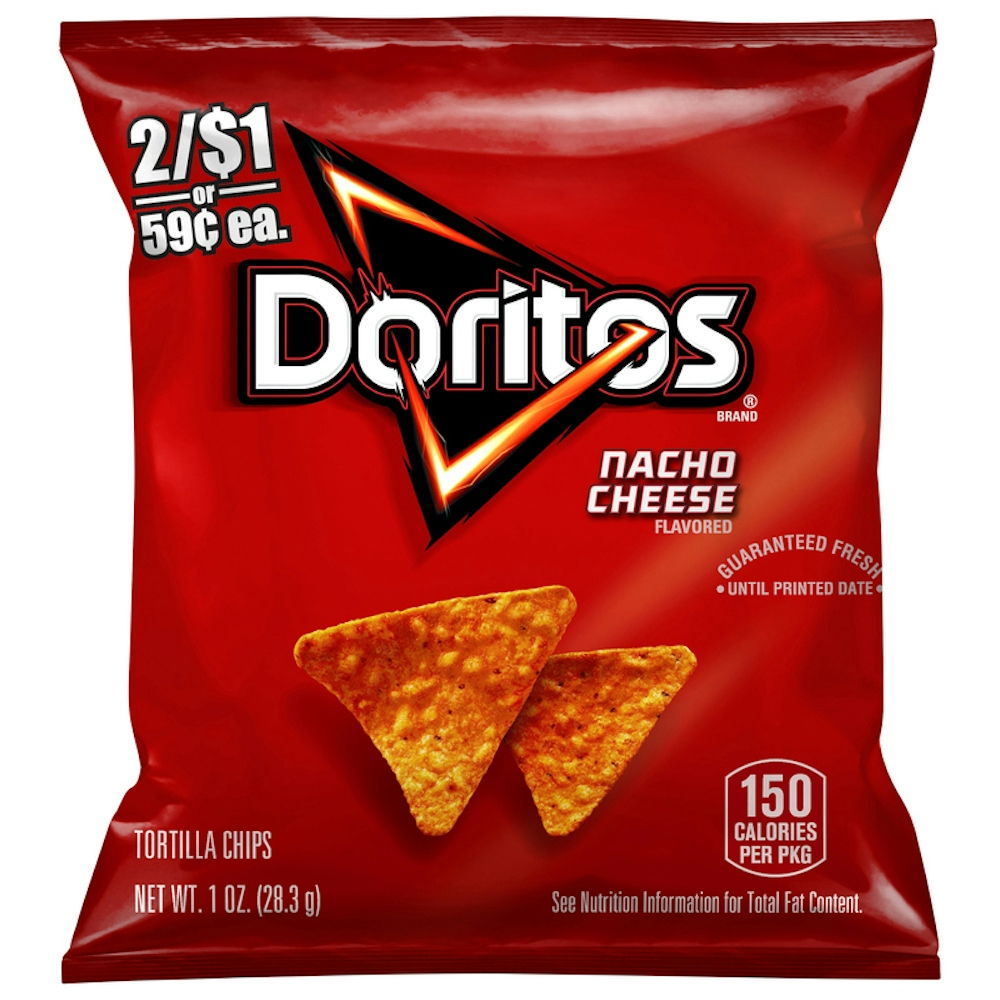
Doritos
Doritos Tortilla Chips Nacho Cheese Flavored - 1 Ounce
SOYBEAN · SUNFLOWER OIL · MILK
Standout ingredient: GARLIC POWDER
Analysis by Aurascan. The app shows the full breakdown and its sources.
What changed
These enforcement actions reflect strict federal boundaries separating permitted, certified additives from unapproved chemical colorants and undeclared preservatives.
For the Hexing Haw Balls candy, the legal violation is the presence of Ponceau 4R. While Ponceau 4R (known as New Coccine or E124) is permitted in several international markets, it is not an approved color additive for food use in the United States under 21 CFR Part 74 or Part 82. In contrast to regions covered in our guide on EU Warning-Label Additives Still Allowed in the US, the United States maintains a closed list of certified colorings. Because Ponceau 4R is not an approved food color in the United States, its inclusion renders the finished candy adulterated regardless of concentration.
For the Elegant Foods products, the recall centers on misbranding rather than an outright prohibition of the substances. Both FD&C Yellow No. 5 and FD&C Yellow No. 6 are permitted in the United States, but only when strictly declared. The colors were in the carrot decoration and were not listed on the finished product label. Under 21 CFR 101.22(k), any added coloring must be declared in the ingredient statement.
The dried fruit and coconut products were recalled because sulfiting agents were present without the necessary label warnings. Under 21 CFR 101.100(a)(4), sulfiting agents at a detectable level, 10 parts per million or more in the finished food, must be declared.
Who is affected
The scope of these actions ranges from a 15-state candy distribution to products distributed only in Wisconsin.
The recalled Hexing Haw Balls candy is packaged in a 200 g (0.44 lb / 7.05 oz) clear plastic bag bearing UPC 6 920603 810025, with a Best Before date of 10/01/2026. The package lists only "haw, white sugar, water" and indicates "Product of China." Tiffany Food Corp distributed the 38 recalled cartons across 15 states: Arizona, New York, California, Florida, Georgia, Illinois, Massachusetts, Minnesota, North Carolina, New Jersey, Ohio, Pennsylvania, Tennessee, Texas, and Virginia. The FDA enforcement record did not disclose the specific retail store chains that carried the candy.
The Elegant Foods recalls are centered in Wisconsin. The recalled carrot cake is a 9-inch, 14-serving cake (300 cakes total). The bulk shelf-stable products include 8 five-pound bags of Golden Raisins and 6 five-pound bags of Coconut Flakes. The FDA enforcement records state "No code applied" for the lot identification on all three Elegant Foods items. The public records did not disclose whether these items were distributed strictly to commercial food service operations or sold directly through retail outlets.
Undeclared ingredients matter most to people who deliberately avoid them, such as shoppers who avoid sulfites or Yellow 5. The FDA enforcement reports did not disclose any illnesses or adverse allergic reactions associated with any of the recalled items.
What it means for shoppers
For shoppers and wholesale buyers, these notices emphasize why reading ingredient statements remains essential, even for seemingly simple items.
The haw candy's label listed only haw, white sugar and water, yet the FDA record cites Ponceau 4R as the reason for the recall. Shoppers who bought Hexing Haw Balls with UPC 6 920603 810025 and a Best Before date of 10/01/2026 should not eat them.
For baked goods, the cake base is not the only place a color can come from: in this recall, the colors were in the carrot decoration. Shoppers who avoid these dyes can read What Is Tartrazine (Yellow 5)? Uses, Safety, and Labeling and Is Yellow 6 (Sunset Yellow, E110) Safe? Uses, Labels, Risks.
For dried fruit and shredded coconut, people who avoid sulfites should check the ingredient list, and ask about bulk products sold without a full label.
The background
Food additive labeling in the United States is governed by detailed statutory mandates designed to prevent hidden chemical exposures.
Under 21 CFR 101.22(k), any added coloring must be declared in the ingredient statement. For certified color additives, regulations dictate that they must be declared by their specific name as listed in 21 CFR Part 74 or Part 82, such as "FD&C Yellow No. 5" or simply "Yellow 5". A generic term alone is not enough for a certified color; it must be named.
Furthermore, 21 CFR 74.705 requires any food containing FD&C Yellow No. 5 to declare it by name in the ingredient list, and every batch of the dye must be certified by the FDA. A standard commercial example of full compliance can be seen on snack packaging: Doritos Nacho Cheese, for instance, explicitly lists "ARTIFICIAL COLOR (YELLOW 6, YELLOW 5, RED 40)" in its formal ingredient deck.
Sulfite regulations follow a similarly rigorous standard under 21 CFR 101.100(a)(4). Sulfiting agents including sulfur dioxide, sodium sulfite, sodium bisulfite, potassium bisulfite, sodium metabisulfite, and potassium metabisulfite cannot be treated as incidental additives if measurable amounts remain. The FDA establishes that any finished food containing 10 parts per million (ppm) or more of sulfiting agents is treated as containing a detectable amount, which must be declared on the label.
What is not known: the public enforcement records do not disclose the exact parts-per-million levels of sulfites measured in the Elegant Foods items, nor the detection thresholds and testing methods used to isolate Ponceau 4R in the imported haw candy.
What to watch next
Ponceau 4R is not an approved color additive for food in the United States, so foods containing it can be recalled. Consumers should watch for further updates to FDA enforcement logs as Tiffany Food Corp and Elegant Foods continue their recall retrieval processes across distribution channels.
Retailers in the 15 affected states handling imported dried fruit candies should verify their inventory against UPC 6 920603 810025 to ensure affected lots are removed from store shelves. Food service buyers in Wisconsin should review bakery and pantry stocks for un-coded 5-pound bags of Elegant Foods raisins and coconut flakes, as well as 9-inch Elegant Foods carrot cakes.
Want to check which colors and preservatives are in the packaged foods you buy? Scan the barcode with the free Aurascan app to see each ingredient explained with cited evidence.
Try Aurascan
See what is really in the food you buy.
Common questions
- What is Ponceau 4R and why is it recalled in the United States?
- Ponceau 4R (also known as E124 or New Coccine) is a synthetic red azo dye. While it is permitted for food use in several countries outside the U.S., it is not approved by the FDA as a certified color additive. Any food product sold in the United States that contains Ponceau 4R is considered adulterated and subject to recall.
- Which specific candy was recalled for containing unapproved dyes?
- The recall applies to Hexing Haw Balls candy, imported from China and distributed by Tiffany Food Corp. The product is packaged in 200 g (7.05 oz) clear plastic bags with UPC 6 920603 810025 and a Best Before date of 10/01/2026, distributed across 15 U.S. states.
- Why does the FDA require FD&C Yellow No. 5 to be listed by name?
- Under 21 CFR 74.705 and 21 CFR 101.22, FD&C Yellow No. 5 (tartrazine) must be specifically declared by name in the ingredient list. Every batch of the dye must also be certified by the FDA.
- At what concentration must sulfites be declared on a food label?
- Under 21 CFR 101.100(a)(4), sulfiting agents are considered detectable if they reach or exceed 10 parts per million (ppm) in the finished food. Once sulfites reach this threshold, they cannot be treated as incidental ingredients and must be declared on the label.
- Were any illnesses reported in connection with these recalls?
- The FDA enforcement report published on September 23, 2026, did not disclose any illnesses, hospitalizations, or adverse allergic reactions associated with the recalled Hexing Haw Balls candy or the Elegant Foods bakery and dried-fruit items.
Sources
- FDA Enforcement Report: Recall H-1387-2026 (api.fda.gov)
- FDA Enforcement Report: Recall H-1385-2026 (api.fda.gov)
- FDA Enforcement Report: Recall H-1384-2026 (api.fda.gov)
- 21 CFR 101.22 Foods; labeling of spices, flavorings, colorings and chemical preservatives (ecfr.gov)
- 21 CFR 101.100 Food; exemptions from labeling (ecfr.gov)
In this series
Guide
FDA Weighs Calcium Sulfate as a New Food ColorGuide
Annatto: The Seed Color in Cheese and SnacksGuide
Is Caramel Color (E150) Safe? 4-MEI, Classes, and LabelsGuide
EU Warning-Label Additives Still Allowed in the USGuide
Is Blue 1 (Brilliant Blue FCF, E133) Safe? Uses and LabelsGuide
Is Yellow 6 (Sunset Yellow, E110) Safe? Uses, Labels, Risks
Related guides
Latest News
Sunset Yellow in Pregnancy: New Rat Study Finds Few EffectsA new rat study of the dye Sunset Yellow (Yellow 6) during pregnancy found no harm to mothers or fetal growth, with one preliminary finding at the highest dose.
Guides
Color Added vs Named Colors: 6 Scanned Labels Without FD&C DyesAnnatto, paprika extract, fruit juice, or just color added: how 6 scanned products name colors that skip FDA batch certification, and what 21 CFR 101.22 allows.
Latest News
Saint Francis Frozen Pizzas Recalled for Undeclared SoyFour Saint Francis frozen pizzas left soy sub-ingredients off the label. Where they were sold in Ohio and Kentucky, and how sub-ingredient labeling works.
Try it on your own groceries
Scan your next label with Aurascan
Point the camera at any ingredient list and get the same evidence-graded read you see here.
Open the scannerGet food recall alerts + a weekly digest
An email when a food recall is announced, plus one weekly roundup of label news and new guides.
We email a confirmation link first - nothing is sent until you click it. Unsubscribe anytime. Privacy