
Comparisons · October 14, 2026 · 8 min read
Diet Coke vs Coke Caffeine: 46 mg vs 34 mg per 12 oz Can
Diet Coke has 46 mg of caffeine per 12 oz can and Coca-Cola has 34 mg. We compare sugar (0 g vs 39 g), calories, aspartame and both ingredient lists.
By Chris Carrillo · Reviewed by Armin Rad, Co-Founder & CTO, Aurascan · October 14, 2026
Every article is checked against primary sources before publication. How we review

Per 12 fl oz, Diet Coke lists 46 mg of caffeine, 0 calories and 0 g of sugar, while Coca-Cola Original lists 34 mg of caffeine, 140 kcal and 39 g of total sugars, all of it added.
Key takeaways
- Per 12 fl oz, Diet Coke lists 46 mg caffeine, 0 calories and 0 g sugar. Coca-Cola Original lists 34 mg caffeine, 140 kcal and 39 g total sugars, all added.
- The sweetener difference is aspartame (Diet Coke) vs high fructose corn syrup (Coca-Cola Original). Diet Coke's label carries a phenylketonurics statement for phenylalanine. FDA says people with PKU should avoid or restrict aspartame, per the FDA aspartame page.
- Diet Coke's ingredient list adds potassium benzoate (to protect taste) and citric acid. Both drinks list caramel color, phosphoric acid, natural flavors and caffeine.
- FDA says 400 mg of caffeine a day is an amount not generally associated with negative effects for most healthy adults, per the FDA caffeine consumer update.
What Are the Main Label Differences Between Diet Coke and Coca-Cola Original?
The main label differences are caffeine (46 mg vs 34 mg per 12 fl oz), calories (0 vs 140 kcal), total sugars (0 g vs 39 g) and sweetener (aspartame vs high fructose corn syrup). Sodium is 40 mg per 12 fl oz in Diet Coke and 45 mg per 12 fl oz in Coca-Cola Original, with sources given in the calories and sugar section.
Both drinks list caramel color, phosphoric acid, natural flavors and caffeine. Diet Coke also lists potassium benzoate and citric acid, which do not appear on the Coca-Cola Original list shown in this article.
Serving size matters when comparing. Diet Coke's brand page reports a 12 fl oz can. Coca-Cola's brand page reports a 20 fl oz bottle, so the 12 fl oz Coca-Cola figures in this article come from an Open Food Facts record for a 2-liter bottle with a 12 fl oz serving.
| Label item | Diet Coke (12 fl oz) | Coca-Cola Original (12 fl oz) |
|---|---|---|
| Caffeine | 46 mg | 34 mg |
| Calories | 0 | 140 kcal |
| Total carbohydrate | 0 g | 39 g |
| Total sugars | 0 g | 39 g |
| Added sugars | 0 g | 39 g |
| Sodium | 40 mg | 45 mg |
| Protein | 0 g | 0 g |
| Fat | 0 g | 0 g |
| Sweetener | Aspartame | High fructose corn syrup |
Table note: Coca-Cola caffeine (34 mg) is taken from Coca-Cola's FAQ. Calorie, sugar, sodium, protein and fat rows for Coca-Cola use the 12 fl oz serving in the Open Food Facts record. The sweetener row comes from the 20 fl oz bottle on the brand page, because the brand page does not list a 12 fl oz panel.
Sources for the table: Coca-Cola Original product page and Open Food Facts record for Coca-Cola.
How Much Caffeine Is in Diet Coke vs Coca-Cola Original per 12 oz?
Diet Coke contains 46 mg of caffeine per 12 fl oz, and Coca-Cola Original contains 34 mg per 12 fl oz, a difference of 12 mg. Coca-Cola's own caffeine FAQ gives the same two figures, and Diet Coke's brand product page prints 'Caffeine Content: 46mg / 12 fl oz'.
For context, the same Coca-Cola FAQ states that a 12 oz cup of coffee has 140 mg or more of caffeine. An Open Food Facts record for a 12-can Diet Coke pack shows 46 mg per can, matching the brand page.
The 20 fl oz Coca-Cola Original bottle on the brand page does not print a caffeine milligram figure. This article does not estimate caffeine for that bottle size, and the 12 oz numbers should not be scaled up to produce one.
Scan preview
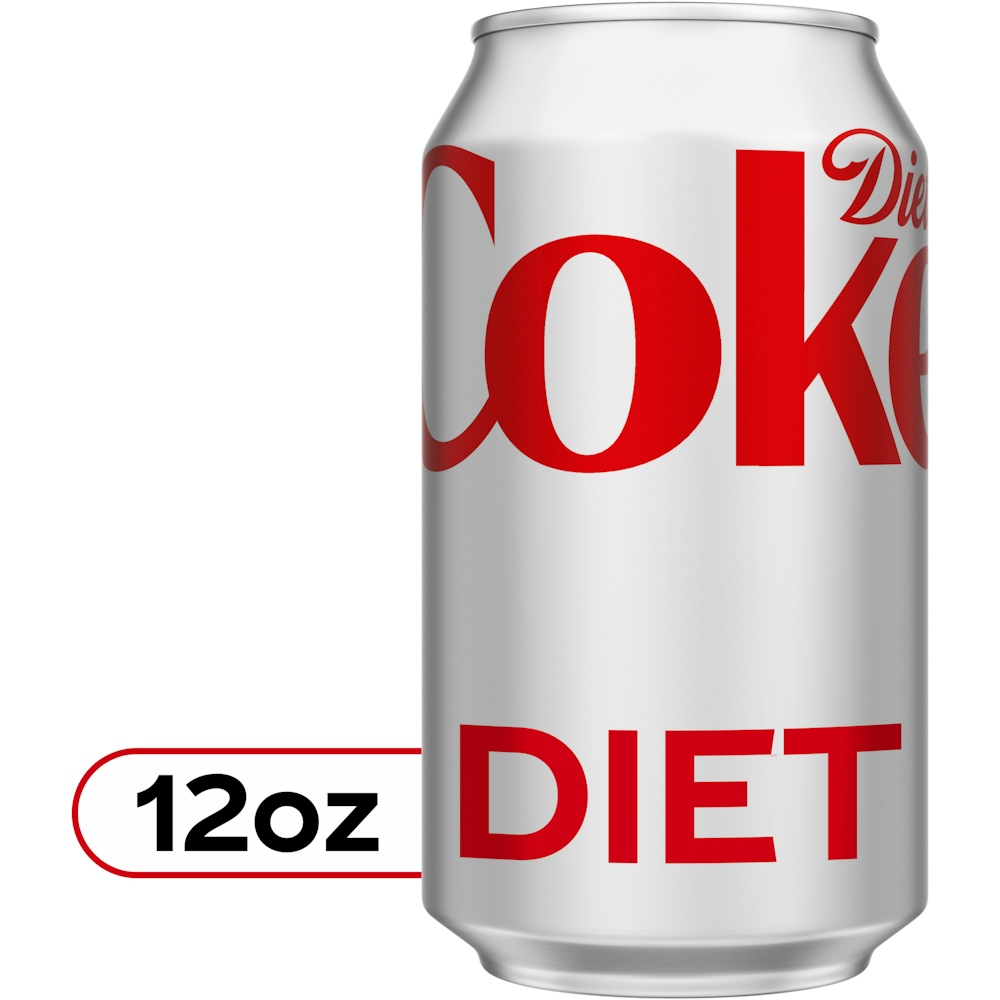
Diet Coke
Diet Coke Can, 12 Fl Oz
CARAMEL COLOR · ASPARTAME · NATURAL FLAVORS
Standout ingredient: CAFFEINE
Analysis by Aurascan. The app shows the full breakdown and its sources.
How Many Calories and How Much Sugar Are in Each Drink?
Diet Coke lists 0 calories and 0 g of total sugars per 12 fl oz can. Coca-Cola Original lists 140 kcal and 39 g of total sugars per 12 fl oz, all of which are added sugars.
The 20 fl oz Coca-Cola Original bottle on the brand page lists 240 calories, 65 g of total sugars and 65 g of added sugars. Its added sugar line is printed as 130% of the Daily Value for that bottle size.
FDA's Daily Value for added sugars is 50 grams per day based on a 2,000-calorie diet, as described on the FDA added sugars page. This article does not express the 39 g serving as a percentage of that Daily Value, because the cited pages do not state one for the 12 fl oz serving.
Sodium figures are labeled by serving and source. Diet Coke lists 40 mg per 12 fl oz (2% DV) in the Open Food Facts record for the Diet Coke 12-can pack. Coca-Cola Original lists 45 mg per 12 fl oz in the Open Food Facts record for the 2-liter Coca-Cola bottle. The Coca-Cola brand page lists 75 mg (3% DV) for the 20 fl oz bottle, a different serving size, so that figure is not directly comparable to the 12 fl oz numbers.
Does Diet Coke Use a Different Sweetener Than Coca-Cola Original?
Yes. Diet Coke's label lists aspartame as its only sweetener, while Coca-Cola Original is sweetened with high fructose corn syrup. The original Diet Coke list does not include acesulfame potassium. Diet Cherry Coke, which appears on the same brand page, lists both aspartame and acesulfame potassium.
FDA states on its aspartame page that aspartame is about 200 times sweeter than table sugar. The exact amount of aspartame per Diet Coke can is not stated on the label or on the cited pages.
Coca-Cola Original's sugar comes from high fructose corn syrup, which appears on its ingredient list and is counted in the 39 g of added sugars per 12 fl oz.
Which Ingredients Appear on Diet Coke's Label but Not on Coca-Cola's?
Diet Coke's label lists potassium benzoate (to protect taste) and citric acid. The Coca-Cola Original ingredient list, taken from the 20 fl oz bottle on the Coca-Cola Original product page, includes neither. Both lists are shown below in the order printed on each label.
- Diet Coke (12 fl oz can): carbonated water, caramel color, aspartame, phosphoric acid, potassium benzoate (to protect taste), natural flavors, citric acid, caffeine
- Coca-Cola Original (20 fl oz bottle, per the brand page): carbonated water, high fructose corn syrup, caramel color, phosphoric acid, natural flavors, caffeine
The shared items are caramel color, phosphoric acid, natural flavors and caffeine. The composition of 'natural flavors' in either drink is not disclosed on the cited pages, and the amount of phosphoric acid per can is not stated for either drink. Ingredient lists can differ by package size, so check the panel on the container you hold.
Is Aspartame in Diet Coke Safe, and What Does the PKU Warning Mean?
FDA says its scientists do not have safety concerns about aspartame when it is used under approved conditions, according to its aspartame page. FDA permits aspartame as a food additive under those conditions.
Diet Coke's label carries the statement 'PHENYLKETONURICS: CONTAINS PHENYLALANINE'. Phenylketonuria (PKU) is a condition in which phenylalanine is not processed normally. The same FDA page states that people with PKU should avoid or restrict aspartame. The Coca-Cola Original label information used in this article does not include that statement, because it does not contain aspartame.
What the label facts cannot show: they do not reveal how any individual will respond to aspartame, and the evidence linked here does not address how aspartame affects specific groups beyond people with PKU.
Is the Caffeine in Diet Coke vs Coca-Cola Original Within FDA Guidance?
FDA says that for most healthy adults, 400 mg of caffeine a day is an amount not generally associated with negative effects, as explained in its caffeine consumer update. A single 12 fl oz can contains 46 mg of caffeine in Diet Coke and 34 mg in Coca-Cola Original, so the guidance applies to total daily intake from all sources, not to one drink.
FDA's guidance is written for healthy adults. It does not address how caffeine affects people with specific health conditions, and the label figures compared here cannot answer that question.
How Do You Spot the Key Differences on a Diet Coke or Coca-Cola Label?
Use this checklist when comparing any two sodas:
- Serving size: confirm whether the panel is per 12 fl oz, per 20 fl oz or per container, because the two brand pages use different sizes.
- Caffeine: check whether the panel prints a milligram figure. The Coca-Cola 20 fl oz brand page does not.
- Sugars: compare total sugars with added sugars. Both are 0 g on the Diet Coke panel.
- Sweetener: look for aspartame, acesulfame potassium or high fructose corn syrup in the ingredient list.
- PKU statement: look for the phenylketonurics warning if the drink contains aspartame.
- Ingredient order: read the list in the order printed on the label.
The Nutrition Facts panel on the can or bottle you are holding is the authoritative source for its own serving size, so check it directly.
Which Related Diet Soda Comparisons Should Shoppers Read Next?
Readers who want to compare the same label items across other sodas can start with these related guides:
- Diet Coke vs Diet Dr Pepper: Caffeine (46 vs 41 mg), Aspartame
- Coke Zero vs Diet Coke: Ingredients, Taste and Caffeine (34 vs 46 mg)
- Coca-Cola Light vs. Coca-Cola: Ingredients Compared
To check any label yourself, Aurascan is a food-label scanner app for iPhone with a free tier. It explains each ingredient one by one with cited evidence instead of a single score, and it pulls product data from Open Food Facts, USDA and barcode databases. Scan your next label with Aurascan to see the Nutrition Facts panel and ingredient list of the can or bottle you are holding.
Try Aurascan
See what is really in the food you buy.
Common questions
- Does Diet Coke have more caffeine than Coca-Cola Original?
- Yes. Per 12 fl oz, Diet Coke lists 46 mg of caffeine and Coca-Cola Original lists 34 mg, a difference of 12 mg. Coca-Cola's own FAQ gives the same two figures.
- How much sugar is in a 12 oz Coke vs a 12 oz Diet Coke?
- A 12 fl oz Coca-Cola Original serving lists 39 g of total sugars, all added. A 12 fl oz Diet Coke can lists 0 g of total sugars and 0 g of added sugars.
- Does Diet Coke contain aspartame?
- Yes. Diet Coke's ingredient list names aspartame as its only sweetener, and its label carries the statement 'PHENYLKETONURICS: CONTAINS PHENYLALANINE'. The exact amount of aspartame per can is not stated on the label.
- What sweetener is in Coca-Cola Original?
- Coca-Cola Original is sweetened with high fructose corn syrup, according to its ingredient list on the brand page for the 20 fl oz bottle.
- What ingredients are in Diet Coke but not in Coca-Cola Original?
- Diet Coke's list includes potassium benzoate (to protect taste) and citric acid, which the Coca-Cola Original list shown in this article does not include. Both drinks list caramel color, phosphoric acid, natural flavors and caffeine.
- Is aspartame safe according to the FDA?
- FDA says its scientists do not have safety concerns about aspartame when it is used under approved conditions, and it permits aspartame as a food additive under those conditions. FDA also says people with PKU should avoid or restrict aspartame. These are regulator positions, not a guarantee for every individual.
Sources
- Diet Coke Products and Nutrition Information (coca-cola.com)
- Coca-Cola Original Nutrition Facts and Ingredients (coca-cola.com)
- What is caffeine? (coca-cola.com)
- Open Food Facts record for Coca-Cola (049000050103) (world.openfoodfacts.org)
- Open Food Facts record for Diet Coke 12-can pack (049000028911) (world.openfoodfacts.org)
- Spilling the Beans: How Much Caffeine Is Too Much? (fda.gov)
- Aspartame and Other Sweeteners in Food (fda.gov)
- Added Sugars on the Nutrition Facts Label (fda.gov)
In this series
Guide
Diet Coke vs Diet Dr Pepper: Caffeine (46 vs 41 mg), AspartameGuide
Coke Zero vs Coca-Cola: Ingredients, Sugar (0 vs 39 g), CaffeineGuide
Dr Pepper Zero Sugar vs Coke Zero: Caffeine (41 vs 34 mg)Guide
Sprite vs Fresca: Sugar, Sweeteners and PreservativesGuide
The 5 Sodas People Scan Most: Sweeteners, Acids and ColorsGuide
Mountain Dew Zero Sugar vs Diet: Caffeine (68 vs 54 mg), Sweeteners
Related guides
Comparisons
Is Outshine Healthier Than Popsicle? 12g Sugar vs AspartameOutshine Strawberry lists 12 g added sugar per bar and no low-calorie sweeteners; Popsicle Orange Cherry Grape uses aspartame and ace-K, 0 g sugar.
Comparisons
Which Has More Fiber, Metamucil or Benefiber? 6 g EachBoth labels list 6 g fiber per serving. Metamucil is psyllium (5 g soluble) with aspartame or 16 g sugar plus Yellow 6; Benefiber is just wheat dextrin (6 g soluble).
Comparisons
Are Teddy Grahams Healthier Than Bunny Grahams? 7g vs 6gHoney Teddy Grahams list 7g added sugar and 90mg sodium per 24 pieces; Annie's Honey Bunny Grahams list 6g and 120mg per 31 cookies. Labels compared.
Try it on your own groceries
Scan your next label with Aurascan
Point the camera at any ingredient list and get the same evidence-graded read you see here.
Open the scannerGet food recall alerts + a weekly digest
An email when a food recall is announced, plus one weekly roundup of label news and new guides.
We email a confirmation link first - nothing is sent until you click it. Unsubscribe anytime. Privacy