
Comparisons · September 8, 2026 · Updated September 21, 2026 · 9 min read
Stevia vs Monk Fruit: Which Sweetener Is Better for You?
Stevia vs monk fruit compared: sweetness, aftertaste, FDA and EU status, ADI, blood sugar and gut evidence, hidden bulking agents, and which one to pick for baking.
By Chris Carrillo · Reviewed by Armin Rad, Co-Founder & CTO, Aurascan · September 21, 2026
Every article is checked against primary sources before publication. How we review
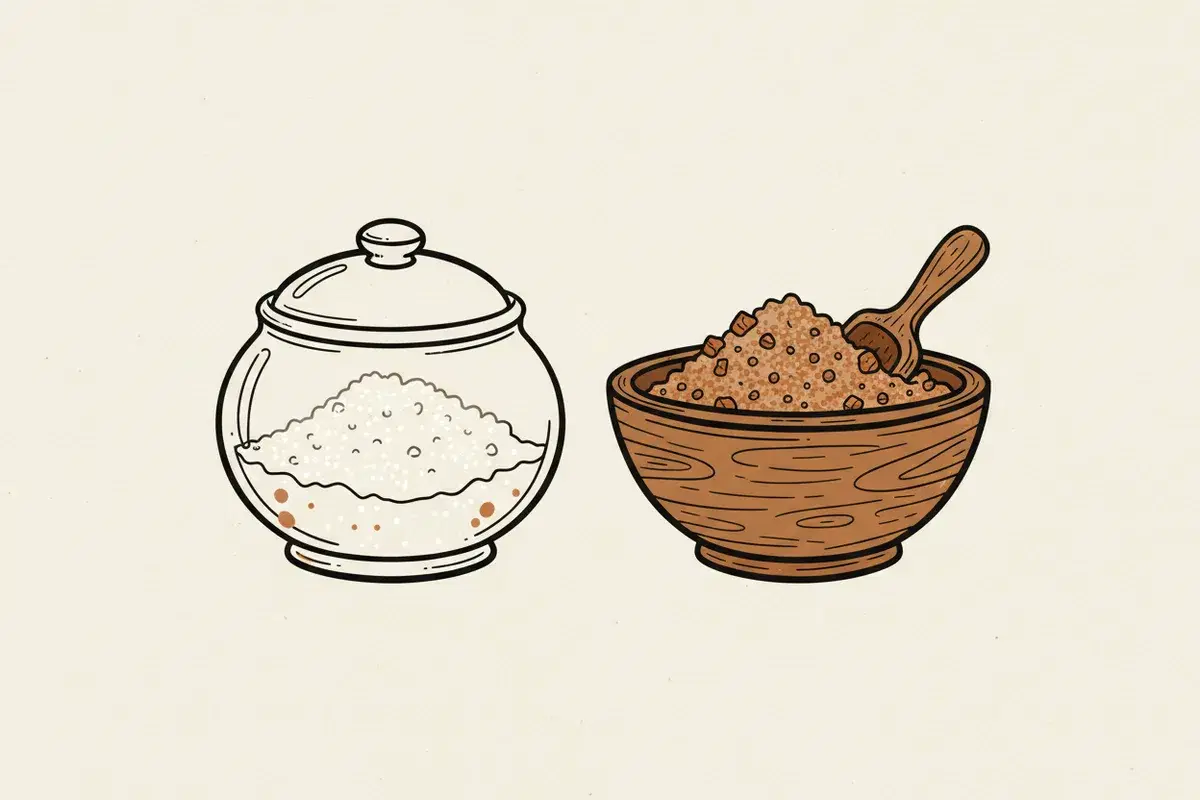
Stevia and monk fruit are both zero-calorie, plant-derived sweeteners that do not raise blood sugar, but monk fruit provides a cleaner taste without stevia's bitter aftertaste. Stevia is more widely available, globally approved, and budget-friendly. Choose monk fruit for neutral flavor in baking; choose stevia for an affordable, accessible daily sweetener.
Key takeaways
- Stevia extract (steviol glycosides) is roughly 200 to 400 times sweeter than table sugar, while monk fruit extract (mogrosides) is 100 to 250 times sweeter.
- Monk fruit provides a rounded, fruity sweet profile with minimal bitterness, whereas stevia can leave a metallic or licorice aftertaste.
- The US FDA considers high-purity extracts of both sweeteners to be Generally Recognized as Safe (GRAS), but the European Food Safety Authority (EFSA) distinguishes steviol glycosides by production method (E 960a, E 960b, E 960c, E 960d) and has not yet authorized monk fruit extract as a general food additive.
- Most supermarket packets and baking blends dilute these potent extracts with bulking agents like erythritol, dextrose, or maltodextrin, which may trigger digestive symptoms.
Stevia vs Monk Fruit: Which Sweetener Wins the Quick Verdict?
When choosing between stevia and monk fruit, the best option depends on your budget, taste tolerance, and regional availability. Both compounds deliver intense sweetness with zero grams of net carbohydrates, making them popular for ketogenic, low-carb, and diabetic diets. According to Michigan State University Center for Research on Ingredient Safety, both sweeteners offer functional non-nutritive alternatives derived from botanical sources.
| Feature | Stevia (Steviol Glycosides) | Monk Fruit (Mogrosides) |
|---|---|---|
| Plant Source | Stevia rebaudiana leaf | Siraitia grosvenorii (Luo Han Guo) fruit |
| Sweetness Potency | 200 to 400x sucrose | 100 to 250x sucrose |
| Flavor Profile | Sweet with bitter, licorice notes | Clean, mildly fruity sweet notes |
| FDA Status | GRAS (purified extracts) | GRAS (purified extracts) |
| EU Status | Authorized (E 960a, E 960b, E 960c, E 960d) | Pending / unapproved as food additive |
| Common Bulking Agents | Erythritol, inulin, dextrose | Erythritol, allulose, maltodextrin |
| Relative Cost | Low to moderate | Moderate to high |
If you want an affordable, widely available sweetener for morning coffee or oatmeal, stevia is practical and thoroughly researched. If you find stevia's lingering bitter finish unpalatable, monk fruit delivers a more neutral sugar replacement, provided you are comfortable paying a premium.
How Are Steviol Glycosides and Mogrosides Made from Plants?
Stevia is derived from the leaves of Stevia rebaudiana, a shrub native to South America. The sweet taste comes from natural compounds called steviol glycosides, primarily stevioside and rebaudioside A (often labeled as Reb A). To learn more about how these compounds are isolated and regulated, explore our detailed guide on what are steviol glycosides? uses, safety, and labels. Commercial production involves harvesting leaves, steeping them in hot water, and refining the extract through filtration and crystallization to yield an isolated white powder reaching minimum purity thresholds of 95% total steviol glycosides.
Monk fruit, known traditionally as Luo Han Guo (Siraitia grosvenorii), is a small green gourd native to southern China and northern Thailand. Traditional herbalists have used the dried fruit for centuries in soothing teas. The sweetness does not stem from fructose or sucrose, but from unique triterpene glycosides known as mogrosides (most notably Mogroside V, which accounts for 30% to 55% of standardized commercial extracts). Extracting monk fruit involves crushing the fruit, collecting the sweet juice, removing undesirable volatile aromas, and concentrating the mogroside content into liquid drops or fine powder.
Neither commercial sweetener is simply dried, crushed plant material. Both undergo standardized water extraction and purification processes to concentrate their active sweet molecules and eliminate unpalatable tannins and waxes.
Why Does Stevia Taste Bitter Compared to Monk Fruit?
Taste is the most noticeable difference between these two natural sugar alternatives. Pure steviol glycosides are roughly 200 to 400 times sweeter than table sugar. However, stevioside and lower-purity Reb A molecules bind not only to the human sweet taste receptor (hTAS1R2/hTAS1R3) but also to human bitter taste receptors (hTAS2R4 and hTAS2R14), as shown in human psychometric and taste receptor studies of steviol glycosides. This dual binding creates a characteristic astringent, licorice-like finish that lingers on the tongue, which some consumers find unpleasant.
Monk fruit extract is roughly 100 to 250 times sweeter than sucrose. Mogroside V binds almost exclusively to sweet taste receptors with minimal stimulation of bitter receptors. As a result, monk fruit tends to deliver an immediate, rounded sweetness without the sharp, metallic aftertaste associated with budget stevia products. For delicate flavor profiles like light teas, custards, or simple syrups, monk fruit generally produces a cleaner result.
Food manufacturers frequently blend the two extracts together. Combining small amounts of stevia and monk fruit creates a synergistic sweetness profile that minimizes the bitter notes of stevia while lowering the higher ingredient cost of monk fruit. As detailed in academic overviews published by California State University, combining intense sweeteners can improve overall palatability while eliminating caloric density. For consumers interested in synthetic high-intensity alternatives, comparing these profiles to is acesulfame potassium (ace-k) safe? uses and labels or what is aspartame? uses, safety, and labeling explained provides a helpful perspective on overall sweetness characteristics.
How Do the FDA and the EU Regulate Stevia and Monk Fruit?
Regulatory agencies assess intense sweeteners by examining purification methods, toxicological studies, and metabolic pathways. In the United States, the U.S. Food and Drug Administration has evaluated numerous Generally Recognized as Safe (GRAS) notices for high-purity steviol glycosides (minimum 95% purity) and high-purity monk fruit extracts without objection. However, the FDA does not permit crude stevia leaves or unrefined stevia extracts as food additives due to insufficient historical safety data on unpurified fractions.
In Europe, regulatory approval diverges significantly, featuring specific E-number subclassifications. The EU, following evaluation by the European Food Safety Authority (EFSA), authorized steviol glycosides extracted directly from the plant under the code E 960a. To account for newer production methods, it added distinct E-numbers: E 960b for fermentation-derived steviol glycosides, E 960c for enzymatically produced steviol glycosides, and E 960d for glucosylated steviol glycosides. These specific designations ensure precise labeling transparency regarding whether the sweetener originated directly from plant leaf extraction or enzymatic bioconversion.
Conversely, monk fruit extract has not received full authorization as a general food additive across the European Union. In its 2019 evaluation, EFSA concluded that the available toxicological data were insufficient to establish the safety of monk fruit extract as a food additive. Therefore, travelers in Europe will readily find stevia-sweetened goods with E 960a through E 960d on ingredient lists, but rarely spot commercial monk fruit products on supermarket shelves.
Both agencies maintain that purified steviol glycosides possess an Acceptable Daily Intake (ADI) of 4 milligrams per kilogram of body weight per day (expressed as steviol equivalents). The US FDA has not established a numerical ADI for monk fruit, instead evaluating individual GRAS dossiers based on self-limiting sweetness levels and current toxicological data.
How Do Stevia and Monk Fruit Affect Blood Sugar and Gut Health?
Neither steviol glycosides nor mogrosides are absorbed in the upper gastrointestinal tract as intact carbohydrates. Consequently, neither compound supplies usable calories or causes immediate spikes in postprandial blood glucose or serum insulin. A comprehensive synthesis in Current Research in Nutrition and Food Science highlights that swapping sugar for pure stevia or monk fruit helps stabilize glycemic response in individuals with type 2 diabetes or insulin resistance.
When steviol glycosides reach the colon, resident microflora cleave the sugar molecules from the core steviol backbone. The free steviol is absorbed through the intestinal wall, processed by the liver into steviol glucuronide, and excreted in urine. Mogrosides follow a similar path, undergoing microbial breakdown into mogrol before excretion. Peer-reviewed research suggests that normal dietary intakes of these high-intensity compounds do not disrupt the overall diversity of the gut microbiome, unlike some synthetic sweeteners.
It is worth noting that while short-term glycemic safety is well established, current scientific evidence cannot establish the long-term metabolic or microbiome impacts of lifelong monk fruit versus stevia consumption in diverse human populations. Individual metabolic responses can vary depending on baseline metabolic health, gut flora composition, and overall dietary context.
What Bulking Agents Are Hidden in Commercial Sweetener Packets?
Because pure stevia and monk fruit are hundreds of times sweeter than table sugar, a single serving of pure extract is microscopic, often less than 1 milligram to 5 milligrams. To create a product that measures like sugar in a teaspoon or packet, brands blend the active sweetener with high-volume carriers, which often make up more than 99% of the packet by total weight.
Common bulking ingredients include:
- Erythritol: A sugar alcohol that provides bulk and cooling sweetness. To understand potential digestive tolerance and vascular markers associated with this additive, read our guide on whether is erythritol safe? heart concerns and side effects.
- Dextrose and Maltodextrin: Simple corn-derived starches used in tabletop packets. Although labeled as zero-calorie due to small single-serving rules, they are rapidly absorbed carbohydrates that can spike blood sugar if used in large quantities.
- Inulin and Soluble Tapioca Fiber: Prebiotic plant fibers that add volume and mouthfeel, but may cause bloating or gas in sensitive individuals.
- Allulose: A rare sugar that caramelizes like sucrose and carries minimal glycemic impact.
When buying monk fruit or stevia for baking or tabletop use, check the ingredient list carefully. If erythritol or dextrose appears as the first ingredient, the product consists primarily of that bulking agent, with only a trace fraction of stevia or monk fruit added to boost sweetness.
How Do Stevia and Monk Fruit Perform in High-Heat Baking?
Both steviol glycosides and mogrosides demonstrate solid thermal stability up to approximately 200 degrees Celsius (392 degrees Fahrenheit), making them suitable for standard baking, boiling, and hot beverage preparation. Unlike sugar, however, neither extract will melt, caramelize, retain moisture, or ferment with yeast.
Monk fruit blends typically yield superior flavor in baked desserts like cookies, quick breads, and cakes because high heat does not amplify mogroside bitterness. In contrast, baking with concentrated stevia can concentrate its herbal aftertaste, resulting in a noticeably metallic finish in dense goods.
To achieve proper browning and tender crumb structure without real sucrose, bakers often use a 1:1 sugar replacement blend that pairs monk fruit or stevia with allulose or erythritol. For shoppers comparing other common sugar substitutes for cooking, review our breakdown of what is sucralose? uses, safety, baking risks, and labels to evaluate thermal safety across artificial options.
Which Sweetener Should You Pick for Your Daily Routine?
Your choice between stevia and monk fruit comes down to how you plan to use the sweetener and how sensitive you are to lingering flavors.
Choose Stevia if:
- You want an economical, everyday sweetener for protein shakes, heavily flavored coffee, or smoothies where strong ingredients mask subtle aftertastes.
- You live in Europe or international regions where monk fruit is not approved for retail distribution and you rely on regulated E 960 additives.
- You prefer liquid drops containing only purified water and organic Reb A with zero added sugar alcohols.
Choose Monk Fruit if:
- You are sensitive to bitter or licorice undertones and want a taste profile that closely mimics cane sugar.
- You do frequent low-carb baking, confection making, or delicate tea preparation.
- You want a sweetener that blends seamlessly with other keto-friendly ingredients without an astringent bite.
Whenever you shop for either sweetener, inspect the ingredient label to ensure you know whether you are purchasing a pure extract or a carrier blend that includes sugar alcohols or starches.
Common questions
- Is monk fruit healthier than stevia?
- Neither sweetener is definitively healthier than the other. Both are zero-calorie, plant-derived extracts that do not spike blood glucose or insulin levels. Monk fruit is often preferred for taste because it lacks stevia's bitter aftertaste, but both are safe when consumed within standard dietary guidelines.
- What do E 960a, E 960b, E 960c, and E 960d mean on European food labels?
- In the European Union, the EFSA categorizes stevia-derived sweeteners by their specific production method. E 960a refers to steviol glycosides extracted directly from the Stevia plant, E 960b to steviol glycosides produced by fermentation, E 960c to enzymatically produced steviol glycosides, and E 960d to glucosylated steviol glycosides.
- Does monk fruit break a fast or raise insulin?
- Pure monk fruit extract contains no usable carbohydrates or calories and does not trigger an insulin spike, meaning it will not break a metabolic fast. However, always check the label for bulking agents like dextrose or maltodextrin, which can raise blood sugar.
- Why is monk fruit extract more expensive than stevia?
- Monk fruit is more difficult to cultivate, requires specific geographic and climatic conditions in southern China, and yields less sweet compound per acre than stevia plants. The extraction and purification process is also more labor-intensive, resulting in a higher retail cost.
- Can monk fruit or stevia cause digestive problems?
- Pure steviol glycosides and mogrosides rarely cause digestive issues at normal intake levels. However, commercial tabletop packets and baking blends are frequently mixed with sugar alcohols like erythritol or prebiotic fibers like inulin, which can cause gas, bloating, or loose stools in sensitive individuals.
- Why is monk fruit not widely available in the European Union?
- Monk fruit extract has not yet received official authorization as a food additive from the European Food Safety Authority (EFSA), pending additional comprehensive safety and exposure data. Steviol glycosides, by contrast, have full EU authorization under codes E 960a, E 960b, E 960c, and E 960d.
Sources
- High-Intensity Sweeteners (fda.gov)
- The Battle of Natural Sweeteners: A Comprehensive Guide to Monk Fruit and Stevia (foodandnutritionjournal.org)
- Stevia & Monk Fruit Sweeteners Overview (cris.msu.edu)
- Sugar Substitutes and Low-Calorie Sweeteners (pressbooks.calstate.edu)
- Human psychometric and taste receptor responses to steviol glycosides (pubmed.ncbi.nlm.nih.gov)
- Safety of use of Monk fruit extract as a food additive in different food categories (efsa.europa.eu)
In this series
Guide
Is Acesulfame Potassium (Ace-K) Safe? Uses and LabelsGuide
What Are Steviol Glycosides? Uses, Safety, and LabelsGuide
Is Erythritol Safe? Heart Concerns and Side EffectsGuide
What Is Sucralose? Uses, Safety, Baking Risks, and LabelsGuide
What Is Aspartame? Uses, Safety, and Labeling ExplainedComparisons
Which Has More Fiber, Metamucil or Benefiber? 6 g Each
Related guides
Comparisons
Does Prego Have Added Sugar? Yes, 4 g vs Ragú's <1 gPrego Traditional lists 4 g added sugar per 1/2 cup; Ragú Old World Style Traditional lists under 1 g. Sodium, oil and ingredient order compared.
Comparisons
Do Stauffer's Animal Crackers Have HFCS? Barnum's Don'tStauffer's Original Animal Crackers list high fructose corn syrup; Barnum's list sugar, dextrose and fructose. Both carry 7g added sugars per serving.
Comparisons
Which Has More Fiber, Metamucil or Benefiber? 6 g EachBoth labels list 6 g fiber per serving. Metamucil is psyllium (5 g soluble) with aspartame or 16 g sugar plus Yellow 6; Benefiber is just wheat dextrin (6 g soluble).
Try it on your own groceries
Scan your next label with Aurascan
Point the camera at any ingredient list and get the same evidence-graded read you see here.
Open the scannerGet food recall alerts + a weekly digest
An email when a food recall is announced, plus one weekly roundup of label news and new guides.
We email a confirmation link first - nothing is sent until you click it. Unsubscribe anytime. Privacy