
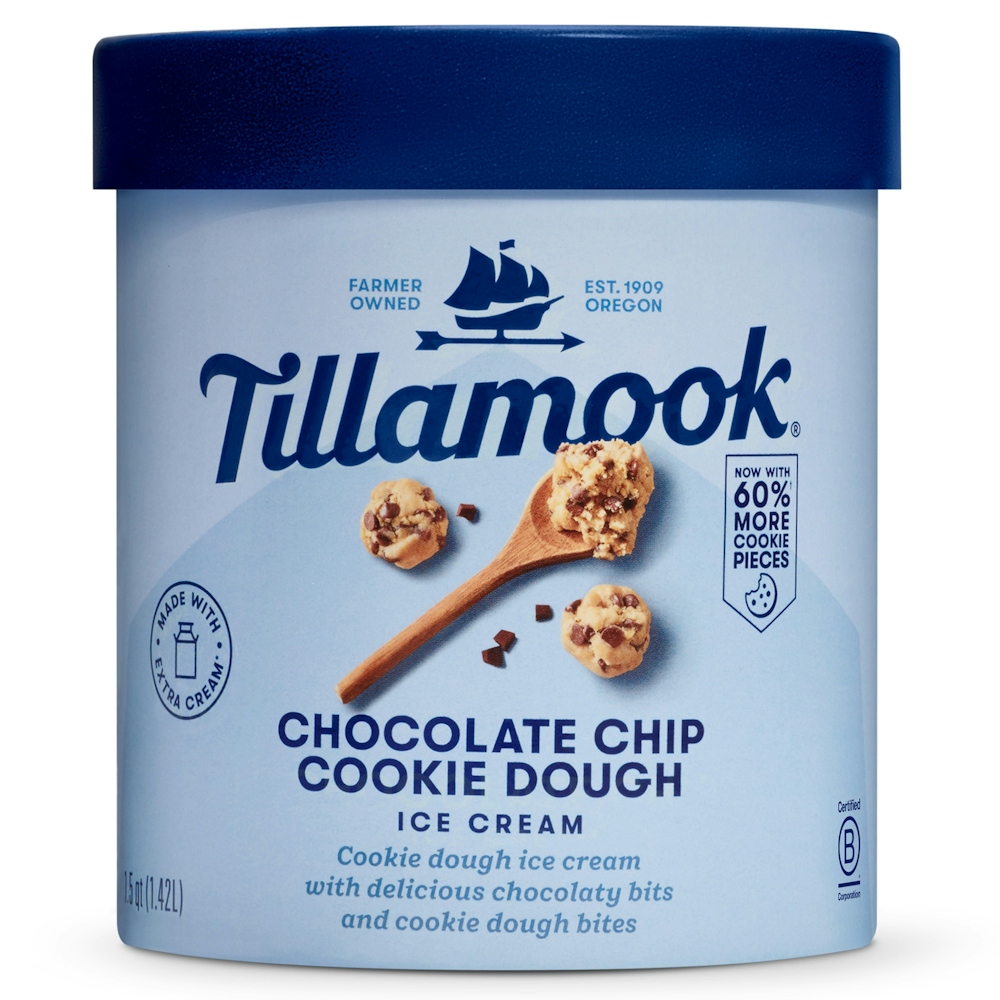
Tillamook Ice Cream, Chocolate Chip Cookie Dough
Tillamook
Ice Cream & Frozen Desserts
29 ingredients on the label
Barcode: 072830081115
All ingredients (29)
- CREAMThe body digests cream's milk fat as a dietary fat, and the brief contains no body-system risk finding specific to cream itself. The FAO/WHO Codex Alimentarius defines cream as a fluid milk product rich in fat, and the brief does not include an ADI or specific regulator-set limit for cream as an ingredient.Processed
The body digests cream's milk fat as a dietary fat, and the brief contains no body-system risk finding specific to cream itself. The FAO/WHO Codex Alimentarius defines cream as a fluid milk product rich in fat, and the brief does not include an ADI or specific regulator-set limit for cream as an ingredient.
- CODEX STANDARD FOR CREAM AND PREPARED CREAMS - FAO / Codex Alimentarius
- SKIM MILKSkim milk supplies protein, calcium, lactose, and other nutrients that the gut digests and the body uses for bone and general nutrition, and people with lactose intolerance lack the lactase enzyme needed to break lactose down. The FAO notes that skimmed milk does not contain essential fatty acids or fat-soluble vitamins, and the EFSA sets tolerable upper intake levels for vitamin D rather than a specific ADI for skim milk itself.Processed
Skim milk supplies protein, calcium, lactose, and other nutrients that the gut digests and the body uses for bone and general nutrition, and people with lactose intolerance lack the lactase enzyme needed to break lactose down. The FAO notes that skimmed milk does not contain essential fatty acids or fat-soluble vitamins, and the EFSA sets tolerable upper intake levels for vitamin D rather than a specific ADI for skim milk itself.
- Raw Milk Misconceptions and the Danger of Raw Milk Consumption | FDA - FDA
- Milk consumption and multiple health outcomes: umbrella review of systematic reviews and meta-analyses in humans | Nutrition & Metabolism | Springer Nature Link - Nutrition & Metabolism
- Milk and dairy products: good or bad for human health? An assessment of the totality of scientific evidence - Food & Nutrition Research
- Milk and Dairy Products in Human Nutrition- Questions and Answers - FAO
- High vs. low-fat dairy and milk differently affects the risk of all-cause, CVD, and cancer death: A systematic review and dose-response meta-analysis of prospective cohort studies: Critical Reviews in Food Science and Nutrition: Vol 62 , No 13 - Get Access - Critical Reviews in Food Science and Nutrition
- Safety of UV‐treated milk as a novel food pursuant to Regulation (EC) No 258/97 - - 2016 - EFSA Journal - Wiley Online Library - EFSA Journal
- Daily milk consumption and all-cause mortality, coronary heart disease and stroke: a systematic review and meta-analysis of observational cohort studies | BMC Public Health | Springer Nature Link - BMC Public Health
- SUGARThe body breaks sucrose into glucose and fructose in the small intestine, and excess sugar is stored as fat, which can build up over time. The EFSA reviewed dietary sugars and could not set a tolerable upper intake level for added sugars in 2010, while the FDA sets a Daily Value of 50 grams of added sugars per day on a 2,000-calorie diet.Processed
The body breaks sucrose into glucose and fructose in the small intestine, and excess sugar is stored as fat, which can build up over time. The EFSA reviewed dietary sugars and could not set a tolerable upper intake level for added sugars in 2010, while the FDA sets a Daily Value of 50 grams of added sugars per day on a 2,000-calorie diet.
- Tolerable upper intake level for dietary sugars | EFSA - EFSA
- Dietary sugar consumption and health: umbrella review - The BMJ
- Important Food Sources of Fructose-Containing Sugars and Incident Hypertension: A Systematic Review and Dose-Response Meta-Analysis of Prospective Cohort Studies - Journal of the American Heart Association
- Metabolism and Health Impacts of Dietary Sugars - Journal of Lipid and Atherosclerosis
- MILKMilk supplies protein, calcium, vitamin D, and lactose, which the gut digests and the body uses for bone and metabolic functions, while people with lactose maldigestion may have gut symptoms. The EFSA has evaluated raw drinking milk microbial hazards and UV-treated milk as a novel food, and FSANZ reviewed raw milk health claims; no ADI applies to milk as a food.Minimally processed
Milk supplies protein, calcium, vitamin D, and lactose, which the gut digests and the body uses for bone and metabolic functions, while people with lactose maldigestion may have gut symptoms. The EFSA has evaluated raw drinking milk microbial hazards and UV-treated milk as a novel food, and FSANZ reviewed raw milk health claims; no ADI applies to milk as a food.
- Milk consumption and multiple health outcomes: umbrella review of systematic reviews and meta-analyses in humans - Nutrition & Metabolism
- Dairy Consumption and Cardiometabolic Diseases: Systematic Review and Updated Meta-Analyses of Prospective Cohort Studies - Current Nutrition Reports
- Consumption of Dairy Foods and Cardiovascular Disease: A Systematic Review - Nutrients
- Systematic review and meta-analysis of lactose digestion, its impact on intolerance and nutritional effects of dairy food restriction in inflammatory bowel diseases - Nutrition Journal
- Scientific Opinion on the public health risks related to the consumption of raw drinking milk - EFSA Journal
- Milk Consumption and Mortality from All Causes, Cardiovascular Disease, and Cancer: A Systematic Review and Meta-Analysis - Nutrients
- Milk and dairy products: good or bad for human health? An assessment of the totality of scientific evidence - Food & Nutrition Research
- BROWN SUGARThe body breaks brown sugar's sucrose into glucose and fructose, which supply energy and, in excess, are stored as fat, and sugar consumption is known to cause dental caries. The EFSA could not set a Tolerable Upper Intake Level for dietary sugars, concluding that added and free sugars should be as low as possible, and the Hong Kong Centre for Food Safety advises limiting free sugars including dark brown sugars.Processed
The body breaks brown sugar's sucrose into glucose and fructose, which supply energy and, in excess, are stored as fat, and sugar consumption is known to cause dental caries. The EFSA could not set a Tolerable Upper Intake Level for dietary sugars, concluding that added and free sugars should be as low as possible, and the Hong Kong Centre for Food Safety advises limiting free sugars including dark brown sugars.
- Acrylamide in Dark Brown Sugar - Centre for Food Safety, Hong Kong
- Sugar: Facts and Myths - Centre for Food Safety, Hong Kong
- Tolerable upper intake level for dietary sugars | EFSA - European Food Safety Authority
- Dietary sugar consumption and health: umbrella review - The BMJ
- The development of metabolic endotoxemia is dependent on the type of sweetener and the presence of saturated fat in the diet - Gut Microbes
- The Effect of Unrefined Sugar on Inflammation: A Systematic Review of Intervention Studies - International Journal of Preventive Medicine
- WHEAT FLOURThe body breaks wheat flour's starch and protein down in the gut, and wheat components can trigger adverse reactions in some people, per a peer-reviewed review of wheat adverse reactions (Brouns, 2019). The Codex Alimentarius Commission's wheat flour standard (CXS 152-1985) sets the composition and contaminant rules for flour, and the EFSA has reviewed mycotoxin and process-contaminant levels in wheat-based bread, which is relevant to flour.Processed
The body breaks wheat flour's starch and protein down in the gut, and wheat components can trigger adverse reactions in some people, per a peer-reviewed review of wheat adverse reactions (Brouns, 2019). The Codex Alimentarius Commission's wheat flour standard (CXS 152-1985) sets the composition and contaminant rules for flour, and the EFSA has reviewed mycotoxin and process-contaminant levels in wheat-based bread, which is relevant to flour.
- Adverse Reactions to Wheat or Wheat Components - Comprehensive Reviews in Food Science and Food Safety
- Fungal and Toxin Contaminants in Cereal Grains and Flours: Systematic Review and Meta-Analysis - Foods (MDPI)
- WATERWater is absorbed and used throughout the body for hydration, and dissolved minerals and contaminants in it are handled by the gut, kidneys, and other organs according to their chemistry. The WHO sets guideline values for chemical contaminants in drinking water based on health concern, and the ANSES sets quality limits for around 40 chemicals or chemical classes in drinking water in France.Processed
Water is absorbed and used throughout the body for hydration, and dissolved minerals and contaminants in it are handled by the gut, kidneys, and other organs according to their chemistry. The WHO sets guideline values for chemical contaminants in drinking water based on health concern, and the ANSES sets quality limits for around 40 chemicals or chemical classes in drinking water in France.
- Updated consumer risk assessment of fluoride in food and drinking water including the contribution from other sources of oral exposure | EFSA - European Food Safety Authority
- Exposure to Drinking Water Trihalomethanes and Risk of Cancer: A Systematic Review of the Epidemiologic Evidence and Dose–Response Meta-Analysis - Environmental Health Perspectives
- Adverse health outcomes associated with drinking highly saline water: a systematic review - European Journal of Epidemiology
- COCONUT OILThe body absorbs its mostly saturated fats, with lauric acid as the main fatty acid, and meta-analyses of trials link coconut oil intake to higher LDL cholesterol than cis unsaturated plant oils. The FDA lists coconut oil as generally recognized as safe (GRAS) for food use, and the CIR has assessed coconut oil as safe for cosmetic use.Processed
The body absorbs its mostly saturated fats, with lauric acid as the main fatty acid, and meta-analyses of trials link coconut oil intake to higher LDL cholesterol than cis unsaturated plant oils. The FDA lists coconut oil as generally recognized as safe (GRAS) for food use, and the CIR has assessed coconut oil as safe for cosmetic use.
- Coconut oil: what do we really know about it so far? | Food Quality and Safety | Oxford Academic - Food Quality and Safety
- Coconut oil consumption and cardiovascular risk factors in humans - PMC - Nutrition Reviews / PMC
- Impact of coconut oil consumption on cardiovascular health: a systematic review and meta-analysis | Nutrition Reviews | Oxford Academic - Nutrition Reviews
- The effects of coconut oil on the cardiometabolic profile: a systematic review and meta-analysis of randomized clinical trials | Lipids in Health and Disease | Springer Nature Link - Lipids in Health and Disease
- Dose-dependent effect of coconut oil supplementation on obesity indices: a systematic review and dose-response meta-analysis of clinical trials - BMC Nutrition
- Safety Assessment of (Coconut)-Derived Ingredients as Used in Cosmetics - Cosmetic Ingredient Review
- Safety Assessment of Cocos nucifera (Coconut)-Derived Ingredients as Used in Cosmetics - Cosmetic Ingredient Review
- PASTEURIZED EGG YOLKSThe body absorbs the yolk's fats, protein, and micronutrients, and dietary cholesterol from yolk raises fasting LDL cholesterol by about 10% on average with wide individual variation, per peer-reviewed reviews. Regulatory reviews of egg products, including FSANZ's risk assessment, rate chemical hazards in eggs as low and identify Salmonella as the main microbial concern, and the FSANZ does not set a numeric ADI for yolk.Processed
The body absorbs the yolk's fats, protein, and micronutrients, and dietary cholesterol from yolk raises fasting LDL cholesterol by about 10% on average with wide individual variation, per peer-reviewed reviews. Regulatory reviews of egg products, including FSANZ's risk assessment, rate chemical hazards in eggs as low and identify Salmonella as the main microbial concern, and the FSANZ does not set a numeric ADI for yolk.
- Cardiovascular Harm From Egg Yolk and Meat: More Than Just Cholesterol and Saturated Fat - Journal of the American Heart Association
- Egg consumption and health effects: A narrative review - Journal of Food Science
- Allergenicity of pasteurized whole raw Hen's egg compared with fresh whole raw Hen's egg. - Europe PMC
- Public health and safety of eggs and egg products in Australia - Food Standards Australia New Zealand
- What You Need to Know About Egg Safety | FDA - U.S. Food and Drug Administration
- The Golden Egg: Nutritional Value, Bioactivities, and Emerging Benefits for Human Health - Nutrients
- BUTTERButter is rich in saturated fatty acids, which raise LDL cholesterol in the blood, and the liver clears less LDL when these fats are eaten in place of unsaturated oils.Processed
Butter is rich in saturated fatty acids, which raise LDL cholesterol in the blood, and the liver clears less LDL when these fats are eaten in place of unsaturated oils.
- Cooking oil/fat consumption and deaths from cardiometabolic diseases and other causes: prospective analysis of 521,120 individuals - BMC Medicine
- Butter and Plant-Based Oils Intake and Mortality - JAMA Internal Medicine
- Is Butter Back? A Systematic Review and Meta-Analysis of Butter Consumption and Risk of Cardiovascular Disease, Diabetes, and Total Mortality - PLOS One
- The Effect of Diet on Cardiovascular Disease and Lipid and Lipoprotein Levels - Endotext - NCBI Bookshelf - NCBI Bookshelf / Endotext
- NORDIC NUTRITION RECOMMENDATIONS 2023 - Nordic Council of Ministers
- Trans fatty acids: EFSA Panel reviews dietary intakes and health effects | EFSA - European Food Safety Authority
- COCOA (PROCESSED WITH ALKALI)Alkalization lowers cocoa's pH and phenolic content, and the reduced polyphenols are what the gut and blood vessels would otherwise process from cocoa.Processed
Alkalization lowers cocoa's pH and phenolic content, and the reduced polyphenols are what the gut and blood vessels would otherwise process from cocoa.
- Document - European Commission (DG Health and Food Safety)
- Changes in cocoa properties induced by the alkalization process: A review - Valverde García - 2020 - Comprehensive Reviews in Food Science and Food Safety - Wiley Online Library - Comprehensive Reviews in Food Science and Food Safety
- MOLASSESMolasses is mostly sugars, and its iron content is absorbed in the gut, where it has been studied as an iron source for iron deficiency anemia. The FDA lists molasses as a nutritive sweetener under 21 CFR 172.816 and it carries no ADI, while peer-reviewed rat work reports that Saccharum officinarum molasses lowered sperm count and testosterone at high doses.Processed
Molasses is mostly sugars, and its iron content is absorbed in the gut, where it has been studied as an iron source for iron deficiency anemia. The FDA lists molasses as a nutritive sweetener under 21 CFR 172.816 and it carries no ADI, while peer-reviewed rat work reports that Saccharum officinarum molasses lowered sperm count and testosterone at high doses.
- Saccharum officinarum molasses adversely alters reproductive functions in male wistar rats - Toxicology Reports
- Full article: Review on the application, health usage, and negative effects of molasses - Taylor & Francis
- Investigation of the quality, antimicrobial, and antioxidant effects of commercial carob molasses and determination of phenolic acids by using HPLC - Journal of Food Science (PMC)
- SOYBEAN OILThe body absorbs soybean oil's linoleic acid, which becomes part of cell membranes and platelets, and changes in platelet fatty acid profile have been reported to slightly inhibit platelet clotting signals. The FDA reviewed soybean oil for a qualified health claim on coronary heart disease risk, and the WHO JECFA lists a thermally oxidized soybean oil ADI of 0-3 mg/kg body weight.Ultra-processed
The body absorbs soybean oil's linoleic acid, which becomes part of cell membranes and platelets, and changes in platelet fatty acid profile have been reported to slightly inhibit platelet clotting signals. The FDA reviewed soybean oil for a qualified health claim on coronary heart disease risk, and the WHO JECFA lists a thermally oxidized soybean oil ADI of 0-3 mg/kg body weight.
- Linoleic acid–good or bad for the brain? - npj Science of Food
- FOOD USE AND HEALTH-EFFECTS OF SOYBEAN AND SUNFLOWER OILS - Journal of the American College of Nutrition (via HERO/EPA)
- EGGSEgg proteins such as lysozyme are digested in the gut, and egg allergens can trigger immune reactions in susceptible people. EFSA concluded that the food enzyme lysozyme from hens' eggs does not give rise to safety concerns under intended conditions of use, except for known allergic reactions in susceptible individuals.Minimally processed
Egg proteins such as lysozyme are digested in the gut, and egg allergens can trigger immune reactions in susceptible people. EFSA concluded that the food enzyme lysozyme from hens' eggs does not give rise to safety concerns under intended conditions of use, except for known allergic reactions in susceptible individuals.
- Safety evaluation of the food enzyme lysozyme from hens' eggs - EFSA
- Risk Assessment Report Food Allergens: Eggs - Food Safety Commission of Japan
- Scientific Opinion on the evaluation of allergenic foods and food ingredients for labelling purposes - EFSA
- Public health and safety of eggs and egg products in Australia - Food Standards Australia New Zealand
- Egg and Dietary Cholesterol Intake and Risk of All-Cause, Cardiovascular, and Cancer Mortality: A Systematic Review and Dose-Response Meta-Analysis of Prospective Cohort Studies - Frontiers in Nutrition
- UNSWEETENED CHOCOLATEThe body absorbs cocoa-derived compounds such as flavanols and methylxanthines, which are metabolized and cleared after intake, and cadmium carried in cocoa mass can build up in the kidneys. The EFSA set a tolerable weekly intake for cadmium of 2.5 µg/kg body weight, and the WHO set a provisional tolerable weekly intake of 0.007 mg/kg body weight.Processed
The body absorbs cocoa-derived compounds such as flavanols and methylxanthines, which are metabolized and cleared after intake, and cadmium carried in cocoa mass can build up in the kidneys. The EFSA set a tolerable weekly intake for cadmium of 2.5 µg/kg body weight, and the WHO set a provisional tolerable weekly intake of 0.007 mg/kg body weight.
- BfR suggests the introduction of a maximum level for cadmium in chocolate - BfR Opinion No. 015/2007, 31 January 2007 - BfR (German Federal Institute for Risk Assessment)
- CODEX COMMITTEE CONTAMINANTS IN FOOD 14 Session – 20 – 24 April 2020 - European Union / Codex Committee on Contaminants in Food
- The Health Effects of Chocolate and Cocoa: A Systematic Review - Nutrients (PMC)
- Macro- and Microelemental Composition and Toxicity of Unsweetened Natural Cocoa Powder in Sprague-Dawley Rats - Journal of Toxicology
- VANILLA EXTRACTThe body breaks down vanillin and related vanilla compounds, and peer-reviewed research links vanilla and vanillin to type IV hypersensitivity reactions such as itching rash and swelling in sensitive people. The FDA lists vanilla extract as a food substance under 21 CFR 182.20, and JECFA sets an ADI of 0-10 mg/kg bw for vanillin.Processed
The body breaks down vanillin and related vanilla compounds, and peer-reviewed research links vanilla and vanillin to type IV hypersensitivity reactions such as itching rash and swelling in sensitive people. The FDA lists vanilla extract as a food substance under 21 CFR 182.20, and JECFA sets an ADI of 0-10 mg/kg bw for vanillin.
- Vanilla and Vanillin as Probable Causes of Hypersensitivity Reactions and Vaping Cytotoxicity - Current Issues in Molecular Biology
- Coumarin in Cinnamon-Containing Foods and Vanilla Extracts - April 1, 2014 to March 31, 2015 - Canadian Food Inspection Agency
- Safety Assessment of Vanilla-Derived Ingredients as Used in Cosmetics - Cosmetic Ingredient Review
- Post Meeting Announcement - Cosmetic Ingredient Review
- Toxicology of flavoring- and cannabis-containing e-liquids used in electronic delivery systems - Pharmacology & Therapeutics
- ENRICHED FLOURFolic acid is needed for DNA synthesis and cell division, and the iron, niacin, thiamine and riboflavin in the flour are used for energy metabolism and red blood cell formation. The EFSA set a safe level of intake for iron of 40 mg/day for adults, and the Food Safety Commission of Japan and the WHO both publish guidance on fortification of flour.Ultra-processed
Folic acid is needed for DNA synthesis and cell division, and the iron, niacin, thiamine and riboflavin in the flour are used for energy metabolism and red blood cell formation. The EFSA set a safe level of intake for iron of 40 mg/day for adults, and the Food Safety Commission of Japan and the WHO both publish guidance on fortification of flour.
- Dietary reference values | EFSA - EFSA
- Fortification of wheat and maize flour with folic acid for population health outcomes - PMC - Cochrane Database of Systematic Reviews
- NIACINThe body converts niacin into the coenzymes NAD and NADP, which drive redox reactions in energy metabolism, and the liver mainly processes nicotinic acid and nicotinamide. The SCF (the European Commission's Scientific Committee on Food) set a tolerable upper intake level for niacin, with a UL of 10 mg/day for nicotinic acid and 900 mg/day for nicotinamide per the Nordic Nutrition Recommendations 2023 summary of EFSA values.Processed
The body converts niacin into the coenzymes NAD and NADP, which drive redox reactions in energy metabolism, and the liver mainly processes nicotinic acid and nicotinamide. The SCF (the European Commission's Scientific Committee on Food) set a tolerable upper intake level for niacin, with a UL of 10 mg/day for nicotinic acid and 900 mg/day for nicotinamide per the Nordic Nutrition Recommendations 2023 summary of EFSA values.
- Niacin - LiverTox - NCBI Bookshelf - LiverTox (NCBI Bookshelf)
- Niacin Toxicity - StatPearls - NCBI Bookshelf - StatPearls (NCBI Bookshelf)
- The intake of nicotinic acid in excessive dosage can have damaging health effects - BfR opinion No. 018/2012, 6 February 2012 - BfR (German Federal Institute for Risk Assessment)
- The adverse effects of oral niacin/nicotinamide - an overview of reviews | Eye - Eye (Nature)
- Cardiovascular safety of vitamin B3 administration | Nature Medicine - Nature Medicine
- The effect of niacin on inflammatory markers and adipokines: a systematic review and meta-analysis of interventional studies - European Journal of Nutrition
- REDUCED IRONThe body absorbs iron through the gut and uses it for oxygen transport in hemoglobin and myoglobin, with surplus iron stored in the liver and no pathway for excretion. The EFSA set a safe level of intake of 40 mg/day for adults, including pregnant and lactating women, and the JECFA set a provisional maximum tolerable daily intake of 0.8 mg/kg bw for iron from all sources.Processed
The body absorbs iron through the gut and uses it for oxygen transport in hemoglobin and myoglobin, with surplus iron stored in the liver and no pathway for excretion. The EFSA set a safe level of intake of 40 mg/day for adults, including pregnant and lactating women, and the JECFA set a provisional maximum tolerable daily intake of 0.8 mg/kg bw for iron from all sources.
- Scientific opinion on the tolerable upper intake level for iron | EFSA - EFSA
- Dietary reference values | EFSA - EFSA
- NORDIC NUTRITION RECOMMENDATIONS 2023 - Nordic Council of Ministers
- Iron intake and multiple health outcomes: Umbrella review: Critical Reviews in Food Science and Nutrition: Vol 63 , No 16 - Get Access - Critical Reviews in Food Science and Nutrition
- THIAMIN MONONITRATEThiamine acts as a coenzyme in carbohydrate and energy metabolism, and ingested thiamine is well absorbed, with absorption falling at doses of 5 mg per day or more. The EFSA reviewed thiamine mononitrate as a feed additive and found it safe for target animals and consumers, and the SCF did not identify a risk of adverse health effects at total population intakes.Ultra-processed
Thiamine acts as a coenzyme in carbohydrate and energy metabolism, and ingested thiamine is well absorbed, with absorption falling at doses of 5 mg per day or more. The EFSA reviewed thiamine mononitrate as a feed additive and found it safe for target animals and consumers, and the SCF did not identify a risk of adverse health effects at total population intakes.
- Thiamin (Vitamin B1) – A scoping review for Nordic Nutrition Recommendations 2023 - Food & Nutrition Research
- Vitamin B1 (Thiamine) - StatPearls, NCBI Bookshelf
- Wernicke's encephalopathy — from basic science to clinical practice. Part 1: Understanding the role of thiamine - Therapeutic Advances in Psychopharmacology
- Opinion of the Scientific Committee on Food on the Tolerable Upper Intake Level of Vitamin B1 - European Commission SCF
- Scientific Opinion on the safety and efficacy of vitamin B1 (thiamine mononitrate and thiamine hydrochloride) as a feed additive for all animal species based on a dossier submitted by DSM Nutritional Products - EFSA Journal
- Scientific Opinion on the safety and efficacy of vitamin B1 (thiamine mononitrate and thiamine hydrochloride) as a feed additive for all animal species based on a dossier submitted by Lohmann Animal Health - EFSA Journal
- RIBOFLAVINRiboflavin is converted into the coenzymes FMN and FAD, which drive energy metabolism and many flavoprotein enzyme reactions across the body. The EFSA set an adequate intake (PRI) of 1.6 mg/day for adults, and the JECFA group ADI is "not specified" after its 2021 evaluation.Processed
Riboflavin is converted into the coenzymes FMN and FAD, which drive energy metabolism and many flavoprotein enzyme reactions across the body. The EFSA set an adequate intake (PRI) of 1.6 mg/day for adults, and the JECFA group ADI is "not specified" after its 2021 evaluation.
- NORDIC NUTRITION RECOMMENDATIONS 2023 - Nordic Council of Ministers
- Riboflavin - Health Professional Fact Sheet - NIH Office of Dietary Supplements
- Scientific Opinion on the re-evaluation of riboflavin (E 101(i)) and riboflavin-5′-phosphate sodium (E 101(ii)) as food additives - EFSA Journal
- Maximum levels for the addition of vitamin B1, vitamin B2 and pantothenic acid to foods including food supplements - BfR (German Federal Institute for Risk Assessment)
- FOLIC ACIDAfter swallowing, the gut converts folic acid into active folate forms through the enzyme dihydrofolate reductase, which the body needs for DNA building and red blood cell formation. The EFSA retained a tolerable upper intake level of 1000 µg/day (1 mg) for adults, including pregnant and lactating women, set to avoid masking cobalamin (vitamin B12) deficiency.Ultra-processed
After swallowing, the gut converts folic acid into active folate forms through the enzyme dihydrofolate reductase, which the body needs for DNA building and red blood cell formation. The EFSA retained a tolerable upper intake level of 1000 µg/day (1 mg) for adults, including pregnant and lactating women, set to avoid masking cobalamin (vitamin B12) deficiency.
- Fortification, folate and vitamin B12 balance, and the nervous system. Is folic acid excess potentially harmful? - European Journal of Clinical Nutrition
- Scientific opinion on the tolerable upper intake level for folate - EFSA
- Tolerable Upper Intake Level of folate - European Commission Scientific Committee on Food
- Unmetabolized Folic Acid: Biology, Epidemiology, and Clinical Consequences: A Systematic Review - Nutrients
- Folate - Health Professional Fact Sheet - NIH Office of Dietary Supplements
- SALTThe kidneys regulate sodium levels by filtering fluid, while excess sodium draws water into blood vessels to increase circulating volume. The EFSA identified an intake of 2.0 grams of sodium per day as safe and adequate for the general adult population.Processed
The kidneys regulate sodium levels by filtering fluid, while excess sodium draws water into blood vessels to increase circulating volume. The EFSA identified an intake of 2.0 grams of sodium per day as safe and adequate for the general adult population.
- Dietary Reference Values for sodium - European Food Safety Authority
- EFSA provides advice on adverse effects of sodium - European Food Safety Authority
- Impact of sodium intake on blood pressure, mortality and major cardiovascular events: an umbrella review of systematic reviews and meta-analyses: Critical Reviews in Food Science and Nutrition: Vol 65 , No 28 - Get Access - Critical Reviews in Food Science and Nutrition
- The impact of excessive salt intake on human health | Nature Reviews Nephrology - Nature Reviews Nephrology
- Salt Reduction to Prevent Hypertension and Cardiovascular Disease: JACC State-of-the-Art Review. - Abstract - Europe PMC - Journal of the American College of Cardiology
- The Science of Salt: A Regularly Updated Systematic Review of Salt and Health Outcomes (August to November 2015) - Wong - 2016 - The Journal of Clinical Hypertension - Wiley Online Library - The Journal of Clinical Hypertension
- TARA GUMTara gum is unlikely to be absorbed intact and is expected to be fermented by intestinal microbiota, so its main body interaction is in the gut. The EFSA concluded in its 2017 re-evaluation that no numerical ADI is needed for tara gum (E 417), and JECFA set its ADI as "not specified".Processed
Tara gum is unlikely to be absorbed intact and is expected to be fermented by intestinal microbiota, so its main body interaction is in the gut. The EFSA concluded in its 2017 re-evaluation that no numerical ADI is needed for tara gum (E 417), and JECFA set its ADI as "not specified".
- Re‐evaluation of tara gum (E 417) as a food additive - EFSA Journal via PMC
- Tara Flour - LiverTox - NCBI Bookshelf - NIDDK / NCBI
- Characterization of an Outbreak of Acute Liver Injury After Ingestion of Plant Based Food Supplement - Aliment Pharmacol Ther via PMC
- FDA declares tara flour unsafe—two years after outbreak - Center for Science in the Public Interest
- COCOACocoa flavanols are absorbed and act on blood vessel lining, where they support endothelium-dependent vasodilation, which is linked to healthy blood flow. The EFSA concluded a cause-and-effect relationship for cocoa flavanols and endothelium-dependent vasodilation and set 200 mg of cocoa flavanols daily as the amount needed for the claimed effect, while the EFSA set a tolerable weekly intake of 2.5 µg/kg body weight for cadmium.Processed
Cocoa flavanols are absorbed and act on blood vessel lining, where they support endothelium-dependent vasodilation, which is linked to healthy blood flow. The EFSA concluded a cause-and-effect relationship for cocoa flavanols and endothelium-dependent vasodilation and set 200 mg of cocoa flavanols daily as the amount needed for the claimed effect, while the EFSA set a tolerable weekly intake of 2.5 µg/kg body weight for cadmium.
- Scientific Opinion on the substantiation of a health claim related to cocoa flavanols and maintenance of normal endothelium-dependent vasodilation pursuant to Article 13(5) of Regulation (EC) No 1924/2006 - EFSA Journal
- Scientific Opinion on the modification of the authorisation of a health claim related to cocoa flavanols and maintenance of normal endothelium-dependent vasodilation pursuant to Article 13(5) of Regulation (EC) No 1924/2006 following a request in accordance with Article 19 of Regulation (EC) No 1924/2006 - EFSA Journal
- Maximum levels for cadmium in chocolates containing or declaring ≥30% to <50% total cocoa solids on a dry matter basis and cocoa powder (100% total cocoa solids on a dry matter basis) (at Step 4) - European Union / Codex Committee on Contaminants in Food
- The Health Effects of Chocolate and Cocoa: A Systematic Review - Nutrients
- GUAR GUMGuar gum is practically undigested and not absorbed intact, so it is significantly fermented by gut bacteria into short-chain fatty acids, which can cause bloating and abdominal discomfort at high intake. The EFSA concluded there is no need for a numerical ADI and no safety concern for the general population at refined exposure, and JECFA allocated an ADI "not specified".Processed
Guar gum is practically undigested and not absorbed intact, so it is significantly fermented by gut bacteria into short-chain fatty acids, which can cause bloating and abdominal discomfort at high intake. The EFSA concluded there is no need for a numerical ADI and no safety concern for the general population at refined exposure, and JECFA allocated an ADI "not specified".
- Re-evaluation of guar gum (E 412) as a food additive - EFSA Journal
- Authorised Regulated Food and Feed Products for Great Britain: Guar Gum - UK Food Standards / data.food.gov.uk
- Processed dietary fiber partially hydrolyzed guar gum increases susceptibility to colitis and colon tumorigenesis in mice - npj Science of Food
- Effectiveness of different gums on modulating of glycemic indices in adults: a systematic review and meta-analysis - Journal of Diabetes & Metabolic Disorders
- Effects of guar gum supplementation on the lipid profile: A systematic review and meta-analysis of randomized controlled trials - Nutrition, Metabolism and Cardiovascular Diseases
- The effects of guar gum supplementation on lipid profile in adults: a GRADE-assessed systematic review, meta-regression and dose-response meta-analysis of randomised placebo-controlled trials - British Journal of Nutrition
- Thickening agents used in foods for infants below 16 weeks of age - EFSA
- SOY LECITHINThe body takes up lecithin's phospholipids, mainly phosphatidylcholine, and uses them as building blocks for cell membranes, with the gut microbiota also shifting in response to lecithin in lab models. The JECFA (FAO/WHO) set an ADI "not limited" for lecithin, and the EFSA re-evaluated lecithins (E 322) as a food additive in 2017.Processed
The body takes up lecithin's phospholipids, mainly phosphatidylcholine, and uses them as building blocks for cell membranes, with the gut microbiota also shifting in response to lecithin in lab models. The JECFA (FAO/WHO) set an ADI "not limited" for lecithin, and the EFSA re-evaluated lecithins (E 322) as a food additive in 2017.
- Direct impact of commonly used dietary emulsifiers on human gut microbiota - Microbiome
- Common dietary emulsifiers promote metabolic disorders and intestinal microbiota dysbiosis in mice - Communications Biology
- Lecithinum ex soya - herbal medicinal product - European Medicines Agency
- Safety and efficacy of lecithins for all animal species - EFSA Journal
- COCOA BUTTERCocoa butter is mostly triglycerides of palmitic, stearic, and oleic acids, which the body digests and absorbs as ordinary dietary fat that affects blood lipids and glucose response. The FDA has affirmed cocoa butter substitutes from palm oil as GRAS for use in nonstandardized confectionery, and the Codex Alimentarius sets maximum lead limits for cocoa butter and other vegetable fats.Processed
Cocoa butter is mostly triglycerides of palmitic, stearic, and oleic acids, which the body digests and absorbs as ordinary dietary fat that affects blood lipids and glucose response. The FDA has affirmed cocoa butter substitutes from palm oil as GRAS for use in nonstandardized confectionery, and the Codex Alimentarius sets maximum lead limits for cocoa butter and other vegetable fats.
- Effects of Cocoa Butter and Cocoa Butter Equivalent in a Chocolate Confectionery on Human Blood Triglycerides, Glucose and Insulin - Foods (MDPI) / PMC
- Diets enriched with palm olein, cocoa butter, and extra virgin olive oil exhibited similar lipid response: a randomized controlled study in young healthy adults - Nutrition Research
- NATURAL FLAVORMost flavouring substances are efficiently broken down in the body into metabolites that are more water-soluble and readily excreted, with the liver and kidneys handling conjugated products. JECFA concluded that most individual flavouring agents are efficiently detoxified to innocuous metabolites, and FEMA GRAS re-evaluations of natural flavor complexes containing allylalkoxybenzenes such as safrole and methyleugenol report that intake is below the thresholds of concern set by the FEMA Expert Panel.Processed
Most flavouring substances are efficiently broken down in the body into metabolites that are more water-soluble and readily excreted, with the liver and kidneys handling conjugated products. JECFA concluded that most individual flavouring agents are efficiently detoxified to innocuous metabolites, and FEMA GRAS re-evaluations of natural flavor complexes containing allylalkoxybenzenes such as safrole and methyleugenol report that intake is below the thresholds of concern set by the FEMA Expert Panel.
- Myristicin and Elemicin: Potentially Toxic Alkenylbenzenes in Food - Foods (MDPI)
- FEMA GRAS assessment of derivatives of basil, nutmeg, parsley, tarragon and related allylalkoxybenzene-containing natural flavor complexes. - Europe PMC
- THE SAFETY EVALUATION OF NATURAL FLAVOURING COMPLEXES (JECFA 52, 2004) - JECFA / WHO
- Policy, toxicology and physicochemical considerations on the inhalation of high concentrations of food flavour - NPJ Science of Food
- Foods and food supplements containing soy: health aspects - BfR (German Federal Institute for Risk Assessment)
Sources
- CODEX STANDARD FOR CREAM AND PREPARED CREAMS - FAO / Codex Alimentariusgovernment agency
- Raw Milk Misconceptions and the Danger of Raw Milk Consumption | FDA - FDAgovernment agency
- Milk consumption and multiple health outcomes: umbrella review of systematic reviews and meta-analyses in humans | Nutrition & Metabolism | Springer Nature Link - Nutrition & Metabolismmeta analysis
- Milk and dairy products: good or bad for human health? An assessment of the totality of scientific evidence - Food & Nutrition Researchreview article
- Milk and Dairy Products in Human Nutrition- Questions and Answers - FAOgovernment agency
- High vs. low-fat dairy and milk differently affects the risk of all-cause, CVD, and cancer death: A systematic review and dose-response meta-analysis of prospective cohort studies: Critical Reviews in Food Science and Nutrition: Vol 62 , No 13 - Get Access - Critical Reviews in Food Science and Nutritionmeta analysis
- Safety of UV‐treated milk as a novel food pursuant to Regulation (EC) No 258/97 - - 2016 - EFSA Journal - Wiley Online Library - EFSA Journalgovernment agency
- Daily milk consumption and all-cause mortality, coronary heart disease and stroke: a systematic review and meta-analysis of observational cohort studies | BMC Public Health | Springer Nature Link - BMC Public Healthmeta analysis
- Tolerable upper intake level for dietary sugars | EFSA - EFSAgovernment agency
- Dietary sugar consumption and health: umbrella review - The BMJmeta analysis
- Important Food Sources of Fructose-Containing Sugars and Incident Hypertension: A Systematic Review and Dose-Response Meta-Analysis of Prospective Cohort Studies - Journal of the American Heart Associationmeta analysis
- Metabolism and Health Impacts of Dietary Sugars - Journal of Lipid and Atherosclerosisreview article
- Dairy Consumption and Cardiometabolic Diseases: Systematic Review and Updated Meta-Analyses of Prospective Cohort Studies - Current Nutrition Reportsmeta analysis
- Consumption of Dairy Foods and Cardiovascular Disease: A Systematic Review - Nutrientsreview article
- Systematic review and meta-analysis of lactose digestion, its impact on intolerance and nutritional effects of dairy food restriction in inflammatory bowel diseases - Nutrition Journalmeta analysis
- Scientific Opinion on the public health risks related to the consumption of raw drinking milk - EFSA Journalgovernment agency
- Milk Consumption and Mortality from All Causes, Cardiovascular Disease, and Cancer: A Systematic Review and Meta-Analysis - Nutrientsmeta analysis
- Acrylamide in Dark Brown Sugar - Centre for Food Safety, Hong Konggovernment agency
- Sugar: Facts and Myths - Centre for Food Safety, Hong Konggovernment agency
- The development of metabolic endotoxemia is dependent on the type of sweetener and the presence of saturated fat in the diet - Gut Microbespeer reviewed study
- The Effect of Unrefined Sugar on Inflammation: A Systematic Review of Intervention Studies - International Journal of Preventive Medicinereview article
- Adverse Reactions to Wheat or Wheat Components - Comprehensive Reviews in Food Science and Food Safetyreview article
- Fungal and Toxin Contaminants in Cereal Grains and Flours: Systematic Review and Meta-Analysis - Foods (MDPI)meta analysis
- Updated consumer risk assessment of fluoride in food and drinking water including the contribution from other sources of oral exposure | EFSA - European Food Safety Authoritygovernment agency
- Exposure to Drinking Water Trihalomethanes and Risk of Cancer: A Systematic Review of the Epidemiologic Evidence and Dose–Response Meta-Analysis - Environmental Health Perspectivesmeta analysis
- Adverse health outcomes associated with drinking highly saline water: a systematic review - European Journal of Epidemiologyreview article
- Coconut oil: what do we really know about it so far? | Food Quality and Safety | Oxford Academic - Food Quality and Safetyreview article
- Coconut oil consumption and cardiovascular risk factors in humans - PMC - Nutrition Reviews / PMCreview article
- Impact of coconut oil consumption on cardiovascular health: a systematic review and meta-analysis | Nutrition Reviews | Oxford Academic - Nutrition Reviewsmeta analysis
- The effects of coconut oil on the cardiometabolic profile: a systematic review and meta-analysis of randomized clinical trials | Lipids in Health and Disease | Springer Nature Link - Lipids in Health and Diseasemeta analysis
- Dose-dependent effect of coconut oil supplementation on obesity indices: a systematic review and dose-response meta-analysis of clinical trials - BMC Nutritionmeta analysis
- Safety Assessment of (Coconut)-Derived Ingredients as Used in Cosmetics - Cosmetic Ingredient Reviewcosmetics safety body
- Safety Assessment of Cocos nucifera (Coconut)-Derived Ingredients as Used in Cosmetics - Cosmetic Ingredient Reviewcosmetics safety body
- Cardiovascular Harm From Egg Yolk and Meat: More Than Just Cholesterol and Saturated Fat - Journal of the American Heart Associationpeer reviewed study
- Egg consumption and health effects: A narrative review - Journal of Food Sciencereview article
- Allergenicity of pasteurized whole raw Hen's egg compared with fresh whole raw Hen's egg. - Europe PMCpeer reviewed study
- Public health and safety of eggs and egg products in Australia - Food Standards Australia New Zealandgovernment agency
- What You Need to Know About Egg Safety | FDA - U.S. Food and Drug Administrationgovernment agency
- The Golden Egg: Nutritional Value, Bioactivities, and Emerging Benefits for Human Health - Nutrientsreview article
- Cooking oil/fat consumption and deaths from cardiometabolic diseases and other causes: prospective analysis of 521,120 individuals - BMC Medicinepeer reviewed study
- Butter and Plant-Based Oils Intake and Mortality - JAMA Internal Medicinepeer reviewed study
- Is Butter Back? A Systematic Review and Meta-Analysis of Butter Consumption and Risk of Cardiovascular Disease, Diabetes, and Total Mortality - PLOS Onemeta analysis
- The Effect of Diet on Cardiovascular Disease and Lipid and Lipoprotein Levels - Endotext - NCBI Bookshelf - NCBI Bookshelf / Endotextreview article
- NORDIC NUTRITION RECOMMENDATIONS 2023 - Nordic Council of Ministersgovernment agency
- Trans fatty acids: EFSA Panel reviews dietary intakes and health effects | EFSA - European Food Safety Authoritygovernment agency
- Document - European Commission (DG Health and Food Safety)government agency
- Changes in cocoa properties induced by the alkalization process: A review - Valverde García - 2020 - Comprehensive Reviews in Food Science and Food Safety - Wiley Online Library - Comprehensive Reviews in Food Science and Food Safetyreview article
- Saccharum officinarum molasses adversely alters reproductive functions in male wistar rats - Toxicology Reportspeer reviewed study
- Full article: Review on the application, health usage, and negative effects of molasses - Taylor & Francisreview article
- Investigation of the quality, antimicrobial, and antioxidant effects of commercial carob molasses and determination of phenolic acids by using HPLC - Journal of Food Science (PMC)peer reviewed study
- Linoleic acid–good or bad for the brain? - npj Science of Foodreview article
- FOOD USE AND HEALTH-EFFECTS OF SOYBEAN AND SUNFLOWER OILS - Journal of the American College of Nutrition (via HERO/EPA)review article
- Safety evaluation of the food enzyme lysozyme from hens' eggs - EFSAgovernment agency
- Risk Assessment Report Food Allergens: Eggs - Food Safety Commission of Japangovernment agency
- Scientific Opinion on the evaluation of allergenic foods and food ingredients for labelling purposes - EFSAgovernment agency
- Egg and Dietary Cholesterol Intake and Risk of All-Cause, Cardiovascular, and Cancer Mortality: A Systematic Review and Dose-Response Meta-Analysis of Prospective Cohort Studies - Frontiers in Nutritionmeta analysis
- BfR suggests the introduction of a maximum level for cadmium in chocolate - BfR Opinion No. 015/2007, 31 January 2007 - BfR (German Federal Institute for Risk Assessment)government agency
- CODEX COMMITTEE CONTAMINANTS IN FOOD 14 Session – 20 – 24 April 2020 - European Union / Codex Committee on Contaminants in Foodgovernment agency
- The Health Effects of Chocolate and Cocoa: A Systematic Review - Nutrients (PMC)review article
- Macro- and Microelemental Composition and Toxicity of Unsweetened Natural Cocoa Powder in Sprague-Dawley Rats - Journal of Toxicologypeer reviewed study
- Vanilla and Vanillin as Probable Causes of Hypersensitivity Reactions and Vaping Cytotoxicity - Current Issues in Molecular Biologypeer reviewed study
- Coumarin in Cinnamon-Containing Foods and Vanilla Extracts - April 1, 2014 to March 31, 2015 - Canadian Food Inspection Agencygovernment agency
- Safety Assessment of Vanilla-Derived Ingredients as Used in Cosmetics - Cosmetic Ingredient Reviewcosmetics safety body
- Post Meeting Announcement - Cosmetic Ingredient Reviewcosmetics safety body
- Toxicology of flavoring- and cannabis-containing e-liquids used in electronic delivery systems - Pharmacology & Therapeuticspeer reviewed study
- Dietary reference values | EFSA - EFSAgovernment agency
- Fortification of wheat and maize flour with folic acid for population health outcomes - PMC - Cochrane Database of Systematic Reviewsmeta analysis
- Niacin - LiverTox - NCBI Bookshelf - LiverTox (NCBI Bookshelf)review article
- Niacin Toxicity - StatPearls - NCBI Bookshelf - StatPearls (NCBI Bookshelf)review article
- The intake of nicotinic acid in excessive dosage can have damaging health effects - BfR opinion No. 018/2012, 6 February 2012 - BfR (German Federal Institute for Risk Assessment)government agency
- The adverse effects of oral niacin/nicotinamide - an overview of reviews | Eye - Eye (Nature)meta analysis
- Cardiovascular safety of vitamin B3 administration | Nature Medicine - Nature Medicinepeer reviewed study
- The effect of niacin on inflammatory markers and adipokines: a systematic review and meta-analysis of interventional studies - European Journal of Nutritionmeta analysis
- Scientific opinion on the tolerable upper intake level for iron | EFSA - EFSAgovernment agency
- NORDIC NUTRITION RECOMMENDATIONS 2023 - Nordic Council of Ministersgovernment agency
- Iron intake and multiple health outcomes: Umbrella review: Critical Reviews in Food Science and Nutrition: Vol 63 , No 16 - Get Access - Critical Reviews in Food Science and Nutritionmeta analysis
- Thiamin (Vitamin B1) – A scoping review for Nordic Nutrition Recommendations 2023 - Food & Nutrition Researchpeer reviewed study
- Vitamin B1 (Thiamine) - StatPearls, NCBI Bookshelfreview article
- Wernicke's encephalopathy — from basic science to clinical practice. Part 1: Understanding the role of thiamine - Therapeutic Advances in Psychopharmacologypeer reviewed study
- Opinion of the Scientific Committee on Food on the Tolerable Upper Intake Level of Vitamin B1 - European Commission SCFgovernment agency
- Scientific Opinion on the safety and efficacy of vitamin B1 (thiamine mononitrate and thiamine hydrochloride) as a feed additive for all animal species based on a dossier submitted by DSM Nutritional Products - EFSA Journalgovernment agency
- Scientific Opinion on the safety and efficacy of vitamin B1 (thiamine mononitrate and thiamine hydrochloride) as a feed additive for all animal species based on a dossier submitted by Lohmann Animal Health - EFSA Journalgovernment agency
- NORDIC NUTRITION RECOMMENDATIONS 2023 - Nordic Council of Ministersgovernment agency
- Riboflavin - Health Professional Fact Sheet - NIH Office of Dietary Supplementsgovernment agency
- Scientific Opinion on the re-evaluation of riboflavin (E 101(i)) and riboflavin-5′-phosphate sodium (E 101(ii)) as food additives - EFSA Journalgovernment agency
- Maximum levels for the addition of vitamin B1, vitamin B2 and pantothenic acid to foods including food supplements - BfR (German Federal Institute for Risk Assessment)government agency
- Fortification, folate and vitamin B12 balance, and the nervous system. Is folic acid excess potentially harmful? - European Journal of Clinical Nutritionpeer reviewed study
- Scientific opinion on the tolerable upper intake level for folate - EFSAgovernment agency
- Tolerable Upper Intake Level of folate - European Commission Scientific Committee on Foodgovernment agency
- Unmetabolized Folic Acid: Biology, Epidemiology, and Clinical Consequences: A Systematic Review - Nutrientsmeta analysis
- Folate - Health Professional Fact Sheet - NIH Office of Dietary Supplementsgovernment agency
- Dietary Reference Values for sodium - European Food Safety Authoritygovernment agency
- EFSA provides advice on adverse effects of sodium - European Food Safety Authoritygovernment agency
- Impact of sodium intake on blood pressure, mortality and major cardiovascular events: an umbrella review of systematic reviews and meta-analyses: Critical Reviews in Food Science and Nutrition: Vol 65 , No 28 - Get Access - Critical Reviews in Food Science and Nutritionmeta analysis
- The impact of excessive salt intake on human health | Nature Reviews Nephrology - Nature Reviews Nephrologyreview article
- Salt Reduction to Prevent Hypertension and Cardiovascular Disease: JACC State-of-the-Art Review. - Abstract - Europe PMC - Journal of the American College of Cardiologyreview article
- The Science of Salt: A Regularly Updated Systematic Review of Salt and Health Outcomes (August to November 2015) - Wong - 2016 - The Journal of Clinical Hypertension - Wiley Online Library - The Journal of Clinical Hypertensionreview article
- Re‐evaluation of tara gum (E 417) as a food additive - EFSA Journal via PMCgovernment agency
- Tara Flour - LiverTox - NCBI Bookshelf - NIDDK / NCBImedical institution
- Characterization of an Outbreak of Acute Liver Injury After Ingestion of Plant Based Food Supplement - Aliment Pharmacol Ther via PMCpeer reviewed study
- FDA declares tara flour unsafe—two years after outbreak - Center for Science in the Public Interesttoxicology database
- Scientific Opinion on the substantiation of a health claim related to cocoa flavanols and maintenance of normal endothelium-dependent vasodilation pursuant to Article 13(5) of Regulation (EC) No 1924/2006 - EFSA Journalgovernment agency
- Scientific Opinion on the modification of the authorisation of a health claim related to cocoa flavanols and maintenance of normal endothelium-dependent vasodilation pursuant to Article 13(5) of Regulation (EC) No 1924/2006 following a request in accordance with Article 19 of Regulation (EC) No 1924/2006 - EFSA Journalgovernment agency
- Maximum levels for cadmium in chocolates containing or declaring ≥30% to <50% total cocoa solids on a dry matter basis and cocoa powder (100% total cocoa solids on a dry matter basis) (at Step 4) - European Union / Codex Committee on Contaminants in Foodgovernment agency
- Re-evaluation of guar gum (E 412) as a food additive - EFSA Journalgovernment agency
- Authorised Regulated Food and Feed Products for Great Britain: Guar Gum - UK Food Standards / data.food.gov.ukgovernment agency
- Processed dietary fiber partially hydrolyzed guar gum increases susceptibility to colitis and colon tumorigenesis in mice - npj Science of Foodpeer reviewed study
- Effectiveness of different gums on modulating of glycemic indices in adults: a systematic review and meta-analysis - Journal of Diabetes & Metabolic Disordersmeta analysis
- Effects of guar gum supplementation on the lipid profile: A systematic review and meta-analysis of randomized controlled trials - Nutrition, Metabolism and Cardiovascular Diseasesmeta analysis
- The effects of guar gum supplementation on lipid profile in adults: a GRADE-assessed systematic review, meta-regression and dose-response meta-analysis of randomised placebo-controlled trials - British Journal of Nutritionmeta analysis
- Thickening agents used in foods for infants below 16 weeks of age - EFSAgovernment agency
- Direct impact of commonly used dietary emulsifiers on human gut microbiota - Microbiomepeer reviewed study
- Common dietary emulsifiers promote metabolic disorders and intestinal microbiota dysbiosis in mice - Communications Biologypeer reviewed study
- Lecithinum ex soya - herbal medicinal product - European Medicines Agencygovernment agency
- Safety and efficacy of lecithins for all animal species - EFSA Journalgovernment agency
- Effects of Cocoa Butter and Cocoa Butter Equivalent in a Chocolate Confectionery on Human Blood Triglycerides, Glucose and Insulin - Foods (MDPI) / PMCpeer reviewed study
- Diets enriched with palm olein, cocoa butter, and extra virgin olive oil exhibited similar lipid response: a randomized controlled study in young healthy adults - Nutrition Researchpeer reviewed study
- Myristicin and Elemicin: Potentially Toxic Alkenylbenzenes in Food - Foods (MDPI)peer reviewed study
- FEMA GRAS assessment of derivatives of basil, nutmeg, parsley, tarragon and related allylalkoxybenzene-containing natural flavor complexes. - Europe PMCpeer reviewed study
- THE SAFETY EVALUATION OF NATURAL FLAVOURING COMPLEXES (JECFA 52, 2004) - JECFA / WHOgovernment agency
- Policy, toxicology and physicochemical considerations on the inhalation of high concentrations of food flavour - NPJ Science of Foodpeer reviewed study
- Foods and food supplements containing soy: health aspects - BfR (German Federal Institute for Risk Assessment)government agency
See what's in the products you buy
Scan a barcode and read what every ingredient does, in plain English.