
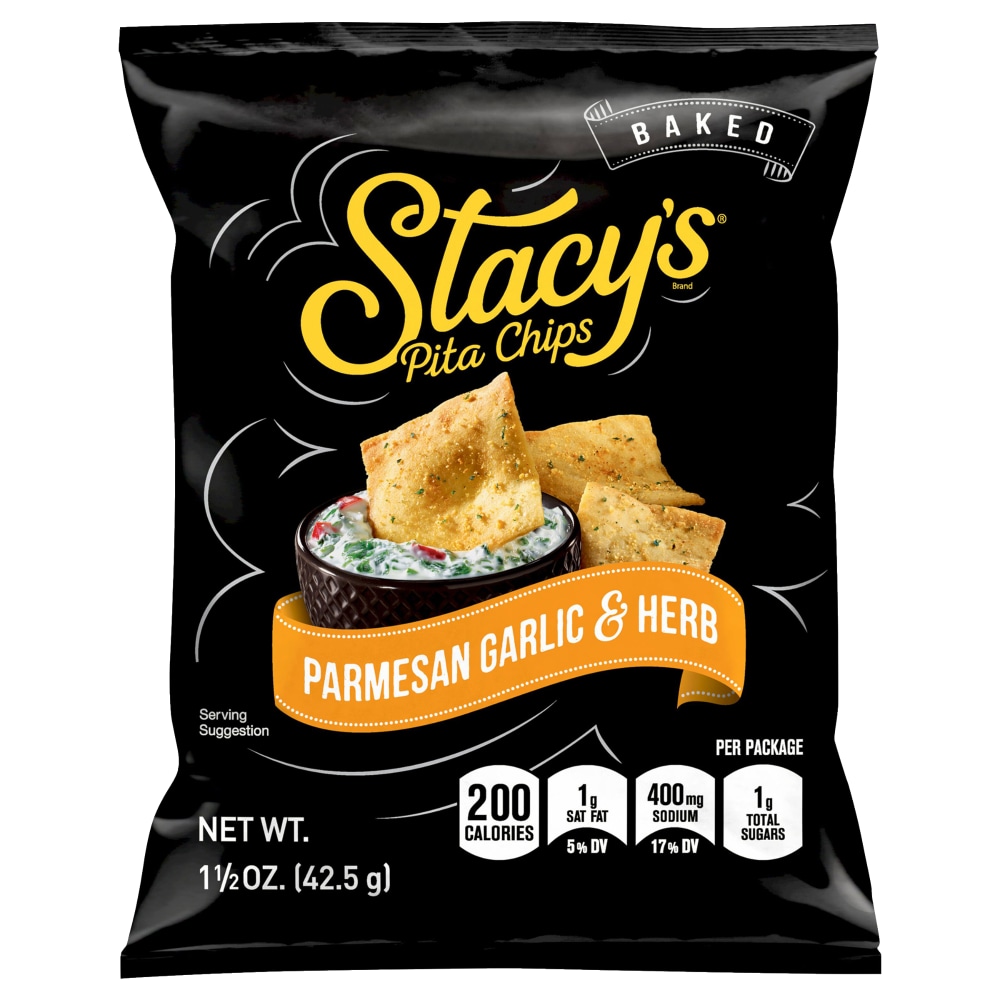
Stacy's Baked, Parmesan Garlic & Herb, Pita Chips
Stacy's
Chips & Crisps
24 ingredients on the label
Barcode: 028400094498
All ingredients (24)
- Enriched _wheat_ FlourOnce swallowed, the flour is digested mainly as starch and protein, and its added iron, niacin and thiamin are absorbed as nutrients. The UK Committee on Toxicity (COT) reviewed the fortificant guidance levels for bread and flour, and the EFSA set a tolerable upper intake level for calcium of 2,500 mg/day as cited in that review.Processed
Once swallowed, the flour is digested mainly as starch and protein, and its added iron, niacin and thiamin are absorbed as nutrients. The UK Committee on Toxicity (COT) reviewed the fortificant guidance levels for bread and flour, and the EFSA set a tolerable upper intake level for calcium of 2,500 mg/day as cited in that review.
- Whole grains: Hearty options for a healthy diet - Mayo Clinic - Mayo Clinic
- In search of healthy whole grains: How to read a whole grain nutrition label - Harvard Health - Harvard Health Publishing
- Adverse Reactions to Wheat or Wheat Components - Comprehensive Reviews in Food Science and Food Safety
- _wheat_ FlourWhen swallowed, starch is digested into sugars and absorbed, while wheat fiber and B vitamins contribute to gut and metabolic function, and refined flour lacks the bran and germ fractions. The UK Committee on Toxicity reviews fortificant guidance levels for flour, and the JECFA has evaluated contaminants such as mycotoxins that can occur in flour.Processed
When swallowed, starch is digested into sugars and absorbed, while wheat fiber and B vitamins contribute to gut and metabolic function, and refined flour lacks the bran and germ fractions. The UK Committee on Toxicity reviews fortificant guidance levels for flour, and the JECFA has evaluated contaminants such as mycotoxins that can occur in flour.
- Is It Safe to Eat Raw Cookie Dough or Cake Batter? - Cleveland Clinic
- How does flour cause a Salmonella outbreak? - CSPI
- Do we need to worry about eating wheat? - PMC - Nutrition Bulletin
- Fungal and Toxin Contaminants in Cereal Grains and Flours: Systematic Review and Meta-Analysis - PubMed
- Rye flour induces a stronger early bronchial response than wheat flour in occupational asthma - PubMed - PubMed
- exploratory quantitative risk assessment for high molecular weight sensitizers: wheat flour | Annals of Work Exposures and Health | Oxford Academic - Annals of Work Exposures and Health
- NiacinThe body converts niacin into the coenzymes NAD and NADP, which drive redox reactions in energy metabolism, and the liver mainly processes nicotinic acid and nicotinamide. The SCF (the European Commission's Scientific Committee on Food) set a tolerable upper intake level for niacin, with a UL of 10 mg/day for nicotinic acid and 900 mg/day for nicotinamide per the Nordic Nutrition Recommendations 2023 summary of EFSA values.Processed
The body converts niacin into the coenzymes NAD and NADP, which drive redox reactions in energy metabolism, and the liver mainly processes nicotinic acid and nicotinamide. The SCF (the European Commission's Scientific Committee on Food) set a tolerable upper intake level for niacin, with a UL of 10 mg/day for nicotinic acid and 900 mg/day for nicotinamide per the Nordic Nutrition Recommendations 2023 summary of EFSA values.
- Niacin - LiverTox - NCBI Bookshelf - LiverTox (NCBI Bookshelf)
- Niacin Toxicity - StatPearls - NCBI Bookshelf - StatPearls (NCBI Bookshelf)
- The intake of nicotinic acid in excessive dosage can have damaging health effects - BfR opinion No. 018/2012, 6 February 2012 - BfR (German Federal Institute for Risk Assessment)
- The adverse effects of oral niacin/nicotinamide - an overview of reviews | Eye - Eye (Nature)
- Cardiovascular safety of vitamin B3 administration | Nature Medicine - Nature Medicine
- The effect of niacin on inflammatory markers and adipokines: a systematic review and meta-analysis of interventional studies - European Journal of Nutrition
- Reduced IronThe body absorbs iron through the gut and uses it for oxygen transport in hemoglobin and myoglobin, with surplus iron stored in the liver and no pathway for excretion. The EFSA set a safe level of intake of 40 mg/day for adults, including pregnant and lactating women, and the JECFA set a provisional maximum tolerable daily intake of 0.8 mg/kg bw for iron from all sources.Processed
The body absorbs iron through the gut and uses it for oxygen transport in hemoglobin and myoglobin, with surplus iron stored in the liver and no pathway for excretion. The EFSA set a safe level of intake of 40 mg/day for adults, including pregnant and lactating women, and the JECFA set a provisional maximum tolerable daily intake of 0.8 mg/kg bw for iron from all sources.
- Scientific opinion on the tolerable upper intake level for iron | EFSA - EFSA
- Dietary reference values | EFSA - EFSA
- NORDIC NUTRITION RECOMMENDATIONS 2023 - Nordic Council of Ministers
- Iron intake and multiple health outcomes: Umbrella review: Critical Reviews in Food Science and Nutrition: Vol 63 , No 16 - Get Access - Critical Reviews in Food Science and Nutrition
- Thiamine MononitrateThiamine is absorbed from the small intestine and converted to thiamine diphosphate, which acts as a cofactor for enzymes in glucose, amino acid, and lipid metabolism. The SCF concluded that thiamine toxicity is very low and set no Tolerable Upper Intake Level, a position the German BfR later reaffirmed for vitamin B1 in food supplements and fortified foods.Processed
Thiamine is absorbed from the small intestine and converted to thiamine diphosphate, which acts as a cofactor for enzymes in glucose, amino acid, and lipid metabolism. The SCF concluded that thiamine toxicity is very low and set no Tolerable Upper Intake Level, a position the German BfR later reaffirmed for vitamin B1 in food supplements and fortified foods.
- Scientific Opinion on the safety and efficacy of vitamin B1 (thiamine mononitrate and thiamine hydrochloride) as a feed additive for all animal species based on a dossier submitted by DSM Nutritional Products - EFSA Journal
- Scientific Opinion on the safety and efficacy of vitamin B1 (thiamine mononitrate and thiamine hydrochloride) as a feed additive for all animal species based on a dossier submitted by Lohmann Animal Health - EFSA Journal
- Opinion of the SCF on the Tolerable Upper Intake Level of Vitamin B1 - European Commission Scientific Committee on Food
- Maximum levels for the addition of vitamin B1, vitamin B2 and pantothenic acid to foods including food supplements - German Federal Institute for Risk Assessment (BfR)
- Vitamin B1 (Thiamine) - StatPearls / NCBI Bookshelf
- Vitamin B1 (Thiamine) Deficiency - StatPearls - NCBI Bookshelf - StatPearls / NCBI Bookshelf
- RiboflavinRiboflavin is converted into the coenzymes FMN and FAD, which drive energy metabolism and many flavoprotein enzyme reactions across the body. The EFSA set an adequate intake (PRI) of 1.6 mg/day for adults, and the JECFA group ADI is "not specified" after its 2021 evaluation.Processed
Riboflavin is converted into the coenzymes FMN and FAD, which drive energy metabolism and many flavoprotein enzyme reactions across the body. The EFSA set an adequate intake (PRI) of 1.6 mg/day for adults, and the JECFA group ADI is "not specified" after its 2021 evaluation.
- NORDIC NUTRITION RECOMMENDATIONS 2023 - Nordic Council of Ministers
- Riboflavin - Health Professional Fact Sheet - NIH Office of Dietary Supplements
- Scientific Opinion on the re-evaluation of riboflavin (E 101(i)) and riboflavin-5′-phosphate sodium (E 101(ii)) as food additives - EFSA Journal
- Maximum levels for the addition of vitamin B1, vitamin B2 and pantothenic acid to foods including food supplements - BfR (German Federal Institute for Risk Assessment)
- Folic AcidAfter swallowing, the gut converts folic acid into active folate forms through the enzyme dihydrofolate reductase, which the body needs for DNA building and red blood cell formation. The EFSA retained a tolerable upper intake level of 1000 µg/day (1 mg) for adults, including pregnant and lactating women, set to avoid masking cobalamin (vitamin B12) deficiency.Ultra-processed
After swallowing, the gut converts folic acid into active folate forms through the enzyme dihydrofolate reductase, which the body needs for DNA building and red blood cell formation. The EFSA retained a tolerable upper intake level of 1000 µg/day (1 mg) for adults, including pregnant and lactating women, set to avoid masking cobalamin (vitamin B12) deficiency.
- Fortification, folate and vitamin B12 balance, and the nervous system. Is folic acid excess potentially harmful? - European Journal of Clinical Nutrition
- Scientific opinion on the tolerable upper intake level for folate - EFSA
- Tolerable Upper Intake Level of folate - European Commission Scientific Committee on Food
- Unmetabolized Folic Acid: Biology, Epidemiology, and Clinical Consequences: A Systematic Review - Nutrients
- Folate - Health Professional Fact Sheet - NIH Office of Dietary Supplements
- Sunflower Oil And/or Canola OilThe body absorbs these oils as fatty acids, mainly linoleic acid in sunflower oil and oleic and linoleic acids in canola oil, which feed into blood lipid handling and cell membranes. FDA reviewed oleic acid in edible oils such as sunflower and canola oil and granted a qualified health claim for oils containing at least 70% oleic acid, with no ADI set for these fats.Processed
The body absorbs these oils as fatty acids, mainly linoleic acid in sunflower oil and oleic and linoleic acids in canola oil, which feed into blood lipid handling and cell membranes. FDA reviewed oleic acid in edible oils such as sunflower and canola oil and granted a qualified health claim for oils containing at least 70% oleic acid, with no ADI set for these fats.
- The effects of Canola oil on cardiovascular risk factors: A systematic review and meta-analysis with dose-response analysis of controlled clinical trials - Nutrition, Metabolism and Cardiovascular Diseases
- Comparison of sunflower oil and canola oil consumption on serum lipid profile in adults: a systematic review and meta-analysis - Journal of Health, Population and Nutrition
- Full article: Concerns about the health effects of industrially produced seed oils are without scientific foundation: a scoping narrative review of the clinical and observational evidence - Critical Reviews in Food Science and Nutrition
- Risk in Brief: Canola oil and food safety - Centre for Food Safety, Hong Kong
- Erucic acid rapid risk assessment: rapeseed oil subsitution for sunflower oil - Food Standards Agency
- Process contaminants in vegetable oils and foods | EFSA - EFSA
- Health Effects of Various Edible Vegetable Oil: An Umbrella Review - Advances in Nutrition
- Novel food information: NuSunTM mid-oleic sunflower oil - Health Canada
- Novel food information: High oleic acid/low linolenic acid canola lines 45A37, 46A40 - Canada.ca - Health Canada
- Parmesan CheeseParmesan contains bacterially formed biogenic amines such as tyramine, which the body breaks down mainly through monoamine oxidase enzymes, and in high amounts these amines can raise blood pressure and trigger migraines.Processed
Parmesan contains bacterially formed biogenic amines such as tyramine, which the body breaks down mainly through monoamine oxidase enzymes, and in high amounts these amines can raise blood pressure and trigger migraines.
- Tyramine, a biogenic agent in cheese: amount and factors affecting its formation, a systematic review - Food Production, Processing and Nutrition (Springer Nature)
- Biochemistry, Tyramine - StatPearls - NCBI Bookshelf - NCBI StatPearls
- A Comprehensive Review on the Biogenic Amines in Cheeses: Their Origin, Chemical Characteristics, Hazard and Reduction Strategies - Foods (MDPI) via PubMed Central
- Joint FDA / Health Canada Quantitative Assessment of the Risk of Listeriosis from Soft-Ripened Cheese Consumption in the United States and Canada - FDA
- Cheese Microbial Risk Assessments — A Review - Asian-Australasian Journal of Animal Sciences (PMC)
- Colonization of the human gut by bovine bacteria present in Parmesan cheese - Nature Communications
- Pasteurized Cow's _milk_Once swallowed, milk proteins and fats are digested and absorbed, and a rapid human review found heat treatment may alter how quickly protein and fat appear in the blood. The EFSA NDA Panel found UV-treated pasteurized milk safe as a novel food, and the EFSA set tolerable upper intake levels for iodine in children and adults that milk can contribute to.Processed
Once swallowed, milk proteins and fats are digested and absorbed, and a rapid human review found heat treatment may alter how quickly protein and fat appear in the blood. The EFSA NDA Panel found UV-treated pasteurized milk safe as a novel food, and the EFSA set tolerable upper intake levels for iodine in children and adults that milk can contribute to.
- Consumption by Healthy Adults of Pasteurized Milk with a High Concentration of Bacillus cereus: A Double-Blind Study - ScienceDirect - ScienceDirect
- Short communication: Pasteurization as a means of inactivating staphylococcal enterotoxins A, B, and C in milk - PubMed
- Shiga toxin Stx2 is heat-stable and not inactivated by pasteurization - PubMed - PubMed
- Heat Treatment of Milk: A Rapid Review of the Impacts on Postprandial Protein and Lipid Kinetics in Human Adults - PubMed - PubMed
- Concentration of heavy metals in pasteurized and sterilized milk and health risk assessment across the globe: A systematic review | PLOS One - PLOS One
- Cheese CulturesLive culture microbes act in the gut and in the cheese itself, where they ferment lactose into lactic acid; the microbes do not persist as a distinct treatment in the body. The EFSA Panel reviewed starter-culture microorganisms as part of its food-safety approach and does not set a numeric ADI for cheese cultures.Processed
Live culture microbes act in the gut and in the cheese itself, where they ferment lactose into lactic acid; the microbes do not persist as a distinct treatment in the body. The EFSA Panel reviewed starter-culture microorganisms as part of its food-safety approach and does not set a numeric ADI for cheese cultures.
- Impact of Fermented Dairy on Gastrointestinal Health and Associated Biomarkers - Nutrition Reviews
- A review of biogenic amines in fermented foods: Occurrence and health effects - Heliyon
- A Comprehensive Review on the Biogenic Amines in Cheeses: Their Origin, Chemical Characteristics, Hazard and Reduction Strategies - Foods
- Tyramine, a biogenic agent in cheese: amount and factors affecting its formation, a systematic review - Food Production, Processing and Nutrition
- SaltThe kidneys regulate sodium levels by filtering fluid, while excess sodium draws water into blood vessels to increase circulating volume. The EFSA identified an intake of 2.0 grams of sodium per day as safe and adequate for the general adult population.Processed
The kidneys regulate sodium levels by filtering fluid, while excess sodium draws water into blood vessels to increase circulating volume. The EFSA identified an intake of 2.0 grams of sodium per day as safe and adequate for the general adult population.
- Dietary Reference Values for sodium - European Food Safety Authority
- EFSA provides advice on adverse effects of sodium - European Food Safety Authority
- Impact of sodium intake on blood pressure, mortality and major cardiovascular events: an umbrella review of systematic reviews and meta-analyses: Critical Reviews in Food Science and Nutrition: Vol 65 , No 28 - Get Access - Critical Reviews in Food Science and Nutrition
- The impact of excessive salt intake on human health | Nature Reviews Nephrology - Nature Reviews Nephrology
- Salt Reduction to Prevent Hypertension and Cardiovascular Disease: JACC State-of-the-Art Review. - Abstract - Europe PMC - Journal of the American College of Cardiology
- The Science of Salt: A Regularly Updated Systematic Review of Salt and Health Outcomes (August to November 2015) - Wong - 2016 - The Journal of Clinical Hypertension - Wiley Online Library - The Journal of Clinical Hypertension
- EnzymesWhen swallowed, enzyme proteins are broken down in the gut like other dietary proteins, and the main documented concern is allergic reaction, since enzyme proteins can act as allergens. The EFSA reviews food enzymes before EU authorisation, and JECFA sets general specifications for enzyme preparations, with no numeric ADI set because an acceptable daily intake of "not specified" is assigned when no hazard is identified.Processed
When swallowed, enzyme proteins are broken down in the gut like other dietary proteins, and the main documented concern is allergic reaction, since enzyme proteins can act as allergens. The EFSA reviews food enzymes before EU authorisation, and JECFA sets general specifications for enzyme preparations, with no numeric ADI set because an acceptable daily intake of "not specified" is assigned when no hazard is identified.
- Section 9.1.4.2 Enzymes - WHO
- Guidelines for the Risk Assessment of Additives (Enzymes) in Foods - Food Safety Commission of Japan
- Scientific Guidance for the submission of dossiers on Food Enzymes - EFSA Journal (PMC)
- Sea SaltThe body uses sodium and chloride as electrolytes for fluid balance and nerve and muscle function, and excess sodium raises blood pressure. EFSA set a Tolerable Upper Intake Level for sodium and later set an adequate daily dietary reference value of 2 g of sodium per day for adults.Processed
The body uses sodium and chloride as electrolytes for fluid balance and nerve and muscle function, and excess sodium raises blood pressure. EFSA set a Tolerable Upper Intake Level for sodium and later set an adequate daily dietary reference value of 2 g of sodium per day for adults.
- EFSA provides advice on adverse effects of sodium | EFSA - EFSA
- Updating DRVs: job done, after 10 years and 34 nutrients | EFSA - EFSA
- The World Hypertension League Science of Salt: a regularly updated systematic review of salt and health outcomes studies (Sept 2019 to Dec 2020) - Journal of Human Hypertension
- Effects of sea salt intake on metabolites, steroid hormones, and gut microbiota in rats - PLoS ONE
- Microplastics in European sea salts – An example of exposure through consumer choice and of interstudy methodological discrepancies - Ecotoxicology and Environmental Safety
- Microplastic contamination of salt intended for human consumption: a systematic review and meta-analysis - Discover Applied Sciences
- A Systematic Review of Fatalities Related to Acute Ingestion of Salt. A Need for Warning Labels? - Nutrients
- Whole Wheat _flour_Once swallowed, the fiber and bran fraction slows starch breakdown and supports gut transit, while the endosperm starch is digested into glucose. The Committee on Toxicity (UK) reviews wheat-based fortification guidance levels, and the WHO has issued interim consensus recommendations on wheat flour fortification.Processed
Once swallowed, the fiber and bran fraction slows starch breakdown and supports gut transit, while the endosperm starch is digested into glucose. The Committee on Toxicity (UK) reviews wheat-based fortification guidance levels, and the WHO has issued interim consensus recommendations on wheat flour fortification.
- Effects of Whole Grain Intake, Compared to Refined Grain, on Glycemia and Insulinemia: A Systematic Review and Meta-Analysis of Randomized Controlled Trials - Advances in Nutrition
- Effects of whole grains on glycemic control: a systematic review and dose-response meta-analysis of prospective cohort studies and randomized controlled trials - PMC - Nutrition Journal
- Whole grain consumption and risk of cardiovascular disease, cancer, and all cause and cause specific mortality: systematic review and dose-response meta-analysis of prospective studies - BMJ
- Consumption of whole grains and refined grains and associated risk of cardiovascular disease events and all-cause mortality: a systematic review and dose-response meta-analysis of prospective cohort studies. - American Journal of Clinical Nutrition
- Effect of cleaning, milling, and baking on deoxynivalenol in wheat - Applied and Environmental Microbiology
- Effect of Cooking Process on the Deoxynivalenol Content and Its Subsequent Cytotoxicity in Wheat Products - Bioscience, Biotechnology, and Biochemistry
- Determination of Deoxynivalenol in Whole Wheat Flour and Wheat Bran - Journal of AOAC International
- Organic Cane SugarThe body breaks sucrose down into glucose and fructose in the small intestine, which are then used for energy, with excess stored as fat. The EFSA set no tolerable upper intake level for added sugars, and it notes that sugars consumed in excess are linked to obesity, liver disease, hypertension, and type 2 diabetes.Processed
The body breaks sucrose down into glucose and fructose in the small intestine, which are then used for energy, with excess stored as fat. The EFSA set no tolerable upper intake level for added sugars, and it notes that sugars consumed in excess are linked to obesity, liver disease, hypertension, and type 2 diabetes.
- Tolerable upper intake level for dietary sugars | EFSA - EFSA
- Sugars and Sweeteners | Knowledge4Policy (K4P) - European Commission Knowledge4Policy
- Dietary sugar consumption and health: umbrella review - The BMJ
- The role of dietary sugars in health: molecular composition or just calories? - European Journal of Clinical Nutrition
- The Effect of Unrefined Sugar on Inflammation: A Systematic Review of Intervention Studies - International Journal of Preventive Medicine
- Dried GarlicOnce swallowed, garlic's sulfur compounds are processed by the gut and liver and can cause digestive upset and breath or body odor. The FDA lists garlic as a flavoring agent under GRAS, and JECFA reviewed garlic-derived flavoring substances without setting an ADI for garlic as a whole in the sources provided.Processed
Once swallowed, garlic's sulfur compounds are processed by the gut and liver and can cause digestive upset and breath or body odor. The FDA lists garlic as a flavoring agent under GRAS, and JECFA reviewed garlic-derived flavoring substances without setting an ADI for garlic as a whole in the sources provided.
- Garlic: Usefulness and Safety - NCCIH
- Allium vegetable consumption and health: An umbrella review of meta-analyses of multiple health outcomes - Food Science & Nutrition
- Garlic hepatotoxicity: safe dose of garlic - PubMed
- Garlic Supplements - Cleveland Clinic
- Part-skim _milk_After swallowing, milk supplies protein, calcium, and other minerals that the gut absorbs, and a 2024 Mendelian randomization study linked skimmed milk intake to coronary artery disease risk. Canada's CFCS sets partly skimmed milk as milk with its fat reduced by mechanical separation, and Health Canada requires 2 µg vitamin D per 100 mL in these products.Processed
After swallowing, milk supplies protein, calcium, and other minerals that the gut absorbs, and a 2024 Mendelian randomization study linked skimmed milk intake to coronary artery disease risk. Canada's CFCS sets partly skimmed milk as milk with its fat reduced by mechanical separation, and Health Canada requires 2 µg vitamin D per 100 mL in these products.
- Association of different milk fat content with coronary artery disease and myocardial infarction risk: A Mendelian randomization study - PLOS One
- Dairy Consumption and Cardiometabolic Diseases: Systematic Review and Updated Meta-Analyses of Prospective Cohort Studies - Current Nutrition Reports
- Milk consumption and multiple health outcomes: umbrella review of systematic reviews and meta-analyses in humans - Nutrition & Metabolism
- Association between dairy intake and multiple health outcomes: a scoping review of systematic reviews and meta-analyses - European Journal of Clinical Nutrition
- An extensive outbreak of staphylococcal food poisoning due to low-fat milk in Japan - Epidemiology and Infection
- Consumption by Healthy Adults of Pasteurized Milk with a High Concentration of Bacillus cereus: A Double-Blind Study - Journal of Food Protection
- Acute effect of milk on serum urate concentrations: a randomised controlled crossover trial - Annals of the Rheumatic Diseases
- Oat FiberOat fiber is largely not digested in the small intestine; gut bacteria ferment its soluble portion, which produces gases and short-chain fatty acids, and the insoluble portion adds stool bulk. The FDA accepts oat hull fiber as GRAS (generally recognized as safe) for food uses listed in its GRAS correspondence, and Health Canada lists oat fibers among accepted dietary fibres.Processed
Oat fiber is largely not digested in the small intestine; gut bacteria ferment its soluble portion, which produces gases and short-chain fatty acids, and the insoluble portion adds stool bulk. The FDA accepts oat hull fiber as GRAS (generally recognized as safe) for food uses listed in its GRAS correspondence, and Health Canada lists oat fibers among accepted dietary fibres.
- Influence of a methanogenic flora on the breath H2 and symptom response to ingestion of sorbitol or oat fiber - PubMed
- Fermentation of oat fiber in the rat intestinal tract: a study of different cellular areas - American Journal of Clinical Nutrition
- List of Dietary Fibres Reviewed and Accepted by Health Canada's Food Directorate - Canada.ca - Health Canada
- Soluble vs. insoluble fiber: MedlinePlus Medical Encyclopedia - MedlinePlus
- The effect of oat β-glucan on postprandial blood glucose and insulin responses: a systematic review and meta-analysis - European Journal of Clinical Nutrition
- Scientific Opinion on the substantiation of a health claim related to oat beta glucan and lowering blood cholesterol and reduced risk of (coronary) heart disease pursuant to Article 14 of Regulation (EC) No 1924/2006 - EFSA Journal
- An encompassing review of meta-analyses and systematic reviews of the effect of oats on all-cause mortality, cardiovascular risk, diabetes risk, body weight/adiposity and gut health - Critical Reviews in Food Science and Nutrition
- YeastYeast cell-wall beta-glucans are a fiber-like carbohydrate that passes through the gut largely unbroken and can feed gut microbes, while yeast protein and peptides are digested like other food proteins. The European Food Safety Authority (EFSA) concluded in 2011 that yeast beta-glucans are safe at proposed food-supplement levels up to 375 mg per day, and EFSA found no safety concern for UV-treated baker's yeast used as a vitamin D2 source in 2014.Processed
Yeast cell-wall beta-glucans are a fiber-like carbohydrate that passes through the gut largely unbroken and can feed gut microbes, while yeast protein and peptides are digested like other food proteins. The European Food Safety Authority (EFSA) concluded in 2011 that yeast beta-glucans are safe at proposed food-supplement levels up to 375 mg per day, and EFSA found no safety concern for UV-treated baker's yeast used as a vitamin D2 source in 2014.
- Scientific Opinion on the safety of 'yeast beta-glucans' as a Novel Food ingredient - EFSA Journal
- Opportunistic Strains of Saccharomyces cerevisiae: A Potential Risk Sold in Food Products - Frontiers in Microbiology via PMC
- The Role of Yeasts in Human Health: A Review - Life (MDPI) via PMC
- Safety Evaluation of Yeasts With Probiotic Potential - Frontiers in Nutrition via PMC
- ParsleyThe body processes parsley's volatile constituents such as apiole and myristicin, which the FEMA GRAS panel evaluated by estimating intake against the threshold of toxicological concern and margin-of-exposure calculations. The BfR states that no safe threshold can be derived for the genotoxic-carcinogenic effects of 1,2-unsaturated pyrrolizidine alkaloids, and the EFSA margin-of-exposure approach it applies sets a benchmark of 10,000 or higher as low concern.Minimally processed
The body processes parsley's volatile constituents such as apiole and myristicin, which the FEMA GRAS panel evaluated by estimating intake against the threshold of toxicological concern and margin-of-exposure calculations. The BfR states that no safe threshold can be derived for the genotoxic-carcinogenic effects of 1,2-unsaturated pyrrolizidine alkaloids, and the EFSA margin-of-exposure approach it applies sets a benchmark of 10,000 or higher as low concern.
- Pyrrolizidine alkaloid levels in dried and deep-frozen spices and herbs too high - BfR (German Federal Institute for Risk Assessment)
- Updated risk assessment on levels of 1,2-unsaturated pyrrolizidine alkaloids (PAs) in foods - BfR (German Federal Institute for Risk Assessment)
- Parsley - LactMed / PubMed (NIH)
- Alkenylbenzenes in food: How large is the health risk? - BfR (German Federal Institute for Risk Assessment)
- FEMA GRAS assessment of derivatives of basil, nutmeg, parsley, tarragon and related allylalkoxybenzene-containing natural flavor complexes - Food and Chemical Toxicology (EPA HERO)
- Malted Barley FlourGluten proteins from barley can trigger small-intestine injury in people with coeliac disease, and Fusarium mycotoxins can rise during malting. The FAO/WHO expert consultation (Codex) reviewed gluten reference doses for cereals in 2025, and FDA guidance lists dimethylnitrosamine in malt as a compound to minimize, with no level of safety established.Processed
Gluten proteins from barley can trigger small-intestine injury in people with coeliac disease, and Fusarium mycotoxins can rise during malting. The FAO/WHO expert consultation (Codex) reviewed gluten reference doses for cereals in 2025, and FDA guidance lists dimethylnitrosamine in malt as a compound to minimize, with no level of safety established.
- Ad hoc Joint FAO/WHO Expert Consultation on Risk Assessment of Food Allergens – reference dose(s) for cereals containing gluten or gluten - FAO/WHO
- Relevant Fusarium Mycotoxins in Malt and Beer - Foods (MDPI)
- Monitoring Fusarium toxins from barley to malt: Targeted inoculation with Fusarium culmorum - Mycotoxin Research (Springer Nature)
- CPG Sec 510.600 Dimethylnitrosamine in Malt Beverages | FDA - FDA
- Safety Assessment of Barley-Derived Ingredients as Used in Cosmetics - Cosmetic Ingredient Review (CIR)
- Rosemary ExtractAfter swallowing, carnosic acid is largely absorbed and oxidised to carnosol, with metabolites processed through common liver pathways such as oxidation, glucuronidation and methylation. JECFA, the WHO/FAO expert committee, set a temporary ADI of 0–0.3 mg/kg bw in 2016 and later withdrew it in 2025 in favour of an ADI of 0–0.6 mg/kg bw, after a rat study showed thyroid hormone (T4) changes in pups.Processed
After swallowing, carnosic acid is largely absorbed and oxidised to carnosol, with metabolites processed through common liver pathways such as oxidation, glucuronidation and methylation. JECFA, the WHO/FAO expert committee, set a temporary ADI of 0–0.3 mg/kg bw in 2016 and later withdrew it in 2025 in favour of an ADI of 0–0.6 mg/kg bw, after a rat study showed thyroid hormone (T4) changes in pups.
- WHO | JECFA - WHO / JECFA
- Toxicity and safety of rosemary (Rosmarinus officinalis): a comprehensive review - Naunyn-Schmiedeberg's Archives of Pharmacology
- Rosemary (Salvia rosmarinus): Health-promoting benefits and food preservative properties - International Journal of Nutrition
- Safety and stress-reducing effects of rosemary extract: an open-label trial and randomized double-blind crossover study - Journal of Clinical Biochemistry and Nutrition
- Ascorbic AcidAscorbic acid is absorbed from the gut by sodium-dependent vitamin C transporters and is used as a cofactor in collagen, carnitine, and neurotransmitter synthesis, while excess is cleared by the kidneys. The EFSA set a tolerable upper intake level (UL) of 2 g per person per day, and the EFSA's 2004 opinion found that supplemental intakes of 1,000 mg per day were not associated with adverse gastrointestinal effects.Processed
Ascorbic acid is absorbed from the gut by sodium-dependent vitamin C transporters and is used as a cofactor in collagen, carnitine, and neurotransmitter synthesis, while excess is cleared by the kidneys. The EFSA set a tolerable upper intake level (UL) of 2 g per person per day, and the EFSA's 2004 opinion found that supplemental intakes of 1,000 mg per day were not associated with adverse gastrointestinal effects.
- Opinion of the Scientific Panel on Dietetic Products, Nutrition and Allergies (NDA) a request from the Commission related to the Tolerable Upper Intake Level of Vitamin C (L-Ascorbic acid, its calcium, potassium and sodium salts and L-ascorbyl-6-palmitate) - EFSA Journal
- Vitamin C - LiverTox - NCBI Bookshelf - NCBI Bookshelf
- Vitamin C | Linus Pauling Institute | Oregon State University - Linus Pauling Institute, Oregon State University
- NORDIC NUTRITION RECOMMENDATIONS 2023 - Nordic Council of Ministers
- Vitamin C or ascorbic acid - ANSES
- Bleeding tendency and ascorbic acid requirements: systematic review and meta-analysis of clinical trials - Nutrition Reviews
Sources
- Whole grains: Hearty options for a healthy diet - Mayo Clinic - Mayo Clinicmedical institution
- In search of healthy whole grains: How to read a whole grain nutrition label - Harvard Health - Harvard Health Publishingmedical institution
- Adverse Reactions to Wheat or Wheat Components - Comprehensive Reviews in Food Science and Food Safetyreview article
- Is It Safe to Eat Raw Cookie Dough or Cake Batter? - Cleveland Clinicmedical institution
- How does flour cause a Salmonella outbreak? - CSPItoxicology database
- Do we need to worry about eating wheat? - PMC - Nutrition Bulletinreview article
- Fungal and Toxin Contaminants in Cereal Grains and Flours: Systematic Review and Meta-Analysis - PubMedmeta analysis
- Rye flour induces a stronger early bronchial response than wheat flour in occupational asthma - PubMed - PubMedpeer reviewed study
- exploratory quantitative risk assessment for high molecular weight sensitizers: wheat flour | Annals of Work Exposures and Health | Oxford Academic - Annals of Work Exposures and Healthpeer reviewed study
- Niacin - LiverTox - NCBI Bookshelf - LiverTox (NCBI Bookshelf)review article
- Niacin Toxicity - StatPearls - NCBI Bookshelf - StatPearls (NCBI Bookshelf)review article
- The intake of nicotinic acid in excessive dosage can have damaging health effects - BfR opinion No. 018/2012, 6 February 2012 - BfR (German Federal Institute for Risk Assessment)government agency
- The adverse effects of oral niacin/nicotinamide - an overview of reviews | Eye - Eye (Nature)meta analysis
- Cardiovascular safety of vitamin B3 administration | Nature Medicine - Nature Medicinepeer reviewed study
- The effect of niacin on inflammatory markers and adipokines: a systematic review and meta-analysis of interventional studies - European Journal of Nutritionmeta analysis
- Scientific opinion on the tolerable upper intake level for iron | EFSA - EFSAgovernment agency
- Dietary reference values | EFSA - EFSAgovernment agency
- NORDIC NUTRITION RECOMMENDATIONS 2023 - Nordic Council of Ministersgovernment agency
- Iron intake and multiple health outcomes: Umbrella review: Critical Reviews in Food Science and Nutrition: Vol 63 , No 16 - Get Access - Critical Reviews in Food Science and Nutritionmeta analysis
- Scientific Opinion on the safety and efficacy of vitamin B1 (thiamine mononitrate and thiamine hydrochloride) as a feed additive for all animal species based on a dossier submitted by DSM Nutritional Products - EFSA Journalgovernment agency
- Scientific Opinion on the safety and efficacy of vitamin B1 (thiamine mononitrate and thiamine hydrochloride) as a feed additive for all animal species based on a dossier submitted by Lohmann Animal Health - EFSA Journalgovernment agency
- Opinion of the SCF on the Tolerable Upper Intake Level of Vitamin B1 - European Commission Scientific Committee on Foodgovernment agency
- Maximum levels for the addition of vitamin B1, vitamin B2 and pantothenic acid to foods including food supplements - German Federal Institute for Risk Assessment (BfR)government agency
- Vitamin B1 (Thiamine) - StatPearls / NCBI Bookshelfreview article
- Vitamin B1 (Thiamine) Deficiency - StatPearls - NCBI Bookshelf - StatPearls / NCBI Bookshelfreview article
- NORDIC NUTRITION RECOMMENDATIONS 2023 - Nordic Council of Ministersgovernment agency
- Riboflavin - Health Professional Fact Sheet - NIH Office of Dietary Supplementsgovernment agency
- Scientific Opinion on the re-evaluation of riboflavin (E 101(i)) and riboflavin-5′-phosphate sodium (E 101(ii)) as food additives - EFSA Journalgovernment agency
- Fortification, folate and vitamin B12 balance, and the nervous system. Is folic acid excess potentially harmful? - European Journal of Clinical Nutritionpeer reviewed study
- Scientific opinion on the tolerable upper intake level for folate - EFSAgovernment agency
- Tolerable Upper Intake Level of folate - European Commission Scientific Committee on Foodgovernment agency
- Unmetabolized Folic Acid: Biology, Epidemiology, and Clinical Consequences: A Systematic Review - Nutrientsmeta analysis
- Folate - Health Professional Fact Sheet - NIH Office of Dietary Supplementsgovernment agency
- The effects of Canola oil on cardiovascular risk factors: A systematic review and meta-analysis with dose-response analysis of controlled clinical trials - Nutrition, Metabolism and Cardiovascular Diseasesmeta analysis
- Comparison of sunflower oil and canola oil consumption on serum lipid profile in adults: a systematic review and meta-analysis - Journal of Health, Population and Nutritionpeer reviewed study
- Full article: Concerns about the health effects of industrially produced seed oils are without scientific foundation: a scoping narrative review of the clinical and observational evidence - Critical Reviews in Food Science and Nutritionreview article
- Risk in Brief: Canola oil and food safety - Centre for Food Safety, Hong Konggovernment agency
- Erucic acid rapid risk assessment: rapeseed oil subsitution for sunflower oil - Food Standards Agencygovernment agency
- Process contaminants in vegetable oils and foods | EFSA - EFSAgovernment agency
- Health Effects of Various Edible Vegetable Oil: An Umbrella Review - Advances in Nutritionreview article
- Novel food information: NuSunTM mid-oleic sunflower oil - Health Canadagovernment agency
- Novel food information: High oleic acid/low linolenic acid canola lines 45A37, 46A40 - Canada.ca - Health Canadagovernment agency
- Tyramine, a biogenic agent in cheese: amount and factors affecting its formation, a systematic review - Food Production, Processing and Nutrition (Springer Nature)meta analysis
- Biochemistry, Tyramine - StatPearls - NCBI Bookshelf - NCBI StatPearlsreview article
- A Comprehensive Review on the Biogenic Amines in Cheeses: Their Origin, Chemical Characteristics, Hazard and Reduction Strategies - Foods (MDPI) via PubMed Centralreview article
- Joint FDA / Health Canada Quantitative Assessment of the Risk of Listeriosis from Soft-Ripened Cheese Consumption in the United States and Canada - FDAgovernment agency
- Cheese Microbial Risk Assessments — A Review - Asian-Australasian Journal of Animal Sciences (PMC)peer reviewed study
- Colonization of the human gut by bovine bacteria present in Parmesan cheese - Nature Communicationspeer reviewed study
- Consumption by Healthy Adults of Pasteurized Milk with a High Concentration of Bacillus cereus: A Double-Blind Study - ScienceDirect - ScienceDirectpeer reviewed study
- Short communication: Pasteurization as a means of inactivating staphylococcal enterotoxins A, B, and C in milk - PubMedpeer reviewed study
- Shiga toxin Stx2 is heat-stable and not inactivated by pasteurization - PubMed - PubMedpeer reviewed study
- Heat Treatment of Milk: A Rapid Review of the Impacts on Postprandial Protein and Lipid Kinetics in Human Adults - PubMed - PubMedpeer reviewed study
- Concentration of heavy metals in pasteurized and sterilized milk and health risk assessment across the globe: A systematic review | PLOS One - PLOS Onemeta analysis
- Impact of Fermented Dairy on Gastrointestinal Health and Associated Biomarkers - Nutrition Reviewspeer reviewed study
- A review of biogenic amines in fermented foods: Occurrence and health effects - Heliyonreview article
- Dietary Reference Values for sodium - European Food Safety Authoritygovernment agency
- EFSA provides advice on adverse effects of sodium - European Food Safety Authoritygovernment agency
- Impact of sodium intake on blood pressure, mortality and major cardiovascular events: an umbrella review of systematic reviews and meta-analyses: Critical Reviews in Food Science and Nutrition: Vol 65 , No 28 - Get Access - Critical Reviews in Food Science and Nutritionmeta analysis
- The impact of excessive salt intake on human health | Nature Reviews Nephrology - Nature Reviews Nephrologyreview article
- Salt Reduction to Prevent Hypertension and Cardiovascular Disease: JACC State-of-the-Art Review. - Abstract - Europe PMC - Journal of the American College of Cardiologyreview article
- The Science of Salt: A Regularly Updated Systematic Review of Salt and Health Outcomes (August to November 2015) - Wong - 2016 - The Journal of Clinical Hypertension - Wiley Online Library - The Journal of Clinical Hypertensionreview article
- Section 9.1.4.2 Enzymes - WHOgovernment agency
- Guidelines for the Risk Assessment of Additives (Enzymes) in Foods - Food Safety Commission of Japangovernment agency
- Scientific Guidance for the submission of dossiers on Food Enzymes - EFSA Journal (PMC)review article
- Updating DRVs: job done, after 10 years and 34 nutrients | EFSA - EFSAgovernment agency
- The World Hypertension League Science of Salt: a regularly updated systematic review of salt and health outcomes studies (Sept 2019 to Dec 2020) - Journal of Human Hypertensionreview article
- Effects of sea salt intake on metabolites, steroid hormones, and gut microbiota in rats - PLoS ONEpeer reviewed study
- Microplastics in European sea salts – An example of exposure through consumer choice and of interstudy methodological discrepancies - Ecotoxicology and Environmental Safetypeer reviewed study
- Microplastic contamination of salt intended for human consumption: a systematic review and meta-analysis - Discover Applied Sciencesmeta analysis
- A Systematic Review of Fatalities Related to Acute Ingestion of Salt. A Need for Warning Labels? - Nutrientsmeta analysis
- Effects of Whole Grain Intake, Compared to Refined Grain, on Glycemia and Insulinemia: A Systematic Review and Meta-Analysis of Randomized Controlled Trials - Advances in Nutritionmeta analysis
- Effects of whole grains on glycemic control: a systematic review and dose-response meta-analysis of prospective cohort studies and randomized controlled trials - PMC - Nutrition Journalmeta analysis
- Whole grain consumption and risk of cardiovascular disease, cancer, and all cause and cause specific mortality: systematic review and dose-response meta-analysis of prospective studies - BMJmeta analysis
- Consumption of whole grains and refined grains and associated risk of cardiovascular disease events and all-cause mortality: a systematic review and dose-response meta-analysis of prospective cohort studies. - American Journal of Clinical Nutritionmeta analysis
- Effect of cleaning, milling, and baking on deoxynivalenol in wheat - Applied and Environmental Microbiologypeer reviewed study
- Effect of Cooking Process on the Deoxynivalenol Content and Its Subsequent Cytotoxicity in Wheat Products - Bioscience, Biotechnology, and Biochemistrypeer reviewed study
- Determination of Deoxynivalenol in Whole Wheat Flour and Wheat Bran - Journal of AOAC Internationalpeer reviewed study
- Tolerable upper intake level for dietary sugars | EFSA - EFSAgovernment agency
- Sugars and Sweeteners | Knowledge4Policy (K4P) - European Commission Knowledge4Policygovernment agency
- Dietary sugar consumption and health: umbrella review - The BMJmeta analysis
- The role of dietary sugars in health: molecular composition or just calories? - European Journal of Clinical Nutritionpeer reviewed study
- The Effect of Unrefined Sugar on Inflammation: A Systematic Review of Intervention Studies - International Journal of Preventive Medicinereview article
- Garlic: Usefulness and Safety - NCCIHgovernment agency
- Allium vegetable consumption and health: An umbrella review of meta-analyses of multiple health outcomes - Food Science & Nutritionmeta analysis
- Garlic hepatotoxicity: safe dose of garlic - PubMedpeer reviewed study
- Garlic Supplements - Cleveland Clinicmedical institution
- Association of different milk fat content with coronary artery disease and myocardial infarction risk: A Mendelian randomization study - PLOS Onepeer reviewed study
- Dairy Consumption and Cardiometabolic Diseases: Systematic Review and Updated Meta-Analyses of Prospective Cohort Studies - Current Nutrition Reportsmeta analysis
- Milk consumption and multiple health outcomes: umbrella review of systematic reviews and meta-analyses in humans - Nutrition & Metabolismreview article
- Association between dairy intake and multiple health outcomes: a scoping review of systematic reviews and meta-analyses - European Journal of Clinical Nutritionreview article
- An extensive outbreak of staphylococcal food poisoning due to low-fat milk in Japan - Epidemiology and Infectionpeer reviewed study
- Acute effect of milk on serum urate concentrations: a randomised controlled crossover trial - Annals of the Rheumatic Diseasespeer reviewed study
- Influence of a methanogenic flora on the breath H2 and symptom response to ingestion of sorbitol or oat fiber - PubMedpeer reviewed study
- Fermentation of oat fiber in the rat intestinal tract: a study of different cellular areas - American Journal of Clinical Nutritionpeer reviewed study
- List of Dietary Fibres Reviewed and Accepted by Health Canada's Food Directorate - Canada.ca - Health Canadagovernment agency
- Soluble vs. insoluble fiber: MedlinePlus Medical Encyclopedia - MedlinePlusmedical institution
- The effect of oat β-glucan on postprandial blood glucose and insulin responses: a systematic review and meta-analysis - European Journal of Clinical Nutritionmeta analysis
- Scientific Opinion on the substantiation of a health claim related to oat beta glucan and lowering blood cholesterol and reduced risk of (coronary) heart disease pursuant to Article 14 of Regulation (EC) No 1924/2006 - EFSA Journalgovernment agency
- An encompassing review of meta-analyses and systematic reviews of the effect of oats on all-cause mortality, cardiovascular risk, diabetes risk, body weight/adiposity and gut health - Critical Reviews in Food Science and Nutritionreview article
- Scientific Opinion on the safety of 'yeast beta-glucans' as a Novel Food ingredient - EFSA Journalgovernment agency
- Opportunistic Strains of Saccharomyces cerevisiae: A Potential Risk Sold in Food Products - Frontiers in Microbiology via PMCpeer reviewed study
- The Role of Yeasts in Human Health: A Review - Life (MDPI) via PMCreview article
- Safety Evaluation of Yeasts With Probiotic Potential - Frontiers in Nutrition via PMCpeer reviewed study
- Pyrrolizidine alkaloid levels in dried and deep-frozen spices and herbs too high - BfR (German Federal Institute for Risk Assessment)government agency
- Updated risk assessment on levels of 1,2-unsaturated pyrrolizidine alkaloids (PAs) in foods - BfR (German Federal Institute for Risk Assessment)government agency
- Parsley - LactMed / PubMed (NIH)medical institution
- Alkenylbenzenes in food: How large is the health risk? - BfR (German Federal Institute for Risk Assessment)government agency
- FEMA GRAS assessment of derivatives of basil, nutmeg, parsley, tarragon and related allylalkoxybenzene-containing natural flavor complexes - Food and Chemical Toxicology (EPA HERO)peer reviewed study
- Ad hoc Joint FAO/WHO Expert Consultation on Risk Assessment of Food Allergens – reference dose(s) for cereals containing gluten or gluten - FAO/WHOgovernment agency
- Relevant Fusarium Mycotoxins in Malt and Beer - Foods (MDPI)peer reviewed study
- Monitoring Fusarium toxins from barley to malt: Targeted inoculation with Fusarium culmorum - Mycotoxin Research (Springer Nature)peer reviewed study
- CPG Sec 510.600 Dimethylnitrosamine in Malt Beverages | FDA - FDAgovernment agency
- Safety Assessment of Barley-Derived Ingredients as Used in Cosmetics - Cosmetic Ingredient Review (CIR)cosmetics safety body
- WHO | JECFA - WHO / JECFAgovernment agency
- Toxicity and safety of rosemary (Rosmarinus officinalis): a comprehensive review - Naunyn-Schmiedeberg's Archives of Pharmacologyreview article
- Rosemary (Salvia rosmarinus): Health-promoting benefits and food preservative properties - International Journal of Nutritionreview article
- Safety and stress-reducing effects of rosemary extract: an open-label trial and randomized double-blind crossover study - Journal of Clinical Biochemistry and Nutritionpeer reviewed study
- Opinion of the Scientific Panel on Dietetic Products, Nutrition and Allergies (NDA) a request from the Commission related to the Tolerable Upper Intake Level of Vitamin C (L-Ascorbic acid, its calcium, potassium and sodium salts and L-ascorbyl-6-palmitate) - EFSA Journalgovernment agency
- Vitamin C - LiverTox - NCBI Bookshelf - NCBI Bookshelfreview article
- Vitamin C | Linus Pauling Institute | Oregon State University - Linus Pauling Institute, Oregon State Universitymedical institution
- NORDIC NUTRITION RECOMMENDATIONS 2023 - Nordic Council of Ministersgovernment agency
- Vitamin C or ascorbic acid - ANSESgovernment agency
- Bleeding tendency and ascorbic acid requirements: systematic review and meta-analysis of clinical trials - Nutrition Reviewsmeta analysis
See what's in the products you buy
Scan a barcode and read what every ingredient does, in plain English.