
Comparisons · October 25, 2026 · Updated October 28, 2026 · 9 min read
Aurascan vs Bobby Approved: Pass/Fail or Per-Ingredient Verdicts?
Bobby Approved gives each product one approved or not-approved verdict from its creator's rules; Aurascan rates each ingredient Clean, Mixed or Flagged, with sources.
By Chris Carrillo · Reviewed by Armin Rad, Co-Founder & CTO, Aurascan · October 28, 2026
Every article is checked against primary sources before publication. How we review
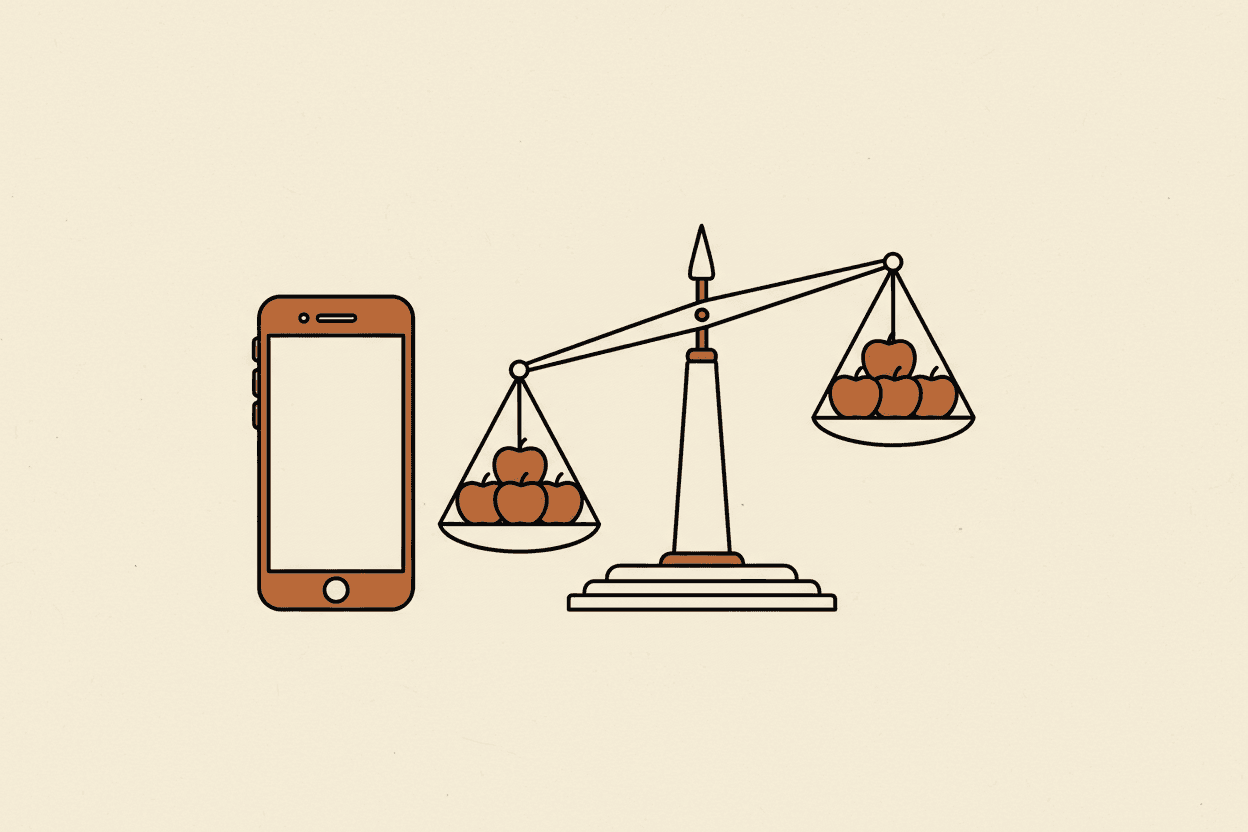
Aurascan and Bobby Approved take two different approaches to the same label: one returns a single approved or not-approved verdict per product, while the other gives each ingredient its own Clean, Mixed or Flagged verdict, and the two formats answer different questions. Bobby Approved bases its verdict on a ten-category rule set listed on its website and presented with creator Bobby Parrish (@flavcity), while Aurascan gives each ingredient a verdict with cited evidence and no numeric score. In an NPR segment, the same almond butter scored 78 out of 100 in Yuka and drew a red thumbs-down in Bobby Approved, which may illustrate how different rulebooks can produce different results. The sections below set the two approaches side by side and note where key details are not disclosed.
Key takeaways
- Bobby Approved returns one approved or not-approved verdict, and its website says less than 10% of products at most grocery stores qualify.
- Aurascan rates each ingredient Clean, Mixed or Flagged, shows the cited evidence, and does not use a numeric score.
- In an NPR segment (May 26, 2025), Yuka rated the almond butter 78 out of 100 while Bobby Approved flagged its cane sugar.
- Compare the verdict formats, the evidence each app shows, and the amounts printed on the Nutrition Facts panel.
What Is the Core Difference Between Aurascan and Bobby Approved?
The core difference is that Bobby Approved reduces each product to one approved or not-approved verdict, while Aurascan breaks the label into individual ingredients, each with its own Clean, Mixed or Flagged verdict.
The Bobby Approved App Store listing describes it as "a free food scanner app that instantly shows if a food product is good for your health or not." Scanning a barcode is meant to show "if a product is Bobby approved or not, and why," with harmful ingredients highlighted in red. The App Store listing reads "Only for iPhone," and an Android version is on Google Play with 1M+ downloads.
Aurascan is an iPhone app with a free tier. It explains every ingredient one by one, with cited evidence, instead of producing a single numeric score or a single pass or fail.
How Does Bobby Approved Reach Its Approved or Not-Approved Verdict?
Bobby Approved reaches its verdict by checking a product against a ten-category rule set, and its website says less than 10% of products at most grocery stores qualify for the stamp. The Bobby Approved website calls the set "The 10 commandments of Bobby Approved ingredients." The ten categories are: free of seed oils, refined or artificial sugars, harmful preservatives, GMOs, artificial or "natural" flavors, harmful pesticides and chemicals, artificial food colorings, ultra-processed ingredients, harmful toxins, and harmful fragrances.
The App Store listing says Bobby "has created a list of over 100 harmful ingredients," and that flagged ingredients "include natural and artificial flavors, fake sugars, food dyes, chemical additives, inflammatory seed oils, preservatives and more." Users can tap each ingredient to see its health impact, and a product that is not Bobby Approved is said to come with healthy alternatives.
The app is presented as shopping with Bobby Parrish, who has "12+ million" followers as @flavcity.
The following are not disclosed on the listing or website: the data sources for product and ingredient information, how often the product database is updated, and how many products it covers. Those gaps remain open here.
How Does Aurascan Assign Clean, Mixed, and Flagged Verdicts?
Aurascan assigns each ingredient one of three verdicts, Clean, Mixed or Flagged, and shows the evidence cited for that verdict. Verdicts are per ingredient, so one product can show several different verdicts across its ingredient list.
Product data comes from Open Food Facts, USDA and barcode databases, and citations are checked by an automated verifier. Aurascan says it has no sponsors.
The Nutrition Facts panel shows amounts per serving, such as grams of added sugars, which readers can set beside the verdict attached to each ingredient.
Aurascan's accuracy rate and any independent audit of its verdicts are not disclosed.
Why Did the Same Almond Butter Get Different Results in Two Apps?
Yuka returned a numeric score of 78 out of 100 for the almond butter, while Bobby Approved returned a binary flag on cane sugar, so the two apps reported different kinds of results.
In an NPR segment dated May 26, 2025, Lindsay Moyer, a dietitian with the Center for Science in the Public Interest (CSPI), scanned the same almond butter in both apps. Bobby Approved gave it "a thumbs down and a red screen."
Moyer said "this is not something I'd be worried about if you like a gram or two of sugar added to your peanut butter or almond butter." Her comment is about the amount, not the presence of the ingredient. The segment reports the flag on the ingredient, and the amount is the context Moyer gave.
The two apps work from different criteria. Yuka's 78 out of 100 is a numeric score, while Bobby Approved's result is a binary flag tied to its own list.
One test on one product cannot establish how either app performs across the grocery aisle.
What Does Bobby Approved Flag, and Why Does Cane Sugar Matter?
Bobby Approved's list covers over 100 harmful ingredients, and its ten categories include seed oils, refined or artificial sugars, harmful preservatives, GMOs, flavors, artificial food colorings and ultra-processed ingredients. Its listing says flagged ingredients include natural and artificial flavors, fake sugars, food dyes, chemical additives, inflammatory seed oils, preservatives and more.
Cane sugar is a form of added sugar, and in the NPR test it was the ingredient that triggered Bobby Approved's red screen. The FDA Daily Value for added sugars is 50 grams per day on a 2,000-calorie diet. The "gram or two" Moyer mentioned would be 2% to 4% of that reference figure. The same ingredient can read very differently depending on how much of it a serving contains.
Shoppers can check the added sugars line on the Nutrition Facts panel and the sweetener names in the ingredient list, then compare them with whichever app's explanation they are reviewing.
How Do Food Dyes and Natural Flavors Get Treated in Each App?
Bobby Approved lists both artificial food colorings and artificial or "natural" flavors among its ten categories. Aurascan gives each flavor or dye ingredient its own verdict and cited evidence, so the reader can see the specific name rather than a category label.
Under 21 CFR 101.22, "natural flavor" means an essential oil, oleoresin, essence or extractive, protein hydrolysate, distillate or product of roasting, heating or enzymolysis derived from a spice, fruit, vegetable, edible yeast, herb, bark, bud, root, leaf, meat, seafood, poultry, eggs or dairy whose significant function is flavoring rather than nutritional. The definition describes sources and processes, not one substance, so the phrase on a label can cover many ingredients.
What Evidence Sits Behind Each Verdict, and What Is Not Disclosed?
Aurascan attaches cited evidence to each ingredient verdict, while Bobby Approved says its flagged ingredients are backed by scientific studies without listing those studies. That difference matters when you want to check a verdict yourself.
Bobby's listing says it has created a list of over 100 harmful ingredients, but it does not name the studies behind each one, so which studies support each ingredient is not disclosed.
No accuracy rate, error rate or independent audit has been disclosed for either app. For a broader view of why one number can hide the ingredient driving it, see Myth: One Health Score Tells You If a Food Is Good for You.
The evidence cannot establish how either app performs for individual people, for groups that have not been studied, or for ingredients where the research is still open. A verdict from either app is one input, not a settled answer.
How Do Platform, Price, and Availability Compare Side by Side?
Bobby Approved is listed as free on the App Store and is also available on Google Play, while Aurascan is an iPhone app with a free tier. Beyond those facts, other pricing details are not described here.
| Factor | Bobby Approved | Aurascan |
|---|---|---|
| Verdict format | One approved or not-approved verdict | One Clean, Mixed or Flagged verdict per ingredient |
| Numeric score | No numeric score described | No numeric score |
| Rule basis | Ten categories on its website; list of over 100 harmful ingredients | Per-ingredient evidence with cited sources |
| Evidence shown | Flagged ingredients described as backed by studies; studies not listed | Citations shown for each ingredient verdict |
| Product data sources | Not disclosed | Open Food Facts, USDA and barcode databases |
| Platforms | iPhone (App Store) and Android (Google Play, 1M+ downloads) | iPhone |
| Price | Listed as Free on the App Store; paid tiers not disclosed | Free tier |
| Creator tie | Presented with Bobby Parrish (@flavcity, 12+ million followers) | Not applicable |
| Accuracy audit | Not disclosed | Not disclosed |
On October 25, 2026, the App Store listing for Bobby Approved showed 4.9 stars from 165K ratings. Those ratings describe user satisfaction, not the accuracy of its verdicts.
What Should Shoppers Check on a Label Before Trusting Either App?
Before accepting any verdict, whether from Aurascan, Bobby Approved or another scanner, check the label itself. The ingredient list and the Nutrition Facts panel show what the product contains and in what amounts.
- Read the full ingredient list, not only the headline result.
- Find the added sugars line on the Nutrition Facts panel and note the serving size it refers to.
- Look for the specific name of any sugar, dye or flavor, not only a general category.
- Check whether the app shows the evidence for a verdict and whether you can follow that evidence.
- Compare two explanations of the same product rather than relying on one headline result.
- Remember that amounts are reported per serving, so a small serving and a large one can read differently.
Public descriptions of either app do not explain how its verdicts apply to infants, pregnant people or people managing medical conditions. Those questions remain open here, and people with individual concerns may want guidance from a clinician.
Treat any app verdict as a starting point for reading the label, not a final judgment.
To see how a per-ingredient breakdown reads on a real label, you can scan a product yourself with the Aurascan app on iPhone. Start at the Aurascan food label scanner and compare its ingredient-by-ingredient results with the label in your hand.
Related reading: for how Bobby Approved compares with Yuka, see Yuka vs Bobby Approved: How Each App Grades Food.
Try Aurascan
See what is really in the food you buy.
Common questions
- Is the Bobby Approved app accurate?
- No accuracy rate, error rate or independent audit has been published for Bobby Approved or for Aurascan. In one NPR test dated May 26, 2025, Bobby Approved flagged cane sugar in an almond butter that Yuka scored 78 out of 100, which shows the two apps use different criteria rather than proving either one wrong.
- Is Bobby Approved free?
- The Bobby Approved App Store listing shows the app's price as Free, and an Android version on Google Play has 1M+ downloads. Whether paid tiers exist or what they cost is not disclosed on its listing or website.
- What apps are like Bobby Approved?
- Aurascan is an iPhone food label scanner with a free tier that gives each ingredient a Clean, Mixed or Flagged verdict with cited evidence. Yuka is another scanner, used alongside Bobby Approved in the NPR comparison.
- Is Bobby Approved better than Yuka?
- This comparison does not rank them. In the NPR test, Yuka gave the almond butter 78 out of 100, while Bobby Approved showed a red thumbs-down because it flagged cane sugar, so the two apps reach different results from different criteria.
- Can I trust Yuka's scores?
- No accuracy audit of Yuka is described in this article, so its reliability cannot be confirmed here. The 78 out of 100 score for almond butter in one NPR test is a single product result and does not show how Yuka performs across other products.
- What does Bobby Approved flag?
- Bobby Approved's App Store listing says its list of harmful ingredients includes over 100 items and that flagged ingredients include natural and artificial flavors, fake sugars, food dyes, chemical additives, inflammatory seed oils, preservatives and more. Its website lists ten categories, including seed oils, refined or artificial sugars, GMOs and artificial food colorings.
- Does Aurascan give a numeric score?
- No. Aurascan gives each ingredient a Clean, Mixed or Flagged verdict with the evidence cited for it, rather than one numeric score or a single pass or fail.
Sources
- Bobby Approved Food Scanner (App Store) (apps.apple.com)
- Bobby Approved on Google Play (play.google.com)
- NPR transcript: almond butter comparison of two food scanner apps (npr.org)
- Added Sugars on the Nutrition Facts Label (fda.gov)
- 21 CFR 101.22 Foods; labeling of spices, flavorings, colorings and chemical preservatives (ecfr.gov)
In this series
Guide
Best Yuka Alternatives in 2026: 8 Food Scanner Apps ComparedGuide
Myth: One Health Score Tells You If a Food Is Good for YouGuide
Aurascan vs Open Food Facts: What Each One Tells YouGuide
Aurascan vs Fooducate: Which Food Scanner App Fits You?Guide
Best Food Label Scanner Apps in 2026: 8 ComparedGuide
Aurascan vs EWG Food Scores: Which Reads Labels Better?
Related guides
Comparisons
Yuka vs Fooducate: 0-100 Score vs A-D GradeYuka rates food 0-100 (60% nutrition, 30% additives, 10% organic); Fooducate gives an A-D grade plus calorie tracking. Features and allergen tools compared.
Comparisons
Is the Olive App Accurate? Its 0-100 Score vs AurascanOlive scores each product 0 to 100 and adds its own lab tests; Aurascan grades every ingredient with cited evidence tiers. How the two food scanners work.
Comparisons
Yuka vs Bobby Approved: How Each App Grades FoodYuka weighs nutrition 60%, additives 30%, organic 10%. Bobby Approved checks over 100 flagged ingredients. Here's how each app grades food, and how Aurascan differs.
Try it on your own groceries
Scan your next label with Aurascan
Point the camera at any ingredient list and get the same evidence-graded read you see here.
Open the scannerGet food recall alerts + a weekly digest
An email when a food recall is announced, plus one weekly roundup of label news and new guides.
We email a confirmation link first - nothing is sent until you click it. Unsubscribe anytime. Privacy