Written by Chris Carrillo. Reviewed by Armin Rad, Co-Founder & CTO, Aurascan. It cites 4 sources; use the source list and methodology to check the evidence directly.
PARMA, Italy - On September 10, 2026, the European Food Safety Authority (EFSA) published its re-evaluation of aspartame-acesulfame salt (E 962), confirming it poses no safety concerns. As of September 13, 2026, EFSA maintained aspartame's Acceptable Daily Intake at 40 mg/kg body weight/day, while the FDA retains its 50 mg/kg limit.
Key takeaways
EFSA published its scientific opinion on September 10, 2026, reconfirming that aspartame exposure across all age groups sits comfortably within safe intake limits.
The Acceptable Daily Intake (ADI) for aspartame remains set at 40 mg/kg body weight/day in Europe, while acesulfame K has an ADI of 15 mg/kg body weight/day.
European food labels identify the 2:1 sweetener compound as E 962, whereas American products list aspartame and acesulfame potassium individually in ingredient decks.
Mandatory phenylketonuria (PKU) warnings remain strictly required across both jurisdictions to alert individuals who cannot metabolize phenylalanine.
EFSA recommended updating technical specifications for E 962 and reviewing heavy metal limits, including lead and arsenic, for standalone aspartame (E 951).
What happened in EFSA's September 2026 aspartame safety review?
On September 10, 2026, EFSA published its final scientific opinion re-evaluating the salt of aspartame-acesulfame (food additive code E 962) in the EFSA Journal (doi: 10.2903/j.efsa.2026.10259). The scientific panel formally adopted the opinion in July 2026, following a thorough assessment of dietary exposure, toxicological data, and manufacturing specifications under the European Union's ongoing additive re-evaluation mandate. Full historical context on European sweetener assessments is detailed on the official EFSA topic page on aspartame.
The review addressed whether the combined salt presents distinct risks compared to its constituent sweeteners. EFSA concluded that E 962 presents no safety concern at the reported uses and use levels. The panel reconfirmed the standalone ADI for aspartame at 40 mg per kg of body weight per day and applied the revised ADI for acesulfame K of 15 mg per kg of body weight per day, determining that combined real-world intake remains well beneath these thresholds for children, adolescents, and adults.
Analysis by Aurascan. Sources are listed on the product page.
What changed in the technical specifications for aspartame and E 962?
While the baseline safety determination reconfirms existing market use, the scientific panel outlined specific technical updates for regulatory consideration. EFSA recommended that the European Commission update the EU purity specifications for E 962 to harmonize fully with the standalone specifications for aspartame and acesulfame K.
Specifically, the panel advised reviewing the heavy metal limits in the aspartame (E 951) specifications, with an emphasis on reviewing the maximum limits for lead and arsenic. This technical refinement ensures that raw material purity matches current risk assessment baselines without altering the consumer-facing approved status of the sweetener compound.
This re-evaluation follows similar systematic safety checks across the European food supply, such as when sucralose was re-evaluated by EFSA in 2026, reinforcing the agency's structured cycle of additive monitoring.
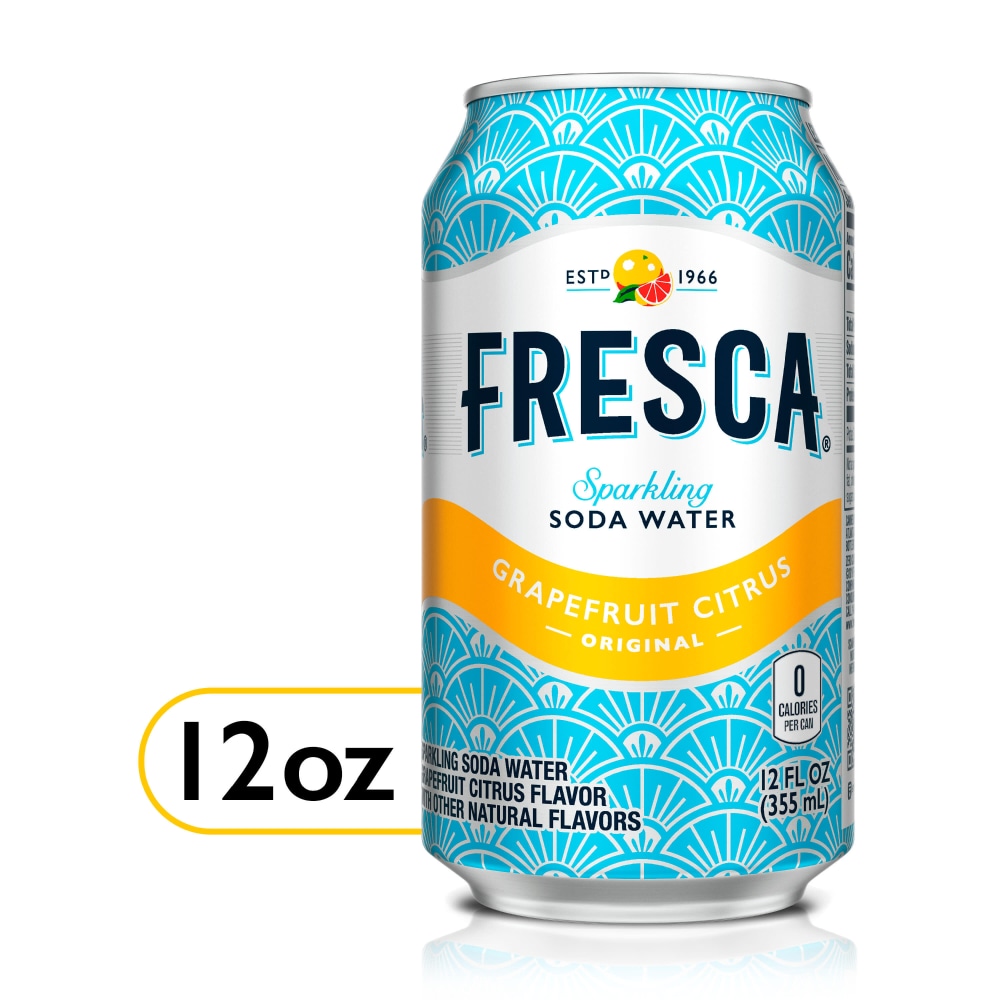
Is a can of Fresca clean?
Guess before you scroll.
Reveal Aurascan's verdict
Aurascan says: Flagged
The main flag is Citric Acid.
Who is affected by aspartame exposure limits and warning labels?
The panel's findings cover consumers across all age groups who purchase sugar-free or reduced-calorie packaged goods, including carbonated beverages, table-top sweeteners, chewing gum, flavored dairy, desserts, and low-calorie confectionery. Exposure modeling demonstrated that even high-level consumers across pediatric and adult cohorts do not exceed the combined intake boundaries.
People diagnosed with phenylketonuria (PKU), a rare genetic metabolic disorder, represent the critical sensitive subpopulation. Because the salt dissolves readily upon consumption into its base parts, releasing phenylalanine, products containing E 962 or standalone aspartame must continue to carry explicit warning notices on the packaging.
Food and beverage manufacturers formulating zero-sugar items in the European Union are affected primarily by the pending technical specification updates, which may require ingredient suppliers to verify tighter heavy metal thresholds during procurement.
What it means for shoppers navigating food and beverage labels?
For everyday shoppers reading packaged-food labels, the practical guidance remains clear and consistent. The salt of aspartame-acesulfame is a specialized chemical compound made of two parts aspartame to one part acesulfame. Manufacturers use this blend because the two sweeteners create a synergistic sweetness profile that masks lingering aftertastes while reducing the total quantity of sweetener required.
Labeling practices differ significantly between international retail markets:
In the European Union: Products formulated with the co-crystallized compound may display the additive code E 962 or list "salt of aspartame-acesulfame" directly in the ingredient deck, accompanied by the mandatory statement noting that it contains a source of phenylalanine.
In the United States: Federal regulations do not typically list the combination as a single compound code. Instead, American packaging lists the components separately, as outlined in the FDA guidance on aspartame and other sweeteners in food. Packaging declares both aspartame and acesulfame potassium (or Ace-K) in the ingredient list, alongside the standard bold notice: "PHENYLKETONURICS: CONTAINS PHENYLALANINE."
Shoppers looking for a deeper dive into either individual ingredient can explore our complete aspartame ingredient review alongside our comprehensive guide to acesulfame potassium to see how each performs alone. Monitoring overall additive intake allows consumers to view these ingredient declarations as two familiar high-intensity sweeteners working in tandem rather than an unstudied novel chemical.
The background of global regulatory reviews on aspartame safety?
Aspartame has been one of the most thoroughly scrutinized food ingredients in global commerce since its initial regulatory approvals in the late 20th century. Upon ingestion, digestive enzymes rapidly break down aspartame in the upper gastrointestinal tract into three basic components: the amino acids phenylalanine and aspartic acid, alongside trace amounts of methanol. Because these constituents occur naturally in common dietary proteins and fruits, standard regulatory reviews have long considered typical exposure manageable for healthy metabolic pathways.
In July 2023, the World Health Organization summarized global health findings in the WHO aspartame hazard and risk assessment release, combining conclusions from the International Agency for Research on Cancer (IARC) and the Joint FAO/WHO Expert Committee on Food Additives (JECFA). While IARC categorized aspartame as "possibly carcinogenic to humans" (Group 2B) citing limited observational data, JECFA reaffirmed that the established ADI of 0 to 40 mg/kg body weight per day is safe and protective. The FDA formally reiterated its agreement with JECFA, maintaining its 50 mg/kg body weight daily limit.
What to watch next as regulators update sweetener purity standards?
Following the publication of the September 10, 2026 scientific opinion, the European Commission and member state delegates will consider whether to amend the technical annexes of Regulation (EU) No 231/2012. These discussions will determine the official timeline for updating E 962 manufacturing specifications and reviewing heavy metal limits for standalone aspartame.
Evidence limitations remain an inherent part of population-level safety evaluations. While large-scale toxicological reviews affirm current safety margins, observational studies cannot fully isolate individual microbiome variations or lifetime cumulative exposures across complex multi-sweetener diets. Regulators continue to evaluate new mechanistic studies as analytical methodologies advance.
It is an engineered sweetener compound combining aspartame and acesulfame in an approximate 2:1 ratio. In the body, it rapidly separates into standard aspartame and acesulfame potassium, offering high sweetness intensity with reduced aftertaste.
What was EFSA's main conclusion in its September 2026 review?
EFSA concluded that E 962 is safe at current exposure levels and reconfirmed the Acceptable Daily Intake (ADI) of 40 mg per kg of body weight per day for aspartame, finding no consumer safety concerns across any age group.
How does the labeling of this sweetener differ between the US and the EU?
In the European Union, the sweetener can be listed as E 962 or 'salt of aspartame-acesulfame'. In the United States, manufacturers generally list the two sweeteners individually as 'aspartame' and 'acesulfame potassium'.
Why do products with aspartame carry a phenylalanine warning?
Aspartame breaks down into phenylalanine during digestion. People born with the rare genetic condition phenylketonuria (PKU) cannot properly metabolize phenylalanine, making clear warning labels essential to prevent toxic accumulation.
Did EFSA lower the Acceptable Daily Intake for aspartame in 2026?
No. EFSA reconfirmed the existing Acceptable Daily Intake of 40 mg per kg of body weight per day, finding that typical and high dietary exposures remain well within safe limits.
What is the FDA's current Acceptable Daily Intake limit for aspartame?
The FDA maintains an Acceptable Daily Intake (ADI) of 50 mg per kilogram of body weight per day, concluding that the sweetener remains safe under approved conditions of use.
See what is in your label
Aurascan turns product labels into plain-English ingredient explanations and source-backed context.
FDA's Red 3 revocation hits food on Jan 15, 2027. Where erythrosine still shows up (candy, frosting, cherries), what the label says, and why older stock may linger.
Most natural food colors are grown and imported, take 12-24 months to validate, and could jump in price as brands drop synthetic dyes by 2027. What that means for labels.
The FDA's dye pledge tracker (Sept 10, 2026) now targets end of 2027 for Red 40, Yellow 5, Yellow 6 and three more. Which brands report Complete, which are still working.